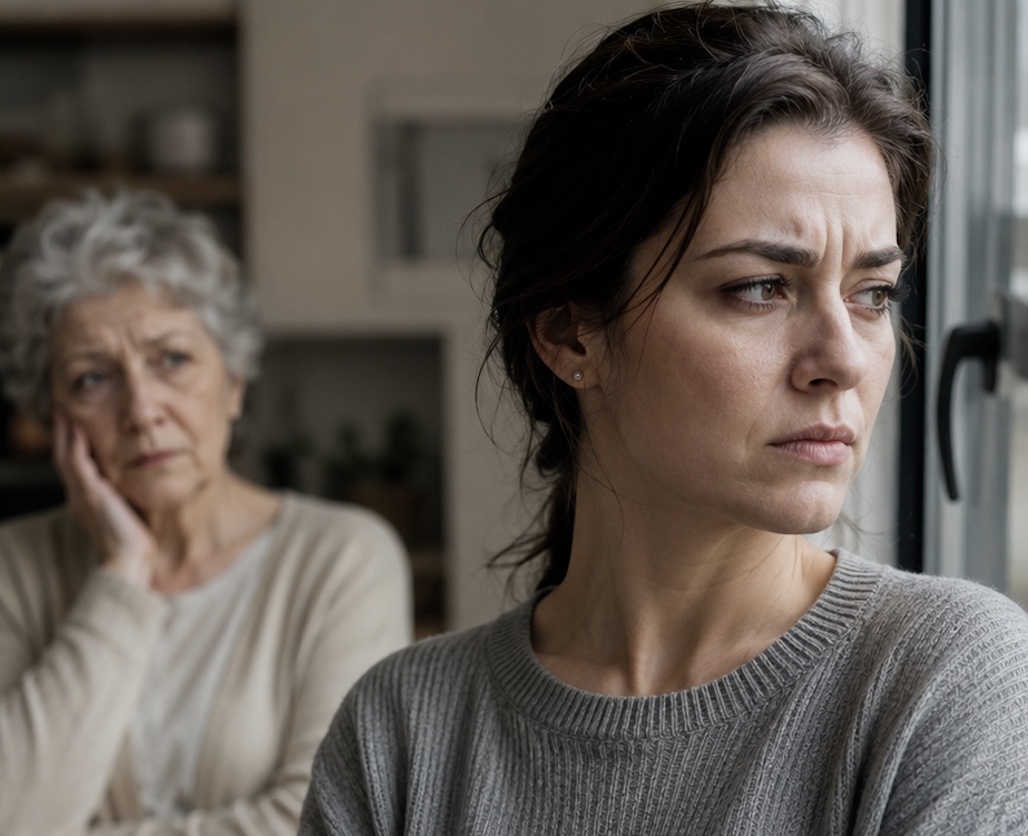
— Mom, do you have unpaid utility bills? I sent you money.
The silence on the other end lasted only a second, but that was enough.
— Oh, sweetheart, don’t worry about that. I sent it to Lidia Ivanovna… They’re in trouble again.
Katya was standing in the hallway without even taking off her shoes, a bag of groceries in one hand and her phone in the other. The bag was light: pasta, bread, a pack of tea. She had deliberately not bought meat, because this month she had once again transferred fifteen thousand to her mother. Those fifteen thousand, earned through double shifts at the clinic, had lasted exactly one day in her mother’s account.
— What kind of trouble, Mom? — her voice dropped.
— Well, their heating… or something with the pipes, I don’t remember exactly. Lidochka called, she was crying.
Katya lowered the bag to the floor. The supermarket receipt slipped out and landed at her feet like a white ribbon. Four hundred and eighty-seven rubles. Her dinner for the next three days. And somewhere in another city, someone else’s pipes were being fixed with her money.
Anger did not come immediately. First came exhaustion, heavy as a soaked coat.
Katya worked as an administrator at a private dental clinic. Her schedule was supposed to be flexible, but in reality she spent six days out of seven at work. The seventh day disappeared into laundry, cooking, and sleep that never felt like enough. She rented a one-room apartment on the outskirts of the city, with windows facing an industrial zone. Every morning, the neighbor behind the wall coughed, and that cough had become as familiar as her alarm clock.
She had been helping her mother for three years. At first, a little. Then more. Then it became something everyone simply expected.
— You know what my pension is like, — Svetlana Petrovna would say over the phone.
And Katya did know.
But before, her mother had managed. Before, she had been different. Katya remembered how, when she was a child, Svetlana Petrovna checked every store receipt, counted her change right in front of the cashier, and could scold her daughter for buying an unnecessary yogurt.
— Money doesn’t fall from the sky, Katerina, — she used to say, her voice straight and sharp like a ruler.
Everything changed two years ago. The stroke happened in April, right at a bus stop. Intensive care, IV drips, three weeks in the hospital. Back then Katya slept on corridor chairs and drank coffee from a vending machine that dispensed warm brown water.
Svetlana Petrovna survived, but she came back different. Softer. Quieter. She started calling relatives she had ignored for years. She began saying strange things.
— Life is short, Katyusha. You have to help your own people while you still can.
By “own people,” she mostly meant Lidia Ivanovna, her younger sister. Katya barely remembered her: a loud woman with red, work-worn hands and children who were always shouting. Whenever her mother spoke to Lidia on the phone, there was always some kind of noise in the background — something crashing, someone yelling, doors slamming.
— Could you lend me a little until payday, Svetochka? — came the voice through the speaker.
What payday, no one knew. Lidia didn’t work, her husband drank, her oldest son was in prison, and the younger one drifted around doing nothing.
At first Katya paid little attention. Her mother was talking to her sister — so what? Helping once in a while was normal. People did that.
Except the “once in a while” never ended.
The first time Katya truly became alarmed was in November. She came to visit her mother on a Saturday and brought groceries. She opened the fridge and froze. On the shelf there was an opened pack of butter, a jar with a little jam left at the bottom, and a quarter of a loaf of black bread. Nothing else.
— Mom, what are you eating?
— I eat, I eat. Don’t make things up. I made porridge this morning.
Katya looked in the cupboard. A pack of oats. A bag of buckwheat. In the medicine cabinet — nothing. No blood pressure pills, no aspirin.
— Where are your medicines?
— They ran out last week. I was going to go to the pharmacy.
On the table, under a newspaper, lay a receipt. A transfer for eight thousand rubles. The date was the day before yesterday.
— Mom.
— How could I not help? They have children, — Svetlana Petrovna turned toward the window. — Poor Lidochka is having such a hard time right now. The younger boy needs boots. Winter is coming.
Katya squeezed the receipt in her hand. Then she carefully put it back.
After that, she began to notice the pattern. Money left every month — five, eight, ten thousand. Her mother started hiding her phone, turning it screen-down whenever Katya was nearby. Once, Katya stepped into the hallway to get her coat and heard a hurried whisper from the kitchen:
— Yes, yes, Lidochka, of course I’ll send it. Don’t worry. I’ll go to the post office tomorrow morning.
The reasons kept changing: a package for the oldest son, treatment for Lidia’s husband, “temporary difficulties” that had already lasted a year and a half.
Katya counted. She worked two hundred hours a month so that part of her money could go to people she had seen twice in her life. Something dark and heavy gathered inside her. Not even anger — more like exhaustion from injustice, from the feeling that her labor was disappearing into someone else’s bottomless pit.
In January, her mother received a notice about unpaid apartment bills. Svetlana Petrovna called her first, in a voice so light it was almost cheerful.
— Katyusha, some nonsense came in the mail. It must be a mistake.
It was not a mistake. Katya went there that same evening.
On the cabinet in the hallway lay a neat stack of bills, held together with a pharmacy rubber band. Three months of unpaid payments. Electricity, gas, building maintenance. The internet had been cut off back in December — her mother had not told her.
On the kitchen table was a sheet of paper covered in numbers. Tiny handwriting, columns of amounts. Her mother was preparing another transfer.
— Mom, — Katya sat down across from her. — Do you understand that you don’t even have enough to pay for yourself?
— Oh, I just got a little confused. I’ll sort it out.
— Three months, Mom. Three months of debt. And you’re about to send money again.
Svetlana Petrovna wrapped both hands around her cup.
— I can’t abandon them. They’re family. Lidochka has no one else.
— And you? — Katya felt her voice sink. — You have me. Just me. And I am not going to keep paying for other people’s problems while you sit here without medicine and with debts piling up.
Her mother said nothing. She only stared into her cup, as if the right words might be waiting there.
Katya stood up. The chair scraped across the linoleum.
— Do you know how much I work? — her voice rang, and this time she did not try to hold it back. — Twelve shifts a month, twelve hours each. I take extra work. I don’t buy myself proper food, Mom. I’ve been wearing the same coat for the fourth winter. I took out a credit card so I could send you money in October because I didn’t have enough.
Svetlana Petrovna opened her mouth, but Katya did not let her speak.
— And you take that money and send it to people who change nothing. Nothing. Lidia doesn’t work, her husband drinks, her son is in prison — and it goes on year after year. That’s not trouble, Mom. That’s a way of life. And you’re feeding it with my hands.
Her mother began to cry. Quietly, almost silently — tears simply rolled down her cheeks.
— You don’t understand, — she whispered. — They are in trouble, Katyusha. Real trouble. I can’t turn away from my own sister.
Katya looked at her mother — small, aged, stubborn. And with a cold clarity, she understood: there was no point trying to persuade her. Words did not work here. She would have to act differently.
Without another word, she put on her coat and left.
In February, Katya stopped transferring money to her mother’s card.
Instead, she logged into the management company’s online portal and paid the apartment debt directly. Three months overdue — twelve thousand. She set up automatic payments for the utilities. Then she went to the pharmacy and bought the medicines listed in her mother’s discharge papers: blood pressure pills, aspirin, vitamins. She left the bag on the cabinet in the hallway.
On Saturdays she came with groceries. Silently, she put everything away: grains in the cupboard, milk and butter in the fridge, meat in the freezer. She left the receipts on the table in a neat little pile, like evidence.
Her mother did not thank her. She sat in her armchair in front of the television and looked past her daughter. Sometimes she would say:
— You can go shopping for me, apparently. But talking to me like a human being is too much.
Katya did not answer. She wiped the shelves, checked the medicine cabinet, and left.
Their relationship changed. It became drier. Colder. But for the first time in a long while, Katya knew exactly where every ruble was going. There was not much warmth in that, but there was truth. She told herself that truth was enough.
She almost believed it.
By April, something began to shift.
Lidia Ivanovna called less often now — once every two weeks instead of three times a week. Sometimes her mother complained while looking away:
— I can’t even help properly anymore. What kind of sister does that make me?
But her voice sounded more habitual than bitter. As if she were rehearsing a line she no longer fully believed herself.
One evening, at the end of April, Katya’s phone lit up with a message. She opened it while standing in line at the supermarket. It was from her mother.
“Lidochka called today. I didn’t send anything. I went to the store and bought myself proper food. I even bought fish.”
Katya read it twice. Then she put the phone back into her pocket.
The cashier scanned her groceries. In the basket were chicken, vegetables, cheese, and a small cake — for no reason at all.
Relief came quietly, without celebration. But bitterness followed behind it — faint, like an aftertaste. The understanding that getting to that message had required silence, tears, and slammed doors. That boundaries are rarely built gently.
She wrote back:
“Good job, Mom. Fish was the right choice.”