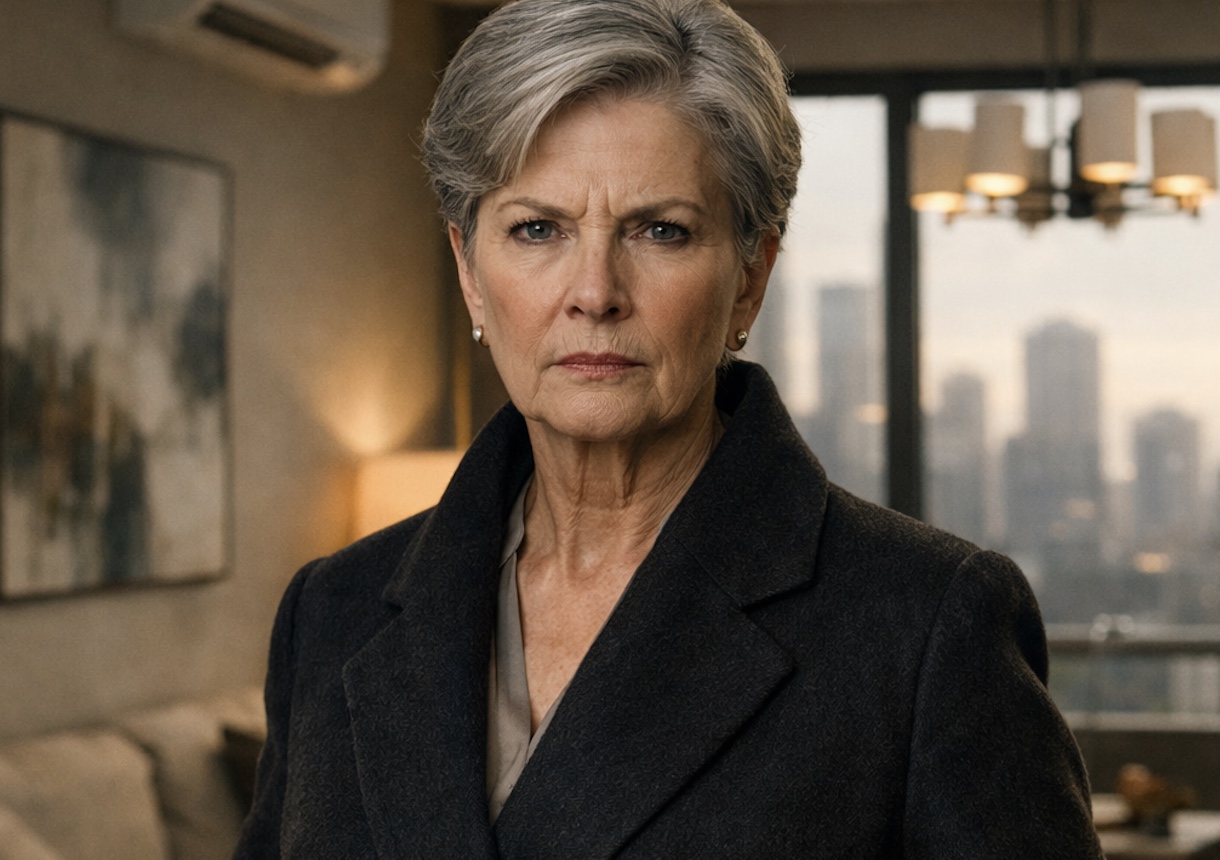
She stormed into the entryway without even taking off her shoes.
“So you quit your job? And who’s supposed to feed this family now?” my mother-in-law snapped, leaving dirty marks all over the floor I had just washed. Somehow, it felt fitting.
“Hello, Valentina Petrovna. Tea first, maybe?” I hung my coat on the hook without turning around.
“Tea? What tea? Lesha called me. He said you quit. Have you completely lost your mind?”
I turned slowly to face her.
Seven years. For seven years I had swallowed the criticism, the lectures disguised as “advice,” the constant phone calls about every little thing. For seven years I smiled, nodded, and kept the peace.
But that day, something inside me finally gave way.
I met Lesha at a company event. Back then, he seemed independent. Not like a man tied to his mother’s apron strings, but like someone grown, self-contained, someone who actually had plans for his life. He courted me beautifully, brought flowers, said all the right things.
At our wedding, Valentina Petrovna cried. At the time, I thought they were tears of joy. Later I understood she was mourning the fact that she was “losing” her son.
The first warning sign came a month after we got married. I made borscht, my own recipe, the one my grandmother taught me. Lesha tasted it and frowned.
“My mom makes it differently,” he said. “Better.”
I laughed then. I thought it was nothing, just one of those small adjustments couples make. I’d learn how his mother cooked. Fool that I was.
“Valentina Petrovna, please take off your shoes. I just cleaned the floor.”
She stared at me as if I’d suddenly switched languages.
“What?”
“Your shoes. Take them off. Or leave.”
The silence that followed was so complete I could hear the kitchen clock ticking. For seven years, that clock had been counting down my patience. Apparently, it had finally run out.
“Lena, do you hear yourself?” she asked, her voice dropping to a whisper. That was always a bad sign. It usually meant a dramatic scene was coming next, complete with hand-wringing and heart pills.
“I hear myself perfectly. Probably for the first time in years.”
She did take off her shoes in the end. Then she sat down on the stool in the hallway like the uninvited guest she actually was.
At work, I carried the load of three people. бухгалтерия, reports, inspections—everything landed on me. I’d get home at nine, collapse onto the couch, and fall asleep with the television muttering in the background.
By then Lesha had already eaten. He’d thrown together dumplings or eggs for himself and left the dishes in the sink.
“You’ll wash them anyway,” he used to say whenever I complained.
And every Saturday, Valentina Petrovna would come by. She would run a finger over the shelves to check for dust. She would open the refrigerator and inspect what was inside. Then she would shake her head.
“Leshenka, you’ve lost weight. She doesn’t feed you properly at all.”
Lesha would shrug and go watch football.
“So what happened?” my mother-in-law asked now, folding her arms across her chest. “Why did you quit?”
I walked into the kitchen and put the kettle on. My hands trembled a little, but my voice did not.
“Because I’m tired.”
“Tired of what? You sit in a warm office shuffling papers around!”
I spun around so quickly I nearly knocked the kettle over.
“Have you ever once asked how I’m feeling? In seven years—has it ever crossed your mind even once?”
Valentina Petrovna opened her mouth, then closed it again.
“My blood pressure is all over the place. I get migraines three times a week. I sleep five hours a night and wake up already exhausted. And your precious Leshenka…”
“What about Leshenka?”
“Your precious Leshenka has been working a two-days-on, two-days-off schedule for the past year and makes three times less than I do. And even then, he can’t lift a finger at home.”
I remembered the time three months earlier when I ended up in the hospital with a hypertensive crisis. I lay there under an IV, staring at the ceiling. Lesha visited once and brought oranges.
“Mom said you need vitamins,” he told me.
He didn’t hug me. He didn’t ask how I was feeling. He just set the bag on the bedside table and left because he had football with his friends.
Valentina Petrovna didn’t come at all. She sent word through her son that hospitals were “full of infections.”
“So now you’re telling me my son is a bad husband?” she said, her voice ringing with outrage.
“I’m telling you I’m done carrying this family on my back alone.”
“And who’s supposed to do it, then?”
“Maybe your son could try. He’s forty-two years old. It’s about time.”
The kettle started whistling. I turned off the gas and poured myself a cup of tea. I didn’t offer her any.
“Lena, I don’t understand what’s gotten into you…”
“What’s gotten into me is clarity. I wasn’t born to spend my life taking care of a grown man who still calls his mother about everything.”
Lesha came home that evening looking tense and irritated. His mother had obviously already filled him in.
“Lena, what is this?” he asked, sitting across from me without meeting my eyes.
“I’m leaving.”
“Leaving where?”
“Leaving you, Lesha. For good.”
He was silent for a full minute. Then he looked up.
“Because of Mom?”
“Because of everything. Because I’ve turned into household staff. Because you never once stood up for me. Because I forgot what color the sky was since I never had the time to lift my head and look.”
“And where are you going to go?”
“To myself,” I said. “Finally.”
I had packed my bag that morning. Documents, a few clothes, the essentials. I’d come back for the rest later.
At the door, I turned around one last time.
“You know what’s funny? I really did love you. For real.”
“And now?”
I gave a small shrug.
“Now I don’t feel anything at all.”
I spent the night at a friend’s place. The next morning I woke up and, for the first time in years, felt that I could breathe. Really breathe.
My phone kept buzzing—Lesha, my mother-in-law, Lesha again.
I turned the sound off and went to make coffee.
Sunlight poured through the window.
I had forgotten the sky was blue.