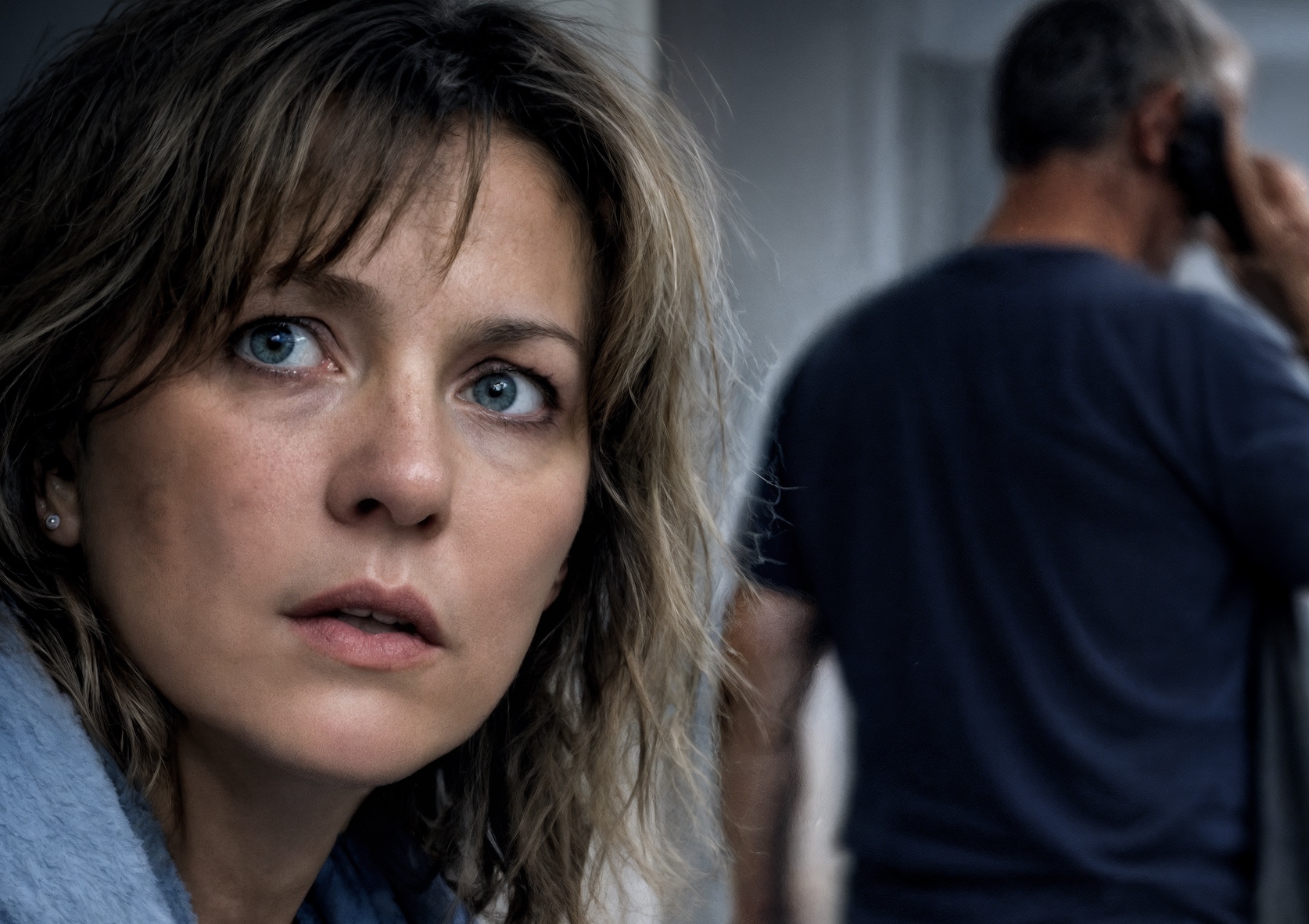
“I’ll sleep in the living room so I don’t catch whatever you’ve got”: the sentence from my husband that made me quietly pack my things
“Did you buy that caraway bread again?” Igor said with disgust, pushing the slice to the edge of his plate. “I asked for plain white.”
He didn’t even lift his eyes. His thumb kept moving across his phone screen, while his fork automatically picked through the roast. In the kitchen, polished to a shine with chrome and spotless surfaces, the only sounds were the ticking of the clock and the way he chewed.
I looked at the top of my husband’s head—his gray hair neat and distinguished, silver in a way that looked expensive, his haircut precise and polished—and felt a coldness spreading through me.
We’ve been married for twenty-three years. Igor doesn’t drink. He never shouts. He reliably sends money for the household and takes me to a health resort twice a year. The neighbors say, “You two are so lucky to have each other.”
But no one knows that the loudest thing in our home is the silence.
You’ve probably met couples like this. They seem to live together, sleep under the same blanket, go through the motions of a shared life, yet between them stands a solid wall. You want to tell him about the funny squirrel you saw in the park that morning or some interesting article you read, and all you get back is a dry “Mm-hmm.” And that “Mm-hmm” really means, “Leave me alone.”
That evening, I didn’t bother defending the bread. I just cleared the plate and turned the water on harder. I’m fifty-three years old, and I feel like an appliance. Convenient. Dependable. Programmed with one button labeled wife. Feed him, iron his shirts, stay out of the way—well done.
A marriage put to the test
Everything changed last Tuesday.
The whole month had been raw and miserable. I came home from work chilled to the bone, and by evening I knew I was coming down with something. I was weak, exhausted, and wanted nothing but to lie still.
I wrapped myself in two blankets. More than medicine, I wanted one simple thing: for Igor to sit beside me. To place his hand on my forehead. To ask, “Lena, should I make you some tea with lemon?” Or at least to stay with me for five minutes without that phone in his hand.
Igor walked into the bedroom at exactly ten.
He saw the pile of blankets and stopped in the doorway, not stepping inside.
“So, you’ve fallen apart?” he asked.
“I feel awful, Igor,” I whispered. “Could you please bring me some water?”
He went to the kitchen, came back with a glass and some pills, and set them on the bedside table, careful not to touch any of my things. Then he said the sentence that became the final click inside me.
“Listen, I’m going to sleep on the couch in the living room tonight. I’ve got a meeting with the general director tomorrow, and we’re delivering a difficult project. I can’t take the risk. The last thing I need is to end up sick right now.”
Then he left, closing the door firmly behind him.
On the surface, it all sounded logical. Adults have to be practical. The breadwinner has to be protected. But lying there in the dark, I realized something that chilled me even more than the fever: if something had happened to me that night, he would only have been upset in the morning. And even then, mostly because there would be no one to make his breakfast.
My escape into silence
Three days later, I was back on my feet. Still weak, but clear-headed.
On Friday afternoon, while Igor was at the office, I understood that I needed to test us. Not even him, really—what was left of us.
I pulled out a travel bag. Packed a change of underwear, a sweater. Booked a room at a guesthouse in a pine forest—just an hour by train, but it felt like another world.
On the kitchen table, right on top of his favorite trivet so he couldn’t possibly miss it, I left a note.
I’ve gone away. I need to be alone for a while. I’ll be back Sunday evening.
That was all.
I locked the door with my own key and stepped outside. I felt like a schoolgirl skipping an exam.
Those two days in the forest passed slowly. I walked along snowy paths, watched ducks, slept. But in truth, there was only one thing I was doing.
Waiting.
Waiting for my phone to come alive.
Lena, where are you? What happened?
I came home and you weren’t there. I’m worried.
But the phone stayed silent. On Friday night, I got a notification that the utility payment had gone through. Saturday morning brought spam from a clothing store. From my husband—nothing.
I checked the signal every half hour. Restarted my phone. Full bars every time.
The truth was simple: I just wasn’t needed.
Coming back
I returned on Sunday around seven in the evening. The windows of our apartment were glowing with warm light. It used to feel like a beacon to me. This time I looked at it and felt absolutely nothing.
On the way back, I kept trying to come up with explanations for him. Maybe he was offended. Maybe pride had stopped him from calling.
The sound of my key turning in the lock was shockingly loud.
The entryway smelled like pizza and something spicy—he’d been ordering takeout. Empty boxes were scattered across the floor. From the living room came the heavy drone of a television show.
I took off my coat. My boots made a soft clinking sound as I placed them on the shelf.
“Igor?” I called quietly.
He came out of the room wearing a T-shirt, the remote in his hand. He looked completely calm. Well-fed. Comfortable. Relaxed. He glanced at me, then at my bag. There was no concern in his face. No relief. Just mild annoyance, as if I had interrupted him.
“Oh, you’re back,” he said casually. “Good. The trash can’s overflowing, nothing else fits in there, so I left the pizza boxes in the hallway. Can you take it out? I’ve got work tomorrow, and I don’t feel like getting my shoes dirty.”
I froze.
Something broke inside me. Quietly. Without any dramatic crash.
He hadn’t even asked where I’d been. He didn’t care. My absence had only been inconvenient because the trash had piled up.
“The trash?” I repeated. My voice sounded unfamiliar, low and flat. “You want me to go straight to the dumpsters the second I get home?”
Igor shrugged, already turning back toward the television.
“What’s the problem? You’re still wearing your coat.”
And he walked away.
I stood there in the hallway, breathing in the smell of someone else’s pizza and my own disappointment.
I looked down at my hands. Strange—I had always imagined that in moments like this, women were supposed to cry or smash dishes. But instead of tears, I felt something else: cold, unmistakable clarity.
The kind that comes when you hear a diagnosis and stop hoping for a miracle. After that, all you do is think about how to live with the truth.
I saw our future ten years from now. I’m sixty-three. I’m still standing at the door holding a bag of trash. Igor is still sitting in front of the television. We are still silent. I am still a convenient button. He is still the one pressing it. All that keeps us together is habit—and the two apartments we bought during the marriage.
Slowly, I hung up my coat. Took off my boots. Walked into the kitchen.
It was a mess of male solitude: crumbs on the table, cups with dried coffee in them, splashes of sauce. My neat kitchen had turned into something like a station cafeteria. The note I had left was lying on the floor—he had probably brushed it off by accident and never even bothered to pick it up.
“Lena!” Igor shouted from the other room. “Did you put the kettle on? Make me some too, but not too strong!”
I filled the kettle with water. Pressed the switch. And while the water roared toward a boil, I made my decision.
A lot of people endure this kind of life for years. Because of money. Because of “what will people say.” Because they’re afraid of being alone. I understood all of that. My salary isn’t some great fortune. My future pension won’t be either. But it will be enough for that same caraway bread. Enough for a theater ticket. Enough for a silence that doesn’t crush me.
The price I was paying for this so-called perfect marriage was myself.
The kettle boiled. I poured hot water into only one mug—my favorite one, with blue flowers on it. Added a sprig of mint. Took the cup and walked into the living room.
Igor didn’t even turn around.
“What about mine?” he asked, still staring at the news.
I sat down in the armchair. Took a sip. The heat spread through me and gave me strength.
“Igor, turn off the TV,” I said quietly.
“In a minute, this is getting interesting—”
“Turn it off. Please.”
There was something in my voice that made him press the button. The screen went black. He looked at me, surprised.
“Why are you being so serious? Tired from the trip?”
“We need to live separately, Igor.”
The room filled with a thick, sticky silence. He blinked. Smirked, waiting for me to turn it into a joke.
“What? Live separately where? On vacation?”
“No. For good. I’m not going to live with you anymore.”
“Lena, what is wrong with you?” His voice sharpened with irritation. “We have everything. An apartment, a dacha, a car. What exactly are you missing? I don’t drink, I don’t run around after other women. You’ve gone crazy from having it too easy.”
“I’m missing myself,” I answered. “To you, I’m like a refrigerator. As long as I work, you don’t notice me. If I break, you kick me or call someone to repair me. I disappeared for three days, Igor. Three days. And the only thing you noticed was that the trash can got full.”
He jumped to his feet and started pacing around the room.
“I thought you’d gone to your mother’s! Or to your friends! What, was I supposed to track your every move?”
“No,” I said. “You were simply supposed to notice.”
I didn’t shout. I didn’t list twenty years of hurt. I just drank my tea. And he grew louder. Accused me of selfishness, stupidity, ingratitude. Started listing how much money he had put into renovating that very room.
And the more he spoke, the lighter I felt.
I looked at him and saw a stranger. An unpleasant man I had somehow ended up sharing a train compartment with by accident.
The train had arrived.
My stop.
My stop
A month has passed.
Now I live in the one-room apartment I inherited from my grandmother. We rented it out for years, and the money always went into our shared budget—for Igor’s car, his hobbies, his wants. Now I live here.
The wallpaper is old. The floor creaks. But it smells like my coffee and cinnamon buns. I bought myself a bright yellow blanket and signed up for clay modeling classes—to make crooked little pots, like I’d dreamed of doing for ten years.
Igor calls.
At first, he threatened lawsuits. Then he tried guilt: his blood pressure was acting up, his shirts weren’t ironed. Now he mostly just calls and stays silent, or asks about the paperwork.
I answer politely, but briefly. A lawyer is handling the divorce. It turns out divorce isn’t nearly as hard when you remove the emotions and leave only the law.
Last night I sat on the balcony wrapped in my blanket, watching the snow fall. I felt a little uneasy. A new life lay ahead of me, uncertain and unfamiliar.
But I didn’t feel lonely.
Because the most important person in my life—myself—had finally come home.
And the trash?
Well, I take it out myself now. And you know what? It’s not hard at all.
It’s much easier than carrying a relationship in which you no longer exist.