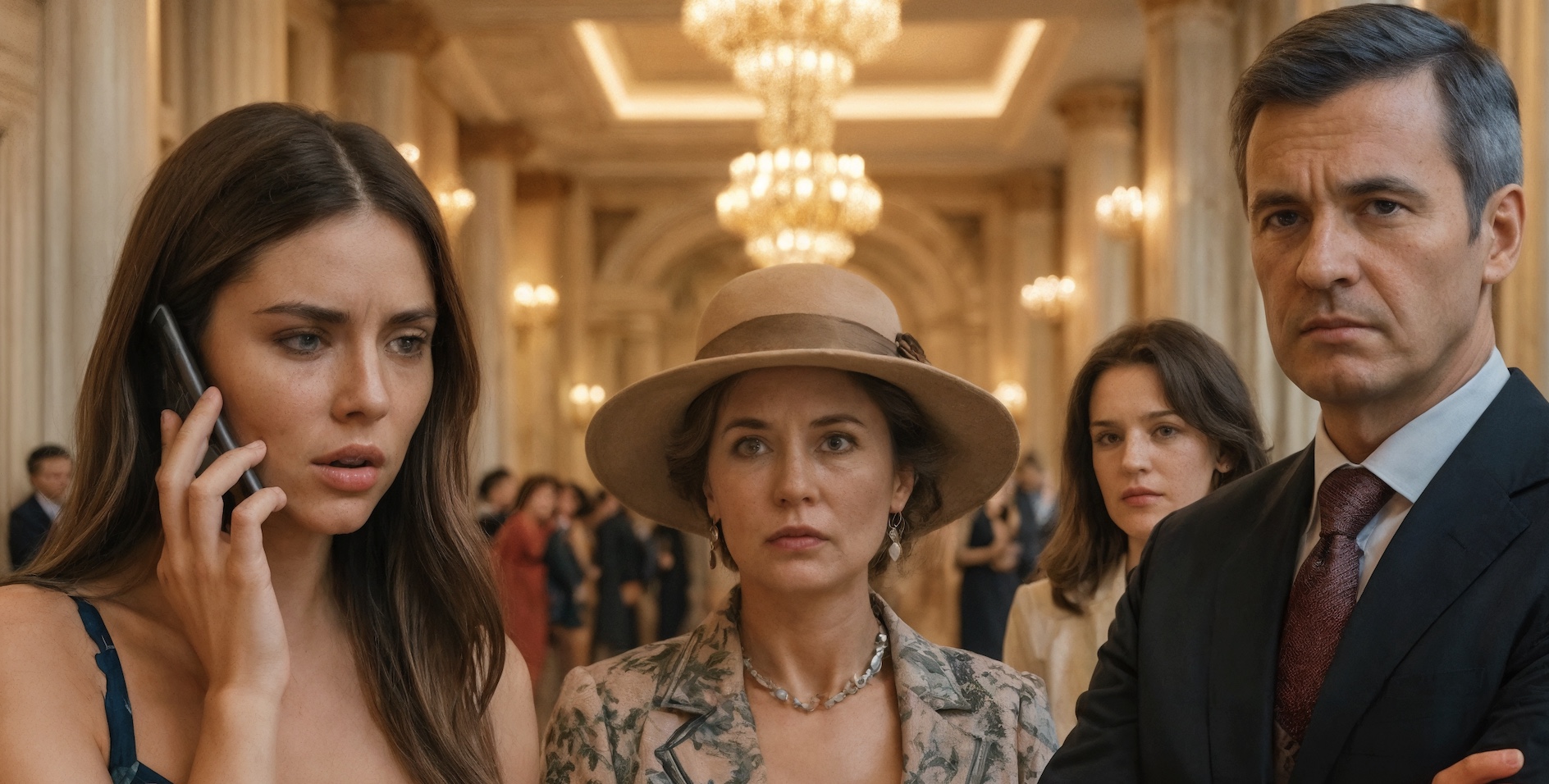
“ So, how’s the vacation treating you, sweetheart? Just don’t pass out from sheer joy!” Antonina Petrovna announced, dramatically removing her glasses, folding her arms, and putting on her “worth-a-million” face.
“Because this isn’t Anapa for eight hundred rubles — this is Sochi! Practically Europe!” she sighed, then looked down at Lena’s sandals as if they were soggy market flip-flops.
And that’s how it began…
…with me, once again, failing to insist on what I wanted.
“Artyom, let them go by themselves. We saved up for a whole year. We dreamed about this, planned it,” I whispered that night, back when the booking could still be changed and I still had enough strength to argue.
He only sighed.
“Mom… you know Dad worked himself to the bone all his life. Maybe we should take them with us after all. It’s not like it’s every year…”
That was the moment I should’ve said, “NO.” Loudly. With a final period. With a fist thumping the pillow.
Instead, I smiled and nodded. Like a fool.
So there we were. Sochi. Heat, the sea, and… my mother-in-law — who even went to the beach wearing pearls. Just to “accidentally” show everyone she wasn’t simply a woman, but an elegant, old-school lady tragically suffering because the younger generation had no manners.
“All right, family!” Viktor Semyonovich called out cheerfully, hauling a gigantic rolling suitcase behind him — the kind that clearly held either a balalaika or his entire existence. “Time to check in!”
And right there in the hotel lobby, under marble columns and the scent of air-conditioned luxury, came the “cherry on top.”
“So, passport, booking… and… oh!” Antonina Petrovna grabbed her purse like she was on stage. “My wallet… Oh, Lena! Where’s my wallet?!”
“Your purse is in your hands, Tonya…” Viktor Semyonovich snorted. “Stop dramatizing.”
“And inside… there’s nothing! I left it in the room— I mean, at home! In the dresser! How could I… That’s it, pension age, old age, memory loss… I’m the disgrace of the family!”
She pressed her palm to her forehead so convincingly the receptionist almost called an ambulance.
I stood beside Artyom and felt the last of my patience draining out of me — leaking through my heels, dripping onto the marble, leaving a burning trail of nerves behind.
“Well, okay…” Artyom reached for his wallet. “We’ll sort it out later.”
That “later” was always the trap.
“Later” meant we’d get home and suddenly they were “short,” or they’d “invested in the dacha,” or “but we’re family.” And the cycle would start again.
I stayed quiet. For now.
The rooms, of course, had an ocean view. Meaning, a parking-lot view — but if you stood on tiptoe and leaned over the balcony, you could see the sea.
“Just like the Maldives,” I said to Artyom with a smirk.
He smiled, exhausted.
“At least we’re together. My parents are happy, we’ll rest… you love the sea…”
What I wanted to say was:
“I used to love Artyom. Before he turned into a momma’s boy on an all-inclusive plan.”
But I simply looked away.
By the third day — when my mother-in-law was openly ordering three-thousand-ruble wine on our tab at the restaurant (“you’re not going to drink that… what is it, Sauvignon? Completely wrong”) — I realized I was boiling. And not from the sun.
And then, during an evening walk along the promenade, a miracle happened.
Not the unicorn-and-rainbows kind. No.
A miracle in the form of a woman in a white linen dress, with a silver streak in her hair and such posture that Antonina Petrovna’s spine straightened on reflex.
“Lena? Lena Bessonova? My goodness! I taught you Personality Psychology! Marina Alexandrovna. Do you remember me?”
I blinked like an owl caught in headlights.
“Marina Alexandrovna… you haven’t changed at all!”
“You have. You’ve grown up. Pity your eyes aren’t the same, though — you used to have spark, ambition… where did it go?”
Artyom approached from behind with two coffees.
“And this is…?” Marina nodded toward him.
“This is my husband. And our… travel companions.”
Marina Alexandrovna looked Artyom over, then glanced toward where Antonina Petrovna hovered with a “free” drink in her hand.
“Want me to explain codependency? And then boundaries? Or have you already worked it out?”
I gave a dry little laugh.
“I’ve worked out a lot. I just don’t know how to get out.”
“It’s simple. I have a villa nearby. Come tomorrow. We’ll practice the skill of saying ‘no.’ A very useful skill at our age.”
“Where do you think you’re going?” my mother-in-law snapped that evening when she saw me packing a backpack.
“To a friend’s,” I answered calmly.
“And what about family vacation? We’re supposed to do everything together!”
“Tonya, don’t start,” Viktor Semyonovich mumbled, crunching a shrimp on a cracker.
“And why not? So we sit on her neck while she runs off to her friends? Where’s the respect for elders?”
“Exactly,” I said, zipping the bag. “Where is it?”
The next day, Artyom and I stood at the gates of a white villa that smelled of jasmine, freedom, and — for the first time in a long time — myself.
“I’m sorry I dragged you into all this,” he said quietly.
“The important part is you understood. And you don’t drag me in again.”
He nodded.
And it was the first time I saw something in his eyes that wasn’t the shadow of his mother’s opinion — but something that truly belonged to him.
“Explain this to me, Lena… what was that?” Artyom stood on the terrace with the sea spread out in front of us, squinting into the sun and scratching his head like he could comb the shame right out.
“It’s called ‘I’m done being an ATM with my mouth shut,’” I said, sipping my coffee calmly while reclining under a huge white hat Marina Alexandrovna had given me.
“But you understand how it looks… Mom and Dad are alone at the hotel. No money. No plan.”
“Artyom,” I looked at him the way you look at an eighth-grader staring at a big fat F in his gradebook, genuinely confused about why. “They’re not kids. They’re grown, healthy adults. This isn’t ‘abandoned parents.’ It’s ‘retired manipulators who know exactly what they’re doing.’”
He went silent, then sat beside me.
“You think they did it on purpose?”
“I think your mom’s ‘memory problems’ begin the exact moment she’s standing near a checkout counter. Especially if it’s expensive and pretty.”
Marina Alexandrovna came out with fruit and wine. She looked like the kind of woman who meditates in the morning, writes clever books in the afternoon, and in the evening… puts entire families in their place.
“Well then, my dears, shall we have a psychological aperitif?” she said brightly, sitting down with us.
“Just none of your… complicated words,” Artyom said, rubbing his neck with an awkward smile. “Make it simple.”
“Fine,” she nodded. “Simple words, then. You’re a couple. But inside your couple there’s a third person. And sometimes a fourth. At this point, five people have taken up residence in your head — and one has moved into your wallet.”
“Are you talking about my parents?” Artyom tensed.
“I’m talking about boundaries, Artyom. Look. Let’s say you go to the sea — just the two of you. Warm water, waves, sun. Beautiful. Then your parents climb in too. They start splashing, discussing your mortgage, telling stories about how in ’83 they almost bought a Zhiguli through a connection.”
“Sounds familiar,” I muttered.
“And what do you do in that moment? You stand between them and Lena, making sure no one drowns. But here’s the problem… nobody is swimming. Because you are entirely — in the middle.”
“So what am I supposed to do? They’re my parents,” Artyom said, quieter now.
“And Lena is who?”
He lowered his eyes.
That evening, near sunset, the villa got a call. A wounded voice sounded through the veranda speaker.
“Lena! Artyom! This is improper — just running off like that! We’re one family!”
Antonina Petrovna stood at the gate like Joan of Arc — only instead of a sword she had a damp handkerchief and lips pinched into a thin paper line.
“Mom…” Artyom started, but I placed my hand on his shoulder.
“Let me.”
I walked out to the gate.
“Tonya, we didn’t run away. We left. On purpose. Those are two different things.”
“This is just low. I would never do that to your mother!”
“I don’t doubt it. Because my mother isn’t a tourism sponsor.”
“And what about Artyom? What about Viktor Semyonovich? He almost cried this morning!”
“Viktor Semyonovich cried? Because for the first time in twenty years he didn’t have access to somebody else’s bank card?”
Antonina Petrovna’s face flushed red.
“You ungrateful girl! We raised you, we helped you! And you repay us with a knife in the back!”
And then I heard Artyom step forward and say — quietly, but clearly:
“Mom. Enough. You’re crossing the line. This is our vacation. Our money. Our decisions. You can stay at the hotel or go home. We’re done making choices for you.”
“Artyomushka… have you lost your mind? I’m your mother!”
“You’re an adult. And like you love to say, ‘a woman doesn’t get old — she gains experience.’ So use it. You’ll have plenty more trips ahead. On your own budget.”
For a second it was like Antonina Petrovna shrank — ten centimeters shorter. Then she pressed her lips into a thin teacher’s line, turned, and walked away.
“I can’t believe you said that,” I stared at Artyom like he was an action-movie hero.
He shrugged.
“I’m just tired. And you know… when Marina Alexandrovna said, ‘your wife isn’t a subscription to unlimited patience,’ I think I understood it for the first time.”
“And before that, what did you think I was?”
“A woman who would… endure anything.”
“You were wrong,” I smirked.
Marina, watching the scene with a glass of wine, simply nodded.
“Well then. Your vacation has finally begun. For the first time in how many years — just for the two of you.”
In the morning, Viktor Semyonovich texted:
“Tonya bought tickets home. I’ll stay two more days, though. Want to walk the cliffs. Thank you, Lenochka. Haven’t seen her stay silent for two hours straight in ages. Almost therapy.”
I laughed.
Artyom stood by the window pouring coffee. And for the first time this whole trip, he looked like an adult. Not hunted. Not accountable to someone. Just a grown man.
“Lena… could you forgive me for… all of this?”
“That depends on whether ‘all of this’ is going to happen again.”
“It won’t.”
I shrugged.
“Then don’t ask for forgiveness. It’s enough that you finally understood.”
And you know…
Sometimes, for everything to change, it only takes one night at a villa and a woman who says:
“You don’t have enemies. You just have boundaries you’re afraid to draw.”
“Let me tell you, man to man,” Viktor Semyonovich dropped into a lounge chair, stretched his legs, and poured himself brandy as if he hadn’t come as a guest but returned to a fortress he’d rightfully conquered. “When a woman starts giving orders, the family falls apart.”
I stood in the kitchen doorway, silent. Artyom looked at his father like he’d just noticed — for the first time — the perfectly plucked eyebrows and rings on every finger.
“Dad, are you here for a therapist… or a fortune teller?” Artyom sighed. “Why did you even come?”
“Why else?” Viktor Semyonovich scratched his belly through his shirt. “To knock some sense into my son. You’ve gotten totally whipped. That Marina of yours — that psychologist — taught Lena all this ‘boundaries, money, freedom’ stuff… Freedom, huh. Family is endurance, son. A woman is like a brick: if she presses down, that means she’s holding everything together.”
“And if she’s choking you?”
“Then construction is happening!”
I couldn’t hold back.
“Viktor Semyonovich, let’s agree on something right now. You can sleep here, drink wine, and even lecture us on ‘Soviet family psychology’ — but only if Artyom asks you to.”
“Oh, so you’re against me?”
“I’m not your bank, not your nurse, and not a free holiday resort. So — only by invitation.”
He went quiet, then snorted.
“Well, look at you — a real witch. Your Marina trained you. Artyom, do you even like living like this?”
Artyom stood up. And I got goosebumps — because he looked at his father differently. Not scared. Not from below. Straight at him. Calm. Hard.
“Dad, do you like living at someone else’s expense, telling everyone how to do things, and then playing the victim when you’re told no?”
“I did everything for you! For the family!”
“You hit Mom. You quit your job at thirty-five because ‘it’s not a man’s work to deal with idiots.’ You sat at home while Mom carried us. And then you left — for the neighbor — because it was ‘quieter there and her cutlets were softer.’”
“Artyom, what nonsense are you spewing?” Viktor Semyonovich flared. “I raised you!”
“You taught me to endure. To stay quiet. Not to fight back. And now you want me to repeat it. But no, Dad. You’re the past. We’re the future.”
“Raise a son and then you’ll understand!”
“I already understand. And my son will know that respect isn’t staying silent in the face of rudeness — it’s being able to say ‘enough.’”
Later, when Viktor Semyonovich left for the station (calling himself a taxi — miracle of miracles), Artyom sat in silence. For a long time. I brought him tea.
“You know, Lena… for twenty years I thought my father was a hero. Then I thought he was just a complicated person. Now I see it: he’s laziness in human form. Shouting, guilt, drama… anything, as long as he doesn’t have to grow up.”
“That happens. To a lot of people. But you’re not him.”
“I was afraid you’d leave. That you were done. That you didn’t want to be with me anymore.”
“I was done being used. But leaving? No. I just wanted you to understand who we are. You and me. We’re not your parents’ ATM. We’re not puppets in a family performance. We’re people. We get to choose how we live. And with whom.”
He hugged me. Stayed quiet for a long time. Then he said:
“Lena… have we ever been happy?”
“We can be. Now that we have boundaries. Freedom. And brandy without lectures from Soviet patriarchy.”
We laughed.
And that was when I realized, for the first time in a long while — we made it. We pulled our family out from under the rubble of parental control. Without hysterics, but with honesty. Without screaming, but with boundaries. With love — just not blind love.
The next morning Artyom texted his mother:
“Mom, we’ll be home in a week. No visitors. No money talk. We’re simply a family. Everything else is not up for discussion.”
There was no reply.
But silence, too, is an answer.