Lena woke up at 3 a.m. to the sound of her son crying. She got out of bed without turning on the lights. As she passed by a closed door—she knew Andrey was sleeping in there. He had been living in that other room for ten months now, ever since Artyom was born.
In the kitchen, she warmed up a bottle as she rocked her son. Gazing out the window, all she could see was darkness, a few scattered lights, and silence.
Andrey’s phone was lying on the table. Suddenly, the screen lit up—a new message. ‘I miss you. When will we meet?’
Lena didn’t pick up the phone. She just looked at it—and turned away.
In the morning, Andrey walked into the kitchen—unshaven, in a wrinkled t-shirt. He grabbed his phone and gave her a nod. Lena poured herself some coffee. He drank his, silently. Then he left.
Their eldest daughter, Masha, sat at the table with her notebook. The middle child, Vera, was picking at her porridge. Masha glanced up:
“Mom, has Dad always been like this?”
“No.”
“Then why doesn’t he look at you?”
Lena didn’t answer. Masha stared at her—with a gaze far beyond her years:
“Dad used to love Mom, but not anymore.”
She didn’t say it to her mother. It was just said aloud—as a final thought.
In the evening Andrey came home late. He sat on the couch and turned on the TV. Lena was feeding Artyom. Andrey didn’t come over, didn’t ask how her day was.
Masha walked in from her room and stood next to her father:
“Dad, do you love me?”
He smirked:
“Of course. Why are you asking?”
“And what about Mom?”
He didn’t answer. Masha went back to her room. Lena could hear her daughter crying.
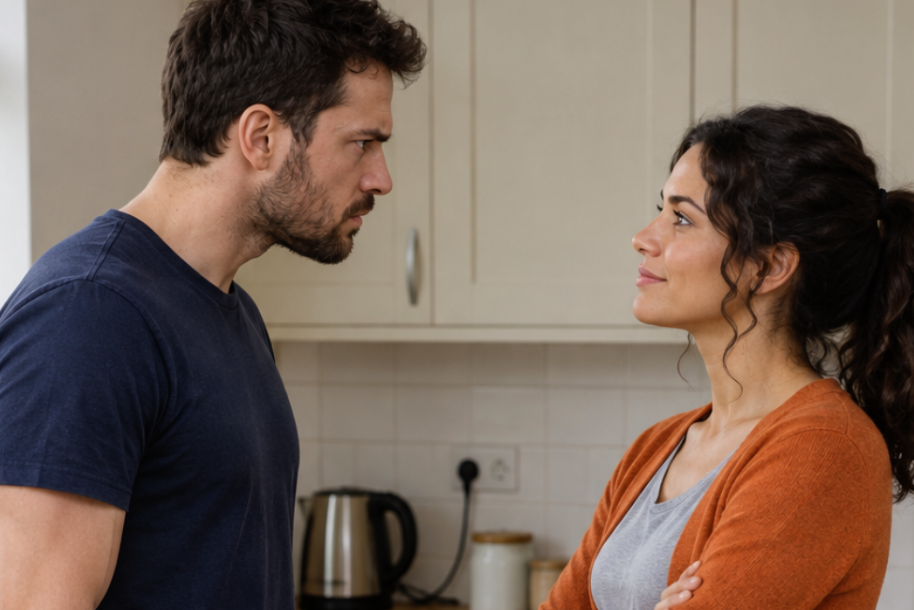
After putting her son to bed, Lena went to the kitchen. Andrey was standing on the balcony, smoking. Lena approached him:
“Aren’t you ashamed?”
He turned around:
“Ashamed of what?”
“Ashamed that your daughter is crying. That you don’t look at me. That I’ve been living like a stranger for ten months.”
He stubbed out his cigarette. Walked past her:
“I’m tired, Lena. Tired of all of this.”
“Tired of what? Of the three children we wanted together? Of me?”
He stopped. Turned around:
“I don’t love you anymore.”
Silence. Lena stood staring at him. Then suddenly—she laughed. Softly.
Andrey frowned:
“What’s so funny?”
She looked at him—as if he were a stranger:
“Nothing. I just remembered who you were thirteen years ago. And who you became because of me.”
He shrugged and walked into the bedroom. The door slammed shut.
In the morning, Lena called her mother-in-law. Alla Petrovna—a stern woman, never any warmth between them.
“Alla Petrovna, it’s Lena. I need to talk. About Andrey.”
A pause.
“What happened?”
Lena spoke calmly. No drama. Just the facts. Ten months of coldness. Living in separate rooms. Insults. Zero attention to the kids.
Alla Petrovna listened silently. Then curtly said:
“I’ll come over.”
She arrived that evening. Came in, took off her coat, and picked up Artyom. He smiled at her. She stroked his hair and looked at Lena:
“Where’s Andrey?”
“He’ll be here in an hour.”
“I’ll wait.”
Alla Petrovna sat down and looked at Lena:
“You’ve lost weight.”
“Yes.”
“Does he know?”
“He doesn’t care.”
Her mother-in-law’s face turned to stone:
“I see.”
Andrey came home at eight. He saw his mother—and froze:
“Mom? Why are you here?”
“Sit down.”
He sat. Lena picked up her son and left the room, leaving the door slightly open.
“What’s going on, Andrey?”
“Everything’s fine.”
“Don’t lie. Lena told me everything.”
He smirked:
“And what exactly did she tell you?”
“That you’ve been living in a different room for ten months. That you don’t look at her. That you said you don’t love her anymore.”
Silence.
“Is it true?”
“Mom, you just don’t get it. I feel like I’m suffocating. Three kids, the same routine every day. I just can’t do it anymore.”
Alla Petrovna leaned forward:
“Do you think she isn’t exhausted? She’s been doing it alone for ten months, all three of them, because you ran away.”
“I didn’t run away!”
“You did. And you know what? If you lose her, you’ll end up with nothing. She’s the only one who ever made you into the person you are.”
Andrey stood up, walked out to the balcony, and slammed the door shut behind him.
Alla Petrovna went over to Lena:
“Have you made your decision?”
“Yes.”
“What are you going to do?”
“I’m leaving.”
Alla Petrovna put her hand on her shoulder:
“You’re doing the right thing.”
Lena started taking action the very next day. She found a remote job, called a friend who agreed to let her stay with the kids, gathered documents, packed things—quietly, so no one would notice.
Andrey never noticed a thing. He came home, sat in front of the TV, and stayed silent.
One evening he walked into the kitchen. Lena was at her laptop. He stood next to her:
“What are you doing?”
“Working.”
“What kind of job?”
“Remote work.”
He frowned:
“Why? I bring in money.”
Lena looked up at him:
“I need my own money.”
“For what?”
“For myself.”
He stood there for a moment, then left.
A day later, he came home with flowers and put them on the table.
“These are for you.”
Lena looked at the bouquet—just roses from a kiosk.
“Why?”
“No reason. Just because.”
She didn’t take them. She got up and walked out.
Andrey was left alone, staring at the bouquet. Then he looked at the table—where her glass of water used to stand. It was gone.
Three days later, Lena said:
“I’m leaving.”
They stood in the kitchen. He was by the window, she was by the door.
“Where?”
“To my friend’s place. With the kids.”
“For good?”
“Yes.”
Silence.
“Is this because of what I said?”
Lena shook her head:
“Because you meant it.”
“Lena, wait. I’ll change. Let’s start over.”
She looked at him for a long moment:
“It’s too late.”
He froze:
“I can’t do this without you.”
She gave a sad smile:
“Exactly.”
She left a week later. Packed her things, took the kids. Andrey stood in the hallway, watching her dress Artyom. Masha and Vera stood quietly, looking serious.
“Lena, let’s talk.”
She zipped her son’s jacket and lifted him up:
“There’s nothing left to say.”
“Will you come back?”
She didn’t answer. She grabbed her bag, opened the door. The girls went out. Lena turned around:
“For thirteen years, I tried to make you a better man. I endured, covered for you, pulled you out of trouble. In ten months you destroyed it all. Now you’ll live without me. Maybe then you’ll realize who you really were.”
She left. The door closed.
Andrey was left alone, staring down the empty hallway. Her coat was gone. Her shoes were gone. He walked into the kitchen. The table was empty. The glass was gone.
He sat down. For the first time in ten months, he felt real fear.
His phone buzzed. “I miss you. When can we meet?”
He looked at the screen. Then at the empty kitchen. At the silence. At what was left.
He didn’t respond.
Because he understood: she wasn’t coming back. And the one who was texting could never fill the emptiness he himself had created.
Lena sat in her friend’s car. The kids were in the back seat—Masha holding Artyom, Vera staring out the window.
“How are you?”
Lena wiped her eyes. She looked in the mirror at the house receding behind them:
“I can breathe.”
For the first time in ten months, her chest wasn’t tight. Her hands weren’t shaking. She was simply breathing.
The car started moving. The house faded into the distance, along with the person she used to be when she was with him. Along with thirteen years of patience.
Something unknown awaited her ahead. But it belonged to her. Hers alone.