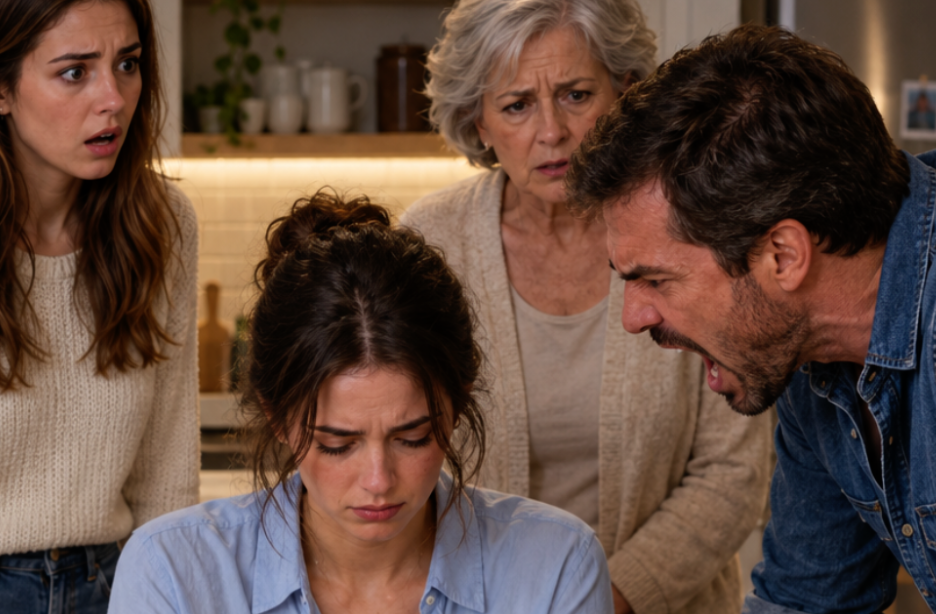
“So I get the furniture, and Maxim gets the apartment?” I stood in the middle of my grandmother’s room, unable to believe what I’d just heard.
Mom was straightening some artificial flowers, not even looking my way:
“Lena, you’re smart. You’ll figure out how to sell it—and whatever you make is yours.”
Yours. The right to sell off the Soviet-era junk, while my brother gets a three-bedroom apartment.
“Maxim and Irina need more space, they’re planning a family,” Mom went on. “And you already have your own place.”
My place—a whole 25 square meters I’ve been working non-stop five years to afford. I can’t even go to the dentist or take a trip to the sea. Maxim rents in the city center and just bought a new car. So he gets a big apartment, and I get old furniture. Sometimes I wonder if we even have the same parents.
I ran my hand along the carved sideboard with lion’s feet. I remembered how Grandma used to show me the secret drawers: “Our treasure, Lenochka.”
“Okay, Mom. I’ll take care of it.”
But something inside me snapped.
That evening, I called Maxim:
“Can you explain why things are being divided this way?”
“Lena, what’s with you?” His voice was patronizing, like he was talking to a fussy child. “It’s actually good for you. Sell the junk—you’ll make some money out of it.”
“And if we did the opposite?”
“The opposite what?”
“You get the furniture, I take the apartment.”
Maxim laughed:
“I have a family—a wife! We need someplace to live, not some cramped little room like yours. You’re just being greedy, Lena. If you’d just get yourself a decent man, he’d help with the bills and buy you some jewelry.”
Get myself a man. Like fish on a hook.
“Right. Got it.”
“Glad to hear it. Just hurry up already—we need to file our paperwork.”
I caught my reflection in the dark phone screen. I’d spent my whole life being the easygoing Lena. Easy to help, easy to agree, easy to stay silent.
Enough.
“Mikhail, remember when you lectured about antiques in college?” I called my old classmate, now an appraiser. “Could you come look at some furniture?”
He showed up an hour later. Walked quietly through the apartment, taking photos and shining a flashlight here and there. He lingered by the sideboard for a long time.
“Lena,” he said with a strange tone, “do you realize what this is?”
“Soviet wardrobes?”
“The sideboard was made by the Kalinin Artel, in the fifties. Collectors fight for these pieces. And that clock—it’s from the era of the Tsars.”
My heart started pounding.
“How much is it worth?”
“If you sell it right—a lot. I know buyers.”
“How’s it going with that old junk?” Mom called.
“I’m working on it.”
“Don’t take too long. Maxim and Irina need to get their documents filed.”
“Mom, do you remember how Grandma always said, ‘Lena is the keeper of the family treasures’?”
“Old people say all kinds of things. The important thing is to clear out the apartment as soon as possible.”
I called Mikhail:
“Let’s sell it. But on one condition—total confidentiality.”
Buyers appeared quickly. The sideboard, the clock, a few other pieces—the total amount was so much I could hardly believe it.
“Lena, how’s it going?” Maxim called. “Sold off the junk yet?”
“Yeah, it’s being picked up now.”
“Did you make much on it?”
“Enough.”
“Come on, how much? Twenty thousand?”
“About that,” I lied.
On Sunday, Mom invited everyone for a family dinner. “To celebrate solving the housing situation.” Maxim and Irina were beaming.
“Lena is such a smart girl,” Mom said as she poured the tea. “She handled the furniture so quickly.”
“Did you get a lot?” Irina asked. “We were thinking of buying you a gift to thank you for your help.”
A gift as a thank you for helping out. How generous.
“I got enough.”
“But exactly how much?” Maxim pressed. “Thirty thousand? Forty?”
I took a sip of my tea and looked at their satisfied faces. They looked so happy. So righteous.
“Eight hundred and fifty thousand.”
Silence. Even the clock seemed to stop ticking.
“What?!” Mom almost dropped her cup.
“Eight hundred and fifty thousand. Turns out the antiques were valuable.”
“Are you kidding?” Maxim went pale.
“The buffet sold for a lot. The clock, too. The rest, smaller amounts.”
“Lena, you’ll share, right?” Mom’s voice trembled. “It’s a family inheritance!”
“Family? Was the apartment a family asset too?”
“But Maxim needs it more!”
“And what about me? Don’t I need it?”
Maxim jumped up:
“You’re a thief! That’s fraud!”
“You asked me to handle the furniture. So I did.”
“We didn’t know the value!”
“And I had no idea how much a three-room apartment was worth. But that didn’t bother you.”
“I’ll get it back through the courts!”
“Go ahead and try,” I stood up. “The deal is legal.”
At the door, I turned around:
“And by the way, I’ll finally get myself a man. Now I can afford it.”
Three months passed. Maxim went to see a lawyer, but the lawyer explained that everything was above board, no grounds for a claim.
I ran into Irina at the store:
“How’s the housewarming?”
“Plans changed,” she pursed her lips. “We got a two-room instead.”
“What about the help from your parents?”
“Less than promised. Maxim says his sister betrayed him.”
“Tell him: I didn’t betray him. I just learned to count things fairly.”
Here I am in my own apartment — now completely mine, no more bank debt. On the table: a ticket to Greece and a statement showing my loan is paid off. I’ve fixed my teeth, booked a vacation, and paid for English classes.
I went up to the mirror. Looking at a woman who stopped being convenient. A woman who realized fairness doesn’t just happen — you have to make it yourself.
Maxim was right — everything is great for me now.
Just not in the way he imagined.
In the kitchen, I popped open a bottle of sparkling wine — bought it yesterday just because I wanted it. Poured myself a glass and raised it to fairness.
Behind my phone sat a text from Mom: “Lenochka, maybe we should still talk? Family is more important than money.”
Family is more important than money. So what am I, not family? When my future was being decided, nobody cared about me.
I deleted the message.
Doorbell rings. I look through the peephole — Maxim. Alone. Face crumpled, tired.
“Lena, let me in. We need to talk.”
I opened the door, but left the chain on:
“Talk.”
“Can I come inside?”
“Say what you want here.”
He sighed:
“Irina filed for divorce. Says she never planned to live in a two-room apartment in an old building. Her parents aren’t as keen anymore either — their support is a fraction of what it was.”
“And?”
“Lena, this isn’t right! We’re brother and sister!”
“Did you think about that before?”
“I didn’t know the furniture was worth that much!”
“And if you had known?”
Maxim went silent. His face showed it — if he’d known the value, I wouldn’t have seen a penny.
“Fine, maybe you could return some of it? At least a third?”
“No.”
“A quarter?”
“Maxim, you called me greedy. Said I’d use the money to get a man. Well, now you go find your own man — let him help you out.”
I shut the door and leaned against it, arms trembling. Not from fear — from relief.
My whole life, I was always the convenient one. In school, I’d lend out lunch money and never asked for it back. At university, I wrote term papers for everyone. At work, I picked up extra shifts for others.
And my family? They got used to it too—Lena will understand, Lena will help, Lena won’t get upset.
But I did get upset. And I finally did what I should’ve done a long time ago—I put myself first.
The very next morning, I was packing my suitcase. Tomorrow I have a flight to Santorini. My first vacation in six years.
The doorbell rang again. This time, it was my mom.
“Lenochka, let your mother in.”
I opened the door without the chain. Mom looked older than ever.
“Maxim told me everything… Irina left him.”
“That’s a shame.”
“How can you just say that’s a shame?! You ruined their family!”
“Mom, I didn’t ruin anything. Irina didn’t leave because of the money. She realized she married a mama’s boy who can’t make his own decisions.”
“But the money—you could just give it back!”
“And will you give me the apartment back?”
Mom blinked in confusion:
“What apartment? The documents are already signed over…”
“Well, my money’s already spent, too.”
“On what?!”
“On my own life, Mom. For the first time in thirty years.”
Mom left, slamming the door. And I got back to packing my suitcase.
At the bottom of the closet I found an old photo—it was me and Grandma by that same sideboard. I’m about seven, sitting on her lap. Grandma’s smiling and hugging me.
“Remember, Lenochka,” she used to say, “family should take care of each other, not take advantage.”
I think I’m the only one who remembered those words.
I put the photo in my bag. Tomorrow, it’s coming with me to Greece.
And as for Maxim—he can search for that man who was supposed to help me. But now, he’s the one who needs help himself.
Sounds fair, don’t you think?