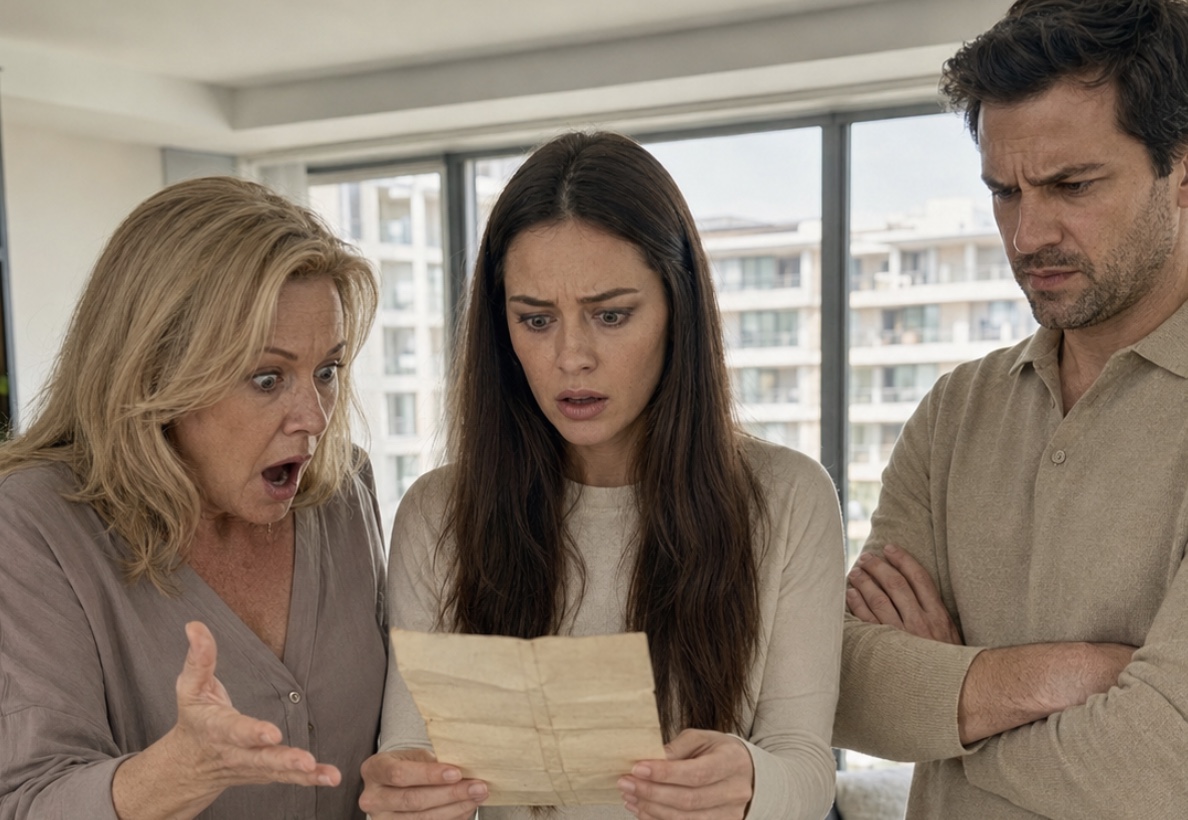
“Lida, don’t make this more difficult than it needs to be,” Raisa Ilyinichna said, opening her notebook on my table. “After the divorce, the apartment will stay with Denis. You can live with your sister until you find another place. My son is registered here, he helped with the renovation, and he has a right to half of it.”
Denis was sitting beside his mother. A folder full of store receipts lay in front of him.
“I’m not asking for anything unreasonable,” he said with deliberate calm. “You can’t erase eleven years of marriage with one decision. I put my time, effort, and money into this apartment.”
“Your money?” I repeated.
“I have proof of everything.” Denis tapped the folder with his finger. “Construction materials, deliveries, kitchen appliances. I kept all the receipts. So we’re going to have to take this seriously.”
Raisa Ilyinichna nodded approvingly.
“Exactly. No scenes, no resentment. Denis stays here, I’ll sell my one-bedroom apartment, and we’ll gradually buy out your share.”
I placed a thick envelope beside the folder.
“Before you sell your apartment, read the date on the first page. Then we can figure out whose money is actually reflected in those receipts.”
Three days earlier, Denis had forgotten his tablet at home. He had been rushing to work, answering a phone call and searching for his keys. The device was left on the kitchen table with a conversation still open on the screen.
I had no intention of reading someone else’s messages.
But my name was written there in large letters.
“Lida is sure the apartment belongs only to her. Don’t argue with her in advance. First tell her you want a divorce and refuse to move out.”
The message had been sent by Raisa Ilyinichna.
Denis had replied:
“I have all the renovation receipts. She won’t remember which card was used. The important thing is to sound confident.”
His mother’s next message read:
“Exactly. If the receipt is in your hands, then the investment looks like yours. She’s so used to paying for everything that she probably won’t even remember the details herself.”
I read the exchange once more. Then I took screenshots, emailed them to myself, and saved additional copies elsewhere.
Farther down, they were discussing Raisa Ilyinichna’s apartment.
Denis wrote:
“When I get my share, we’ll sell your one-bedroom place and use the money to buy out the rest.”
His mother answered:
“First get half of this apartment. We’ll deal with selling mine later.”
Denis asked again, but she never gave him a direct promise.
He seemed not to notice how evasive she was being. What mattered to him was believing that his mother would solve everything once he completed his part of the plan.
Denis came back for the tablet twenty minutes later.
“Did you see it?” he asked from the doorway. There was caution in his voice.
“It’s in the kitchen.”
He picked it up, quickly checked the conversation, then looked at me.
“Did you open my messages?”
“The screen was already on.”
“And what exactly did you see?”
“Enough to know that from now on, I won’t discuss family matters without documents.”
Denis tried to smirk.
“You always turn everything into some kind of audit. Mom is right. It’s impossible to talk to you like a normal person.”
He left with the tablet.
I didn’t stop him.
Until that day, I had believed that our marriage had simply become comfortable for only one of us.
When Denis and I first met, he was renting a room and dreaming of opening an electronics repair shop. He made plans, thanked me for supporting him, and insisted that he would always be responsible for his own life.
Two years later, we got married.
Denis moved into my apartment.
My grandmother had gifted me the two-bedroom apartment before the wedding. She had personally insisted on signing a formal gift agreement.
“Family relationships should be built on trust,” she told me after everything was finalized. “But property should never depend on promises alone.”
I placed the contract in a thick envelope and locked it inside a metal box with my other important papers.
Denis knew exactly where the apartment had come from. During the first few years, it didn’t bother him.
“Does it really matter whose name is on the paperwork?” he used to say. “We’re building a home together.”
At first, that was true.
But Denis’s repair business eventually closed. He changed jobs several times and never stayed anywhere for very long.
My income became the foundation of our household budget. I paid the bills, bought groceries, and saved money for renovations.
Denis contributed irregularly, but he was always good at talking about how everything would soon change.
We renovated the apartment four years ago.
Nothing extravagant. We replaced the flooring, repainted the walls, remodeled the kitchen, and updated the bathroom.
I ordered the materials.
I found the contractors.
Every payment came from my salary account.
Denis helped choose the wall colors, removed the old baseboards, and occasionally drove to pick up extra packages of materials.
At the register, he used my bank card.
He kept the receipts in a separate folder because he liked keeping paperwork organized.
I never imagined that one day he would present those same receipts as evidence that he had financed the renovation.
Raisa Ilyinichna liked to say:
“A man sets the direction. A woman handles everyday life. Everyone has their role.”
By “everyday life,” she meant everything that had to be paid for every month.
Over time, my mother-in-law began coming to our apartment without being invited.
Denis gave her a spare key without asking me.
She rearranged the dishes, inspected the cupboards, and decided which room should be used for what.
My folding easel irritated her more than anything else.
I painted in the evenings.
Not for exhibitions. Not for money.
I simply enjoyed having a few hours to do something where nobody measured my usefulness.
“Denis needs an office,” my mother-in-law declared one day. “He’s developing new projects. Your drawings can wait.”
My husband moved the easel onto the enclosed balcony and placed a large computer desk in the second bedroom.
I never saw any of those new projects.
The easel remained among boxes on the balcony for almost four years.
After reading the messages on the tablet, many separate conversations suddenly formed one clear picture.
I remembered Denis asking where the apartment documents were kept.
I remembered his mother suggesting that we sell the place and buy another one that would be registered “for the family.”
I remembered Denis gradually beginning to claim that his registration and participation in the renovation gave him a right to control my property.
The next morning, I called Oksana Lvovna.
We had gone to school together. She now specialized in family and property disputes.
I explained the situation and sent her screenshots of the messages.
“Bring the gift agreement, your ownership extract, and everything connected to the renovation,” she said. “Pay particular attention to the bank transactions. A receipt proves that something was purchased, but it doesn’t necessarily prove whose money paid for it.”
The metal box was still on the top shelf of the storage closet.
The thick envelope was still inside.
The first page of the contract clearly showed the date: my grandmother had transferred the apartment to me two years before my marriage.
In Oksana Lvovna’s office, I spread the documents across her desk.
She read the agreement, reviewed the ownership records, and asked me to open the transaction history from the renovation period.
“Here’s your card,” she said, pointing to the last digits shown in the statement. “The materials and deliveries were paid with it. If Denis produces receipts, compare the card details. Having a folder of papers doesn’t make him the person who paid.”
“He’s convinced I won’t notice.”
“Then let him demonstrate that confidence in front of witnesses.”
We worked out a clear plan.
I took the original gift agreement to my sister’s home for safekeeping. I ordered a fresh ownership extract, saved the banking records, and prepared copies of the messages.
That same day, I canceled the additional bank card Denis had been using.
It was linked to my account and had originally been intended for household purchases.
That evening, he texted me:
“The card isn’t working. Check the app.”
I replied:
“I canceled it. Pay for your personal purchases from your own account.”
He called immediately.
“Lida, what are you doing? I’m standing in a store and I can’t pay.”
“You have your own bank card.”
“We’ve used shared money for eleven years. You can’t just change everything overnight.”
“I can stop giving you access to my account. Especially after you decided to present my spending as your investment.”
Denis was silent for several seconds.
“You misunderstood the messages.”
“Then you can explain them during our family meeting.”
The following evening, I noticed that the metal box had been moved.
The papers inside were no longer arranged the way I had left them.
Denis had been looking for the contract.
“Didn’t find what you were searching for?” I asked when he walked into the kitchen.
He stopped.
“I wasn’t looking for anything.”
“The box was straight. Now it’s been moved, and the documents are mixed up.”
“I wanted to check some old receipts.”
“Your receipts are in your folder. You wrote that yourself to your mother.”
For the first time, Denis looked at me without his usual confidence.
“Where’s the contract?”
“Somewhere safe.”
“You had no right to hide family documents.”
“The agreement concerns my property. It only became ‘family property’ in your conversations.”
Denis left the kitchen, called his mother, and spoke to her quietly for a long time.
I didn’t need to hear what they were saying.
I knew the meeting was going to happen.
Raisa Ilyinichna arrived two days later.
She brought her notebook.
Denis brought his folder of receipts.
That was how our final family conversation began.
“Lida, don’t make things complicated,” my mother-in-law repeated. “Denis stays here. You can live with your sister. I’ll sell my apartment, and we’ll pay you for your share.”
“All right,” I said. “Denis, show me the documents proving your investment.”
He had clearly expected an argument.
My calm response made him bolder.
Denis opened the folder and spread the receipts across the table.
“Flooring, paint, plumbing fixtures, delivery charges, kitchen appliances. I bought all of it. Some of the receipts have faded, but the important ones are still readable.”
“With what money?”
“Family money. What difference does that make?”
“A minute ago, you called it your money.”
Raisa Ilyinichna interrupted.
“Lida, stop picking at every word. If Denis went to the stores and brought the materials home, then he contributed to the renovation.”
“He did contribute his time. But now he’s demanding half the apartment by claiming he personally paid for the work. So yes, it matters whose money was used.”
I picked up the first receipt.
“The last digits of the bank card are printed here. Denis, read them out loud.”
He looked at the line and read the four digits.
I opened the bank statement.
“That’s my salary card. Here is the transaction from the exact same date and time, for the exact same purchase.”
I placed a second receipt beside it.
“Same card number here. And here. And on the delivery receipt. Even the kitchen appliances were paid for from my account.”
Denis began rapidly flipping through the papers.
“But I handled the purchases. I spent my time on all of this.”
“Your time doesn’t turn my money into yours.”
Raisa Ilyinichna raised her voice.
“You’re humiliating him over a few receipts on purpose!”
“No. I’m showing you that your own evidence proves the opposite of what you’re claiming.”
I opened the saved screenshots and handed the phone to Denis.
On the screen was his message:
“I have all the renovation receipts. She won’t remember which card was used. The important thing is to sound confident.”
He pushed the phone away.
“You’re taking that out of context.”
“Then explain the full context.”
Denis said nothing.
I removed a copy of the gift agreement and the new ownership extract from the envelope.
“The apartment was gifted to me two years before we got married. I am the sole owner. An ordinary renovation did not magically create a fifty-percent share for Denis. A lawyer has reviewed everything.”
Raisa Ilyinichna skimmed the first page.
“That old piece of paper changes nothing. You lived together here for years.”
“It changes quite a lot. That’s why you were looking for it in the metal box.”
Denis turned toward his mother.
“You told me the gift agreement didn’t matter anymore.”
“I was speaking based on general practice,” she replied irritably. “Nobody can know every legal detail.”
“But you already decided where I was supposed to move,” I said. “And you promised to sell your apartment.”
Raisa Ilyinichna straightened her back.
“I did promise, and I would sell it if necessary.”
“It won’t be necessary.”
Denis looked at his mother.
“You’re still going to sell your apartment, right? We can buy another place.”
Raisa Ilyinichna lowered her eyes toward the notebook.
“Why would I sell my only home if you’re not getting half of this apartment? You can stay with me until you sort your situation out.”
“But you said we’d buy out her share together.”
“I said I would help if your plan worked. Circumstances have changed.”
Denis pushed the folder of receipts away.
“So I was supposed to fight with my wife, refuse to leave, demand half the apartment, and you weren’t risking anything at all?”
“Don’t turn this onto me. We’re talking about your future.”
“No, Mom. We’re talking about the fact that you promised me support you never intended to provide.”
I stayed silent.
For the first time, they were discussing their plan with each other instead of behind my back.
Raisa Ilyinichna snapped her notebook shut.
“Lida did this deliberately. She wanted us to turn against each other.”
“I didn’t write your messages,” I said. “And I didn’t collect someone else’s receipts so I could claim their spending as my own.”
Denis ran his palm over the folder.
“Have you already filed for divorce?”
“The documents are prepared. After this meeting, my decision is final.”
“You could have talked to me without involving a lawyer.”
“You could have avoided planning my eviction without involving me.”
“I was never going to leave you homeless.”
“In your plan, I was supposed to live with my sister while the two of you decided what happened to my apartment.”
Raisa Ilyinichna stood up.
“Denis, don’t agree to leave. You’re registered here, so stay. Let her handle everything officially.”
I looked at my husband.
“You can turn this separation into a long legal battle if you want. But then the messages, the bank statements, and everything said here today will also become part of that dispute. Or you can pack your personal belongings and we can resolve this without unnecessary drama.”
Denis stared at the receipts for a long time.
An hour earlier, that folder had looked like powerful evidence to him.
Now every receipt was a reminder that I had paid for the renovation.
“Mom, wait for me in the hallway,” he said.
“You’re going to give in to her?”
“I’m going to pack my things.”
Raisa Ilyinichna tried to object, but Denis repeated himself more firmly.
It took him almost an hour to pack his clothes and electronics.
I didn’t rush him.
When the bags were ready, Denis noticed my easel on the balcony.
“I really did think this apartment was ours,” he said. “We spent most of our marriage living here.”
“It was our home until you decided to gain rights to it through deception.”
“I did a lot for this family.”
“You did. But that doesn’t give you the right to claim my expenses as your own or discuss throwing me out of my home.”
He placed the spare key on the cabinet.
“Do you think you’ll ever forgive me?”
“Right now, it’s more important for me to start respecting myself again.”
Denis moved in with his mother.
From that point on, we communicated through Oksana Lvovna.
Denis initially tried to claim compensation for the renovation, but his own receipts matched the transactions from my card.
He eventually withdrew the claim.
Raisa Ilyinichna never sold her apartment.
Two weeks later, Denis called me in the evening.
“Mom says I need to pay half of her household expenses,” he began without even saying hello. “And now she wants me to find somewhere else to live. Apparently, she has plans of her own.”
“That’s between the two of you.”
“Could I come back for a few days? Just until I find a room.”
“No, Denis. You already chose who you wanted to discuss your future with.”
“I made a mistake.”
“Yes, you did. But I’m not going to pay for fixing that mistake.”
He rented a room near his workplace.
Some time later, our divorce was finalized, and Denis voluntarily removed his registration from my apartment.
Raisa Ilyinichna sent me a long message accusing me of forcing her son to start his life over from nothing.
I replied with a single sentence:
“His new beginning does not have to happen in my apartment.”
A few weeks later, I cleared the second bedroom of the large computer desk.
A young family from a neighboring building came and took the furniture.
My folding easel was still on the balcony.
I wiped off the dust, tightened the screws, and placed it against the wall.
On the first sheet of paper, I painted a red front door and a woman’s hand holding a key.
The old gift agreement remained safely stored at my sister’s home among the important documents.
Denis took his receipts with him.
And the key stayed with me.
So did the right to decide who was allowed to enter my home.