If someone had told me five years ago that I would call the police on my mother-in-law’s sixtieth birthday, I would have laughed in their face. But life has a strange way of putting everything in its proper place.
That evening, when Tamara Vasilyevna summoned us to her living room, I had no idea that our conversation would become the final straw.
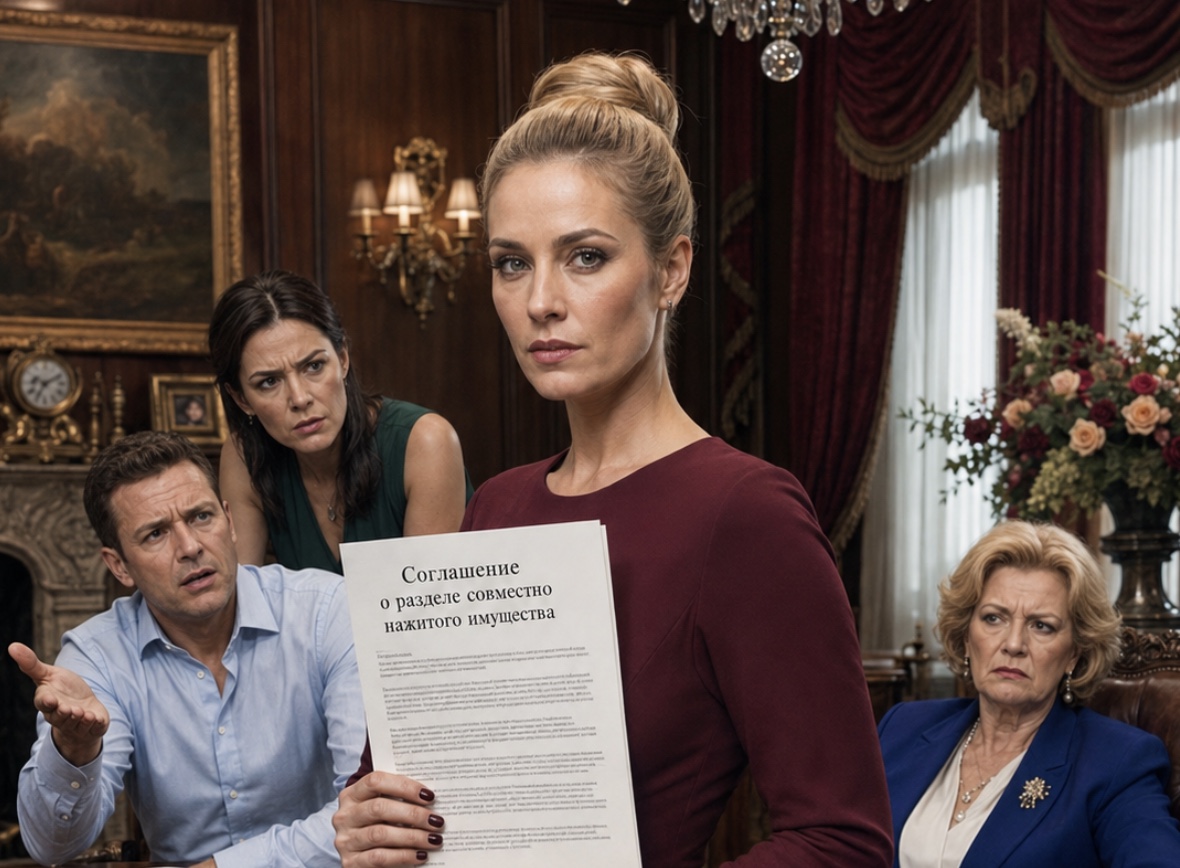
My mother-in-law sat in her armchair like a queen on a throne, lazily flipping through a hairstyle magazine. Igor, my husband, had settled beside her, making it painfully obvious that he had already chosen his side. They placed a chair opposite them for me, as though I had been called in for questioning.
“Olechka, you’re such a capable hostess,” Tamara Vasilyevna sang without looking up from the page. “Naturally, you’ll take care of the guests. The menu, the venue, the music—you can handle all of it. The girls and I will only need to choose our dresses.”
I looked at Igor.
He immediately lowered his eyes.
“Whose birthday is it?” I asked quietly.
“Mine, of course! Turning sixty is a major occasion. We’ve decided to celebrate at your house. You have such a large property, a veranda, and a beautiful garden. The guests will be impressed.”
“No, Tamara Vasilyevna. It’s your birthday, and it has nothing to do with me. Organize it yourself however you like.”
The room fell completely silent.
My mother-in-law dropped the magazine. Red blotches spread across her face. Igor jumped to his feet.
“Olya, what’s wrong with you? Mom has dreamed about this celebration for years!”
“Then she can keep dreaming,” I said, standing up. “She will not set foot in my house. Not for her birthday and not on any other day.”
I walked into the hallway and pulled on my coat. Outraged voices followed me, but I no longer listened. Once I was outside, I drew a deep breath and felt for the folded sheet of paper in my pocket.
It was a copy of the official order reopening a criminal fraud investigation.
My mother-in-law was one of the suspects.
I squeezed the paper so hard that my fingernails dug into my palm.
Did I have the right to speak that way to a woman who had once tried to leave me without a roof over my head?
Yes.
I had every right.
Because I remembered everything.
I got into my car and started the engine, but I did not drive away. The memories came rushing back before I could stop them.
Five years earlier, my grandmother had died. She left me her house in the suburbs—a warm, wooden home surrounded by an old apple orchard. Igor and I had only recently married, and the house felt like the beginning of a long and happy life together.
Tamara Vasilyevna had other plans.
Barely a month after the funeral, she announced:
“The house should be registered in the family’s name. Olechka is still young. Who knows what might happen? Igor should be listed as the owner.”
I refused.
So my mother-in-law found another solution. She contacted an old acquaintance of hers, a notary, and together they arranged an elaborate scheme. They forged a power of attorney in my name. According to the fraudulent document, the house was transferred first to a third party and then to Tamara Vasilyevna.
When I discovered the truth, it felt as though the ground had vanished beneath my feet.
At the property registration office, an employee showed me the official record.
Owner: Tamara Vasilyevna Berezhnaya.
My mother-in-law.
I broke down crying right there in the hallway.
And Igor?
He had looked at me and said, “Olya, she’s my mother. She didn’t mean any harm. She only wanted to keep the house in the family. Why involve the police?”
I went to the police anyway.
The court proceedings dragged on for two years. Eventually, the house was returned to me. A handwriting expert confirmed that my signature had been forged, and the entire chain of transactions was declared invalid.
But the criminal case under Article 159 of the Criminal Code—fraud involving property of especially high value—seemed to freeze in place.
Whenever I asked for an update, the investigator merely spread his hands.
“We are still establishing the circumstances.”
Everything changed only recently, when I located a witness: the former assistant of the notary involved in the scheme. She was prepared to confirm that the forgery had been intentional.
The investigation was reopened.
The statute of limitations had not expired. The crime was classified as serious, and only five years had passed out of the possible ten.
This time, Tamara Vasilyevna faced a genuine risk of punishment.
Had I forgiven her?
No.
I had simply been waiting.
Her birthday had nothing to do with it.
The next day, all hell broke loose.
The first person to call was Igor’s sister, Alla.
“Have you completely lost your conscience? Mom nearly had a heart attack! How can anyone be so selfish?”
“Alla, your mother is a thief,” I replied calmly. “And you know it perfectly well.”
“Why do you keep bringing that up? It happened years ago! You got the house back, didn’t you? Why dig up old grievances?”
“Grievances? We are talking about a criminal offense. I suggest you stay out of it.”
She hung up.
An hour later, Tamara Vasilyevna posted a message in the family group chat:
“Olga has disgraced our entire family. She threw me, an elderly woman, out of a house that rightfully belongs to my son. Everyone should know what kind of woman Igor has been living with.”
The message was followed by a row of crying emojis.
I quietly deleted the chat.
But that was only the beginning.
Igor’s uncle, Arkady Petrovich, came to my workplace. A security guard called me from the front desk.
“There’s a relative here asking for you. He’s shouting that it’s a personal matter.”
I went down to the lobby.
A heavyset, breathless man pointed a thick finger at me.
“Give the keys back! Otherwise, we’ll come over ourselves and settle this! Stop humiliating an old woman!”
“Go ahead and try,” I said before turning to the guard. “Call the police if he refuses to leave.”
That evening, Igor came home. He paced around the kitchen with both hands pressed against his temples.
“Olya, try putting yourself in my position! She is my mother. She’s turning sixty. She’s getting old, and she deserves a celebration. What would one evening cost you?”
“You should try putting yourself in my position,” I replied, leaning against the table. “Your mother threw me and our baby into the street. Our daughter was still nursing, Igor. We had to live in a rented room while your mother celebrated moving into my house. Have you forgotten?”
“But you got the house back!”
“Because I fought for it. She never apologized, and she was never punished. So no, Igor. There will be no birthday celebration here.”
He fell silent.
Then he said quietly, “I’m asking you to do this for me. Just one evening. I’ll supervise everything myself.”
“Absolutely not.”
That night, we slept in separate rooms.
The following morning, Igor’s cousin Marina rang the doorbell. We had never been particularly close, but she asked if she could come in for tea.
“Olya, I didn’t come to persuade you,” she said, twisting a napkin between her fingers. “I only wanted to warn you. Aunt Tamara has found some lawyer. She says that after the birthday she’ll announce that the house is now shared marital property because family money was used for the renovations. Igor doesn’t seem to be against the idea. Please be careful.”
Blood pounded in my ears.
Inseparable improvements.
That was the legal term they intended to use.
I thanked Marina, and the moment the door closed behind her, I began taking precautions.
First, I called the local police officer who already knew about my situation. I reminded him about the criminal investigation and explained that Tamara Vasilyevna’s relatives might attempt some kind of provocation. He promised to keep an eye on the situation.
Next, I changed the locks.
Igor still had keys, of course, but I decided that if necessary, I would install an additional bolt that could only be opened from inside.
My concern proved justified.
Two days later, I returned from the store and discovered two vans parked outside my gate. Both carried the logo of a mobile catering company.
Strangers were already moving around my property, setting up tables and carrying boxes filled with dishes.
Tamara Vasilyevna stood near the gate in a new dress, holding a folder and issuing orders. Beside her were her brother Arkady and her daughter Alla.
I switched off the engine and stepped out of the car.
“What is going on here? Who let you onto my property?”
“Olechka, don’t make a scene,” my mother-in-law said, adjusting her hair. “We decided not to wait. The birthday is tomorrow, so we’re starting the preparations today. Igor gave us the keys. Try not to get in the way.”
“You entered someone else’s home without the owner’s permission. I’m calling the police.”
I dialed the emergency number while looking directly into her eyes.
Tamara Vasilyevna went pale, but she tried not to show her fear.
“Call them! I have nothing to be afraid of. My son lives here.”
“The owner lives here,” I replied, placing the call on speaker so everyone could hear. “The house belongs to me under my grandmother’s will and a final court judgment.”
A police patrol soon arrived. Two broad-shouldered officers stepped out of the vehicle.
I explained the situation and showed them my ownership documents.
The senior officer turned toward Tamara Vasilyevna.
“Ms. Berezhnaya, you are required to leave the property. Your entry was unauthorized. We will have to document the incident.”
“How dare you?” Alla shrieked. “This is outrageous!”
“Then file a complaint,” I said calmly. “Unauthorized exercise of alleged rights is covered by Article 19.1 of the Administrative Code.”
The officers took everyone’s information and ordered the catering workers to pack up their equipment.
My mother-in-law was trembling with rage.
Arkady leaned toward her and whispered, “Let’s go. Come on, it’ll only get worse.”
They climbed into their car and drove away, leaving me standing alone in the middle of the yard among scattered chairs and half-unpacked tables.
I called a locksmith. That same evening, he installed an additional lock that could only be opened from the inside.
Then I sent Igor a message:
“You handed over the keys without telling me. This marriage is over.”
He arrived late that night, furious and carrying a suitcase.
“You have crossed every possible line, Olya. You called my mother a thief in front of the whole neighborhood! You brought the police here! Do you understand that after this, I can’t live with you anymore?”
“You stopped living with me a long time ago,” I said from the bedroom doorway. “You live for your mother’s interests.”
“You know what? I’m leaving. But I’m not giving up this house so easily. We’ll see who it really belongs to.”
He slammed the door behind him.
Later, while sorting through the documents in his study, I found something that made my hands go cold.
Hidden in a desk drawer beneath a folder of contracts was a written opinion from a private lawyer.
“Analysis of possible division of marital property. It may be possible to recognize the house as jointly acquired property to the extent of the value of inseparable improvements financed from the shared household budget.”
Several pages of calculations and references to previous court cases followed.
Igor had been preparing for war.
So this was the betrayal.
He had known what his mother was planning and had remained silent. Perhaps he had even helped her arrange the consultation.
I carefully photographed every page and then called the investigator.
“Dmitry Sergeyevich, this is Olga Gromova. I am ready to participate in a formal confrontation and give additional testimony whenever necessary. I have discovered new circumstances that may help establish intent.”
“Good, Olga Viktorovna. We were already planning further investigative action. Your mother-in-law has been ignoring her summons and hiding from us. However, we have information that she will attend a birthday celebration tomorrow at the Golden Rook restaurant. We can arrange for her to be brought in.”
I smiled.
Fate had organized everything more effectively than I ever could.
A birthday arrest in a restaurant would be even more memorable.
The following day, I did not go to the Golden Rook. However, I knew one of the waiters there, Pasha, whom I had once helped find work. I called him and asked him to stay in contact and tell me what was happening.
I sat in my car nearby with a cup of coffee and waited.
At first, the evening unfolded like an ordinary celebration.
Pasha sent me a message:
“The guests have arrived. Around forty people. The birthday woman is wearing a white suit and glowing like a star. Igor is beside her making a toast.”
I could picture it perfectly.
My mother-in-law sitting on her imaginary throne, surrounded by smiling relatives, while none of them knew what was about to happen.
At 7:45 p.m., Pasha texted again.
“Four people just entered the hall. Two are in uniform, and one is wearing civilian clothes and showing identification. They told everyone to remain in their seats.”
A minute later, he called me and whispered into the phone.
“Olya, they’ve approached Tamara Vasilyevna. They’re telling her, ‘Under the authority of a court order, you are being taken in for compulsory attendance at investigative proceedings in a criminal case.’ The whole room has exploded! Alla is screaming that it’s a setup. Igor tried to block them, but they moved him aside. The guests are in shock, and the music has stopped. Tamara Vasilyevna has gone completely white. They’re escorting her out by the arms. This is unbelievable!”
“Thank you, Pasha. That’s all I needed to know.”
I took a sip of coffee and looked at the time.
On the very day of her sixtieth birthday, at the height of her triumph, Tamara Vasilyevna was taken away for questioning.
Straight from a restaurant where she had expected congratulations, applause, and admiration.
“It’s your birthday. It has nothing to do with me,” I repeated silently.
A strange sense of relief washed over me.
It was not gloating.
It was freedom.
Justice had finally begun moving again.
An hour later, Igor appeared at my house. He pounded on the door so violently that the windows rattled.
“Olya, open this door! You have no idea what you’ve done! You’ve destroyed everything! They took Mom to the police station! You humiliated her in front of everyone!”
I opened the door.
In my hands was a folder containing a copy of his lawyer’s report.
Without saying a word, I handed him the first page.
He stopped shouting.
As he read, all the color drained from his face.
“Where did you get this?”
“From your desk. You knew everything. You knew what she had done, and you continued protecting her. Worse than that—you were preparing to take my property too.”
“Olya, I swear I didn’t know about those papers! I mean, I knew, but…it was only a consultation!”
“You made your choice, Igor. This door is closed to you. I have filed for divorce. I also intend to recover all damages from your mother and her accomplice through the criminal proceedings. The civil claim has already been prepared.”
“But…what about us?” he asked, suddenly confused.
“There is no us.”
I removed my wedding ring and placed it on the small cabinet beside the door.
Igor stood there with his shoulders slumped. Then he quietly turned around and disappeared into the darkness.
I locked the door, leaned my back against it, and cried for the first time in a very long while.
But those were not tears of grief.
They were tears of release.
Six months passed.
The court found Tamara Vasilyevna guilty under Part Four of Article 159—fraud committed by an organized group and involving property of especially high value.
She received a three-year suspended sentence and was ordered to reimburse the financial damages and court costs.
The notary lost his license and received an actual prison sentence.
My marriage to Igor was officially dissolved, and the house remained entirely mine.
He tried to reconcile. He sent messages and called repeatedly, but I never answered.
One quiet afternoon, I sat on the veranda with a cup of tea and watched the apples ripening in the garden.
Life, I thought, sometimes gives us gifts in the strangest forms.
My mother-in-law’s birthday became the day I finally regained my freedom.
I had not taken revenge.
I had simply put my life in order and thrown out the garbage.
Her celebration truly had nothing to do with me.
My phone rang.
It was Marina.
“Hi, Olya. Listen, the whole family is whispering about you. Tamara calls you the curse of the family, while everyone else calls you a hero. How are you doing?”
“I’m fine, Marina. I’m living my life.”
“That’s the way it should be. You owe me an apple pie when the fruit is ready.”
I smiled and turned the page of my book.
Someone else’s birthday became the day I learned to believe in justice again.
And the day I understood that your home must be defended—even when an entire family is standing against you.