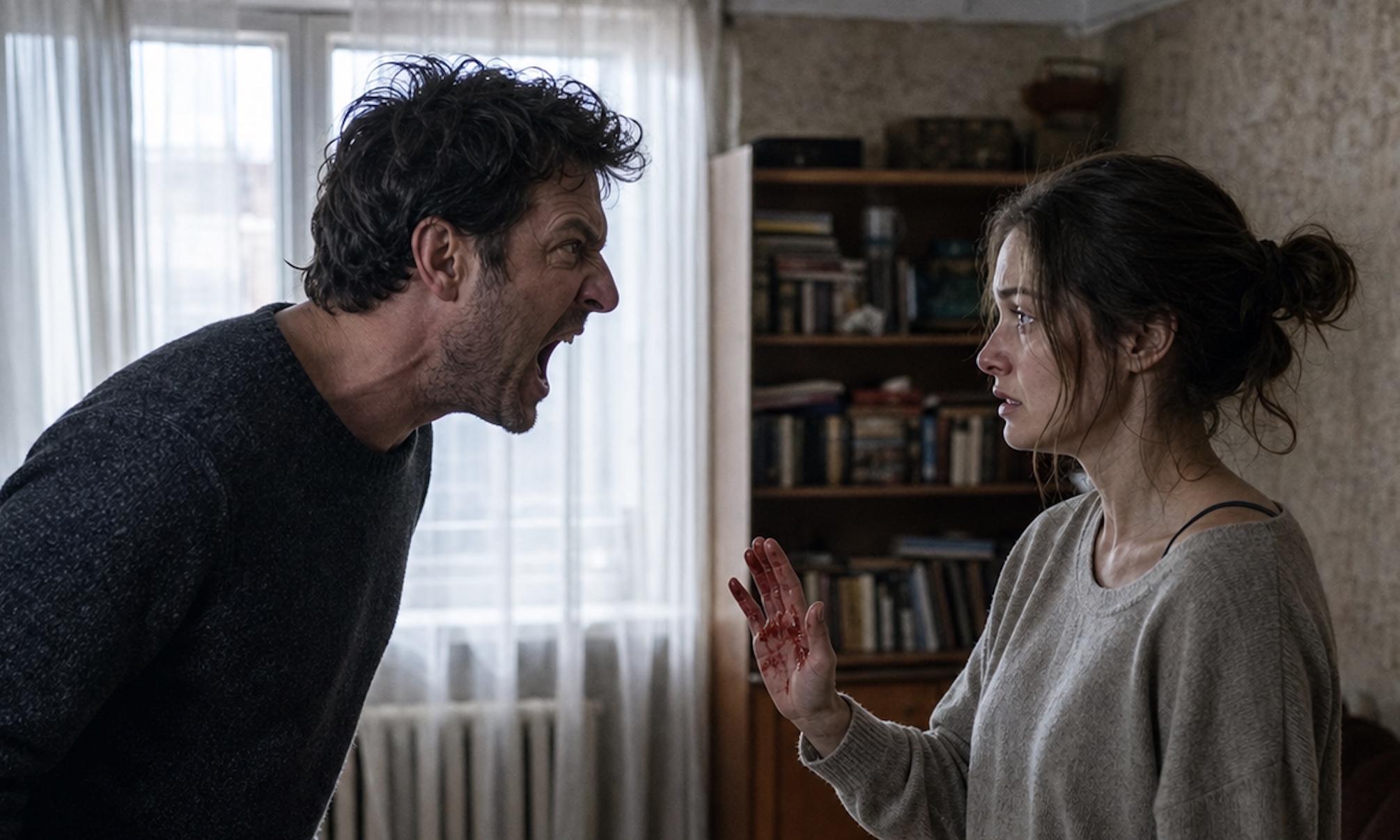
“You are no longer my wife! I’m divorcing you! I’ve had enough of your nonsense!”
Oleg shouted so loudly that the glass doors of the old sideboard — the one I had inherited from my great-grandmother — rattled. His entire family went silent in the living room. My mother-in-law, Antonina Petrovna, froze with a small glass of liqueur halfway to her mouth, but her eyes were shining with an eager, almost predatory excitement. His sister, Veronika, rolled her eyes toward the ceiling as if to say, How much longer are we supposed to put up with this circus?
And it had all started over nothing.
I had been washing dishes after their family dinner, which had been arranged to celebrate yet another one of Oleg’s “promotions.” Of course, he was lying about the promotion. The project idea he had been praised for was mine — something I had worked out late at night with a calculator while he slept. But in front of his mother, he always liked to show off. I was drying my hands when, through the hum of voices, I heard him talking about how irreplaceable he was.
I entered the room carrying a tray with teacups. Oleg noticed that my favorite cup — the one with the blue cornflower and the thin golden rim — had a tiny chip on the bottom. We had bought that cup together during our first year of marriage, back when we barely had enough money for bus fare and cheap ice cream in the park. He had chosen it himself at a flea market from an old woman’s stall.
“Still dragging around your junk?” he snapped, grabbing the cup from the table. “You’re embarrassing me in front of people!”
He hurled it to the floor.
The porcelain shattered into white fragments across the oak parquet. I bent down to pick up the pieces. And then Oleg, fueled by cognac and his mother’s silent approval, yanked me by the shoulder. I lost my balance while crouching and fell with my knee straight into the pile of sharp shards. Then he shoved me toward the wall, as if I were some irritating cat he wanted out of his way.
“I’m filing for divorce tomorrow!” he spat, looking down at me. “I’m sick of you! You walking cloud of misery! Leave the keys and get out.”
I slowly stood up. A tiny shard had lodged itself in my left palm, and blood was running down my fingers. My head was buzzing. But strangely, instead of the pain I expected, an icy emptiness spread through my chest. It felt like carrying a heavy grocery bag for too long, then finally setting it down on the pavement and not quite believing your hands were free.
Without a word, I walked into the hallway. I took my coat from the hook and grabbed my bag. No one came after me. From the living room, I only heard my mother-in-law let out a loud, satisfied breath, followed by the clinking of glasses. It seemed they had continued drinking — perhaps now to celebrate their son’s freedom.
On the stairwell landing, I leaned against the cold wall and pulled out a crumpled napkin to press against my wounded palm. Then I called a taxi and gave the driver the address of the nearest emergency clinic. The cuts were deep, and I did not want to end up with an infection later.
The clinic was empty and drowsy. A young doctor in glasses, yawning tiredly, removed the shard from my hand, rinsed the wound with peroxide, and bandaged it. When he filled out my medical record and asked what had happened, I answered briefly:
“A household injury.”
He looked up at me, remained silent for a moment, and did not ask anything else. He only handed me the stamped medical note and said quietly:
“Clean it with antiseptic at home if it starts throbbing.”
With the certificate in my pocket and my hand bandaged, I went to a hotel. The very same hotel where we had once celebrated our wedding.
The irony was almost perfect.
The room was small and smelled of dampness and someone else’s laundry detergent. I sat on the bed and stared at one spot on the wall. Then I picked up my phone.
I did not call my friends. Over ten years of marriage, Oleg had pushed them all out of my life.
Instead, I called a lawyer — an old acquaintance named Viktor, someone I had known since the beginning of my career in consulting.
“Listen, Vitya,” I said hoarsely. “Do you remember how my late father-in-law — may he rest in peace — transferred everything to my name when they were facing that hostile takeover situation?”
There was a pause on the other end of the line. Then Viktor gave a short chuckle, and I heard papers rustling, as if he was recalling the case from ten years ago.
“Lena,” he said carefully, “do you actually understand what you’re asking? The apartment in the city center, the country house, the three cars, the business… Oleg is nobody on paper. He’s registered there, yes. But the property is yours. Personal property. That’s how it was transferred back then to protect it from the raiders, and that’s how it remains.”
I ended the call and spent a long time staring into the dark window.
Oleg was probably sleeping in our bedroom at that very moment, pleased with himself.
But in the morning, someone began pounding on the hotel room door.
I threw on a robe and opened it.
Oleg stood on the threshold. His hair was disheveled, his eyes were red, and his shirt was wrinkled — he had probably not even taken it off during the night. Behind him hovered Antonina Petrovna, wearing the expression of a woman who had just discovered that all her savings had been stolen.
“Lena…” His voice was hoarse, and he nervously licked his lips. “Lenochka… I got carried away yesterday. I lost my mind. Forgive this fool.”
“And?” I leaned my shoulder against the doorframe, in no hurry to invite them in.
“I, uh…” He hesitated, shifting from one foot to the other. “I called a lawyer this morning. About the divorce, the property… Lena, why did he tell me I’m basically homeless on paper? That the apartment isn’t mine? And neither is the car? And even the business share — it’s all in your name?”
I looked at his pale face, at the twitching muscle near his eye, and felt a heavy, calm satisfaction spreading inside me.
He was not afraid of losing me.
He was afraid of being left without a roof over his head.
“Because your father was smarter than you, Oleg,” I said evenly. “Once upon a time, he trusted me more than he trusted his own son.”
Oleg dropped to his knees right there in the dirty hotel corridor. He grabbed the hem of my robe.
“I’ll fix everything! We’ll start over! Forgive me, do you hear me? Don’t ruin me!”
My mother-in-law stood silently behind him. Only her lips trembled, and her hands kept twisting the strap of her expensive handbag.
“Get up,” I said tiredly. “It’s disgusting to look at you.”
He rose, staring hopefully into my eyes.
I stepped back into the room, took the emergency clinic certificate from the little table, folded it neatly, and placed it into the pocket of my robe.
“I’ll pack your things today, Oleg,” I said, looking past him into the dim hotel corridor. “I’ll tell you when to pick them up. You will voluntarily remove your registration from the apartment. Peacefully. Don’t force me to show this certificate in court or call witnesses to yesterday’s little performance. Relatives are funny that way — during questioning, they suddenly remember very well who smashed the cup and who shoved people around.”
He opened and closed his mouth, unable to force out a single word.
Antonina Petrovna let out a strangled squeak and began frantically searching her handbag for heart medicine.
I closed the door.
The lock clicked.
The room became quiet again, and all I could hear was the sound of tires hissing over the wet asphalt outside.
That evening, I returned to my apartment.
Oleg moved out quickly and without a scandal. His lawyer must have explained everything to him very clearly. I packed his belongings into an old checkered suitcase — the very same suitcase he had brought with him when he first came to me years ago — and left it outside the door.
Then I went into the kitchen and took my house robe down from the hook. It was old, with a hole under the arm. I turned it over in my hands and thought that I did not have to wear things like this anymore.
I could buy a new one.
Something warm, soft, and comfortable.
Something without another person’s memories woven into every thread.
I folded the robe and pushed it into a garbage bag.
There was no way back.
The kitchen was quiet. I made myself tea in a new white mug — plain and simple. Then I sat down on the stool everyone had always called “uncomfortable,” the one that had stood forgotten in the corner.
It turned out that from that stool, I had a perfect view of the bare branches of the old poplar tree swaying outside the window while the first snow slowly drifted through the air.
And no one was shouting that the tea had gone cold.