“I don’t get it, Asya — where’s the hot food? Why is there only salad on the table? Where’s the roast duck with apples? Where are the lamb medallions with asparagus in sweet-and-sour sauce? I promised my friends we’d have the time of our lives at my daughter-in-law’s place, and this is all there is?”
Tamara Gennadyevna’s voice rang through the cozy dining room of the little restaurant Asya had opened just two weeks earlier.
Her mother-in-law stood in the doorway without even taking off her mink coat, while three faithful friends hovered behind her. Before that, Tamara Gennadyevna used to make Asya’s life miserable at home, showing up without warning.
“You’re on maternity leave. What else do you have to do?” she would say, settling herself at the table.
At first, Asya tried to explain that she was exhausted from caring for the baby. Little Dasha had been born fussy and demanding.
But Tamara Gennadyevna never cared about such explanations.
“Oh, come on,” she would wave it off. “As if I never gave birth or raised a child. I did it all. I kept up with the house, welcomed my mother-in-law properly, made an effort. And as you can see, I survived. So hurry up. The girls and I are hungry. Show us that they didn’t bring you into this family for nothing.”
Asya would sigh and start cooking for the hungry “girls,” women who were much closer to retirement than to student life.
Usually, her mother-in-law and her friends left shortly before Nikita came home from work, leaving Asya barely enough time to wash the dishes they had used.
“Why do you look so gloomy?” her husband would ask, sitting down for dinner.
“I’m tired. Your mother came again. With her friends.”
“That’s nice of her,” Nikita would say with genuine delight. “At least you weren’t bored.”
One day, Asya finally snapped and said that she would much rather have been bored than wait on perfectly healthy middle-aged women.
“My mother comes to you with an open heart, and this is how you respond?” Nikita frowned. “Sometimes I think Mom is right. You really are ungrateful.”
“Nikita, I am grateful. I’m just exhausted with the baby, and then they show up.”
“But my mother has every right to see how her only granddaughter is growing up.”
“Then let her come alone,” Asya shot back, throwing a dish towel onto the table.
That night, Nikita and Asya slept in separate rooms. Asya stayed in the nursery, curled up in an armchair.
Eventually Dasha got older, and it was time for Asya to go back to work. Then, unexpectedly, her former classmate invited her to become a business partner — she was opening a restaurant.
“You’re a great economist,” Lera said.
“And you’re no slouch yourself,” Asya laughed, hinting at her friend’s honors degree.
“But you’re a goddess in the kitchen. You cook so well people could lick their fingers clean. You’ll help supervise the chefs.”
Around that time, Asya had inherited money from her grandmother. That was what she invested in the restaurant.
“Honestly, it’s better to work for myself than go back to some office,” she decided.
The two women found a space, renovated it, bought equipment, hired a top chef away from a nearby restaurant, and created a unique menu. The restaurant had opened two weeks earlier. During all that time, Tamara Gennadyevna had been completely silent. Then today she called and asked if she could come by for a business lunch.
“Tamara Petrovna, you asked for a business lunch. You could have warned me you weren’t coming alone.”
“Why should a husband’s mother have to call ahead? I came to see my daughter-in-law,” her mother-in-law said, shamelessly nudging Asya aside, tossing her fur coat into the hands of the coat attendant who rushed over, and seating herself at a table.
Her friends — Zina, Lada, and Irma — nodded in approval and sat down as well. Zina brushed an invisible speck of dust from the tablecloth with visible disgust.
“All right,” Tamara Gennadyevna said with a regal flick of her hand. “Since you weren’t prepared, we’ll wait. But tell the chef to hurry. We’ll have salmon aspic, lamb ribs with baby potatoes, a meat platter, a cheese platter, and one Kamchatka crab each. We’ll order dessert later,” she said, snapping the menu shut.
Asya went pale and, on unsteady legs, made her way to the kitchen.
“My mother-in-law has decided to splurge like there’s no tomorrow,” flashed through her mind. “And that’s not even including dessert.”
Slowly, she read the order out to the chef.
“Why have I put up with her for five whole years?” Asya whispered, heading toward her office.
She sat down in silence at her desk and dropped her head into her hands. There was no point calling Nikita. He would just say again that she simply didn’t love his mother.
“This can’t go on,” Asya suddenly said, springing to her feet and slapping her palm on the desk. “Enough. Whatever happens, happens.”
She strode back into the kitchen, but instead of panicking over her mother-in-law’s demands, she turned sharply and called over the maître d’, a tall, impeccably dressed man named Artur, whom she and Lera had hired for his flawless style and steel nerves.
“Artur,” Asya said quietly but firmly, pointing at the table where her mother-in-law and her friends sat. “I want first-class service. Full VIP treatment: the best dishes, compliments from the chef, every course served like royalty. And the bill at the end — full price, no discounts. Not a single ruble off. Understood?”
Artur lifted an eyebrow in surprise, then nodded.
“As you wish, Asya Vladimirovna. Consider it done. With flair,” he said, dipping his head slightly and clicking his heels.
He returned to the dining room, and the performance began. The moment Tamara Gennadyevna saw three waiters in spotless white gloves suddenly bustling around her, she straightened her shoulders and bloomed with satisfaction.
“Now this is what I’m talking about!” she announced loudly, adjusting the mink coat that had been respectfully draped back around her shoulders. “At last my daughter-in-law has learned to respect her elders. Girls, just look how well I’m taken care of!”
Zina sniffed, Lada giggled, and Irma was already reaching for the complimentary glass.
“You there, young man!” Tamara barked at a waiter. “The sparkling wine is warm! Bring another bottle, and quickly! And I want fresh napkins — these ones are already wrinkled!”
The waiter bowed.
“At once, madam.”
Her friends nodded approvingly, and Tamara Gennadyevna, drunk on attention, continued:
“You see, Zinaida? I told you, the key is to put your daughter-in-law in her place. Now she understands who runs the house. Or rather, the restaurant.”
They finished the main courses, loudly discussing how Asya had finally come to her senses. Then Tamara Gennadyevna opened the menu again.
“Dessert! We want the most expensive one. This one — ‘Triumph of the Empress.’ Chocolate mousse with a truffle base, a layer of edible gold leaf, raspberry sorbet, and fresh vanilla. Two portions each. And coffee.”
Artur calmly wrote it down. The dessert arrived on silver trays with sparklers and personalized plaques that read: “For VIP guests from the chef.”
Tamara Gennadyevna nearly burst with pride.
“Girls, now this is a welcome! Forget homemade pies — this is how a mother-in-law should be treated.”
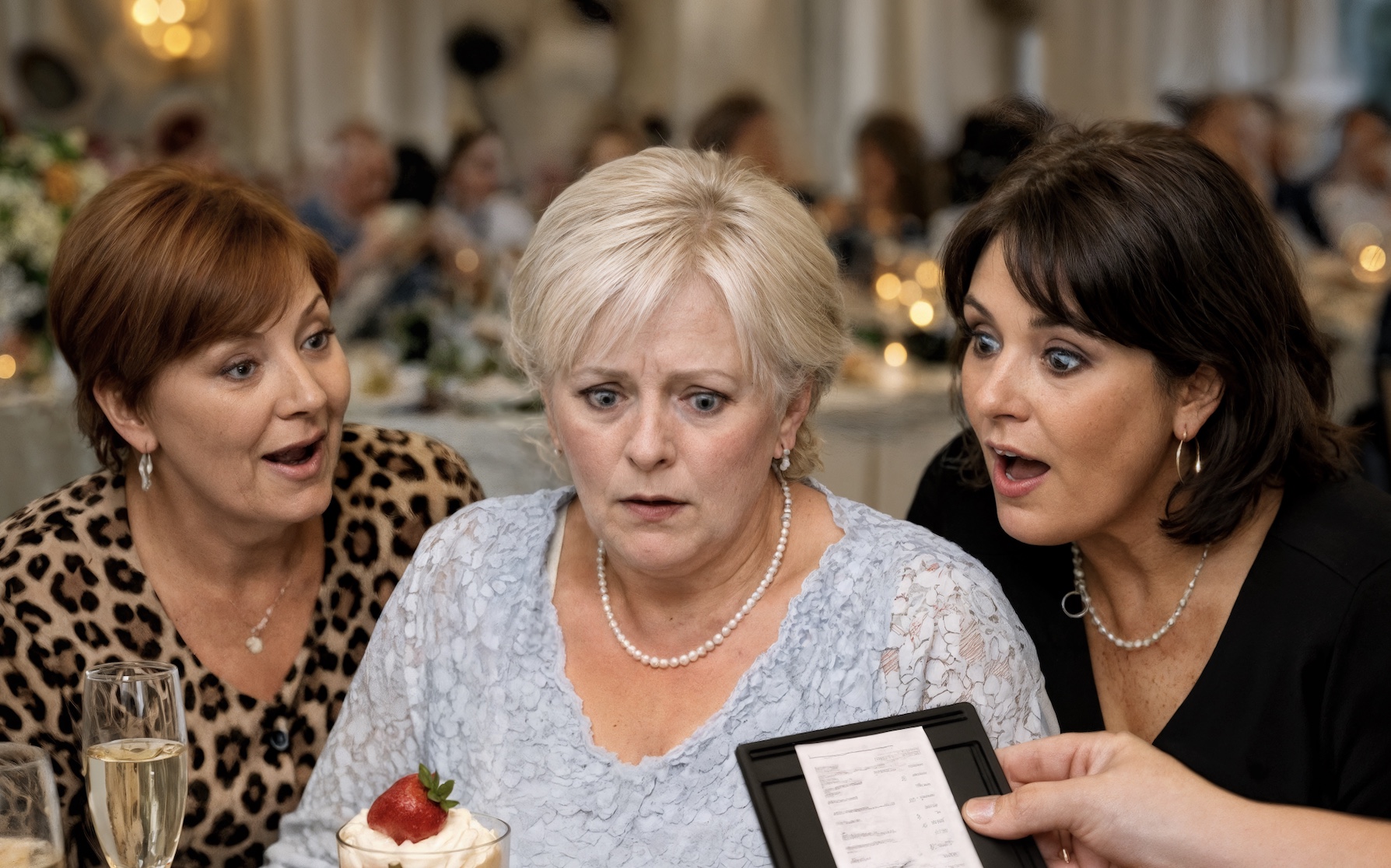
When the guests had finally finished dinner, Artur brought over the bill — a neat leather folder with a total of 187,000 rubles.
At first Tamara Gennadyevna smiled. Then all the color drained from her face.
“What kind of joke is this?” she hissed. “I’m at my daughter-in-law’s restaurant! Everything here is supposed to be free for me. Asya! Asya, come here right now!”
Asya stepped out of her office calmer than ever. She wore a fitted black business dress, her hair swept up, a cool smile on her lips.
“Is there a problem, Tamara Gennadyevna?” she asked evenly.
“The bill. He actually dared to bring me a bill. He should be fired immediately. Do you hear me?”
“Tamara Gennadyevna,” Asya replied without a trace of emotion, “you came here as a customer. You ordered a business lunch, then a full dinner, then dessert. The restaurant follows its rules. You either pay, or we call the police. The choice is yours.”
“Have you lost your mind?” her mother-in-law shrieked, jumping to her feet. “Nikita! Nikita, where are you? Your wife has become completely impossible!”
With trembling fingers, she dialed her son.
Meanwhile, her friends quietly began edging away until they practically vanished.
Twenty minutes later, Nikita stormed into the restaurant, red with anger, his coat hanging open.
“Asya, what are you doing?” he shouted from the doorway, drawing the attention of everyone in the room. “Mom called me in tears, and you humiliated her in front of her friends. Apologize and cancel that bill right now!”
Asya crossed her arms.
“Nikita, they ate 187,000 rubles’ worth of food. The ‘Triumph of the Empress’ dessert alone is 5,000 rubles a portion. Either you pay, or I call the police. I’m not joking.”
Tamara Gennadyevna was already sobbing loudly.
“My son, she did this to me in front of everyone. I’m like a mother to her.”
Nikita tried to comfort his mother, then turned back to Asya.
“Asya, this is my mother. She has every right!”
“She has an obligation to pay like everyone else,” Asya cut in.
In the end, muttering furiously through clenched teeth, Nikita pulled out his card, Tamara Gennadyevna handed over hers, and together they barely scraped together the amount due. Once the payment went through, Tamara Gennadyevna snatched up her coat without looking at Asya and rushed outside, muttering:
“Never again will I set foot in this place.”
That evening at home, Nikita caused a huge scene. Even though little Dasha was already asleep, he shouted and waved his arms wildly.
“What have you done? In front of her friends! My mother was in tears — now the whole city will hear about it. Tomorrow you’re going to apologize and return the money. Otherwise, I want a divorce, Asya. I mean it.”
Asya stood by the window, looking out over the night city. Calmly, almost gently, she replied:
“All right, Nikita. I agree to the divorce. I’ll prepare the papers myself. Dasha will stay with me. Child support will be arranged legally. And the restaurant is mine too. It was opened with my grandmother’s inheritance.”
He stared at her.
“You’re serious?”
“Completely serious. I put up with this for five years. That’s enough.”
The divorce went through quickly. Nikita tried to throw his weight around, but Asya would not bend. She sold her share of the apartment to her ex-husband, bought a cozy two-bedroom place in a new neighborhood near Dasha’s kindergarten and her restaurant. The restaurant became a hit: Lera handled the dining room, while Asya ran the kitchen and the finances. Six months later, they opened a second location — small, but with a river view and the fitting name “Second Chance.”
Asya blossomed. Soon a new man entered her life — Maksim, the calm, smiling chef from their own restaurant. He never shouted, never demanded anything. He simply cooked with her on weekends and taught little Dasha how to make dumplings.
Her former mother-in-law tried calling a couple of times, hoping to make peace, but Asya always answered politely:
“Tamara Gennadyevna, we are no longer family. All the best.”
A year later, Asya stood in the kitchen of her restaurant, tasting a new sauce and smiling. Dasha ran around nearby, clutching a drawing that said, “Mom is the best.” No mother-in-law. No “girls.” Just freedom, the smell of fresh pastries, and the feeling that at last she was living her own life — not for her husband, not for his mother, but for herself and her daughter.