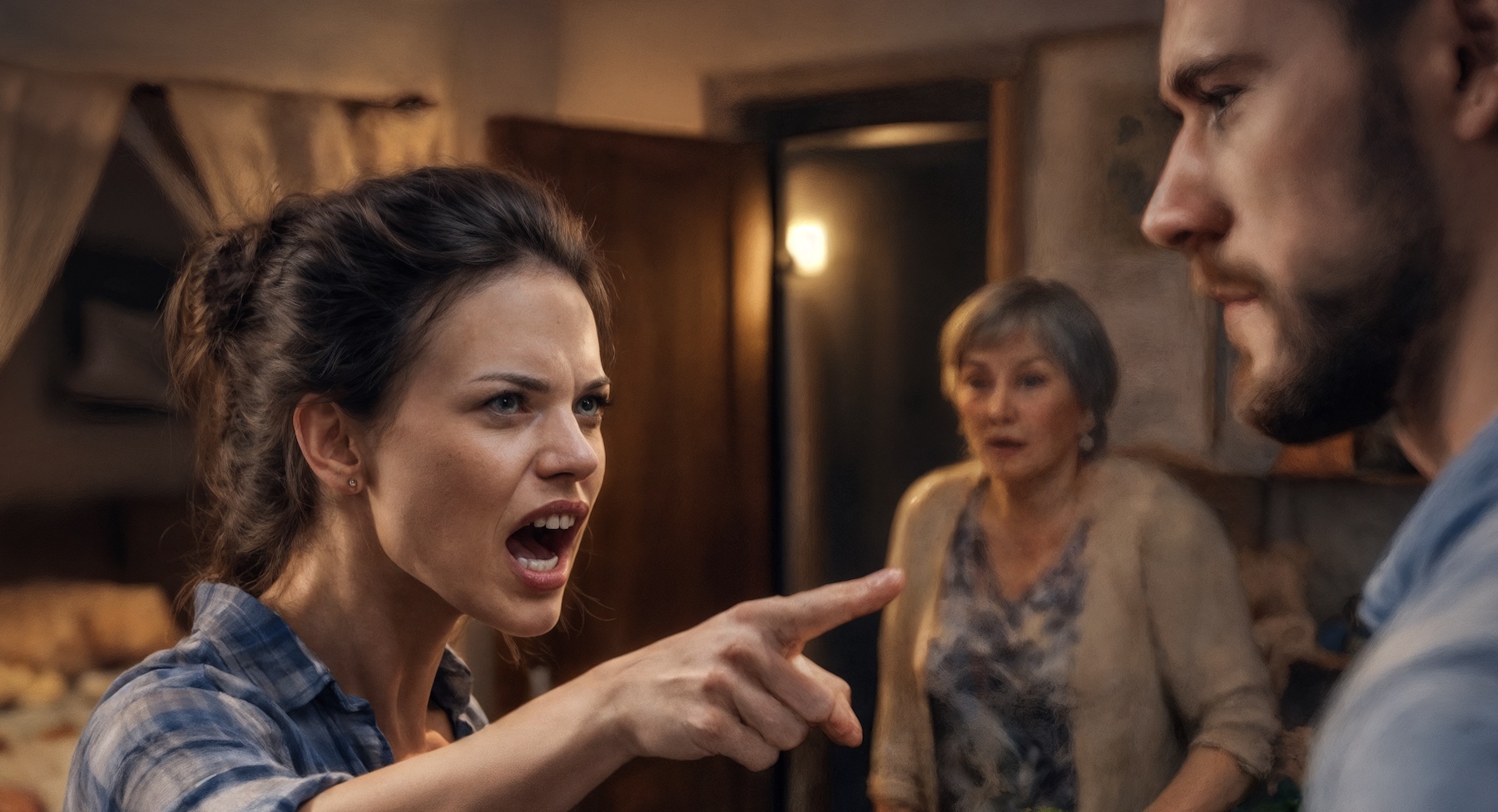
“Mash, what are you stuck out there for? Come on in — just be careful, sideways, sideways! Don’t knock over the crate with the ‘Bull’s Heart’ tomatoes. That’s a premium variety; I barely dragged it up to the fifth floor!” Pavel’s voice rang out from somewhere deep inside the apartment, unnaturally upbeat, edged with new, managerial tones Maria had never heard from him before.
Maria froze in the doorway, her key still in the lock. The door hadn’t even been secured. Instead of the usual scent of fabric softener or perhaps a reheated dinner, a thick, humid heaviness hit her. The air reeked of damp soil, watered-down manure, and something sour — like stale water left too long in a flower vase. It was the smell of a spring barn in the countryside, not her one-bedroom apartment in a modern building — the mortgage she had paid off three years ago, long before she ever met Pasha.
She stepped inside slowly and immediately stumbled. The narrow hallway, which normally held nothing more than a small bench for shoes, was now cluttered with wobbly towers of plastic crates. They lined the walls, crowded the mirror, even propped up the coat rack alongside a sack labeled “Universal Soil — 50 Liters.” On the pale laminate floor she had polished with special wax just last weekend were dark smears and sticky clumps of mud.
“Pasha?” she called quietly, trying to process what she was seeing. “Are we burying someone? Where did all this dirt come from?”
Her husband popped out of the kitchen. He wore a cooking apron over his T-shirt, his face shiny with sweat and feverish excitement. He wiped his hands on a rag that looked suspiciously like one of Maria’s old pillowcases.
“Burying someone? Don’t be dramatic!” he chuckled, winking. “On the contrary, Mashunya! We’re creating life. An agricultural empire, you could say. Come in, take your shoes off. Just don’t look for your slippers — I tossed them onto the balcony. There’s no room left; it’s all taken up by pots.”
Maria didn’t take off her boots. She stood there in her street shoes in the filthy entryway, staring at him as if he’d lost his mind. The exhaustion from her twelve-hour shift, which moments ago had felt like a slab of concrete pressing on her shoulders, vanished, replaced by a cold, sharp tension.
“What empire, Pasha?” she asked, carefully stepping over scattered clay pellets. “Are you even thinking straight? I left this morning — the apartment was clean. What is this, a storage depot?”
“It’s not storage, it’s an investment!” Pavel spread his arms wide, nearly knocking the router off the shelf. “You were the one complaining we couldn’t save for a decent car. Well, I solved the problem. Boldly. Like a man. Go into the room — that’s where the main surprise is. Quietly though, Mom might be napping. Her blood pressure spiked from the move.”
The word “Mom” sounded like a gunshot.
Maria stopped listening to his excited babble and marched into the only living room. She had to squeeze sideways between the wall and a newly built shelving unit that hadn’t existed that morning. It was made of rough, unfinished boards and smelled of raw wood.
What she saw looked like something from a surrealist painting. The room was unrecognizable. The windows were tightly covered in aluminum foil, casting everything in a strange silver twilight, broken only by the bluish flicker of the TV. The curtains Maria had spent two months choosing were gone; ropes now hung from the rod, supporting sprawling vines. Every surface — dresser, nightstands, even windowsills — was crowded with rows of plastic cups filled with green sprouts. The humidity was so thick it felt like a steam room.
And at the center of it all was their double bed. Reclining against a fortress of pillows — including Maria’s orthopedic one — lay her mother-in-law, Galina Sergeyevna. She wore a gaudy floral robe, a bowl of shelled sunflower seeds resting on her lap, eyes glued to yet another melodramatic Russian TV series about female suffering.
“Oh, finally,” her mother-in-law said without turning her head, spitting husks into her palm. “Masha, why are you slamming doors? My tomatoes get stressed; they need quiet. And turn the TV up — the remote’s lost somewhere, and I can’t get up. My back’s aching from your stairs.”
Maria slowly scanned the room. On her bedside table, right on top of the book she had been reading before sleep, sat a tray of wet soil leaking brown sludge. The expensive wallpaper behind the bed was peeling from the dampness.
“Pasha,” Maria said, her voice unrecognizable — flat, metallic, stripped of feeling. “What is your mother doing here? And why has my apartment turned into a farmers’ market annex?”
Pavel squeezed past her and planted himself between wife and mother, beaming like a polished coin.
“Surprise!” he declared cheerfully. “Here’s the genius plan, Mashulya. Mom rented out her two-bedroom place! Tenants moved in today, paid six months upfront. We’ll put the money in a deposit account, earn interest. Mom will stay with us for now. Why should she sit alone? Here it’s lively, and she can keep an eye on things. She’ll grow seedlings, we’ll sell them in season — extra cash for the car. Brilliant, right?”
“Brilliant,” his mother echoed from the bed, finally glancing at her daughter-in-law. “You should be washing your husband’s feet for such initiative, Maria. Instead of counting pennies at your job, here’s real money underfoot. By the way, the kettle’s boiled. Bring me tea. No sugar — my levels are high. And find the cookies in the drawer under the table.”
Maria looked at her husband, who stood there waiting for praise, then at her mother-in-law already absorbed in the TV again, then at the dirty crates invading every inch of her space. Something inside her clicked. Reality blurred, replaced by cold, crystalline fury.
“Come on, don’t just stand there — you’ll miss the best part,” Pavel said, tugging at her coat sleeve. “I’ve set up such a system, you’ll love it. A real loft!”
She let him lead her out, feeling her mother-in-law’s heavy gaze burning into her back. Soil crunched under her winter boots with every step. The sound throbbed in her temples, but she stayed silent, gathering her anger like ice.
The kitchen — her pride, with its ivory glossy cabinets and designer table — now looked like a warehouse backroom. The dining table had vanished under piles of plastic containers filled with peat and bottles of cloudy liquid that reeked of chemicals. On the windowsill where her coffee machine once stood were pots of limp plants tied to the window handle with nylon tights.
“Ta-da!” Pavel gestured toward the fridge.
In the narrow gap between the refrigerator and the wall stood an old yellowed foam mattress, rolled up and tied with clothesline — the same one they’d once planned to take to friends’ country house.
“What is that?” Maria asked flatly.
“Our bed!” he announced proudly. “See how well I thought it through? During the day it stands here. At night we roll it out along the cabinets. Heads by the oven — it’s warm there — feet toward the door. Cozy! We’re young; comfort isn’t everything. It’s romantic, like camping!”
She stared at him. He truly believed it.
“You expect us to sleep on the floor? In the kitchen? Six square meters?” she asked slowly. “And your mother will sleep in my bed, on the orthopedic mattress I bought for my bad back?”
“Don’t be selfish,” Pavel grimaced. “Mom’s older. She has osteochondrosis, blood pressure, veins. She needs proper support. We’re healthy, we’ll survive six months.”
“Survive?” she echoed.
“Do the math!” he said, counting with soil-stained fingers. “Her rent is thirty thousand a month. Six months — one hundred eighty thousand. Plus seedlings. We’ll make at least fifty thousand more. That’s more than we saved in two years! Pure profit!”
From the other room came Galina’s voice: “Pasha! Tell her not to slam the fridge at night! I’m a light sleeper. And sleeping on the floor will straighten her spine. She’s gotten plump anyway. Tight quarters will do her good!”
Pavel smiled weakly. “Don’t mind her, she’s just grumpy. But she’ll cook! Imagine coming home to borscht and pies…”
“Pasha,” Maria interrupted. A tight knot inside her unraveled, releasing something cold and calculated. “When you moved your mother in, did you think to ask me? This is my apartment. My kitchen. My bed.”
“Oh, here we go…” he rolled his eyes. “Yours, mine… Are we family or a corporation? I’m the head of this family. I made a strategic decision. Optimized resources.”
He turned on the tap, filling a jar with water. “Since you’re here doing nothing, grab the watering can — it’s under the mattress — and water the tomatoes. Carefully, at the roots.”
Maria looked at his hunched back. At the jar. At the grotesque mattress. At the muddy cabinets. And she understood: there was no one left to talk to. This wasn’t a partner. This was a mistake.
She turned on her heel and walked back to the room in her boots, deliberately grinding dirt into her beloved beige carpet. She stood in front of the TV.
“Move!” Galina barked. “You’re blocking the screen! And why are you in shoes? You’ll infect my seedlings!”
Pavel rushed in. “Have you lost it? The carpet cost money!”
Maria turned to him, her gaze so icy he stepped back.
“You moved your mother into my apartment while I was at work and didn’t ask me. I don’t care if she’s bored. I will not live in a communal flat with your mommy and sleep behind a curtain. Get out — you and your seedlings — or I’ll make such a scene the neighbors will call the police.”
Silence fell.
“You’re kicking me out?” Pavel laughed nervously. “It’s my home too!”
“No,” Maria replied. “I bought this place before I met you. I worked two jobs for five years to pay it off. Only one name is on the deed — and it’s not yours. You’re not even registered here. You’re a guest who forgot who pays the bills.”
“That’s low!” he shouted, throwing the jar of water to the floor.
“We share only disappointment,” she said calmly. “Ten minutes. Pack your things. After that, I start throwing things out.”
She checked her watch.
He tried to intimidate her. She counted down. His mother spat venom. Maria stood unmoved.
When ten minutes passed and they were still stalling, she stopped talking.
She grabbed a heavy crate of tomato seedlings and hurled it into the hallway. It exploded on impact, soil splattering across the stairwell.
“You’re insane!” Pavel screamed.
“Next!” she barked, throwing another.
Crate after crate flew out the door. Soil, broken stems, shards of plastic everywhere.
Galina grabbed her sleeve. Maria shook her off.
“In my house, this is trash. And I’m taking it out.”
Pavel grabbed her wrists. She met his eyes.
“Let go. Or your gaming console and the TV are next.”
He released her.
“You’re a monster,” he whispered.
“One minute,” she said.
Galina retreated first. Pavel followed, red with humiliation.
“May you rot here alone!” he spat before storming out.
Maria slammed the metal door shut. Locked it. Bolted it.
Silence fell.
It smelled of damp soil and ruin.
She slid down against the door and sat on the dirty floor. No tears came. Tears were for those who regretted the past.
“At least we won’t need the kitchen mattress,” she muttered.
She pulled out her phone. Dirt smudged the screen. She called a 24-hour cleaning service. Then a locksmith.
Life had to start from scratch.
And with new locks.