“Sveta, hey! Listen, weird question… did you sell your car?”
Lenka’s voice on the phone sounded ordinary, but there was a poorly hidden edge of curiosity in it. Sveta, carefully chopping a bell pepper on the cutting board for dinner, froze for a moment. The knife with the red plastic handle stopped a hair’s breadth above the pepper’s glossy yellow skin.
“Why would you think that? No, of course not. It’s down there under the windows, taking a break.”
“Yeah? It’s just— I literally saw it five minutes ago by ‘The Egoist.’ You know, that new club where the bouncers are stricter than border control. Your brother-in-law, Maxim, was piling out of it with some loud, happy crowd. The music was so insane my whole car was vibrating. I even thought maybe you sold it to him… It’s your car—I recognized your little fox keychain on the mirror.”
Sveta slowly set the knife down. The soft clink of metal against wood was the only sound in the kitchen now, besides Lenka’s voice, which suddenly seemed far away and чужой—like it didn’t belong here anymore.
“Okay. Thanks for telling me, Len. I’ll call you back later—something’s burning.”
She ended the call without listening to the reply. Nothing was burning. The smell of fried onions, cozy and homely a minute ago, suddenly turned sharp and acrid, crawling straight into her lungs. Sveta went to the window. From the third floor of their concrete-panel building, she could see the parking lot clearly. The spot where her dark-blue sedan stood every morning and every evening was brazenly empty. It looked like a tooth freshly knocked out of an otherwise tidy row of cars.
She didn’t put anything away. Didn’t switch off the hood, didn’t move the pan from the cooling burner. She simply sat at the kitchen table and stared at the front door. Inside her there was no usual hurt, no urge to cry. Something else was forming—cold, solid, and painfully heavy. The calm of a surgeon studying an X-ray and spotting a tumor that has to be cut out immediately.
She remembered Egor persuading her two weeks earlier. Not demanding, not pressuring—persuading, gently and smoothly, with his hands on her shoulders and his eyes locked on hers.
“Sveta, please, try to understand. Max is job-hunting, running all over the city. Buses are a pain—he’s late, he looks messy. Let him take your car sometimes, just for interviews. He’s careful, you know he is. He’s turned over a new leaf.”
She knew. She knew Egor’s “careful” brother all too well. She knew how he’d “changed” the last time—when they paid off his debt to a microloan company. And the time before that, when he “accidentally” smashed her laptop trying to install a pirated game. But Egor looked at her with that disarming mix of love and guilt for his hopeless relative, and she gave in. Not because she believed it—because she was tired of being the only adult in their small, shaky triangle.
The wall clock marked the minutes with a dull, indifferent tick. With every tick, the cold inside her thickened, settling somewhere under her ribs. Finally, after what felt like an eternity, the lock scraped with the familiar sound of a key.
Egor walked in, kicking off his shoes, worn out but cheerful. He was in a good mood, humming to himself, already anticipating dinner.
“Hey, kitten! Wow, what smells so go—” He stopped short when he saw her sitting motionless at the table in the dim kitchen. “Sveta? What happened? Why are you sitting there? You didn’t even change.”
She stared at him in silence—gave him time to step closer, to feel that the air in the apartment had dropped a few degrees.
“Your brother had an interview today,” she said evenly, her voice stripped of emotion. It wasn’t a question. It sounded like the start of an official report.
“Oh—yeah? Well, good for him. Hope it went well,” Egor said breezily, opening the fridge and peering inside.
“Very well,” she continued in that same distant tone. “The interview was at the nightclub ‘The Egoist.’ And apparently he passed the audition for ‘chief party animal,’ because he was celebrating with his friends—stumbling out of my car with the music blasting.”
Egor froze with a carton of kefir in his hand. He slowly shut the fridge and turned toward her. A flicker of irritation crossed his face—the look of someone being interrupted over nonsense.
“So what? He relaxed a little. He has a right. Why are you starting again? Maybe he landed a job and decided to unwind. Big deal—he went to a club. It’s not like he drove to the other side of the world.”
His words fell into the kitchen silence like a pebble into icy water. No ripples, no splash—just swallowed by the cold depth. “He has a right” wasn’t just a careless phrase. It was a worldview. A position. And it was exactly the trigger Sveta had been waiting for.
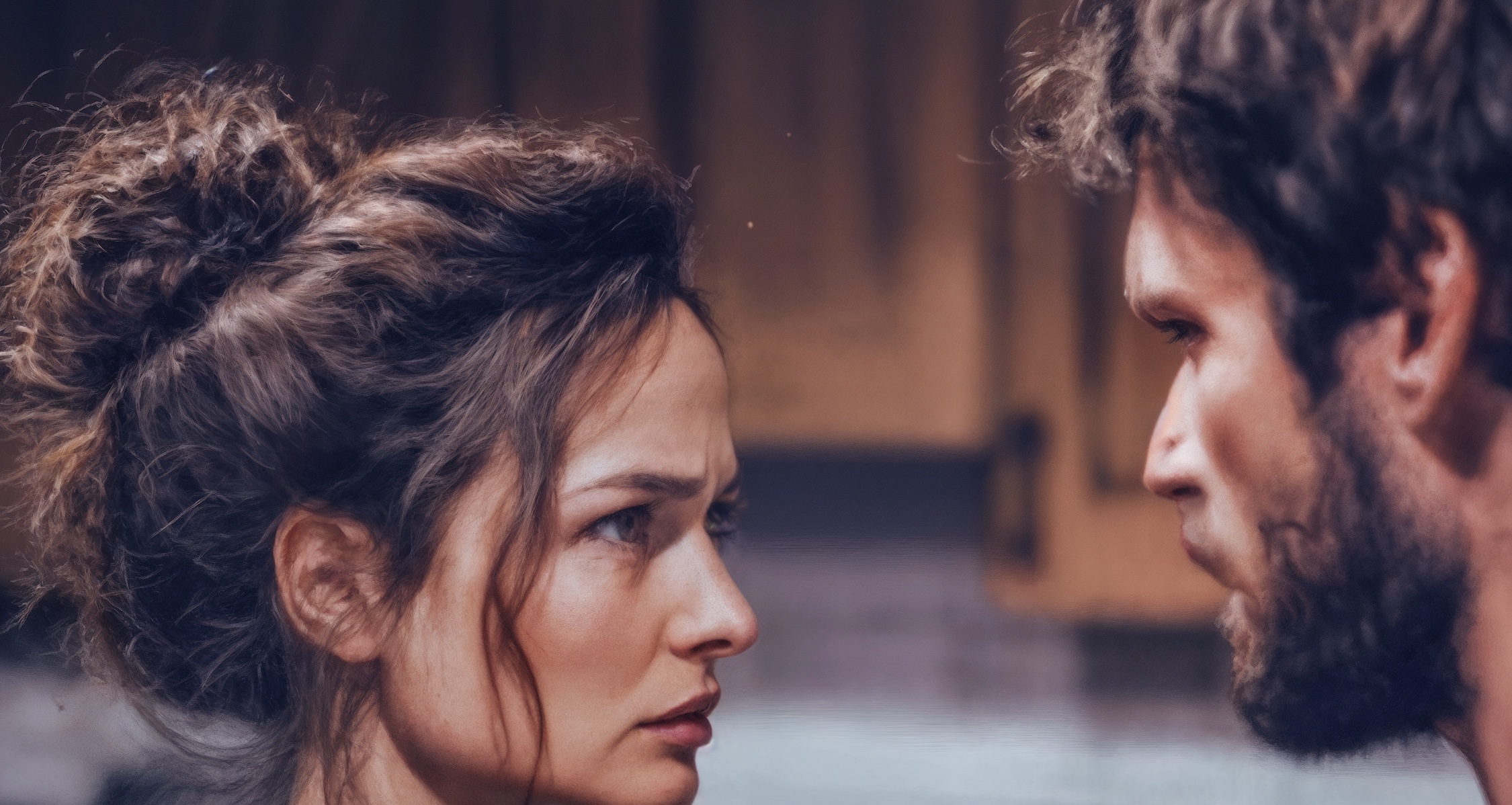
She rose slowly from the chair. No fuss, no shouting—just controlled, almost predatory calm, like someone moving from waiting to action. She stepped out of the kitchen shadows into the lit hallway, and for the first time that evening Egor could see her face clearly. And he didn’t like what he saw. There was no hurt, no tears—only cold, focused fury.
“He has a right?” she repeated quietly, but there was steel in her voice. “To my car? On my dime? With friends I’ve never even met? At night? Outside a club where a single entry fee costs as much as a week of our lunches? He has that right, Egor?”
Egor grimaced. He still didn’t grasp how bad it was, chalking it up to another burst of her “pettiness.”
“Sveta, come on. I’ll talk to him. He got heated, it happens. The car isn’t made of sugar, it won’t melt. He’ll bring it back tomorrow morning—what’s the problem?”
“The problem is that ‘tomorrow morning’ doesn’t work for me.”
She stepped close enough that he could feel her presence like a blade. She didn’t smell like perfume or dinner. She smelled like danger.
“Give me the keys to MY car. Now. And call your useless brother—tell him to bring it back within an hour. Otherwise I’m reporting it stolen. And I don’t care that he’s your brother.”
That sentence—said without yelling, almost in a whisper—finally punched through his lazy indifference. Egor’s face stretched in shock.
“You… you’re serious? You’ll report Max? My brother? Over a car?”
“Not over the car,” she cut in, staring him down without blinking. “Because your ‘he has a right’ applies to everything that belongs to me—and not to you. He has a right to take my money. He has a right to lie to my face. He has a right to turn my property into a cheap taxi for his nightlife. And what right do I have, in your opinion? The right to put up with it in silence, because he’s ‘your brother’?”
Egor hesitated. He looked at her, and his eyes showed confusion, anger, disbelief. He was used to smoothing her irritation away with hugs, promises, a lazy “sorry, I’ll talk to him.” But now he was facing someone else entirely. Instinctively he slid a hand into his jacket pocket, where his keys were. His fingers found cold metal.
She caught the movement. Her mouth twisted into a smile that held no humor.
“You still don’t get it?” she hissed—and there was more threat in that whisper than in any scream. “Either you call him right now and in one hour the car is back under our windows… or I call the police. Choose. Time’s running.”
Deliberately, she pulled her phone from her jeans pocket, unlocked the screen, and set it down on the small hallway cabinet beside her—like a stopwatch at the start of a race. Egor’s gaze bounced from her face to the phone to his hands. The air in the corridor felt thick enough to slice. This was no longer a family argument. This was a standoff. And with growing horror he realized she wasn’t bluffing. She would do exactly what she said. And her calm frightened him far more than any tantrum ever could.
Egor’s expression cycled through a few stages—bewilderment, outrage—and then settled into the mask of offended virtue. He took a step back as if her words had physically shoved him. The ultimatum, clean and merciless, left him no room to maneuver. So he switched to the only attack he had left: turning it against her.
“What is wrong with you, Sveta? You’ve become so… cold. Is that piece of metal really more important to you than a living person? More important than my brother? I always knew you didn’t like my family, but this… calling the police on your own family!”
He spoke loudly, trying to fill the hallway with his righteous anger, to push her calm out with sheer noise. He wanted her to feel guilty—small, stingy, selfish. But his words bounced off her icy self-control like peas off a wall.
“My family, Egor?” she said evenly. “Let’s talk about your family. About your brother, to be exact. This isn’t the first time he’s taken something without asking, is it?”
She didn’t raise her voice. Her tone stayed level, almost academic, as if she were analyzing a case file rather than their private disaster.
“Let’s remember last spring. When your ‘careful’ brother borrowed the neighbor’s hammer drill to ‘help a friend with renovations.’ And the drill was later found in the nearest pawn shop. Who went to smooth things over with the neighbor and handed him eighteen thousand from the money we were saving for vacation? You or me? Actually, no—we went together. You apologized, and I counted out the cash. Our cash, Egor.”
He flinched as if she’d struck him. He opened his mouth to protest, but she didn’t let him get a word in, continuing her cold, methodical breakdown.
“Or maybe we should talk about your watch. Your father’s gift. The one that disappeared from the shelf after Max came over. And later you whispered to me that it had to be him—but you didn’t want to make a scene. You just swallowed it. Because ‘he’s your brother.’ He has the right to take your things, and you don’t even have the right to ask where they went.”
Every sentence was a precise needle pressed into the rawest parts of his conscience. She wasn’t screaming accusations. She was stating facts, and that was worse than any shouting. She wasn’t showing him her “coldness.” She was holding up a mirror to his blindness and weakness.
“So it’s not about the car, Egor. And it never was. It’s about the endless chain of ‘he’s my brother’ that you use like a bandage to cover wounds that are already rotting. He lies—‘he’s my brother.’ He steals—‘he’s my brother.’ He spits on both of us, on our plans, on our property, on our peace of mind—and you stand there and say, ‘The guy has a right.’ No. He doesn’t. And you don’t have the right to demand that I pay for his ‘rights’ with my money and my nerves.”
She paused, letting it sink in. Egor stood there, breathing hard. All his accusations crumbled to dust. He no longer looked righteously angry. He looked cornered.
“So I’ll ask again. Are you calling him? Or am I?”
Egor stared at her, chest heaving. Every argument, every familiar trick, shattered against her calm. He was a boxer who’d stepped into the ring and realized his opponent was a granite wall. And in desperation—having no words left that might crack her—he grabbed the last, dumbest, most insulting weapon he could: money.
“Why are you shaking over that stupid hunk of metal?! ” he exploded, his voice breaking into a furious shout. “So he scratches it, so he dents a fender! Big tragedy! I’ll buy you a new one! Two new ones if you want! Better than this! Stop counting pennies and trembling over every little thing!”
That was the final mistake. The last drop.
Sveta didn’t answer. Instead, something strange happened right in front of him. Her face, for a heartbeat, lost its hard edge—as if she’d made a final, irreversible decision. She stepped toward him, and he instinctively recoiled. But she moved past him, toward his jacket hanging on the hook.
“What are you doing?” he asked, thrown off.
She didn’t respond. Her hand slid into his jacket pocket and pulled out his keyring—his keys. The apartment keys, his office keys, his parents’ house keys. Dangling among them was a small but weighty charm: a little fox she’d once given him. And beside it, on the same ring, was the spare key to her car—the one she’d handed him “just in case.”
Egor watched in silence as she unhooked that key. He still didn’t understand. He thought she was simply taking it so he couldn’t hand it over to his brother again. But what she did next was beyond him.
She gripped the key with both hands, bracing her thumbs against the plastic head and her fingers against the metal blade—and began to bend it with brute force. Her knuckles turned white. Her face tightened with effort; sweat beaded on her forehead. The key resisted. It was made to last years, not to be snapped in half by bare hands.
Egor stared, mouth open, at this quiet, furious, almost insane act.
She leaned her full weight into it, her shoulders trembling from strain. And then—with a dry, sharp crack like a bone breaking—the metal blade tore away from the plastic head.
She didn’t look at him. She walked to the kitchen table—the table where dinner was supposed to be—and dropped the two useless halves onto the surface. They clinked and lay still. One piece: black plastic with buttons. The other: a dull shard of metal.
She straightened, took a breath, and finally lifted her eyes to him. There was no anger in them now. No fury. Only emptiness—cold, burned-out emptiness.
“Call your brother,” she said quietly, pronouncing every word. “Tell him he doesn’t have a car to ride around in anymore. And you don’t either.”