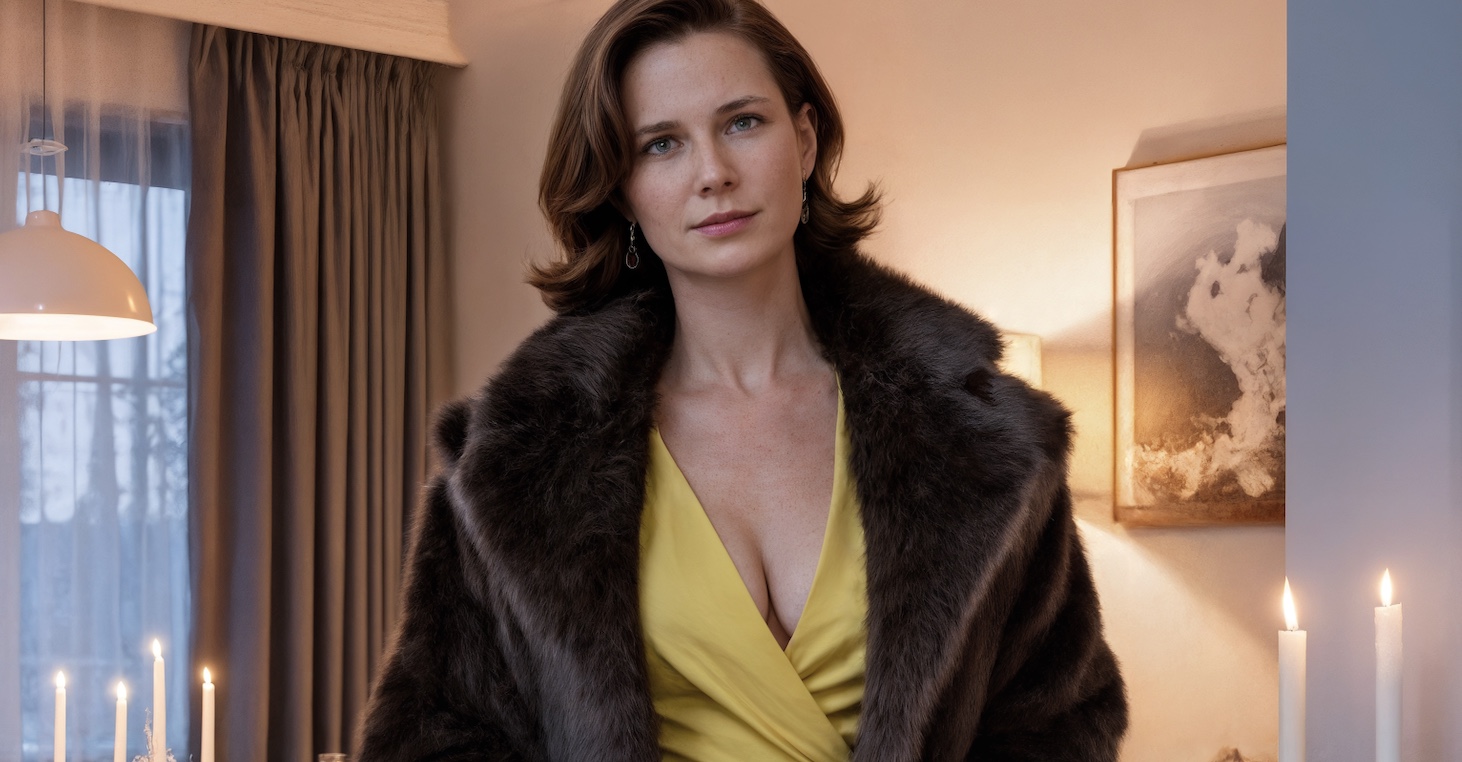
Irina was drying the wine glasses when the intercom burst into its chirping trill. People were arriving for the holiday dinner earlier than planned—she’d set the start for eight o’clock on purpose so she could finish everything without rushing, but it wasn’t even eight yet when someone pressed the buzzer.
“Andrey, can you open the door?” she shouted to her husband, who was in the living room wrestling with the string lights.
Andrey’s parents—Valentina Petrovna and Gennady Stepanovich—were the first to show up. As usual, they came loaded down with big bags: one held a home-smoked chicken, another was packed with jars of jam and pickles, and the third contained gifts wrapped in shiny paper.
“Irishka, happy almost-New Year!” Valentina Petrovna kissed her daughter-in-law. “We brought a few things. You know, Gena smoked that chicken himself just for you. And the jam’s raspberry—remember? We picked those berries in the summer.”
“Thank you so much!” Irina accepted the bags, genuinely delighted. Her mother-in-law was a simple woman, but astonishingly warm and generous.
Soon the rest of the guests filtered in: Andrey’s coworker with his wife, the neighbors from their landing, old friends. By half past eight the apartment was humming with celebration—voices overlapping, laughter, and the familiar smells of tangerines and Olivier salad.
“And where’s Sveta?” Valentina Petrovna asked, scanning the room. “She said she’d come.”
Svetlana, Andrey’s younger sister, really had promised. More than that—she’d called that morning to confirm she would definitely be there.
“Probably stuck in traffic,” Irina said without much confidence, even though she knew perfectly well: Sveta lived twenty minutes away, and there was never any real congestion near her neighborhood.
Sveta finally arrived closer to ten, when everyone was already seated at the table. She swept into the entryway, shrugging off an expensive shearling coat, and Irina immediately noticed the key detail—her sister-in-law’s hands were empty. Completely empty. Not a bag. Not even a tiny gift pouch.
“Hi, everyone! Sorry, I’m late!” Sveta strolled into the living room, casually kissing her parents and brother. She was wearing a new sweater—Irina recognized the brand. In a boutique, a sweater like that cost twenty thousand.
“Svetočka, sit down, sit down,” Valentina Petrovna fussed. “We’ve been waiting for you!”
Sveta settled at the table, and Irina placed a plate in front of her. Every other guest had brought something—food for the table or a present. Even the elderly neighbors, a retired couple, had carried in a box of chocolates and a bottle of champagne. Only Sveta sat there as if it were perfectly normal to show up to a New Year’s dinner empty-handed.
“Again,” Irina thought, feeling that familiar irritation rise in her chest.
This wasn’t Sveta’s first stunt. In the five years Irina had been married to Andrey, she could count dozens of similar episodes. Their mother’s birthday—Sveta “forgot” her wallet and everyone had to chip in for the gift, including her share. A restaurant gathering—she “forgot” her card again, and Andrey paid her bill. A trip to the dacha—Sveta didn’t buy any groceries because she “thought everything was already there.” The list was endless.
And it wasn’t as if Sveta was struggling. She earned good money. She worked as a sales manager at a large company, drove a new foreign car, wore expensive clothes, and flew abroad for vacations twice a year. She had the money—what she didn’t have was the willingness to spend it on anyone but herself.
“Sveta, you said you’d come with gifts,” Valentina Petrovna remarked quietly after the first toasts.
“Oh, Mom.” Sveta waved her off, popping a shrimp into her mouth. “I just didn’t want to give some useless junk, so I came without anything. Better nothing than some pointless crap.”
Irina felt her eye twitch. That line—I didn’t want to give junk—was Sveta’s signature excuse. She used it every time she arrived without a present, without contributing to a shared bill, without lifting a finger.
“Svetočka, but we all give each other something for New Year’s,” Valentina Petrovna said gently. “It’s tradition.”
“Tradition is tradition, but why give something that’ll just collect dust?” Sveta shrugged. “I’m a practical person.”
Practical. Irina snorted to herself. A practical person who never forgot to take—yet always forgot to give.
Andrey stayed silent, as usual. He never contradicted his sister, even when she was blatantly out of line. “She’s my sister,” he said every time Irina tried to talk about Sveta’s behavior. “Don’t turn it into a problem.”
But it was a problem. And it grew with every repeat performance.
Dinner rolled on. People laughed, told stories, offered congratulations. After the salads Irina brought out the main dish—duck baked with apples, which she’d spent half the day preparing. Sveta ate with obvious pleasure, praising everything.
“Ir, you’re a magician! How do you make food this good?” she said, reaching for seconds. “I wish I had your talent!”
“Talent, or time?” Irina asked innocently as she poured Sveta some wine. “I’ve been cooking for two days.”
“Yeah, I can imagine,” Sveta nodded, missing the point entirely. “I couldn’t do that. I just don’t have time.”
“But you’ve got time to come and eat it all,” Irina muttered—so quietly that only the neighbor beside her heard. The woman gave her a sympathetic nod.
The real peak came when everyone moved on to exchanging gifts. Valentina Petrovna and Gennady Stepanovich gave Irina and Andrey a beautiful dinner set Irina had been dreaming about for ages. The coworker handed Andrey a good bottle of whiskey. Friends brought a spa certificate. Even the elderly neighbors had prepared sweet handmade ornaments.
Sveta sat there, turning her glass in her hands. When all eyes shifted to her, she tensed slightly.
“And did you bring something for your brother and Ira?” Valentina Petrovna asked.
“Mom, I already said—” Sveta began her usual routine, but Irina cut her off. She was tired. Tired of swallowing it, tired of staying quiet, tired of pretending everything was fine.
“Sveta, what exactly did you want to give us?” Irina asked loudly and clearly. The living room fell silent. Everyone turned toward Sveta.
“Well… I don’t know,” Sveta blinked. “I haven’t decided yet.”
“Haven’t decided?” Irina put on a look of sincere surprise. “But New Year’s didn’t sneak up on us yesterday. You knew a month ago you were coming. You must’ve been looking at something, right?”
Sveta flushed.
“I… thought about different things…”
“Like what, exactly?” Irina pressed, and now there was steel in her voice. “Tell us—this is interesting. Maybe books? Something for the house?”
“Irina, come on…” Andrey tried to intervene, but his wife stopped him with a glance.
“No, Andrey, this is an important conversation,” she said, turning back to Sveta. “Sveta, maybe the issue is you don’t know what we need. Fine—let’s make it simpler. You can just help with money. Transfer it to my card and we’ll buy what we need ourselves. That’s convenient for everyone, isn’t it?”
Silence hung in the air. The neighbor covered her mouth with her hand. Andrey’s coworker stared very hard at his plate. Valentina Petrovna looked from her daughter-in-law to her daughter, completely lost.
Sveta turned crimson. She opened her mouth, but no words came.
“Or maybe you wanted to get something special and just didn’t have time to buy it,” Irina continued in a sugary tone. “Then let’s pick an amount right now. How much were you planning to spend? Three thousand? Five? We’ll wait—you can transfer it whenever it’s convenient.”
“I… I…” Sveta finally found her voice, but it sounded weak and unconvincing. “That’s not… it’s not done like that…”
“What isn’t done?” Irina asked sweetly. “Giving gifts? Or coming to a holiday dinner empty-handed?”
“Irina, enough,” Andrey said quietly but firmly.
“No, Andrey—this isn’t enough,” Irina snapped, turning to her husband. “I’ve put up with this for five years. Five years your sister comes to our place, eats, drinks, has fun—but never, do you hear me, never brings even a bottle of wine or a box of chocolates. Meanwhile she drives expensive cars, vacations in the Maldives, and wears clothes worth tens of thousands. Maybe it’s time we called things what they are.”
Sveta jumped up from the table. Her face was blazing red, her eyes shining with rage and humiliation.
“How dare you!” she shouted, her voice cracking. “This is a family dinner! Did you all gang up just to shame me?”
“Sveta, nobody ‘ganged up,’” Irina answered calmly. “I asked a simple question: what did you want to give us? If that question is so terrifying, maybe you should ask yourself why.”
“I don’t owe you gifts!” Sveta yelled. “It’s my personal choice!”
“Of course you don’t,” Irina agreed. “But then you don’t owe us your presence either. You know, there’s a word—reciprocity. When people gather, they share. Food, joy, little gifts. That’s what human relationships are.”
“Sveta, maybe you really should’ve brought something,” Valentina Petrovna suddenly said. “We all gave something to each other…”
“Oh, you too?” Sveta snatched her purse from the chair. “Everyone’s against me! You know what—go to hell, all of you! I’m not going to sit here and listen to these accusations!”
She rushed into the hallway. Andrey tried to follow, but Sveta was already pulling on her coat.
“Sveta, wait…”
“No! I get it—I’m not wanted here!” She yanked the door open. “Don’t count on me showing up at your stupid little gatherings ever again!”
The door slammed with a crash. A suffocating silence spread through the apartment.
Andrey turned to Irina. His face was pale; his lips were pressed tight.
“Are you happy now?” he asked coldly.
“Very,” Irina shot back. “I’m tired of being a free restaurant for your sister.”
“She’s my family!”
“That’s not a license to act like a parasite.”
The word hung in the air—hard, merciless. Andrey flinched as if he’d been slapped.
“A parasite? You called my sister a parasite?”
“What else do you call someone who’s spent five years living off your kindness and giving nothing back?” Irina didn’t look away. “She never pays her share. Never brings gifts. Even for your mother’s anniversary we had to remind her to chip in for those gold earrings—and even then she ‘forgot’ half the amount.”
“Ira is right,” Valentina Petrovna said quietly. “I’ve wanted to talk to Sveta about this for a long time, but I didn’t dare. She really is… too stingy.”
“Mom?” Andrey stared at her in disbelief.
“Son, I love your sister, but Ira is telling the truth,” Valentina Petrovna sighed sadly. “Sveta has always been like this. Even as a kid she hated sharing her toys, hoarded her pocket money, and never spent it. I thought she’d grow out of it, but…”
“But she didn’t,” Irina finished. “Only now it isn’t childish selfishness—it’s a conscious habit of taking advantage.”
Gennady Stepanovich, who’d been silent the whole time, cleared his throat.
“You know, I just remembered that whole dacha situation last year,” he said, looking at Andrey. “We all pitched in to fix the roof. Sveta promised she’d pay her share, but she never did. Said she’d transfer it later… and a year’s gone by.”
“Dad, you too?” Andrey looked around the table, stunned.
The coworker and his wife exchanged glances. The wife raised her hand hesitantly.
“Sorry for butting in, but I remember the corporate party two years ago. When Sveta ‘forgot’ her wallet and Andrey covered her. The bill was six thousand,” she said with an embarrassed smile. “My husband and I talked about it afterward—it seemed odd. She clearly has money, judging by her car and fur coat, but she’s always ‘forgetting’ to pay.”
“I remember that restaurant incident on your wedding anniversary,” the neighbor added. “We all chipped in for the banquet, and Sveta said she didn’t have cash, asked Andrey to pay for her. Then promised she’d pay him back.”
Examples started pouring out, one after another. It turned out everyone had noticed Sveta’s habits for a long time, but stayed quiet, not wanting to stir conflict. Only now, after Irina finally said it out loud, did people begin to speak.
Andrey listened, and his face gradually changed. Confusion gave way to realization—and then to shame.
“I didn’t know it was that bad,” he said softly, sinking into his chair.
“You didn’t want to know,” Irina corrected gently as she sat beside him and took his hand. “Because she’s your sister and you love her. But love doesn’t mean pretending you don’t see what’s right in front of you.”
“I always made excuses for her,” Andrey rubbed his face with both hands. “I thought she was just forgetful… or that she was having money problems…”
“She has no money problems,” Valentina Petrovna said firmly. “She earns more than many of us. She simply doesn’t want to spend on anyone else.”
The rest of the evening passed in a strange atmosphere. On one hand, there was relief—finally, the truth had been spoken. On the other, it was awkward and sad. Sveta was still family, and her absence felt like an open wound.
When the guests left, Andrey and Irina stood in the kitchen, clearing the dishes.
“Do you think I was too harsh?” Irina asked, stacking plates into the dishwasher.
“Harsh,” Andrey admitted, “but fair.”
He came up behind her and wrapped his arms around her.
“I’m sorry I didn’t listen sooner. You tried to talk to me, and I brushed it off.”
“She’s your sister,” Irina said softly. “I get why it’s hard to see flaws in someone you love.”
“Flaws are one thing,” Andrey sighed. “What she was doing… that was taking advantage of trust. I need to talk to her seriously.”
But the talk never happened. Sveta didn’t answer her phone that night or the next day. She rejected her mother’s call, her father’s, her brother’s. In the family chat she ignored the New Year greetings completely.
A week passed. Then two. Sveta seemed to vanish. On social media she posted photos—ice skating, a trendy café, out with friends—but she didn’t respond to her family’s messages.
“She’s offended,” Valentina Petrovna concluded when they gathered for Christmas. “I think she’s ashamed. Not of what she did—of being called out for it in front of everyone.”
“If she’s ashamed, then she’s got a conscience,” Gennady Stepanovich said. “And if she’s got a conscience, maybe something will change.”
But nothing changed—at least not with them. Sveta continued to ignore the family. She didn’t come to her mother’s birthday in February. She skipped the March 8th gathering. She didn’t show up for Easter.
“Maybe we should meet her halfway,” Andrey suggested one day. “Call her… apologize…”
“For what?” Irina asked. “For telling the truth?”
“For saying it in front of everyone.”
“Andrey, if we’d spoken to her privately, she would’ve brushed it off or snapped at us—and then kept doing the same thing,” Irina shook her head. “Only the public moment made her feel anything at all.”
Spring turned into summer. In July, Andrey ran into Sveta by chance at a shopping mall. She was walking with a friend, both carrying huge bags from expensive stores.
“Sveta!” he called.
She turned, and for a second her face flickered with uncertainty. Then the cold mask slid into place.
“Hi, Andrey.”
“How are you? Mom’s worried—you don’t pick up…”
“I’m busy. Very busy,” Sveta said pointedly, glancing at her watch. “Sorry, I’ve got to go.”
She turned and walked away without even saying goodbye.
Andrey came home upset.
“She didn’t even want to talk. She acted like I’m nobody.”
“Because you’re asking her for something she can’t give,” Irina said gently. “To admit she was wrong. For people like that, it’s unbearable.”
“So I lost my sister over some stupid gifts?”
“No,” Irina hugged him. “You didn’t lose your sister. You finally saw who she really is. And she’s the one who chose resentment instead of working on herself.”
Months passed. Valentina Petrovna still hoped for peace and sometimes wrote to her daughter, but Sveta replied briefly, coldly. She didn’t attend family gatherings.
Then one autumn day Irina ran into Sveta’s former coworker in a café. They chatted, and the woman mentioned casually:
“By the way, did you hear about Sveta? She fell out with all her friends.”
“Really?” Irina was surprised.
“Yeah. They went to Turkey together this summer. Agreed to split expenses evenly. But Sveta kept ‘forgetting’ her wallet whenever it was time to pay for dinners and excursions. The girls tolerated it for a week, then confronted her. Sveta got offended and stopped talking to them.”
“So she’s still doing the same thing?”
“Looks like it. I used to be friends with her too, but at some point I realized friendship with her is a one-way street. I give, she takes. Sooner or later, you get tired of it.”
That evening Irina told Andrey what she’d heard.
“So we weren’t the only ones,” he said slowly. “It’s the same story everywhere.”
“She never learned anything,” Irina sighed. “I think she convinced herself everyone else is wrong, and she’s the victim.”
As the next New Year approached—one year after that infamous dinner—Valentina Petrovna called her daughter and asked directly:
“Sveta, will you come at least for this New Year?”
Sveta was silent for a long moment, then answered flatly:
“No, Mom. I have other plans.”
“Svetočka, maybe it’s time to let the old hurt go. It’s been a year…”
“Mom, I’m not holding anyone back,” Sveta said, with anger barely hidden. “If they want to discuss how much I spend and what I spend it on, let them. Without me. I’m not going to listen to accusations just because I don’t meet someone else’s expectations.”
“But it’s not about expectations,” Valentina Petrovna began carefully, but Sveta cut her off.
“Mom, I don’t want to talk about it. Happy New Year.”
She hung up, and Valentina Petrovna told Andrey about the call through tears.
Some people don’t change, even when life hands them a clear lesson. They would rather take offense, disappear, surround themselves with new people they can use—anything except look honestly at themselves and do the hard work of changing.
Sveta was exactly that kind of person.
And Irina no longer regretted that New Year’s conversation. Yes, it had been harsh. Yes, it shattered a fragile peace in the family. But it was necessary. Sometimes truth hurts—but silence hurts more: slowly, over time, eating away at relationships from the inside.
And if Sveta chose to walk away instead of grow—then that was her choice. A choice that said more about her than a thousand excuses about “not wanting to give junk.”
Sveta chose a different path. And that was her tragedy—not theirs.