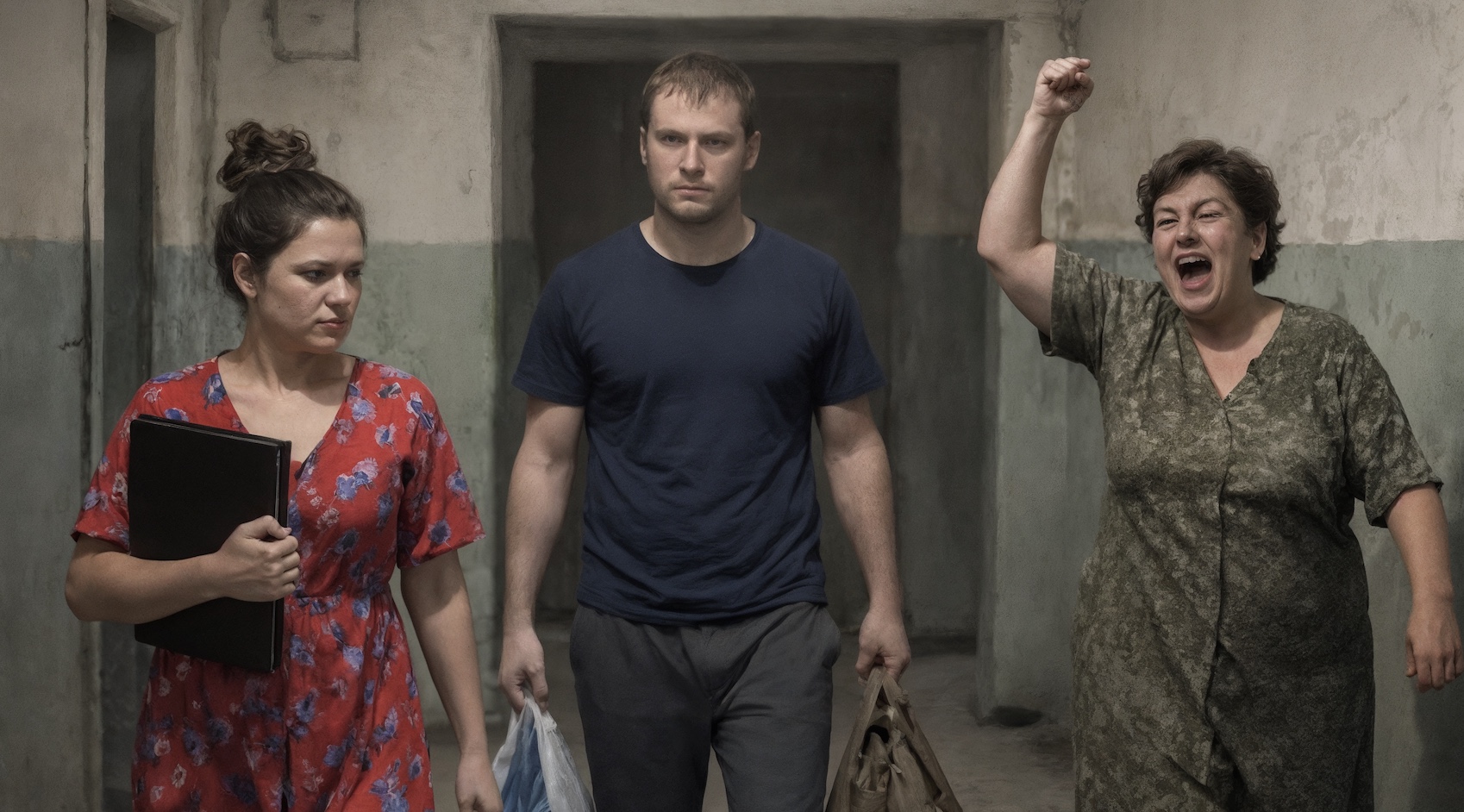
“She’s dumb as a cork—she’ll sign over everything,” my traitor of a husband bragged to his mother…
The kitchen was thick with the smell of fried smelt and pure nerve. Tamara Ilyinichna moved around like she owned the place, as if Alisa weren’t the rightful owner of a three-room Stalin-era apartment in the city center, but a poor cousin they’d temporarily allowed to sleep indoors for the winter.
Her mother-in-law poured tea into Alisa’s own mugs with such loud clinking it felt like the porcelain might crack under the pressure.
“Alisochka, a little sugar?” she trilled, nudging the sugar bowl with her elbow. “Anyway, I’ve settled everything. I have my own realtor—reliable. They’re buying your three-bedroom place for cash, tomorrow. The paperwork is ready at the notary.”
Alisa sat on the edge of her chair, hands locked together so tightly her legs felt numb with fear.
“Tamara Ilyinichna…” she started. “But I’m scared… A gift deed to my husband… That’s… What if we divorce? What if something happens?”
Her mother-in-law slammed the kettle onto the table.
“What do you mean ‘what if,’ sweetheart?” Tamara Ilyinichna widened her eyes, heavily outlined in blue pencil. “Do you doubt Vadim? My son? He’s devoted his life to you! He doesn’t sleep at night—thinking how to start a business! So he can take you, silly girl, to the Maldives instead of Anapa!”
Vadim, seated beside her, immediately covered Alisa’s hand with his. His palm was warm, soft, manicured—manager hands, the kind that had never lifted anything heavier than a phone.
“Baby, honestly,” he said in that velvet voice that always made Alisa’s knees go weak. “It’s just a formality. The gift is so we don’t pay tax when we sell. We’ll sell this dump, add my savings, and buy two gorgeous studios in a new build—rent one out, live in the other. I already paid the deposit! One hundred thousand! If we don’t sign tomorrow, the money is gone. You want our money to go up in smoke?”
Alisa looked into his “honest” blue eyes.
“Studios… Maldives… business…” spun around her head.
She loved him blindly and had learned to trust him, because digging through documents—taxes, registries, cadastral numbers—felt both exhausting and frightening.
“Okay,” she exhaled. “Tomorrow.”
Tamara Ilyinichna gave a triumphant snort and bit off half a gingerbread cookie.
“Good girl. Tomorrow at ten, at the notary. Don’t forget your passport, scatterbrain.”
Tomorrow you’ll be homeless
Night fell over the city. Alisa needed to print some tests for her students, and her printer—of course—chose that moment to chew up the paper.
“Vadik, I’m running to Aunt Valya’s to print them,” she called from the hallway.
“Go ahead, baby,” Vadim answered from the living room, where he was glued to the PlayStation. “Just don’t take long—we still have to pack.”
Alisa went out into the stairwell.
Aunt Valya lived in the next building—her mother’s old friend, an archivist with forty years of experience. A woman who had seen so much betrayal and inheritance warfare that she believed only in the Criminal Code and bad omens.
Aunt Valya opened the door in a robe and curlers.
“Come in, you walking catastrophe. What’ve you got now?”
Alisa handed her the flash drive and, to quiet her conscience, the draft gift agreement her mother-in-law had shoved at her “to review.”
Aunt Valya slid her glasses down her nose and scanned the lines.
Then she removed the glasses.
Looked at Alisa over the frames.
“Alisa… are you an idiot?”
“Why?” Alisa faltered.
“Gift deed. Clause three: ‘free of charge and unconditional.’ Do you understand what that means?”
“Well… so we don’t pay tax…”
“It means tomorrow at 10:05 you’ll be homeless. He’ll toss you into the street and you won’t even be able to sue—gifts aren’t taken back.”
“Vadim isn’t like that!” Alisa flared. “He loves me! He wants a business!”
“He wants a business built on your bones,” Aunt Valya snapped. “Call him. Tell him you’re running late.”
“Why?”
“Because I’m telling you to. Call.”
Alisa dialed. It rang.
He picked up.
“Hello?” Vadim’s voice.
Alisa was about to say, “I’ll be right there,” but the connection glitched. Vadim’s old smartphone often did its own thing. He hit “end call,” but the call didn’t drop—the phone stayed in talk mode.
And Alisa heard them.
Tamara Ilyinichna’s loud, rolling laugh burst through the speaker.
“So, son? The little sucker left?”
“She did, Mom—went to her aunt.”
“She won’t change her mind?”
“Where’s she gonna go?” Vadim’s voice wasn’t velvet now—it was sharp and nasty. “She’s dumb as a cork. Believes every word. ‘Maldives,’ ‘business’… I fed her so much garbage!”
“Just don’t screw up tomorrow,” his mother coached. “She signs, and you hand the documents to me immediately. I called the realtor—the buyer’s waiting with cash.”
“Everything’s fine, Mom!” Vadim snorted. “Tomorrow she signs and—bye-bye, ‘intellectual.’ I’ll sell the place, buy myself a G-Wagon—been dreaming about it forever. And that studio you mentioned? We’ll put it in your name. And her… let her run back to her mommy’s one-room dump, that lousy tutor. I’m sick of her English and that sour face.”
Alisa stood in Aunt Valya’s room like she’d been frozen in place. The phone slipped from her limp fingers and thudded onto the carpet.
They were still laughing.
“You’re a performer, my boy!” the mother-in-law gushed. “A real man—cleaned the chicken out!”
Alisa shook so hard her teeth clacked and she bit her tongue.
No tears—only a brutal, icy cold that locked her whole body.
“Aunt Valya…” she whispered. “I have nowhere to go. Mom’s in a one-room place with my stepfather—there’s no room to even turn around. I have no money. Grandpa’s apartment is everything…”
She pictured tomorrow: Vadim smirking as he dumps her suitcase onto the landing. Tamara Ilyinichna looking at her like dirt. And Alisa walking to the train station because there would be nowhere else.
“I’m not going,” Alisa said. “Tomorrow I’ll make a scene. I’ll spit in their faces.”
Aunt Valya picked up the phone, ended the call, and set it down.
“You’re not going?” she said calmly. “Then he’ll force you, or he’ll start blackmailing you. They’ve already tasted money, Alisa. Scandals don’t work with people like that. You have to be smarter than them.”
The archivist went to an old cabinet, rummaged through papers, and pulled out a dusty folder tied with string.
“Your grandpa left you a garage, right?” she asked. “In the industrial zone, past the railroad tracks?”
“Yeah…” Alisa blinked. “Some rundown shack. I haven’t been there in ten years.”
“Where are the documents?”
“At home. In the folder with the apartment papers.”
“Go get them. Now. And bring your passport. Tell your husband your aunt asked to look at old photos.”
“Why the garage?”
“Because,” Aunt Valya said with a predator’s smile, a gold tooth flashing, “we’re going to give your Vadik a gift. He wanted a business, didn’t he? An auto shop? Great. Let him open one.”
You have to outthink them
They worked all night.
On Aunt Valya’s ancient computer that buzzed like a tractor, they laid out a document.
Aunt Valya typed with one finger, but she didn’t hesitate.
The header matched perfectly: the same font, the same spacing, “City of Moscow,” the date.
“Donor: Full name.”
“Recipient: Full name.”
Clause 1: “The Donor transfers free of charge into the ownership of the Recipient a real estate object…”
And then—number magic.
Instead of the apartment’s cadastral number and the address “Lenin Street, Building 5,” Aunt Valya entered the garage’s cadastral number and the address “Railwayman Garage Cooperative, Unit No. 45.”
Visually, the page looked identical to the one the mother-in-law had provided. The text was dense, the address buried mid-paragraph. If you weren’t reading every number—the area being 18 sq. meters instead of 75—you’d miss the substitution easily. Especially if you were convinced you were dealing with a fool.
“But the notary?” Alisa asked, staring at the screen with inflamed, sleepless eyes. “He’ll read it out loud.”
“The notary is my former boss, Semyon Markovich,” Aunt Valya said, waving it off. “I called him. Told him we’re preparing a family surprise. He’ll read fast, mumble, and focus on the surnames—not the property. He owes me. Five years ago I got him out of a nasty inspection.”
In the morning, Alisa went back home.
“Where were you?!” Vadim lunged at her. “I nearly lost my mind!”
“I stayed at Aunt Valya’s,” Alisa said softly. “She got sick—blood pressure. We called an ambulance.”
“Idiot!” Vadim grabbed her shoulders. “The signing is in an hour! You have your passport?”
“I do.”
Tamara Ilyinichna was already in the kitchen, dressed to impress—wearing a hat with a little veil.
“Nervous, sweetie?” she purred. “Don’t be. Everything will be fabulous! Vadik will give you such a life you won’t believe it!”
Is the notary in on it?
The notary’s office smelled like expensive leather and old dust.
Semyon Markovich, an elderly Jewish man with clever eyes, sat behind a massive desk. He took their passports and the contract Alisa handed over—swapping the folder at the last second while Vadim stared at his phone.
“Well then… a gift deed… to the husband… a noble thing,” the notary mumbled.
He began reading quickly, rattling off words and swallowing endings.
“…Citizen Alisa Sergeyevna… transfers free of charge… a real estate object… located at the address… cadastral number such-and-such… area such-and-such… to Citizen Vadim Petrovich…”
Vadim didn’t listen. He drummed his fingers on the desk, watching the clock.
Tamara Ilyinichna adjusted her hat, admiring the framed diplomas on the wall.
No one noticed the “area” was said as eighteen, not seventy-five. Everyone was waiting for the finish line.
“Sign here,” the notary said, sliding the papers forward.
Vadim grabbed the pen and scribbled without looking.
“Faster, faster,” his mother hissed. “The realtor is waiting!”
Alisa took the pen. Her hand shook.
Vadim looked at her with contempt.
“What are you shaking for? Sign!”
Alisa lifted her gaze. There was no fear in her eyes—only a savage hatred so intense Vadim faltered for a second.
But Alisa had already signed.
“Congratulations,” the notary said, stamping the papers. “The transaction is complete. We’ll send everything for registration electronically. Your extract will be ready in three days.”
It’s not an apartment—it’s a shed!
For three days Alisa moved like she was underwater.
Vadim strutted around like a peacock. He was already shopping for a G-Wagon online, loudly debating trim packages with his mother.
Alisa stayed silent. She packed his things.
On the third day Vadim and his mother went to the service center to pick up the official paper extract (the mother-in-law didn’t trust electronics—she wanted a “blue stamp”).
The moment the door clicked behind them, Alisa called a locksmith.
The locks on the steel door were replaced in twenty minutes.
Then she dragged three suitcases of Vadim’s junk into the stairwell, left them by the trash chute, and set his game console on top.
Two hours later, someone started pounding the door.
“Open up!” Vadim screamed. “What did you slip me?!”
Kicks shook the door.
Alisa walked up to the peephole.
Vadim was red as a boiled crab. Tamara Ilyinichna clutched her chest—this time it looked real—and shrieked at a pitch that could shatter glass.
“Open! This is my apartment! I’m calling the police!”
Alisa didn’t open the door. She shouted through it, loud enough for the neighbors—who were already sticking their heads out.
“I gifted you real estate, sweetheart! For your business! Open your auto shop there! It’s a solid brick garage! There’s three hundred thousand in back dues—pay it, businessman.”
“It’s a rat-infested shed!” Vadim howled. “The roof leaks! Homeless people live there! Give me the apartment back, you—”
“I can’t!” Alisa laughed. “A gift is voluntary. It doesn’t get returned. You signed it yourself—without looking!”
Half an hour later the police arrived, called by the mother-in-law.
“Fraud!” Tamara Ilyinichna screamed, jabbing a finger at the door. “Seizing the home! She tricked my son—swapped the documents!”
A tired precinct officer—a captain with the face of a man who’d seen everything—knocked. Alisa opened.
She showed her passport and the property registry extract for the apartment (where she was the sole owner). She showed a copy of the gift deed for the garage.
“Alright,” the officer said, studying the papers. “Apartment belongs to Alisa. Garage now belongs to Vadim. Contract signed? Notarized? Notarized.”
“She swapped it!” Vadim shrieked. “I didn’t read it!”
“You should’ve,” the officer yawned. “You’re an adult, legally competent. Is that your signature? It is. The notary will confirm.”
“This is a scam!” the mother-in-law jumped in. “We’ll go to court!”
“Go,” the captain nodded. “Order handwriting analysis, find witnesses. But right now, leave someone else’s residence. Only the owner is registered here. You are nobody here.”
He turned to Vadim.
“Alisa Sergeyevna, are these your things in the hallway? Suitcases, electronics?”
“No,” Alisa said. “That’s trash.”
“Then it’s abandoned,” the officer concluded. “Sir, pick up your trash and clear the passage before the fire inspectors fine you.”
He took Vadim by the elbow and firmly guided him toward the elevator.
A neighbor—Grandma Klava—watching through her cracked door, called out loudly:
“Serves him right, the parasite! A ‘G-Wagon,’ huh? Ride a scooter!”
Vadim tried to sue.
But he didn’t have money for a strong lawyer—his hundred-thousand deposit on the studio burned, plus he’d already put down a down payment on a car that wasn’t refunded either.
Tamara Ilyinichna ran from one attorney to another, but everyone told her the same thing: “Notarized deal, competent adult male, he signed it himself. Proving deception is nearly impossible without video evidence of the switch.”
And there was no video.
Alisa filed for divorce. There was nothing to fight over in the property split: Vadim owned nothing except the garage (a gift, therefore not divisible) and credit card debt.
Alisa now lives alone. She rents one room to a quiet medical student, and it’s enough to get by.
The apartment no longer smells like fried fish and fear—now it smells like coffee and peace.
Yesterday she saw Vadim.
She was cutting through the industrial area on her way to Aunt Valya’s.
Vadim was standing by that same garage, trying to pry open the rusty doors with a crowbar. He wore a filthy jacket, thinner, angrier.
When he spotted Alisa, he threw the crowbar down.
“Witch!” he shouted across the road. “I loved you!”
Alisa stopped and looked at him.
At the man who’d planned to dump her onto the street for a luxury SUV.
“You didn’t love me, Vadik,” she said calmly. “You loved my apartment. Now love your garage—and the debts that come with it. There’s a nice deep inspection pit in there. Perfect depth for your conscience.”
She turned and walked away.
That evening Aunt Valya said, shaking her head, “You shouldn’t have given him the garage. It was a good one—brick. Could’ve stored pickles.”
“Let him store it,” Alisa smiled. “His greed. It’ll fit perfectly—along with his mother’s ambitions.”
Now it’s your turn.
Girls, be honest: who here has ever signed papers “without looking” because “my husband asked”? And who managed to switch their brain on in time—and leave the “prince” with nothing (or with a garage)?