Oksana bought her apartment long before she ever got married—a two-bedroom place on the second floor of a brick building. She took out a mortgage and paid it for six years. By the time she married Maksim, there wasn’t much left—just one more year until it was fully paid off. Maksim moved in with her and helped with the payments, but the apartment remained Oksana’s property. They had agreed on that from the beginning.
Then their daughter, Dasha, was born—small, loud, and endlessly curious. Maksim worked as a long-haul driver and was often away for several days at a time. Oksana handled the child, the house, and her job at a beauty salon on her own. She was tired, but she kept going.
Her younger sister Vika came often to help. Vika was twenty-three and worked as a manager in a clothing store. She lived with their parents in a nearby neighborhood, but she tried to visit Oksana at least once a week. She’d arrive with little treats, play with her niece, and help around the house. Oksana valued that support—everything was easier and lighter with her sister around.
Her mother-in-law, Raisa Petrovna, visited rarely. She lived in her own house on the edge of the city and was busy raising grandchildren from her older daughter. She treated Oksana coolly—never openly rude, but never warm either. She would come on holidays, bring Dasha a toy, sit for an hour or two, and leave. Maksim would say his mother was busy, tired, and that traveling across town was hard for her. Oksana didn’t insist on more visits—the less her mother-in-law appeared, the calmer the atmosphere at home.
One autumn Saturday morning, Vika came over to help with cleaning. Oksana was cooking lunch while her sister washed the floors in the living room. Dasha ran between them, asking endless questions and demanding attention. Maksim sat on the couch watching TV.
“Oks, what if we make a cottage-cheese casserole?” Vika suggested as she walked into the kitchen with a bucket. “Do you have any творог?”
“I do—there’s some in the fridge. Good idea, Dasha loves it.”
Vika pulled out the cottage cheese, eggs, and sugar and started mixing. Oksana chopped vegetables for soup, glancing now and then at her daughter, who was trying to climb onto the windowsill.
“Dasha, get down from there!” Oksana called.
“Mom, I want to look at the birds!”
“Later. Right now go help Aunt Vika.”
Dasha hopped down and ran to Vika. Vika handed her a spoon and let her stir the batter. Dasha moved the spoon with serious focus, the tip of her tongue sticking out.
Oksana smiled and kept cooking. Outside, a light rain fell, and wind pushed yellow leaves across the wet pavement. October was in full force—cold and gray—but inside it felt warm and cozy.
Vika poured the batter into small baking dishes and put them in the oven. She wiped her hands and picked up a cup of tea Oksana had poured for her earlier.
“Thanks for coming,” Oksana said. “I couldn’t have managed alone.”
“Oh, come on. It’s nothing,” Vika shrugged. “I’m always happy to help. Besides, Dasha missed me.”
“She really did,” Oksana agreed. “Last night she kept asking when Aunt Vika would come.”
The sisters laughed and went back to cooking. Vika peeled potatoes while Oksana cut up chicken. They worked in sync, almost without speaking—one glance was enough.
Then the doorbell rang—sharp and insistent. Oksana wiped her hands and went to open the door. Raisa Petrovna stood on the threshold with a large bag and a displeased expression.
“Hello, Raisa Petrovna,” Oksana said, stepping aside to let her in.
“Hello,” the older woman grunted as she entered the hallway.
She took off her coat, hung it up, and shoved the bag toward Oksana.
“Here. Apples. From my garden.”
“Thank you.”
Raisa Petrovna walked into the kitchen and stopped in the doorway. She saw Vika by the stove and frowned.
“And who’s that?”
“My sister, Vika. You’ve met her,” Oksana replied, setting the apples on the table.
“I’ve met her,” the mother-in-law said, sweeping Vika with an appraising look. “And what is she doing here?”
“She’s helping me. We’re making lunch together.”
Raisa Petrovna moved farther in, peeked into the pot on the stove, opened the oven, and examined the casserole.
“Casserole? Maksim doesn’t like casserole.”
“It’s for Dasha,” Oksana explained.
“For Dasha…” Raisa Petrovna shook her head. “And what are you cooking for Maksim?”
“Chicken soup. His favorite.”
“Soup… fine.”
Raisa Petrovna went into the living room where Maksim was sitting. He stood up and hugged his mother.
“Mom, hi! I didn’t expect you.”
“Thought I’d stop by. It’s been a while.”
“Come in, sit down. Want some tea?”
“Later.”
She sat on the couch and scanned the room. Her gaze landed on children’s toys scattered across the floor.
“What a mess,” Raisa Petrovna declared.
“Mom, she’s a kid—she’s playing,” Maksim shrugged.
“A kid, a kid… I raised three children and we never had messes.”
Maksim said nothing. Oksana heard the comment from the kitchen and pressed her lips together. There was no “mess”—she and Vika had just cleaned. Dasha had played again afterward; they simply hadn’t had a chance to tidy up a second time.
Vika threw Oksana a look of understanding. Oksana shook her head slightly—don’t react.
Raisa Petrovna returned to the kitchen and stood in the doorway with her arms crossed.
“Oksana, why is it so cold in here?”
“It’s not cold, Raisa Petrovna. The radiators are hot.”
“Well, I’m cold. Maksim—aren’t you cold?” she called loudly toward the living room.
“I’m fine, Mom,” came his voice.
Raisa Petrovna pursed her lips and glanced at Vika again, who was doing her best to pretend she was fully absorbed in cooking.
“And how long is that one going to sit here?” the mother-in-law asked, nodding toward Vika.
Oksana lifted her head from the cutting board.
“Vika? Until evening. She’ll help with lunch, then we planned to go to the store.”
“To the store… with her…” Raisa Petrovna smirked. “And you don’t want to spend time with your husband?”
“Maksim is home. He can come with us if he wants.”
“Maksim is tired! He’s been in a run all week! He needs rest, not to be dragged through stores!”
Oksana set the knife down and turned to her.
“Raisa Petrovna, nobody is forcing Maksim to go anywhere. He’s resting at home.”
“Resting!” the older woman snapped. “While strangers stomp around in here!”
Vika froze by the stove. Oksana stepped forward.
“Vika isn’t a stranger. She’s my sister.”
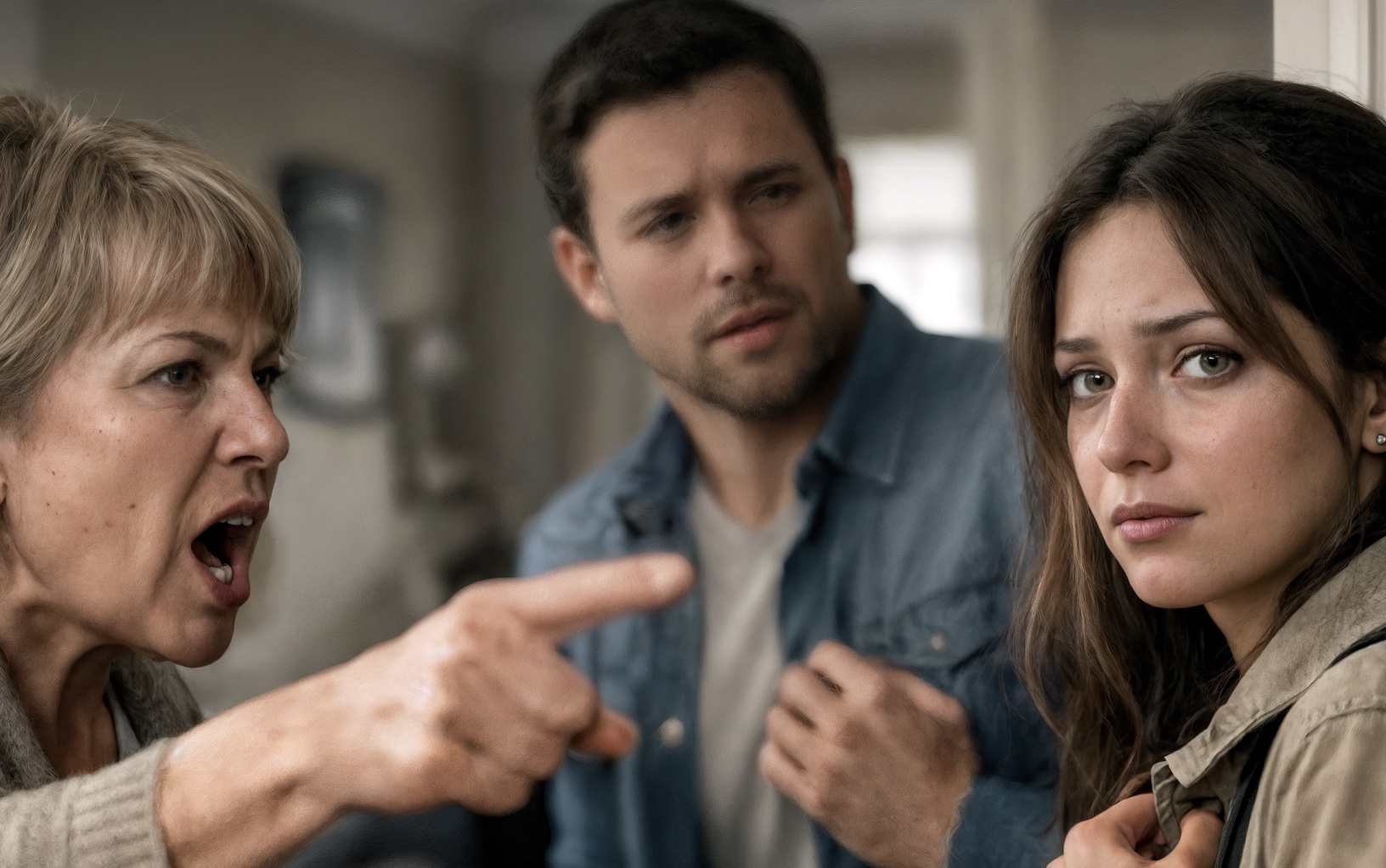
“Sister or not…” Raisa Petrovna curled her lip. “What’s that parasite doing here? Get out!”
Silence filled the kitchen. Even Dasha, who had been playing in the corner with a doll, went quiet and looked at her grandmother.
Vika turned pale. She set down the spoon she’d been stirring the soup with, her hands shaking.
Oksana didn’t find her voice right away. Heat rushed to her face; her heart began to pound.
“What did you just say?”
“I said she should leave. This isn’t a place for outsiders to wander around,” Raisa Petrovna raised her voice, staring straight at Vika.
Vika backed toward the wall, blinking rapidly. She didn’t know where to put herself. She wanted to speak, but her voice stuck in her throat.
Oksana stepped between her mother-in-law and her sister.
“Raisa Petrovna, this is my apartment. Mine. And I invite whoever I choose.”
“Your apartment!” Raisa Petrovna snorted. “My son lives here! He gets a say!”
“Maksim,” Oksana called without turning. “Did you hear that?”
There was silence from the living room. Then the couch creaked—her husband stood and walked to the kitchen. He stopped in the doorway, looking from his mother to his wife to Vika.
“What happened?”
“Your mother insulted my sister—in my home!” Oksana’s voice trembled.
“Mam, why would you do that?” Maksim frowned, but his tone stayed calm.
“Maksim, I’m protecting your interests! Outsiders are always hanging around, and your wife doesn’t spend time with you!”
“Vika isn’t an outsider,” Maksim said. “She comes often. She helps Oksana.”
“Helps!” Raisa Petrovna threw her hands up. “And who helps the husband? Who keeps the house afloat? Your wife is off to the store, and what about you?”
“Mom, that’s enough. No need for a scene.”
“I’m not making a scene! I’m telling the truth!”
Vika spoke quietly:
“Oksana… I should probably go.”
“You’re not going anywhere,” Oksana said firmly. “This is my home, and you’re welcome here.”
Raisa Petrovna spun toward Oksana.
“Oh, so she’s welcome? And what am I—unwelcome?”
“You’re behaving in a way that makes it hard to want you here.”
Her mother-in-law opened her mouth, closed it, opened it again. Maksim stood there shifting his weight, saying nothing.
“Maksim! Are you hearing how your wife talks to me?!”
He sighed.
“Oks, Mom didn’t mean it. She’s just worried.”
“Worried?” Oksana turned to him. “Maksim, your mother called my sister a parasite and a goat. In my apartment. Do you think that’s normal?”
“Well… she got carried away.”
“Carried away,” Oksana repeated slowly. “And you’re not going to say anything?”
“I told everyone to stop.”
“You told me, not the person who started it,” Oksana said, a cold smile flickering. “Fine.”
She turned to her sister.
“Vika, go to the bedroom. We’ll finish cooking later.”
Vika nodded and hurried past them, shutting herself in the bedroom. Oksana heard muffled sobbing through the door.
Raisa Petrovna stood in the middle of the kitchen with her arms crossed, looking satisfied—as if she’d achieved exactly what she came for.
Oksana walked to the stove, turned off the burners, covered the pot, pulled the casserole from the oven, and set it on the counter. She moved slowly and deliberately. Her mind was racing, but her hands were steady.
“Raisa Petrovna,” Oksana said without turning around, “leave my kitchen.”
“What?!” the older woman lunged forward.
“Leave. Now.”
“You’re throwing me out?!”
“I’m asking you to step out of the kitchen. This is my apartment, and I decide who stays here.”
“Maksim! Are you hearing this?!”
Maksim stood frozen in the doorway, face tense, eyes darting.
“Oksana, let’s not get emotional.”
“Not emotional?” Oksana turned and looked him straight in the eyes. “Your mother insulted my sister. Made her cry. In my home. And you’re asking me not to be emotional?”
“She didn’t do it on purpose…”
“She did it on purpose, Maksim. She came here looking for a fight.”
“You’re the one making a scandal!” Raisa Petrovna screeched. “Throwing your mother-in-law out of the house!”
Out of my house. The one I bought with my money—before I married you,” Oksana replied evenly.
“My son lives here!”
“He does. But I’m the owner. And I decide who’s welcome and who isn’t.”
Raisa Petrovna grabbed her bag and threw her coat on right there in the kitchen.
“Maksim, let’s go!”
Maksim froze.
“Mom, I live here…”
“Go, I said! You’re not going to stay with that…” she jabbed a finger toward Oksana.
“Mom, calm down.”
“I won’t! Let’s go!”
Maksim looked at Oksana. She stood by the stove with her arms crossed, expression calm but eyes icy.
“Maksim, decide,” Oksana said quietly. “Either your mother apologizes to Vika, or both of you leave.”
Raisa Petrovna sucked in a breath, outraged.
“Me?! Apologize?! To that girl?!”
“To my sister. Whom you insulted.”
“Never!”
“Then leave.”
Raisa Petrovna seized her son’s hand.
“Maksim, I’ll be waiting in the car. If you stay—consider yourself motherless.”
She stormed out. The door slammed. Maksim stayed in the hall, staring at the door and then at Oksana.
“Oks…”
“What, Maksim?”
“Maybe you didn’t have to be so harsh.”
Oksana didn’t answer. She walked past him, opened the bedroom door. Vika sat on the bed, wiping tears.
“Vik, it’s okay. Go wash your face and we’ll finish cooking.”
Vika nodded and went to the bathroom. Oksana returned to the kitchen. Maksim still stood in the doorway.
“Your mother is waiting in the car,” Oksana said.
“I’m not going.”
“Suit yourself.”
“Oksana, let’s talk like normal people.”
“About what, Maksim? Your mother insulted my sister. You stood there. Everything’s been said.”
“I didn’t stand there! I said to stop!”
“You said it to me—not to your mother, who caused it.”
Maksim rubbed his face with both hands.
“She’s my mother, Oksana. I can’t throw her out.”
“I’m not asking you to throw her out. I’m asking you to protect my family—my sister—from insults.”
“If Mom had just apologized, it would be over.”
“She refused.”
“Because you backed her into a corner!”
Oksana stared at him for a long moment.
“Understood.”
“What’s understood?”
“Everything, Maksim. Everything.”
She turned and went back to the bedroom, leaving him alone in the kitchen.
Oksana closed the bedroom door behind her and leaned against the frame, breathing deeply and evenly. Her hands shook, but she kept herself under control. Vika came out of the bathroom with red eyes.
“Oks… I’m sorry. This fight happened because of me.”
“Not because of you. Because of Raisa Petrovna. You didn’t do anything wrong.”
“Maybe I really should leave…”
“You’re not leaving. This is my home, and you are welcome here.”
Vika sat on the bed, hugging her knees. Oksana came closer and wrapped an arm around her shoulders.
“Don’t take it to heart. Raisa Petrovna is like that. She needs a reason to explode, so she latched onto you.”
“But she was so rude… ‘parasite,’ ‘goat’… I didn’t do anything.”
“Of course you didn’t. She just can’t stand that in this house, I’m the one in charge—not her son.”
Vika wiped her cheeks and looked at her sister.
“And Maksim? Why didn’t he say anything?”
Oksana sighed.
“I don’t know. Maybe he’s more afraid of his mother than he respects his wife.”
“Oks… what happens now?”
“I don’t know. We’ll see.”
They left the bedroom together. Maksim stood in the kitchen staring out the window. Hearing footsteps, he turned.
“Oksana, let’s talk.”
“Go ahead.”
“Mom is upset. This is hard on her.”
“Hard on her?” Oksana tilted her head. “And how do you think Vika felt?”
“She didn’t mean it…”
“Maksim, your mother called my sister a parasite and a goat. Whether she ‘meant it’ or not, it’s an insult.”
“I get it. But she’s my mother. I can’t fight with her.”
“Then go to her.”
“What?”
“Go to your mother—if she matters more to you than showing basic respect to my family.”
Maksim frowned.
“Oksana, don’t start.”
“I’m not starting. I’m ending. Nothing like this will happen in my home again.”
“Nothing like this? Oksana, you’re exaggerating!”
“Exaggerating?” Oksana stepped closer and looked straight into his eyes. “If you think insulting someone in my home is ‘nothing,’ then we truly have nothing to talk about.”
Maksim looked away, silent. Oksana turned back to the stove and continued preparing lunch as if nothing had happened. Vika stood beside her and helped. They worked in silence—only the bubbling soup and the hiss of oil in the pan could be heard.
Maksim lingered in the hall a little longer, then went to the living room. He turned on the TV but kept the volume low. Dasha ran up, climbed into his lap. He hugged his daughter and buried his face in her hair.
They ate lunch without speaking. Oksana set the table, called Maksim and Dasha. Everyone was quiet. Vika stared down into her plate. Maksim chewed without raising his eyes. Dasha swung her legs and chatted about a cartoon, but no one really listened.
After lunch Vika said softly:
“Oks… I think I’ll go. I’ll help Mom with something.”
“Stay,” Oksana said. “We planned to go to the store.”
“Another time. Really. I’m tired.”
Oksana hugged her sister goodbye.
“Don’t take it personally. Raisa Petrovna is just a nasty woman.”
“I know. Still… it hurts.”
“Text me when you get home.”
“Okay.”
Vika dressed and left. Oksana watched her go and closed the door. Then she returned to the kitchen and began washing dishes. Maksim sat in the living room watching TV. Dasha played with her dolls.
Two hours later, Oksana finished cleaning and sat on the couch with a book. Maksim got up, paced the room, and stopped at the window.
“Oks… maybe you should call Mom and apologize?”
Oksana looked up from her book.
“For what exactly?”
“Well… you kicked her out.”
“I didn’t kick her out. I asked her to apologize to Vika. She refused and left on her own.”
“You know what she’s like—proud. She won’t apologize.”
“Then she shouldn’t come here.”
“Oksana, she’s my mother!”
“And Vika is my sister. And in my home, my rules.”
Maksim clenched his fists, turned, and walked out. The bedroom door slammed. Oksana kept reading, though the letters blurred in front of her eyes.
That evening Raisa Petrovna called. Her number flashed on Oksana’s phone. Oksana answered.
“Yes?”
“Oksana, it’s me. Raisa Petrovna.”
“Hello.”
“What are you doing? Turning my son against his own mother!”
“I’m not doing anything. You came into my home and insulted my sister.”
“Your sister! Everything is ‘yours, yours, yours!’ Have you thought about family at all?”
“I have. My family is my husband, my daughter, my sister, my parents. You were part of that—until you crossed the line.”
“What line? I’m the mother-in-law! I have rights!”
“Rights to what—insult people in my apartment?”
“I have the right to raise my son!”
“Maksim is an adult. He decides how to live.”
“Adult? You manipulate him!”
“This conversation is over. Goodbye.”
Oksana ended the call and blocked her mother-in-law’s number. She set the phone down. Her hands were shaking, but her face stayed calm.
Maksim came out of the bedroom.
“Who was that?”
“Your mother.”
“And?”
“Nothing. There’s nothing to discuss.”
“Oksana, can we just talk like adults…”
“Maksim, I am acting like an adult. I’m protecting my family and my home. If your mother wants to come here, she needs to learn respect. If she won’t—she’s not welcome here.”
“You’re banning me from seeing my mother?!”
“I’m banning your mother from insulting people in my apartment. See her anywhere you like—at her place, outside, in a café. Just not here.”
Maksim opened his mouth, closed it, opened it again—then said nothing. He turned and went back into the bedroom. The door slammed.
Oksana sat down. Dasha crawled up onto her lap.
“Mom, why is Dad sad?”
“He’s tired, sweetheart.”
“And why did Grandma shout?”
“Grandma behaved badly.”
“And Aunt Vika cried.”
“She did. But it’s okay now.”
Dasha wrapped her arms around Oksana’s neck and pressed her nose into her shoulder. Oksana stroked her daughter’s hair and closed her eyes. It had been a heavy day.
The next days passed in tense silence. Maksim barely spoke—short answers, avoiding her gaze. Oksana didn’t force conversation. She’d said what she needed to say. Now it was on Maksim to decide where he stood.
Raisa Petrovna didn’t call again. Maksim visited his mother alone, without Oksana and Dasha. He came back gloomy and quiet. Oksana didn’t ask what they talked about. It wasn’t her concern.
A week later Vika came by again. She called first, asking if she could stop in. Oksana was happy to hear her voice.
“Of course. Come. Maksim won’t be here—he’s on the road.”
“I won’t be in the way?”
“Not even a little.”
Vika arrived with a cake and flowers. Oksana greeted her with a hug.
“Vik, how are you?”
“Okay. I’ve calmed down. It was just… unpleasant.”
“I know. But you did nothing wrong.”
“I know. Oks… are things okay between you and Maksim?”
“I don’t know. He’s mad I didn’t let his mother back in. He’s not talking.”
“Seriously?”
“Seriously.”
“And you? How are you?”
“Calm. I said my piece. I’m not going to tolerate disrespect in my own home anymore.”
Vika hugged her again.
“You’re right. This is your apartment. Your home. And nobody has the right to tell you who belongs here.”
They drank tea, talked, laughed. Dasha hovered nearby, showing off new toys and begging for a story. Vika read to her niece with enthusiasm, changing voices, acting out characters. Dasha laughed and clapped.
Oksana watched her sister and daughter and smiled. This was real—warmth, care, love. Not shouting, insults, and demands.
That evening Vika left. Oksana stayed home with Dasha, put her to bed, tidied the kitchen, then sat by the window with tea, watching the dark courtyard, the scattered streetlights, the passing cars.
She thought about Maksim—about how he acted that Saturday. How he stayed quiet while his mother insulted Vika. How he defended his mother instead of his wife. How he sulked because Oksana wouldn’t allow her mother-in-law to be rude in her own home.
So his mother mattered more to him. More than his wife, more than respect, more than peace. Oksana saw it clearly.
Maksim returned from his trip three days later—tired and withdrawn. He greeted Oksana, kissed Dasha, took a shower, then ate dinner. He ate in silence, eyes down.
“Maksim, we need to talk,” Oksana said when he finished.
“About what?”
“About what happened with your mother.”
“Oks, we already discussed it.”
“No, we didn’t. I want to hear one thing from you: do you believe your mother had the right to insult my sister?”
Maksim paused.
“No. She didn’t.”
“Good. Then why did you stay silent?”
“I didn’t. I told everyone to calm down.”
“You told me. Not your mother—the one who started it.”
“Oksana, what could I do? She’s my mother.”
“You could have taken your wife’s side. You could have demanded she apologize. You could have defended Vika. But you didn’t.”
Maksim rubbed his face with his hands.
“Oksana, it’s hard being between you two.”
“Hard for you?” Oksana let out a humorless laugh. “And for me it’s easy? Your mother comes into my home and humiliates my sister. You stay quiet. Then you get offended because I won’t welcome her back. And you think it’s easy for me?”
“I didn’t want a conflict.”
“Your mother created the conflict. Not me.”
Maksim got up from the table.
“Oks, I’m tired. I don’t want to argue.”
“We’re not arguing. We’re talking.”
“I don’t see the difference.”
He went into the bedroom. Oksana stayed at the kitchen table. The conversation had failed. Maksim didn’t understand—or didn’t want to.
A week later Raisa Petrovna called Maksim. He spoke quietly, but Oksana caught fragments.
“Mom, I can’t… No, Oksana won’t let you… Mom, what do you want me to do…?”
He hung up and came into the kitchen.
“Mom wants to come over. For Dasha’s birthday.”
“When is her birthday?”
“In two weeks.”
“I see.”
“Oks, can we let her come? Just for Dasha.”
Oksana looked at him.
“Has your mother apologized to Vika?”
“No.”
“Then no.”
“Oksana, it’s a child’s birthday!”
“Exactly. My child’s birthday. In my home. And I don’t want a woman there who insults my family.”
“But Dasha wants to see her grandma!”
“Then Raisa Petrovna can see Dasha another day. Invite her to her own place. I’m not against that—just not here.”
Maksim’s jaw tightened.
“You’re getting revenge.”
“I’m protecting my home.”
“It’s the same thing.”
“No, Maksim. It’s not.”
He turned and walked away. That evening he packed a bag and said he’d stay at his mother’s for a couple days. Oksana didn’t stop him.
They celebrated Dasha’s birthday without the mother-in-law. Oksana’s parents came, Vika came, and a few friends brought their children. It was loud and joyful. Dasha squealed over presents, blew out the candles on her cake, and played with the guests. Maksim arrived later in the evening, congratulated Dasha, gave her a doll. He sat quietly, gloomy. Oksana’s parents exchanged glances but didn’t ask questions.
After the party Maksim went to his mother again. He returned three days later.
“Oksana, we have to decide.”
“Decide what?”
“How we’re going to live.”
Oksana set her book down and looked at him.
“Explain.”
“I can’t live without talking to my mother.”
“No one is stopping you from talking to her.”
“Not letting her into the house is stopping me.”
“Maksim, I won’t allow someone who insults my family into my home. If your mother wants to come here, she apologizes to Vika. If she won’t, she stays away.”
“She won’t apologize.”
“Then that’s her choice.”
“So what now?”
“We live like we’ve been living.”
Maksim shook his head.
“That doesn’t work for me.”
“Then what does?”
“For my mother to be able to come into the home where I live.”
“This is my home, Maksim. I bought it before we married. And I decide who comes here.”
“So I’m nobody here?”
“You’re my husband. My child’s father. But the apartment is mine.”
Maksim stood up and paced.
“Got it. So I’m a tenant to you.”
“Don’t twist my words.”
“I’m not. You said it yourself—it’s your apartment. So I live here by your permission.”
“Maksim, don’t make it dramatic. This isn’t about the apartment. It’s about your mother insulting my sister and refusing to apologize.”
“And you won’t forgive.”
“I will—when she apologizes.”
Maksim stopped at the window and looked out into the yard.
“I’m leaving.”
“Where?”
“To my mother’s. For now. Until we figure this out.”
Oksana nodded.
“Alright.”
“That’s it? ‘Alright’?”
“What else do you want?”
Maksim stared at her for a long moment, then went to the bedroom and began packing. Oksana stayed in the living room, listening to the sounds: drawers opening, clothes being folded, shoes being pulled out.
Maksim came out with two bags and set them by the door.
“I’ll take the rest later.”
“Okay.”
“Will you tell Dasha?”
“I will.”
“Oksana… maybe you’ll still think about it?”
“Think about what, Maksim? You chose your mother’s side. I chose my family’s side.”
“I’m your family.”
“You were—until you defended the person who insulted my sister.”
Maksim lifted the bags, opened the door, and turned back.
“You’ll regret this.”
“I don’t think so.”
He left. The door closed softly behind him. Oksana remained in the living room, listening to the silence. Strangely, she didn’t feel heavy. Only calm.
She got up, went to the kitchen, put the kettle on, took out her favorite mug, made tea, and sat by the window. Outside, the first snowflakes drifted down. November. Winter was close.
Dasha slept in her room. In the morning she would ask where Dad was. Oksana would explain simply: Dad went to Grandma’s to live for a little while. Dasha would understand. Children understand more than adults realize.
Her phone buzzed—Vika messaged.
“Oks, how are you?”
“I’m okay. Maksim left for his mother’s.”
“Seriously?”
“Yes. His decision.”
“Oks, I’m sorry. Because of me…”
“Vik, not because of you. Because my husband couldn’t protect my family. Don’t blame yourself.”
“Are you sure you did the right thing?”
“I’m sure. No one in my home will ever dare insult the people I love again.”
“I’m proud of you, little sis.”
“Thank you.”
Oksana finished her tea, washed the cup, dried it, and went to bed. She lay there a long time staring at the ceiling, thinking. Maksim had left. Maybe he’d come back, maybe he wouldn’t. That was his choice now.
What mattered was that the apartment was peaceful again. No insults, no shouting, no attempts to declare who was “in charge.” Just Oksana, Dasha, a warm home—and the right to decide who is welcome and who isn’t.
And that was right. Because a home should be a fortress: a place where you protect your own, not a place where you invite in those who cause pain.