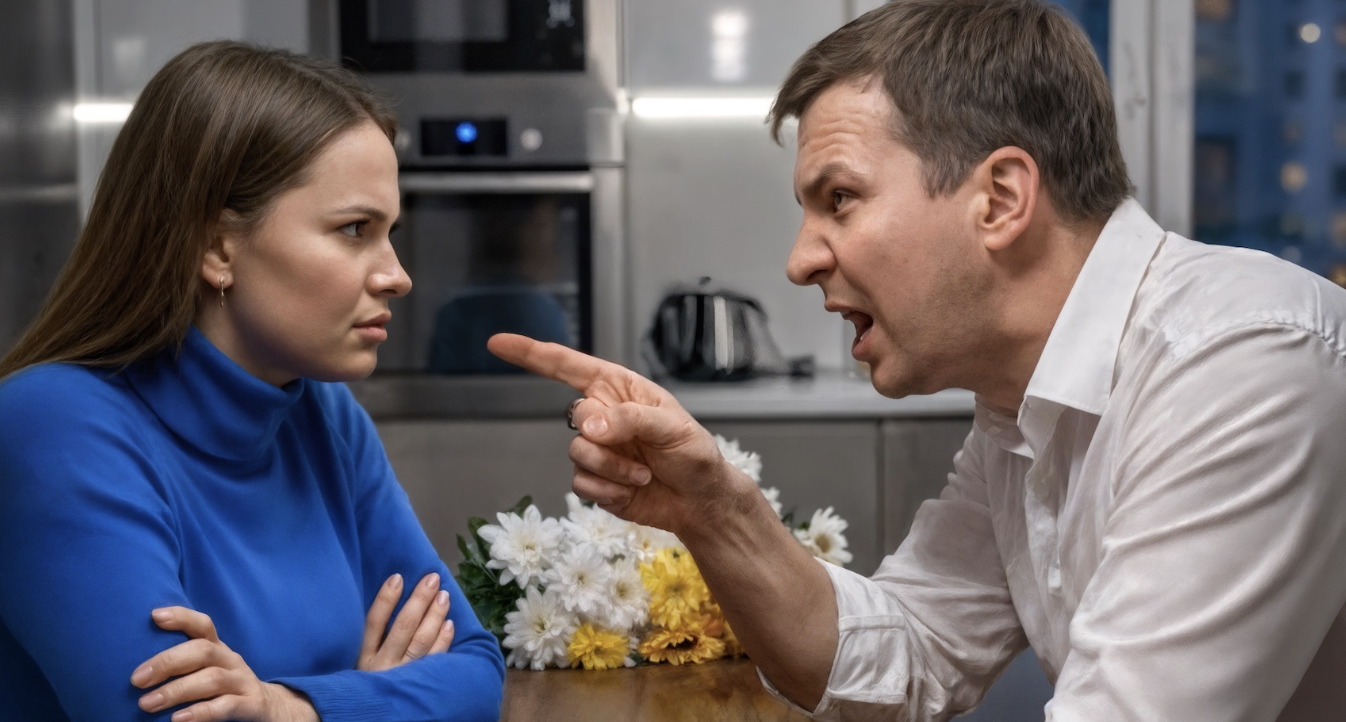
The Day Everything Started Falling Apart
The first real warning sign hit in mid-March, when Oleg came home earlier than usual with a cardboard box in his hands. Marina could tell from his face right away—something they’d both secretly feared for months had finally happened.
“Downsized,” he said curtly, dropping the box of his office stuff on the hallway floor. “They cut the entire department. ‘Saving money,’ apparently.”
Marina stepped forward to hug him, but he pulled away, headed to the kitchen, and yanked a beer out of the fridge.
It was three in the afternoon on a Wednesday.
“Oleg… we’ll survive this,” Marina said carefully. “My paycheck is stable—we’ll manage. The main thing is not to give up. You’ll start looking, send out resumes—”
“Don’t comfort me,” he snapped. “I know what I’m supposed to do.”
But from that moment on, it became obvious he wasn’t planning to do much of anything.
The first week Marina blamed it on shock. People need time, she told herself. Oleg slept late and spent most of the day at the computer—maybe applying for jobs, maybe playing games. She didn’t check. Marina worked as a manager at a construction company, left at eight in the morning, came home around seven in the evening, and every day she hoped she’d walk in and see him moving forward.
But the changes she saw weren’t the changes she’d been hoping for.
By the end of the second week, the apartment looked like a different place. Oleg would cook for himself and leave the mess as if someone else lived there to clean it up. Frying pans with dried eggs sat on the stove until night. Crumbs covered the table. Empty beer bottles lined up neatly on the windowsill like a display.
Marina came home exhausted and immediately started cleaning.
“Oleg… you could at least wash the dishes,” she tried one evening, fighting to keep her voice neutral.
“Busy,” he muttered, eyes still locked on the screen. “I’ll do it later.”
Later never came.
A month after the layoff, Marina realized it wasn’t only the mess. Oleg had changed. He was constantly irritated, snapping at her for the smallest comment, barking back like everything she said was an attack. When she cautiously asked how the job hunt was going, he exploded.
“What are you doing—checking up on me now? Am I some little kid? I’ll find a job when I find it!”
“I’m just asking,” Marina said quickly. “I’m worried…”
“Worried?” he mocked. “Then stop meddling. I’ve got enough problems as it is.”
Marina fell silent. She wanted to say those problems belonged to both of them now. That she was tired too. That it would be nice to feel like they were a team.
But she swallowed the words, because she was afraid of making him angrier.
And then the real problem arrived.
The Brother Who “Just Needed a Couple Days”
In early May, Marina came home from work and, once again, found a mountain of dirty dishes—except this time Oleg wasn’t alone in the kitchen. Sitting at the table, surrounded by beer bottles and chip bags, was his younger brother Sergey.
“Marinka!” Sergey boomed. “Hey! I’m going to stay with you guys for a bit. You don’t mind, do you?”
Marina looked at her husband. Oleg stared off to the side like the wall was suddenly fascinating.
“What do you mean… stay?” she asked carefully.
“Me and my wife Olya had a little argument,” Sergey said with a careless grin. “I figured I’d give her time to cool down. Oleg said I could crash here. Just a couple days. Nothing more.”
A couple days turned into two weeks.
Sergey camped out on the living room couch and claimed the space like it belonged to him. His clothes and stuff were everywhere. He blasted the TV late into the night, not caring who needed sleep. The brothers drank beer together, laughed about their own jokes, and Marina felt like a guest in her own home.
Her home—an apartment she’d bought with her money before she even married Oleg. He moved in after the wedding. But suddenly it was as if everyone had forgotten that.
“Oleg, we need to talk,” Marina said on a weekend when Sergey stepped out to the store.
“About what?” Oleg didn’t even look up from his phone.
“Your brother. He’s been living here for two weeks. When is he leaving?”
“Soon,” Oleg shrugged. “Why are you freaking out?”
“I’m not freaking out. I want to understand what’s happening. This is my apartment, Oleg, and I never agreed to having someone else live here.”
That made him look up.
Something ugly flashed in his eyes.
“My apartment?” he repeated slowly.
“Yes. Mine. I bought it. You know that.”
Marina knew she was walking onto thin ice, but she couldn’t stop. All her bottled-up frustration finally spilled out.
“Oleg, I’m exhausted. I work all day, and I come home and clean up after two grown men. There’s dirt everywhere, dishes never washed, cigarette butts on the floor—”
“Cigarette butts on the floor?” Sergey scoffed, coming back in with another bag of beer. “Seriously? The ashtray just overflowed.”
“I’m not talking to you, Sergey,” Marina snapped.
“Well excuse me, Your Highness,” he rolled his eyes and disappeared into the living room.
Oleg stood up. Marina noticed his jaw tightening.
“Listen, Marina,” he said quietly, but the anger was plain. “I know you’re tired. But me and my brother aren’t just sitting here for fun. I’m going through a hard time. I need support— not your constant complaints.”
“Support,” Marina blurted, “like me paying for you for two months?”
Silence.
From the living room, the TV volume jumped—Sergey’s version of “giving them privacy.”
“Paying for me?” Oleg gave a bitter half-smile. “You’re really going to say that out loud?”
“Am I wrong?” Marina’s voice trembled, but she kept going. “I pay for everything. Bills, food, everything. And you can’t even wash your own plate.”
“I’m looking for work!” he roared.
“You’re drinking beer and playing tank games!” she snapped back. “I see you, Oleg. I’m not blind.”
He stepped closer, and for a moment she felt like she didn’t know him at all. A stranger stood in front of her—angry and hostile.
“You know what, Marina?” he hissed. “I’m sorry I’m not meeting your expectations. But I’m sick of your nagging. You act like I owe you something.”
“You owe me basic respect,” she said quietly. “You live in my apartment, I feed you—”
“In your apartment,” he cut in. “Ah, so that’s what this is. You’re going to throw that in my face now?”
“I’m not throwing anything,” Marina said, forcing herself to stay steady. “I’m stating facts. And I don’t like what’s happening here. I want your brother gone. And I want you to start doing something at home while you’re not working.”
Oleg turned away, paced the kitchen, then spun around.
“Who cares whose apartment it is?” he snapped. “I’m the man—meaning I’m in charge of everything. I’ll do what I want here. If I need my brother, he stays. If I want to rest, I’ll rest. And you…”
He didn’t finish, but Marina understood exactly what he meant.
“You know what, Oleg?” Her voice went unexpectedly calm. “You’re right. You’re a man. So go be the ‘boss’—just not here.”
“What?” he blinked, confused.
“Pack your things,” she said, crystal clear. “You and your brother. Pack up and get out. Today.”
“Are you insane?” Sergey burst in from the living room.
“Shut up,” Marina snapped without even looking at him. “This doesn’t involve you.”
“Marina, you can’t kick me out,” Oleg tried to smirk, but it didn’t land. “This is ridiculous.”
“Yes, I can,” she said. “And I am. You said it yourself—who cares whose apartment it is, you’re the man and you run everything. Perfect. Go run everything somewhere else. Move in with Sergey. Let Olya clean up after both of you if you two think you’re such ‘kings.’”
“You’ve lost your mind,” Sergey muttered.
“Sergey, if you’re not out of here in an hour, I’m calling the police,” Marina said softly—so softly it sounded more dangerous than shouting. “You can test whether Olya will take you back. Or you can go to your mom. I don’t care.”
Oleg’s confidence cracked. He clearly hadn’t expected her to go this far.
“Marina, we can talk about it,” he started quickly. “No need to—”
“There’s nothing to talk about.” Marina opened the closet, grabbed a bag, and tossed it at him. “I’m done being a maid in my own home. I’m done tolerating your rudeness. I’m done watching you turn into someone I don’t recognize. Leave. And think about who you’ve become.”
“You don’t have the right—” Oleg began, but she cut him off.
“I do. This is my apartment. My home. And I decide who lives here. You wanted to be the boss? Go be the boss somewhere else.”
The brothers exchanged a look. Marina could tell they didn’t believe her. They were waiting for tears, for apologies, for her to back down.
She didn’t.
“One hour,” she repeated. “And I don’t want either of you here when it’s up.”
They were gone within forty minutes, stuffing their things into bags, muttering about hysterical women and vicious witches. Marina stood at the window and watched them load Sergey’s car. Her hands shook, her throat tightened, but she refused to cry.
When the door closed behind them, the apartment felt painfully quiet.
Marina sat at the kitchen table, cradling a mug of cold tea, and only then did she let herself cry—not from self-pity, not from hurt, but from relief. As if she’d dropped a crushing weight she’d been carrying for months.
Silence… and a New Kind of Peace
The first three days felt strange. Marina came home from work expecting chaos out of habit, but the place was clean—exactly as she’d left it in the morning. The silence was unfamiliar, almost ringing in her ears. No TV blasting late at night. No drunk laughter. No empty bottles.
She wandered from room to room like she was meeting her own home again.
It was comforting… and strangely sad.
Oleg called on the second day. She didn’t answer.
Then he texted:
“You know you went too far. I’m at Sergey’s. Olya isn’t happy at all. Maybe stop acting crazy?”
Marina didn’t reply.
On the third day he called five times. She ignored every call.
On the fourth day, he showed up.
He rang the doorbell, and Marina opened. Pretending she wasn’t home felt childish.
“Marina, come on,” Oleg said. He looked rough, unshaven, worn out. “Enough already. Olya kicked us out. She said she’s not carrying two lazy men on her back. I’m basically on the street now.”
“And Sergey?” Marina asked.
“He’s at Mom’s. But there’s only one spare spot there. He took it.”
“Then you’ll find a spot too.”
“Mom lives in a two-bedroom!” he protested. “Where am I supposed to go?”
“On the couch. Or the floor. Not my problem, Oleg.”
He stared at her like he didn’t recognize her.
“Marinochka… please. I get it. I was wrong. Let me come back. We’ll talk calmly—”
“There’s nothing to talk about,” Marina said, arms crossed. “You didn’t change. You just ran out of options.”
“I did change!” he rushed. “I swear. I understand everything now.”
“You understood that Olya wouldn’t tolerate your arrogance either?” Marina said. “That being ‘the boss of everything’ only works in places where people let you get away with it?”
Oleg’s jaw tightened.
“So what— I’m supposed to live on the street now?”
“Live with your mom. Find a job. When you have work, come talk to me.”
“Marina, that’s stupid!”
“No, Oleg. What was stupid was tolerating what you allowed yourself to become. Leave. And don’t call me until you have a job. I mean it.”
She closed the door.
He stood there a moment longer, then she heard footsteps—slow, heavy ones—moving away.
Marina went back to the kitchen, sat down… and realized she was smiling. For the first time in weeks, she felt genuinely light.
A Real Apology
The following weeks were calm. Marina worked, came home, cleaned up—only after herself now, which somehow felt pleasant. She cooked dinner, watched shows, read books she’d meant to read for ages.
Sometimes she felt lonely. Sometimes she caught herself listening for the sound of keys in the lock. But then she remembered the last months: the filth, the disrespect, the line—“Who cares whose apartment it is?”—and loneliness didn’t seem nearly as frightening.
Oleg called once a week. Marina never answered.
Then, a month and a half later, he wrote:
“I got hired. Sales manager for security systems. Probation three months, but they promise good pay. Can I come over?”
Marina stared at the message for fifteen minutes.
Then she replied:
“Come Saturday at two. We’ll talk.”
On Saturday, Oleg arrived right at two. Clean shirt. Shaved. A bouquet of flowers in his hands.
“Come in,” Marina said, stepping aside.
They sat at the kitchen table. Oleg set the flowers down, folded his hands, and looked her straight in the eye.
“Marina… I want to apologize,” he said quietly. “For everything. I acted like an absolute idiot.”
Marina said nothing. She waited.
“When I got fired, I just… broke,” he admitted slowly. “I felt useless. Like a failure. And instead of pulling myself together, I took it out on you—on the only person who was actually supporting me.”
“You didn’t just take it out on me,” Marina said softly. “You tried to feel powerful at my expense. To be ‘the boss’ somewhere.”
He nodded.
“Maybe you’re right. It was easier to play the ‘man of the house’ than admit I was scared. That nothing was working. That I felt like garbage.”
“Oleg, I would’ve supported you,” Marina said. “If you’d talked to me. If you hadn’t been cruel. If you hadn’t turned my home into a dump. If you hadn’t dragged your brother in here.”
“I know.” He rubbed his face with both hands. “God, I see it now. When Olya kicked us both out—Sergey too—I finally saw myself from the outside. Two grown men with no jobs, behaving like pigs. And I thought… is that really me?”
“And what did you answer?”
“That yes,” he said, voice raw. “That’s exactly who I became. And I hated it.”
He told her he’d lived at his mother’s for three weeks, getting lectured daily: that he was an idiot, that he’d thrown away a good wife, that he was acting like a helpless child. He admitted he’d wanted to snap back at her—then realized she was right.
Marina listened and felt something inside her soften, inch by inch.
“I started actually job hunting,” Oleg said. “For real. Ten resumes a day. Interviews. And I found something. The pay is lower than before, but it’s a start. And I’m going to work hard.”
“Why didn’t you do that earlier?” Marina asked. “When you lived here?”
He paused.
“Because I didn’t have to,” he said honestly. “Because you fed me. You stayed. Why push myself if I could sit and play tank games?” He gave a bitter smile. “I was a parasite, Marina. I see that now. And I’m ashamed.”
“That’s good,” Marina said, lifting the bouquet and inhaling the scent. “Chrysanthemums. My favorite. You remembered.”
“Of course I did.”
They were silent for a moment. Outside, a couple walked by with a dog. Children were laughing somewhere in the courtyard.
“So… what now?” Oleg asked quietly. “I want to come back. I want to start over. But I’ll understand if you don’t. If I burned every bridge.”
Marina studied him. He looked ashamed, tired, uncertain—nothing like the arrogant man who’d screamed about being “the man” and therefore “in charge of everything.”
“Rules,” Marina said at last. “If you come back, there will be rules.”
He nodded quickly.
“First: housework is fifty-fifty. Cooking is fifty-fifty. Everything at home is shared.”
“Agreed.”
“Second: your brother is never staying here again for more than one evening. If he has problems with his wife, he solves them himself.”
“Agreed.”
“Third: no disrespect. Not to this home and not to me. If you’re struggling, we talk. You don’t dump your anger on me and you don’t turn my apartment into a landfill.”
“Marina… I agree,” he said, reaching across the table and covering her hand with his. “I’ll be different. I swear.”
Marina looked at their hands, then at his face.
“If you ever go back to the way you were,” she said slowly, “there won’t be a second chance. Do you understand?”
“I do.”
“Alright,” she said with a faint smile. “Then you can come back.”
He stood, walked around the table, and hugged her. Marina closed her eyes and rested her forehead against his shoulder. She knew this wasn’t the end of problems. Trust doesn’t rebuild overnight.
But it was a beginning.
“Thank you,” he whispered. “Thank you for not leaving me for good.”
“I didn’t leave you,” Marina corrected gently. “I left the person you became.” She pulled back slightly and met his eyes. “This version… I think I still remember.”
Oleg smiled—truly smiled—for the first time in months.
And Marina thought that sometimes people really do have to hit rock bottom before they understand how far they’ve fallen. Sometimes they have to lose everything to appreciate what they had.
And sometimes, all you need is the courage to say enough—and not be afraid of being alone, if the alternative is living in constant humiliation.
That evening they cooked dinner together. Oleg chopped salad while Marina fried chicken. They talked—carefully, avoiding sharp edges, but they talked. The sun set outside the window, the kitchen smelled of garlic and spices, and for the first time in a long time, Marina felt like maybe things really could be okay.
Not instantly. Not magically.
But with time—yes.