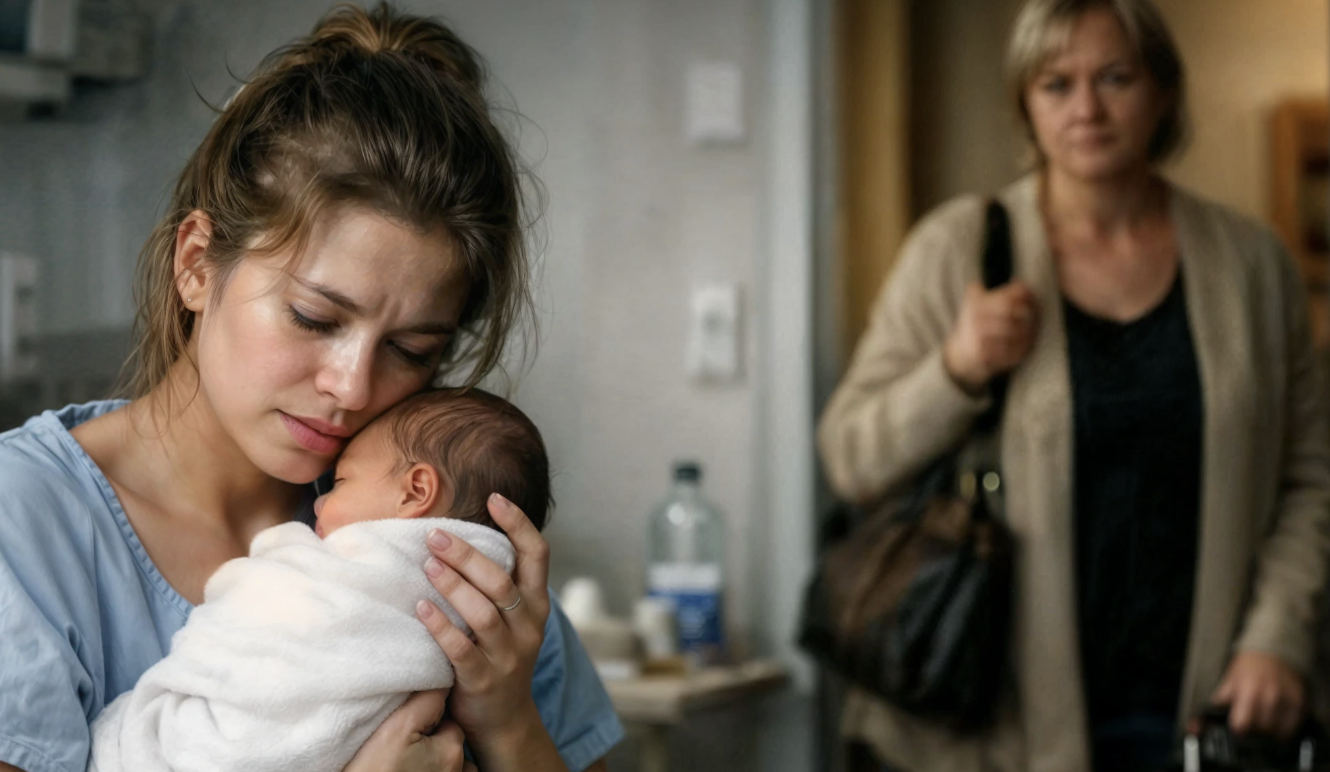
Lera was sitting on the floor in a small room, shifting baby clothes from one box to another. The eighth month of pregnancy was making itself felt—her back ached, her legs were swollen, but she didn’t want to stop what she’d started. Tiny onesies with little bunnies, soft diapers, rattles—everything lay scattered around, waiting for its moment.
The nursery was small, but cozy. Lera had chosen a pale blue for the walls, bought a white crib with carved side panels, and hung a mobile with plush teddy bears above it. The changing table stood by the window next to a chest of drawers for baby clothes. Everything had been thought through down to the smallest detail.
Her husband Artyom came into the room, leaned against the doorframe, and looked the place over.
“Not bad,” Artyom nodded, sliding his hands into his jeans pockets. “You put the table in a good spot.”
Lera lifted her head and smiled.
“Really? I was thinking maybe I should move it to the other wall…”
“It’s fine. Don’t stress.”
Artyom turned and walked back into the living room without even offering to help pick up the scattered things. Lera sighed and went back to sorting the little rompers by size. She was used to it—her husband never really got involved in the details. He’d nod approvingly when necessary, and that was where his participation ended.
Her phone rang while Lera was unpacking crib covers. The screen showed her mother-in-law’s name—Tamara Ivanovna. She called every day, sometimes twice a day. Lera grimaced, but answered.
“Hello, Tamara Ivanovna.”
“Hello, Lera. So, how are you? Sitting in that nursery again?”
“Yes, I’m finishing the last touches. I put the toys away, put the cover on the mattress…”
“Oh, and why do you need all that nonsense?” her mother-in-law cut in. “Babies grow fast—six months and you’ll throw all of this away. Why waste money?”
Lera pressed her lips together. This was far from the first conversation like this.
“Tamara Ivanovna, I want everything to be nice and comfortable for the baby.”
“Comfortable!” her mother-in-law snorted. “You’d be better off saving money. When I raised Artyom, there were no toys for a thousand rubles, no designer cribs. And nothing—he grew up to be a normal person.”
Lera rolled her eyes and stepped away from the crib, lowering herself onto the chair by the window. Arguing was pointless. Tamara Ivanovna always knew best—how to live, what to buy, and how to raise children.
“Yesterday I saw those diapers you bought in the store,” her mother-in-law went on. “Three times the price! Why? Just buy plain calico ones—Soviet babies slept in them and nothing happened.”
“Alright, Tamara Ivanovna,” Lera answered wearily. “I’ll think about it.”
“That’s right, think. Or later you’ll be complaining you don’t have enough money.”
After the call, Lera put the phone on the windowsill and stared out the window. The autumn wind chased yellow leaves around the courtyard, and the sky was covered in gray clouds. Her mood soured instantly. Tamara Ivanovna could crush all enthusiasm with a single phone call.
The next day, Lera was back in the nursery again. She arranged undershirts on the shelves, hung a terry towel with a little duck hood on a hook, and lined up jars of powder and cream on the dresser. Everything looked sweet and homey. Lera pictured herself bathing the baby, changing diapers, rocking him to sleep—and warmth spread through her chest.
Artyom peeked in toward evening, glanced at the shelves, and nodded.
“Neat. Good job.”
“What do you think—should we buy a nightlight too?” Lera asked. “So I don’t have to turn on the main light when I get up at night.”
“Sure, if you want. You know better what’s needed.”
Artyom left again. Lera frowned. “You know better”—her husband’s standard phrase for anything related to the baby, as if it concerned only her.
A week later, the doorbell rang. Lera opened the door and froze. On the landing stood Tamara Ivanovna with a huge bag in one hand and a folder of documents in the other. Her face was glowing; her eyes shone with excitement.
“Lerochka, hello! Well, are you happy to see me?”
“Hello, Tamara Ivanovna,” Lera mumbled, bewildered. “You didn’t say you were coming…”
“And why would I need to warn you? I’m going to be here all the time now!”
Her mother-in-law stepped into the apartment without waiting for an invitation, dropped the bag on the floor in the entryway, and unfastened her coat.
“Where’s Artyom? Still at work?”
“Yes. He’ll be back in an hour.”
“Perfect. Then I’ll tell you everything right away. Sit down—there’s news!”
Tamara Ivanovna marched into the living room, sat on the couch, and patted the seat next to her. Lera slowly lowered herself onto the edge, feeling anxiety rise inside her.
“So listen,” her mother-in-law began, opening the folder. “I sold my apartment! Closed the deal yesterday, got the money. Now I’m moving in with you for good!”
Lera blinked several times, trying to process what she’d just heard.
“As in… for good?”
“Exactly!” Tamara Ivanovna smiled broadly. “I’ll live with you, help with the baby. You’re giving birth for the first time—no experience at all. I know everything. I’ll teach you.”
Lera’s heart began to race. A two-room apartment—one bedroom for her and Artyom, the second was the nursery. Where was her mother-in-law supposed to live?
“Tamara Ivanovna, but we… our apartment is small, two rooms. We already set up the nursery…”
“Exactly!” her mother-in-law cut in, undimmed. “That’s where I’ll live. The baby will sleep with you in your room at first anyway—why would he need a separate room in the first months?”
Lera opened her mouth, but the words stuck. Her mother-in-law kept going as if she didn’t notice the shock.
“I’ve already thought it all through. You can move the crib into your bedroom for now—there’s enough space. And I’ll put my things in the nursery. Convenient!”
“But I spent so much time…” Lera started.
“Oh, come on, it’s nothing! We’ll move things back later when the baby gets older. Right now the main thing is that I’m nearby. You won’t manage on your own—you need help.”
Tamara Ivanovna set the documents on the coffee table and leaned back, clearly pleased with herself.
“And you know what else I think?” she added, dropping her voice into a confidential tone. “Maybe you shouldn’t fuss so much with the baby at all. Give birth, leave him at the maternity hospital for a couple of weeks—let them take care of him there. And I’ll get settled in the meantime, prepare everything properly. You’ll be exhausted after labor—you’ll need rest.”
Lera sprang up so abruptly her head spun. She grabbed the armrest so she wouldn’t fall.
“What?!” Lera gasped. “What did you just say?”
“Oh, I don’t mean it badly,” Tamara Ivanovna waved a hand. “I’m just thinking of your comfort. The first days are the hardest—why deal with a newborn right away? I’ll help, I’m experienced. You don’t know anything about raising children.”
Lera stood in the middle of the room, staring at her mother-in-law, unable to believe her ears. Heat rushed to her face; her fingers curled into fists. Was Tamara Ivanovna seriously suggesting she leave her newborn in the hospital so she could take over the nursery?
“Tamara Ivanovna, that’s my child,” Lera said dully. “And I’m not abandoning him anywhere.”
“And who’s talking about ‘abandoning’?” her mother-in-law snapped. “I’m talking about help! You’re young and inexperienced—it’ll be hard for you. I know what’s right. I raised Artyom alone, without all these fashionable gadgets. And he turned out a good man.”
Lera turned and walked out, unable to continue. She locked herself in the bathroom, turned on cold water, and held her hands under the stream. Breathing was difficult; her thoughts tangled. Was this really happening?
Her mother-in-law had sold her apartment. She was going to live with them. In the nursery Lera had prepared for two months. And on top of that she was talking about leaving the baby in the hospital.
Footsteps sounded outside the door.
“Lera, why are you offended?” Tamara Ivanovna’s voice was irritated. “Come out, let’s talk properly.”
“I need to be alone,” Lera answered, trying to keep her voice steady.
“Well, here we go. Pregnant women are always so nervous. Fine—I’ll put the kettle on.”
Lera heard her mother-in-law head to the kitchen and exhaled. She had to wait for Artyom. He had to decide something. It was his mother—let him explain that this was impossible.
When Artyom came home from work, Tamara Ivanovna was already running the kitchen. She’d brewed tea, cut bread, and taken sausage out of the fridge.
“Mom!” Artyom said, startled. “Where did you come from?”
“Surprise, son!” Tamara Ivanovna hugged him and kissed his cheek. “I’m going to live with you now. Sold my apartment—moving in for good.”
Artyom frowned.
“How is it for good? We didn’t discuss this…”
“And what is there to discuss? I’ll help with the baby. Lera won’t manage alone—no experience. I’ll teach her how to change diapers, feed, put him down. It’ll be easier for you!”
“But where are you going to live?” Artyom looked around as if searching for a catch.
“In the nursery. The baby will sleep in your bedroom at first anyway—why does he need his own room?”
Lera stood in the kitchen doorway, silently watching. Artyom scratched the back of his head, looked at his mother, then at Lera.
“Well… in principle, Mom’s right. The baby really will sleep with us the first months. Maybe it would be more convenient…”
Lera couldn’t believe her ears. Artyom was agreeing—just like that—without even asking her.
“Artyom,” Lera called quietly. “Can we talk?”
“Wait a second. Mom, what did you do with the money from the apartment?”
“It’s in the savings book. Don’t worry, I’m not a spendthrift. I’ll help you and put money away for the grandchild.”
“Okay. Well then, Mom, let’s talk about how we’ll organize everything.”
Something clenched inside Lera. Artyom wasn’t going to object at all. He was simply accepting his mother’s decision as a given.
“Artyom, we need to talk. Alone,” Lera repeated, raising her voice.
“Oh, come on, why the secrets?” Tamara Ivanovna waved a hand. “We’re family—let’s decide everything together.”
“I don’t want anyone living in the nursery,” Lera blurted. “I spent two months getting that room ready!”
“Lerochka, don’t be stubborn,” Tamara Ivanovna said soothingly. “I’m not moving in there forever. The baby will grow, I’ll move out. In the meantime I’ll help you.”
“But you sold your apartment! Where will you move out to?”
“I’ll find something. Or I’ll rent. Don’t worry so much.”
Lera looked at Artyom, waiting for support. But her husband only shrugged.
“Ler, let’s not start a conflict right away. Mom wants to help. Is that bad?”
“It’s bad that nobody asked me!” Lera’s voice trembled. “This is our home, our child—and someone just shows up and announces she’s taking the nursery!”
“Oh, you’ve gotten so nervous,” Tamara Ivanovna sighed. “Pregnant women shouldn’t worry like that—it’s bad for the baby.”
Lera turned and left for the bedroom, slamming the door. She sat on the bed and buried her face in her hands. Tears rose, but she held them back. Crying was the last thing she needed right now.
A few minutes later, Artyom came into the bedroom. He sat beside her and put a hand on her shoulder.
“Ler, what’s wrong? Mom really wants to help.”
“Artyom, she said I should leave the baby in the hospital and not take him home right away,” Lera lifted her head and looked him in the eyes. “Did you hear that?”
Artyom frowned.
“What? That can’t be.”
“It can. She said it. Word for word. That I should give birth, leave him there, and she’d get settled in the nursery.”
“Well, Mom says things sometimes… she didn’t mean it seriously.”
“What if she did?” Lera grabbed his hand. “Artyom, this is our child. I don’t want your mother telling me how to raise him. And I don’t want her living in the nursery!”
“Okay, okay, I’ll talk to her,” Artyom sighed. “But no hysterics, alright?”
Lera nodded, though everything inside her was boiling. “No hysterics.” As if she were the one who’d created this circus.
Artyom left the bedroom, and Lera stayed sitting on the bed. A strange calm washed over her suddenly—not anger, not hurt, but calm. Cold and clear. Through the slightly open door, she saw Tamara Ivanovna at the kitchen table, drinking tea and flipping through a magazine as if nothing had happened.
A woman who was seriously planning to take the place meant for her future child. Who suggested leaving a newborn at the hospital. And her husband hadn’t truly been outraged—he’d only asked her not to make a scene.
Lera got up and walked to the wardrobe. She opened the top drawer of the dresser and took out a folder with documents. The title deed to the apartment—registered in her name. Bought three years ago, before she even met Artyom, with money left after she sold her room in a communal apartment she’d inherited from her grandmother.
The apartment was hers. Completely. No marital property, no rights for her husband or his mother.
Lera ran her fingers over the stamps on the document and suddenly felt the tension loosen. Everything became simpler. Much simpler than it had seemed a minute ago.
That evening, Tamara Ivanovna announced she’d go “home” to pack for the move.
“Tomorrow I’ll come with the bags and start settling in,” she said, fastening her coat. “Artyom, help me move the sofa tomorrow, okay? It’s a good fold-out one—will fit perfectly in the nursery.”
“Yeah, okay, Mom,” Artyom nodded, seeing her to the door.
Lera stood in the hallway, silently watching the farewell. Tamara Ivanovna turned back to her.
“Lera, don’t be offended, alright? I really want to help. You’ll see—after you give birth you’ll thank me for being there.”
Lera didn’t answer. She only nodded. Her mother-in-law left; Artyom closed the door and turned to his wife.
“See? Mom’s trying. She wants to be useful.”
“Yes, I see,” Lera said quietly.
“Let’s not fight over this. The baby’s coming soon—we need support.”
“Of course.”
Artyom put an arm around Lera’s shoulders and kissed her temple, then went to watch TV. Lera remained in the hallway, staring at the closed nursery door.
The next morning, while Artyom was at work, Lera went downstairs to the concierge desk. Aunt Vera sat at her little table, doing a crossword.
“Vera Petrovna, hello.”
“Oh, Lerochka!” the concierge looked up and smiled. “How’s the belly? Soon, right?”
“In a month. Vera Petrovna, I have a request.”
“I’m listening.”
“Don’t let anyone into my apartment without my permission. Under any pretext. Even if they say I asked. Only if I personally call and tell you to.”
Vera Petrovna frowned.
“Did something happen?”
“I don’t want unnecessary visitors. Pregnant women need peace.”
“I understand. Alright, Lerochka—don’t worry. I won’t let anyone through.”
Lera went back upstairs. She sat in the nursery on the chair by the window and looked at the crib, the teddy-bear mobile, the neatly folded diapers. All of it had to stay here—for the baby, not for her mother-in-law.
Closer to midday, the doorbell rang. Lera looked through the peephole. On the landing stood Tamara Ivanovna with two huge suitcases and several bags.
“Lera, open up!” her mother-in-law shouted. “I’m here!”
Lera didn’t open the door. She just stood behind it, listening as Tamara Ivanovna knocked and rang.
“Lera! Are you deaf? Open the door! I told you I’m moving in today!”
Silence.
“Lera, stop this nonsense! Open up immediately!”
Lera took her phone and pressed the intercom button, connecting to the landing speaker.
“Tamara Ivanovna, the nursery is for the baby. You will not be moving in with us.”
“What?!” her mother-in-law’s voice shot up several octaves. “What is this supposed to mean?!”
“No tricks. I’m simply not giving the nursery to anyone else. I wish you luck. In your life. Not in mine.”
“How dare you?! I’ll call my son—he’ll put you in your place!”
“Call him.”
Lera disconnected. She went into the bedroom, lay down, and placed a hand on her belly. The baby kicked from inside, as if in support. Lera smiled.
Ten minutes later, the phone rang. Artyom. Lera answered slowly.
“Lera, what are you doing?!” her husband shouted. “Mom just called me—she said you didn’t let her in!”
“That’s right. I didn’t.”
“How could you not?! You were home!”
“I was. And I stayed. Tamara Ivanovna didn’t.”
“Lera, that’s my mother! You have no right to treat her like that!”
“I do. This is my apartment. It’s in my name. I decide who lives here.”
Artyom fell silent. Then he exhaled.
“Listen, let’s talk calmly when I get home. Mom didn’t mean anything bad, she just—”
“She suggested I abandon the baby in the hospital so she could take the nursery,” Lera cut in. “Yes, I remember. Artyom, I’m not discussing it. The decision is made.”
“You can’t just throw my mother out!”
“I can. And I already did. See you tonight.”
Lera hung up. The phone rang again immediately. Artyom. Lera turned the sound off and put the phone in the nightstand drawer.
For the next two days her husband tried to change her mind. He called ten times a day, came home gloomy, tried to talk her into it, tried to explain that his mother didn’t mean it, that Lera was exaggerating, that she should be more tolerant.
“Mom didn’t mean it,” Artyom repeated for the third time that evening. “She just has her own view of raising kids.”
“A view that includes suggesting you leave a newborn in the hospital?”
“Artyom, look me in the eyes. Do you really think your mother was joking?”
Her husband looked away. He was quiet.
“Alright, maybe Tamara Ivanovna meant it… But we can just not listen to her advice. Let her live in the nursery and you do what you want.”
“No. The nursery is for the baby. Not for your mother.”
“Lera, you do understand Mom is homeless now, right? She sold her apartment!”
“That was her decision. I didn’t ask her to sell it and move in with us.”
“You’ve become unbearable!” Artyom snapped. “Selfish!”
Lera silently stood up and went into the bedroom. She locked the door. Artyom knocked, demanded she open it, but Lera went to sleep, turning on white noise on her phone so she wouldn’t hear him.
In the morning Artyom left for work, slamming the door hard enough to rattle the glass. Lera drank tea, ate breakfast, and then went into the nursery. She straightened the little blanket in the crib and spun the mobile. Everything was in its place—no suitcases, no fold-out sofa.
Her phone rang. Her mother-in-law. Lera hit decline. It rang again—decline. A third time. Lera blocked the number.
A week later Artyom started coming home later and later. He said he was staying at work, there were lots of projects. Lera didn’t ask. She just kept preparing the nursery, buying the last little things, reading books about newborns.
One evening Artyom came in and silently packed a bag. Lera stood in the bedroom doorway and watched him fold his clothes.
“You’re leaving?”
“To Mom’s. For now. Tamara Ivanovna rented an apartment. It’s hard for her alone—she needs support.”
“I see.”
“Maybe you’ll come to your senses. Before it’s too late.”
“Artyom, the nursery stays a nursery. If you want to live with your mother—live. I’m not holding you.”
He zipped the bag and went into the hallway, pausing at the front door.
“You’re really letting me go that easily?”
“You’re the one leaving.”
“Because of Mom!”
“Because you chose her. Not me. Not our child.”
Artyom jerked his head and walked out. The door closed with a soft click. Lera stood in the hallway for a moment, then went back into the bedroom. She lay down and stared at the ceiling. Strange—she didn’t want to cry. She didn’t want to call and beg him to come back. Just silence and peace.
Two weeks later Lera went to the maternity hospital. She gave birth alone. Artyom didn’t come, even though she messaged him. He read it and didn’t respond.
The labor went fine. A boy. Three kilos two hundred grams. Healthy, with a loud cry and clenched little fists. Lera looked at her son and couldn’t tear her eyes away. Tiny. Defenseless. Hers.
On the third day after the birth, Artyom texted: “How’s the baby?”
Lera replied: “Everything’s good. Healthy.”
“Picked a name?”
“Yes. Maxim.”
“Nice name.”
There were no more messages. Lera didn’t write first. She was discharged on the fifth day, called a taxi, and came home with her son in her arms. She went upstairs, changed, and dressed Maxim in a clean onesie.
The nursery greeted her with the fresh smell of washed diapers and silence. Lera placed her son in the crib and turned on the mobile. Plush teddy bears began to spin under a soft melody. Maxim yawned and closed his eyes.
Lera sat on the chair by the window and watched her sleeping baby. No suitcases. No strangers. Just a nursery where a child lived.
Artyom came a week later. He rang the doorbell; Lera opened. Her husband looked tired and gaunt. He stood in the doorway holding a bag of toys.
“Brought gifts for the baby,” Artyom said quietly.
“Come in.”
Artyom took off his shoes and went into the nursery. He walked up to the crib and looked at sleeping Maxim.
“He looks like me,” her husband smiled.
“Yes.”
He stood there a moment, then turned to Lera.
“Mom wants to see her grandson.”
“No.”
“Lera…”
“No, Artyom. Not now. Maybe someday. But not now.”
“Tamara Ivanovna is still his grandmother.”
“The one who suggested abandoning the baby in the hospital.”
Artyom tightened his lips and nodded.
“Alright. I understand.”
He stayed another half hour. They talked about the baby, vaccines, how Lera was managing alone. Artyom offered help; Lera refused. When he was leaving, he paused by the door.
“Maybe I’ll come back? We could try again?”
Lera looked at Artyom for a long moment.
“You chose your mother over your family. I’m not angry. But don’t come back. Maxim and I are fine on our own.”
“Lera, that’s just stupid…”
“No. It’s honesty. You’re not ready to protect your family from your own mother. That means we’re not on the same path.”
Artyom wanted to say something, but stayed silent. He left. Lera closed the door and leaned back against it, exhaling.
A month later, Lera was sitting in the nursery, feeding Maxim. He nursed, snuffling softly and occasionally opening his eyes. Outside the window it was raining; drops ran down the glass. Cozy. Calm.
Her phone vibrated. A message from an unknown number: “This is Tamara Ivanovna. Artyom said you had a boy. I want to see my grandson.”
Lera read it and set the phone face-down. She didn’t reply. She didn’t block it. She simply ignored it.
Maxim finished, released her, and pressed his nose into her hand, already dozing off. Lera stroked her son’s head and looked at the crib—white, with soft bumpers and a blue-check blanket. Above it the mobile with teddy bears turned. On the dresser were jars of cream, powder, wet wipes. On the shelves were neat stacks of little shirts, rompers, socks.
A nursery. Real. For a child. Not for a mother-in-law with suitcases and demands.
Lera stood up, carefully laid the sleeping Maxim in the crib, and tucked him in. She watched him for a moment. He snuffled, his hands twitching in sleep, his nose wrinkling.
The house was quiet. Peaceful. Hers.
And no one would ever tell her again what to do with her own child