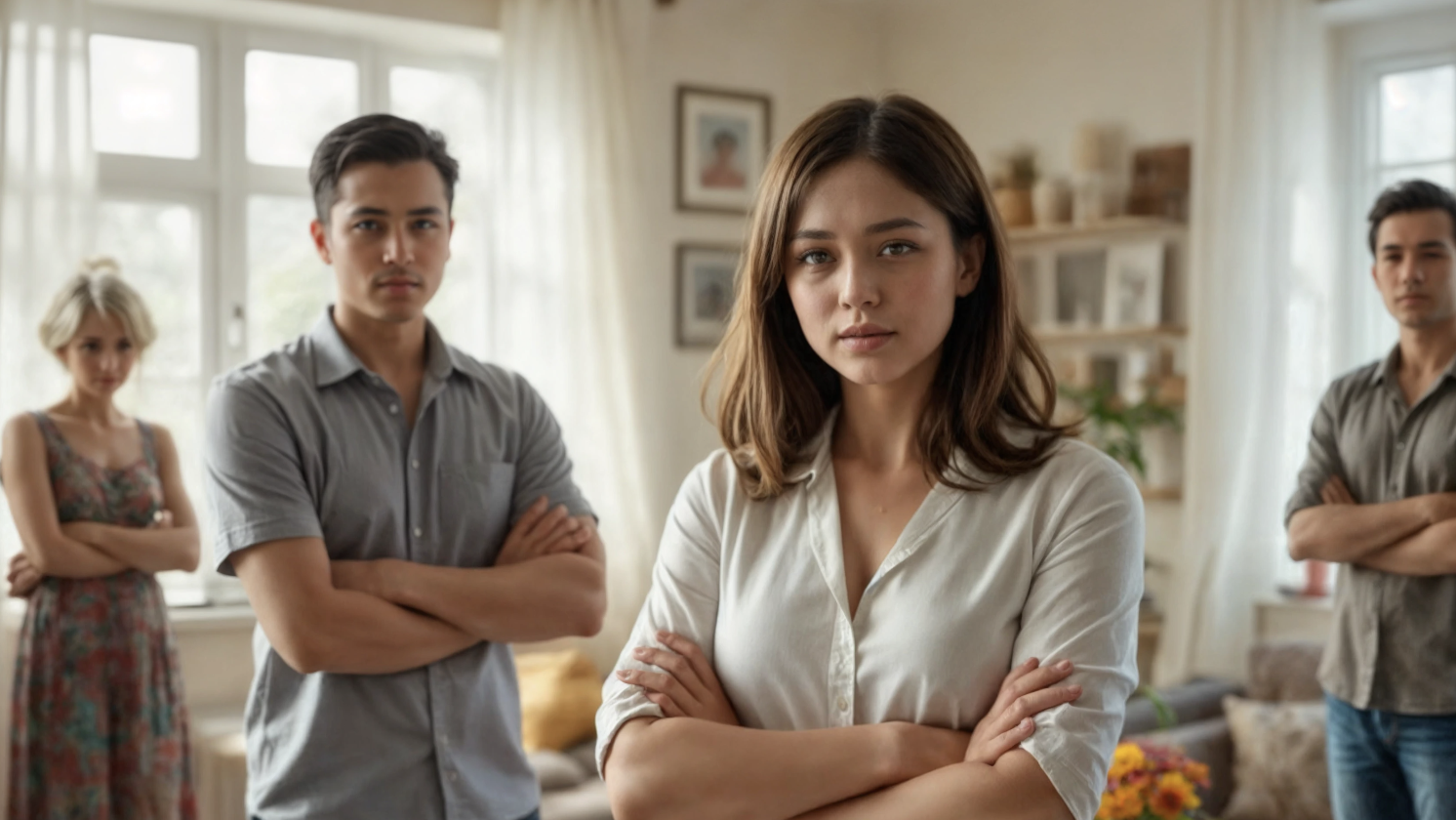
Well hello there, Victoria,” came the voice—icy polite. “I want you to know something. You turned my son against his family. He used to be a normal man. Now he’s a doormat.”
“Are you calling to insult me?” Victoria opened the fridge and took out some kefir. She didn’t have the strength to be angry anymore. There was only a sticky, exhausted indifference.
“I’m calling to tell you: I see right through you. Everything about you is obvious. You think that because the car is with you, the power is with you too? You’re just petty and mean. You’re a snake, Victoria. Cold-blooded.”
“Thanks for the diagnosis. Now you can go back to your TV shows. Looks like your favorite one is on—the one about the suffering poor widow.”
“Dmitry is suffering!” Raisa Gennadyevna screamed. “He told me himself: ‘Mom, I’m tired of her coldness.’ Tired, do you understand?!”
“Then let him leave,” Victoria said, quietly shutting the fridge. “Pavel has a free room. Or he can come to you. And I’m tired of someone trying to profit off my things, my time, my nerves—every single time.”
“Oh, so that’s how you’re talking now,” Raisa Gennadyevna drawled slowly. “So the apartment is yours, everything is yours. And my boy is nobody?”
“No, Raisa Gennadyevna. He’s somebody. But he’s a grown man. And if he can’t say ‘no’ to a brother who uses him, then that’s not my husband. That’s a doormat. And I’m not married to a doormat.”
That evening Dmitry came home late. The entryway smelled of booze.
“Where were you?” Victoria asked without getting up from the couch.
“With Pavel. We were drinking. He’s a decent person. Understanding. Unlike some people.”
She silently stood up, went to the kitchen, and sat down without turning on the light.
“I don’t understand you, Vika…” He followed her, leaning on the doorframe. “What happened to you? You used to be… gentler. Softer. And now you divide everything: your car, your money, your apartment.”
“Because I’m tired. Because I don’t want to play the role of the nice aunt anymore—the one everyone can take from without giving anything back. Because it disgusts me when my husband drinks with his brother and, while he’s at it, discusses what a bitch his wife is.”
“You… you don’t notice it about yourself?” he suddenly raised his voice. “You’re taking my family away from me! I have no one else besides you and them!”
“Then think about why you have no one else. Maybe because everyone you defend is using you? And I’m the only one who’s ever told you the truth?”
They didn’t speak until morning. He slept in the kitchen. She slept in the bedroom. In the morning he left for work in silence. Without saying goodbye.
Victoria put her documents into a folder, took out the car contract, and finally put on her coat. On the table she left a note:
“I’m not your mother. I’m not Pavel. And I’m not ‘always convenient.’ I’m a person. Who’s tired of being an object. See you this evening. If there’s no conversation, there will be a divorce.”
She didn’t know whether she would come back that evening. But she knew for sure: there was no road back anymore.
The day was unusually gray. A fine, nasty drizzle fell—the kind where an umbrella only gets in the way. Victoria sat in her car across from Dmitry’s workplace. The windshield wipers squeaked like old bones. In the glove compartment lay a printed divorce petition form. No hysterics, no “this is all your fault”—just a petition.
She hadn’t come to make a scene. She came to look him in the eyes one more time and understand—was there anything alive left in there? Or only habit.
“Are you serious?” Dmitry stood in the parking lot in his work vest, holding a bag from Pyaterochka. He looked tired, dim, even somehow resigned. “You really want to just take everything and throw it away like this?”
“And haven’t you thrown it away?” Victoria looked at him the way you look at a stranger. “When you told Pavel I’m a bitch. When you let your mother pour filth on me. When you drank yesterday and didn’t come to the bedroom.”
He looked down, mumbled, searched for words. But the words were like loose change in a pocket with a hole—rustling somewhere inside, impossible to catch.
“I just… didn’t know what to do,” he finally breathed out. “Pavel is always in debt, Mom is yelling, you’re angry. I’m being pulled apart. I didn’t want to hurt anyone.”
“By not hurting anyone, you hurt me. Constantly. Systematically. For years, Dim. You don’t even understand that this isn’t about the car. It’s about the fact that you always choose them. And I’m always at the end of the list.”
“Vika, but you knew who you were marrying…”
“I knew. And I hoped you’d grow up.”
She took the petition out of her bag and held it out to him.
“Sign it. If you really don’t want to fight—let me go.”
He took the paper and looked at it. His hands were shaking. Then, for some reason, he glanced around—as if hoping someone would tell him what to do. But there was only a wet parking lot and passersby with plastic bags.
“So that’s it? Just like that?”
“No—not ‘that’s it.’ It’s ‘finally.’ This isn’t a divorce, Dim. It’s freedom.”
That evening Raisa Gennadyevna came to her place. She stood in the doorway in shoes on bare feet, in a thin jacket, with the expression of a prosecutor delivering a death sentence.
“Happy now?” she spat viciously, not stepping over the threshold. “You got what you wanted. Broke up the family. Saved your little car. Congratulations.”
“Yes,” Victoria answered calmly. “I’m happy.”
“You think he’ll come back to you on his knees?”
“No. I think I’ll finally have silence. And no one will ask me to lease out my life anymore.”
Raisa flinched. Victoria had never raised her voice at her. Never gotten personal. She’d always been “polite.” But not now. Now she was simply herself.
“Don’t forget,” Raisa hissed, “he’ll still be my son.”
“Better you forget he was my husband.”
And she closed the door.
A month passed.
Victoria didn’t cry. She didn’t replay how they met; she didn’t look at old photos. Life felt as though the scale had been scrubbed off it. It was empty, but it was the right kind of emptiness—the kind something new can begin from. Without fear. Without other people’s voices in her head.
She enrolled in a driving school—an extreme-conditions driving course. The psychologist said it was symbolic: she wanted to take full control into her own hands. And he was right.
The car now sat in an underground parking garage with an alarm system. But it wasn’t about the car. It was about the fact that now she had her own road.
And she would drive it. Without passengers who don’t pay the fare.
The end.