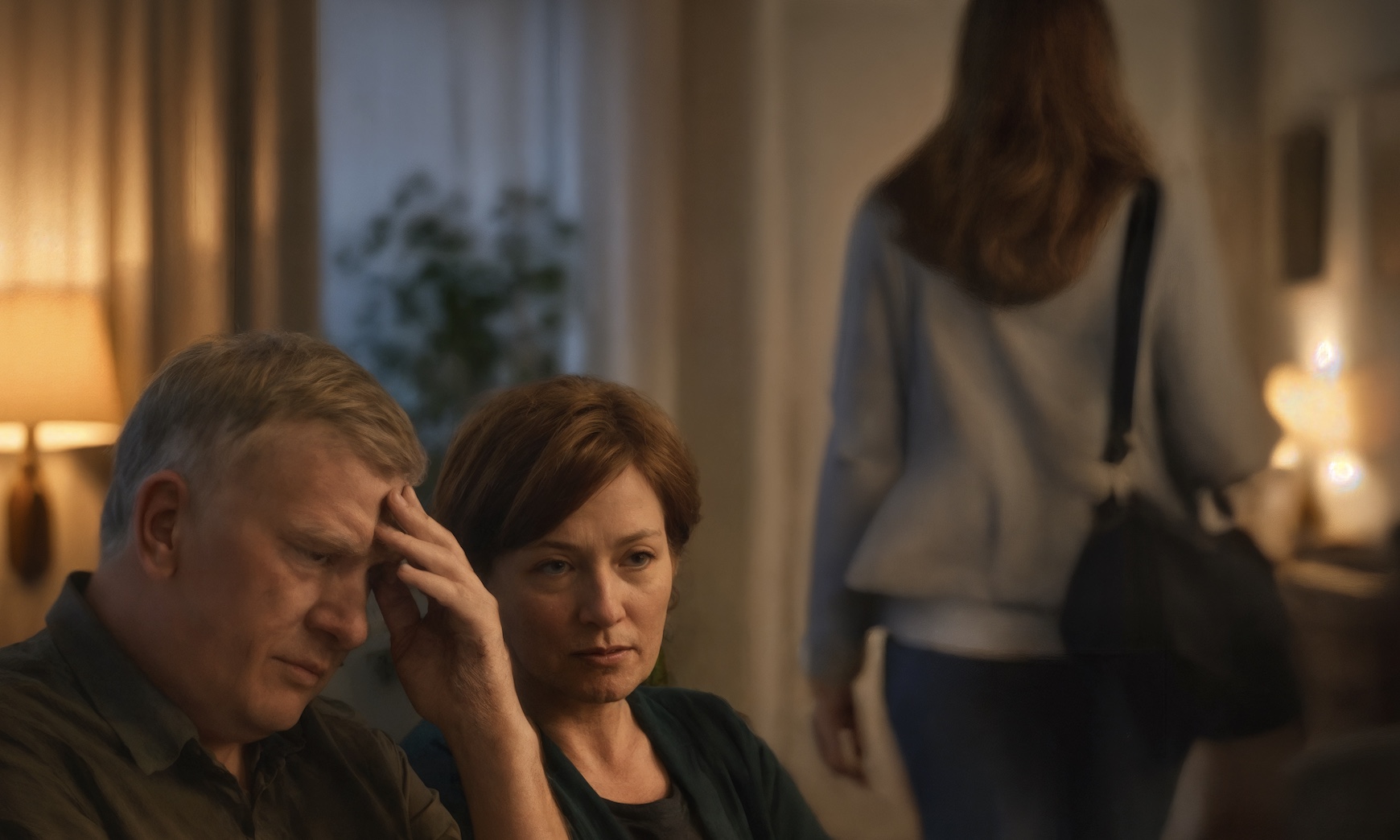
Anna sat in the compartment of a fast train, watching through the window as tired October fields and scattered little villages with leaning fences flashed by. The ride back always felt shorter—especially when you’re hurrying away. Especially when behind you there’s a conversation that has turned your whole life upside down.
She pulled out her phone and reread her mother’s last message:
“Annushka, think carefully. Family is sacred. Don’t abandon us.”
Anna let out a dry, humorless chuckle. Family is sacred. Beautiful words that, in her world, always meant the same demand: send money. Help. Fix it. As if it didn’t matter that her own life had long since become an endless race with one purpose—stay afloat and drag everyone else along.
Three days earlier, Anna had come to her small hometown in the Tver region for the first time in half a year. She was drowning in work: her company was preparing for a major restructuring, and as a senior HR specialist she handled everything—from employee psychological assessments to building a new corporate culture. Twelve-hour office days had become normal.
But when her mother called, tearful and pleading—“We need to talk, sweetheart. We can’t sort this out without you”—Anna took three days off and got on the train.
Her parents’ two-bedroom apartment on the outskirts greeted her with the familiar smell of fresh pies and heart drops. Her mother hurried around setting the table; her father only nodded from his chair by the television. Anna hugged them both, felt how much older they had become in those months, and her chest tightened with the old, well-trained guilt. She came home too rarely. She called too little. Always work, work…
“Where’s Lyoshka?” she asked, looking around.
“With Sveta,” her mother waved it off. “His fiancée. You know—joined at the hip.”
Lyosha was her younger brother, twenty-seven. He’d dropped out of college in his third year and quit jobs every six months—either after clashing with a boss or because he was “tired of routine.” For the past five years he’d lived with their parents, scraping by on odd jobs. And Anna had carried them all.
Her salary covered her father’s heart medication, their utility bills, groceries. She sent thirty to forty thousand rubles a month—sometimes more. And she never once asked for it back.
“So,” Anna said, sitting down with her tea, “tell me why you called me.”
Her parents exchanged a glance. Her mother fidgeted with the edge of her apron.
“Annushka, you know Lyosha’s getting married,” her mother began.
“I’ve heard something. Congratulations. Is Sveta pregnant?”
“Yes, five months already. The wedding’s set for December. Nothing fancy, but still, you know…”
“Mom, if you need money for the wedding, just say so. How much?”
Her mother looked at her father again. He suddenly stood, went to the cabinet, and returned with a folder of documents.
“It’s not about the wedding money,” he said, placing the folder on the table. “You understand—Lyosha’s starting a family. There will be a baby. They need somewhere to live.”
Something icy stirred inside Anna’s chest.
“And?”
“Your mother and I thought it over and decided…” her father hesitated. “We signed the apartment over to Lyosha. And the car too. He needs them more.”
Anna stared at him in silence. The words reached her as if through thick wool.
“What… what did you do?”
“Well, you see,” her mother rushed in, speaking quickly, almost tripping over her own sentences. “You have prospects in Moscow, a good job. You’re doing fine. But Lyosha… he needs support. The baby’s coming—where is a young wife supposed to go? Sveta lives with her mom in a one-room place; they won’t fit there. So your father and I thought we’d give the apartment to the kids, and we’d move to the village ourselves.”
“Wait,” Anna lifted a hand. “So you signed over the apartment you live in—to Lyosha. The car—also to him. And what about your savings?”
“We gave him that too,” her father said quietly. “Two hundred and fifty thousand. To get them started.”
“Two hundred and fifty thousand?!” Anna’s voice broke into a shout. “That was your last money! The money I sent you all these years separately—‘for old age’!”
“Anna, don’t yell,” her father grimaced. “He’s going to have a child. He needs it more.”
“He needs it more,” Anna echoed, as if in a trance. “So I—the one who has supported you all for five years, who denied herself everything just to pay for your life—I get nothing. And my brother, who hasn’t contributed a single ruble in thirty years—gets everything.”
“You’re the smart one, the successful one,” her mother babbled. “You’ll manage. But Lyosha…”
“Lyosha is a failure,” Anna snapped. “I love him, but it’s true. He’s been hunting for an easy life for almost thirty years and living at other people’s expense. And instead of teaching him responsibility, you hand him everything you have!”
“He’s creating a family!” her mother shouted back. “He’ll get married, the baby will be born—he’ll finally grow up!”
Anna laughed—bitter and sharp.
“How many times have you said that? When he quit college—‘it’s fine, he’ll start working.’ When he got fired from the store for skipping shifts—‘he’s still young, he’ll find his way.’ When he took thirty thousand from your hiding place without asking—‘we’ll forgive him, he won’t do it again.’ And what? Did he grow up?”
A heavy silence fell. Her father turned toward the window. Her mother wiped her eyes with her apron.
“We didn’t call you here for this,” her mother said at last. “The apartment is already transferred. That’s final. We wanted to ask… Anna, give Lyosha money for the wedding. And for the baby, for the first months. Two hundred thousand—maybe three. Until he finds work, until they settle in…”
“Three hundred thousand,” Anna leaned back in her chair. “You gave him everything you had. And now you want me to hand him even more. For what, exactly? So he can waste that too?”
“He won’t waste it!” her mother jumped up. “He has a family now!”
“Mom, six months ago he borrowed twenty thousand from me ‘for something urgent.’ Remember? I still haven’t seen it.”
“He’ll pay it back!”
“When? When he finds a job? He’s been ‘finding’ one his entire life!”
Anna stood up, feeling her insides boil. Hurt, pain, unfairness—everything mixed into one suffocating knot.
“Do you even know I’m paying a mortgage?” she asked softly. “That I haven’t taken a real vacation in three years? That I’ve worn the same clothes for five years because all my money went to you? I went without because I believed family mattered more. Parents are retired—they need help.”
“See?” her mother brightened. “You understand!”
“I understand,” Anna said. “But I thought it was temporary. That once Lyosha finally stood on his own feet, it would get easier. Do you know what you actually decided? That I’m a milk cow. If I work, then I owe. And Lyosha—he’s special, he must be helped.”
“He’s your brother!” her father shouted.
“So what?” Anna turned to him. “He’s thirty-two! He’s a grown man! Why should I be responsible for him?”
“Because you succeeded!” her father sprang up too, red-faced, a vein pulsing at his temple. “You’re strong, smart, successful. And he… he was always weaker. Life is hard for him.”
“Life is hard for him because you spent his whole life protecting him from consequences!”
“Don’t you dare say that!” her mother clutched her chest. “That’s your brother! Your family!”
“My family,” Anna said, shaking her head. “And where were you when I came to Moscow alone—living in a dorm, working three jobs to afford school? Where were you when I was so broken after my divorce I didn’t sleep for a month? I called you, cried into the phone—and you said, ‘Don’t upset us, we have enough problems of our own.’ Remember?”
Her mother looked away. Her father stayed silent.
“And Lyosha…” Anna gave a cold smile. “Lyosha was living with you then, doing nothing, and you pitied him. You said he was having an identity crisis. At twenty.”
“Enough!” her father barked. “We raised you, educated you…”
“I educated myself,” Anna cut in. “On scholarships and side jobs. You didn’t even send me money for food—everything went to Lyosha so he ‘wouldn’t feel deprived’ in college.”
The silence that followed rang in her ears. Her mother sniffled. Her father breathed hard.
“So are you going to help or not?” he finally asked.
And something inside Anna broke for good.
“No,” she said clearly. “I won’t. You left the apartment to my brother—let him solve your problems.”
Her mother went white. “What?!”
“Exactly what you heard. You gave him all your property? Wonderful. You believe he’s ready for a family? Great. Then he’ll handle it. He’s an adult, and he’ll soon be a father. Let him carry responsibility for his own life.”
“You can’t do this!” her mother stepped toward her. “He’ll be ruined!”
“Then he’ll be ruined,” Anna answered. “That will be his choice and his consequences. I’m done catching him before he falls.”
“Anna,” her father said with effort. “You understand… we’re getting old. Our pensions barely cover anything. If you stop helping…”
“Then you’ll go to your favorite son,” Anna said, picking up her bag. “The one you gave the apartment and all the money to. He’ll support you.”
“But he has a family! A baby!”
“And I have a life too,” Anna said. “And I want to finally live it.”
“You’ll be alone!” her mother screamed. “With that character, that cold heart—you’ll be all alone, and no one will help you when you need it!”
Anna stopped in the doorway.
“You know, Mom,” she said quietly, “I’ve been alone for years. Alone carrying everyone. Alone solving problems. Alone paying the bills. So nothing changes—except now I’ll be alone and free.”
She left without turning back. The stairwell door slammed, and only then did the tears finally spill. Anna leaned against the cold wall and let them come—years of resentment, exhaustion, and injustice pouring out with them.
She wiped her face, called a taxi, and went to the station. The Moscow train wasn’t until evening, but she bought the first ticket she could—Tver, then a bus to Moscow. Anything, as long as she got away.
Three months passed. Anna stopped sending her parents money. For the first two weeks they called every day—begging, demanding, threatening. Then the calls came less often. Then they stopped.
Anna threw herself into work. The restructuring went well, and she was promoted to head the entire department. Her salary rose by forty percent. For the first time in years, money didn’t disappear by the end of the month—it was still there by the middle.
She bought herself a new winter coat—not on sale, just the one she liked. She signed up for yoga. She started going to the theater.
It felt strange to live for herself. Unfamiliar. Sometimes guilt hit—what if her parents really were suffering? But Anna learned to handle it. After all, they had a son—the son they’d given everything to.
Let him take care of them.
One day in January, Aunt Lena—her father’s sister—called.
“Anya, how are you?” her aunt’s voice sounded anxious.
“I’m fine. Why?”
“Do you know what’s going on with Lyosha?”
Anna’s heart dropped.
“What happened?”
“Well…” her aunt hesitated. “Sveta left him. A month ago. With the baby.”
“How—left?”
“Just like that. She gave birth in November—a girl, Polina. And right before New Year’s she packed up and went back to her mother. Says she can’t do it anymore.”
“Why?”
“Lyosha married her in December like they planned. Sveta was still pregnant. Your parents paid for the wedding, moved them into the apartment. Lyosha even found a job—security company. For the first month everything seemed normal.”
“And then?”
“And then,” Aunt Lena sighed, “it turned out he’d already blown the money your parents gave him—those two hundred and fifty thousand—before the wedding. On sports betting. Online. At first he won a little, apparently, and then he lost everything. Sveta thought they had at least something saved for the baby—turns out there was nothing. Zero.”
Anna closed her eyes. Of course. Of course.
“That’s not all,” her aunt continued. “Sveta had the baby and stayed home with her. Lyosha worked, but the pay is pennies—twenty-five thousand a month. Out of that they have utilities, food… it’s not enough. Sveta told him to get a second job. He snapped—said he was tired, he needed rest. And he went back to betting. Only now he was gambling with his salary. Sveta said in one week he lost half his paycheck. She and the baby were sitting hungry while he stared at his phone placing bets.”
“And she left.”
“She left. Said she wouldn’t live like that. Now she’s at her mother’s, filed for child support. The court ordered him to pay seven thousand a month. Where’s he supposed to get it? He makes twenty-five thousand; minus seven leaves eighteen. The apartment is in his name now, so he has to cover utilities—at least five thousand. That leaves thirteen—for food, transportation… Your parents are feeding him now, otherwise he’d barely survive.”
Anna stayed silent. One thought circled in her head: I knew it. I knew this would happen.
“Your mother called me,” her aunt lowered her voice. “Asked to borrow money. Says Lyosha has nothing to live on. I refused, of course—my own grandchildren need help. But she’ll probably come to you next.”
“She will,” Anna said. “Thank you for warning me, Aunt Lena.”
“Stay strong, girl. And don’t soften. You did the right thing stepping back in time. Otherwise they’d have destroyed you completely.”
After the call, Anna sat by the window for a long time, looking at snowy Moscow. She felt sorry for her brother—she did. He was still her blood. But pity wasn’t a reason to carry someone else’s life on your back.
Her parents called a week later. Her mother sobbed into the phone; her father demanded Anna come and “discuss everything.” She listened for five minutes, then said calmly:
“You left the apartment to my brother. Let him solve your problems.”
“But he can’t!” her mother wailed. “He’ll be completely lost!”
“Then sell the apartment,” Anna replied. “Transfer it back to yourselves and sell it. You’ll have money to live on for a while.”
“How can we sell it?! That’s our apartment!”
“No,” Anna corrected. “It’s Lyosha’s apartment. You chose that. So it’s his responsibility.”
“You’re heartless!” her father screamed. “That’s your family!”
“That was my family,” Anna said.
She ended the call and blocked their numbers. Not forever—just for a while, until everything inside her settled.
Half a year passed. Anna met a man—Dmitry, an architect—by chance at a book fair. They talked for a long time about literature, about life, about how hard it is to be an adult. Dmitry said he too had once cut off toxic relatives who treated him like an ATM—and that it had been the best decision of his life.
They started dating. Slowly, carefully, giving each other time. Anna was learning to trust again. Learning not to be afraid of being happy.
Sometimes she thought about her parents and her brother. She asked her aunt how they were doing. Aunt Lena told her: Lyosha quit his security job and wasn’t working at all. He wasn’t paying child support. Sveta took him to court; the bailiffs seized his belongings. The betting debts had trapped him—collectors called. Their parents lived on two pensions, barely scraping by. They still hadn’t sold the apartment—they couldn’t bear to. They’d lived there their whole lives.
It hurt to hear. But Anna knew: it wasn’t her fault. She wasn’t responsible for her brother’s irresponsibility. She wasn’t responsible for her parents choosing him over her again and again. She wasn’t responsible for their shortcut—“we’ll give him everything”—instead of the hard road—“we’ll teach him to stand on his own.”
She chose herself.
For March 8, Dmitry gave her a trip for two to Georgia. Their flight was in the evening. Anna was packing, humming under her breath, when the doorbell rang.
She opened the door without looking through the peephole—and froze.
Her mother stood there. Older, thinner, in a worn coat.
“Hi, sweetheart,” she said quietly.
Anna said nothing. Something inside her tightened into one aching knot.
“Can I come in?”
Anna stepped aside. Her mother entered, looked around, and sat on the edge of the couch.
“It’s nice here,” she said. “Cozy.”
“Why are you here, Mom?”
Her mother was silent for a moment. Then she pulled a handkerchief from her bag and dabbed her eyes.
“Lyosha… Lyosha is really bad, Anya. He’s drinking. He’s not looking for work. He hasn’t paid utilities for three months—the debt is huge. Sveta filed to strip him of parental rights—he doesn’t visit the child, doesn’t pay support. Those bets pushed him into debt—collectors keep calling. Your father and I don’t know what to do.”
“So you came for help,” Anna said, sitting across from her.
“I came to ask forgiveness,” her mother looked up at her. “You were right. About everything. We spoiled Lyosha. We thought we were helping, but really… he can’t live on his own. He’s like a child. And it’s our fault.”
Anna hadn’t expected those words. She’d expected demands, accusations. Not an apology.
“Mom…”
“I’m not asking you to help him,” her mother continued. “I understand I don’t have that right. I only wanted to tell you I’m sorry. Sorry for what we did to you. For choosing him over you. For using your kindness. You did so much for us, and we… we were blind.”
Tears ran down her cheeks. Anna handed her a tissue.
“How’s Dad?”
“His heart is acting up. He takes his pills. He’s holding on. He… he asked me to tell you he regrets it too.”
They sat in silence. Outside, the sun was setting, painting the sky in pink and gold.
“What will you do?” Anna asked at last.
“I don’t know,” her mother said. “They offered Lyosha a rehab program—free, through a state program. For alcohol and gambling. He agreed. Maybe it will help him. And your father and I… we’ll manage somehow. We’ll sell the apartment if we have to.”
Anna nodded. Her chest still hurt, but the pain wasn’t as sharp as before.
“I can’t help the way I used to,” she said. “I can’t and I won’t. It was destroying me.”
“I understand.”
“But if things get truly desperate—call me.”
Her mother nodded, eyes lowered.
“Thank you, my girl.”
She stood and walked to the door. On the threshold she turned back.
“Will you forgive me someday?”
Anna smiled—sadly, but without anger.
“I already have, Mom. I’m a psychologist—I understand how these things work. But forgiveness doesn’t mean everything goes back to how it was.”
“I know,” her mother said, and hugged her. “Be happy, Anyuta. You earned it.”
When the door closed, Anna returned to her suitcase. Her heart felt heavy, but something new had appeared inside it. Not joy—no. Something like… relief.
She had made a choice she could live with. She had drawn boundaries without destroying herself. She had learned to say no without drowning in guilt.
And Georgia was ahead—spring, a new life.
A life where, at last, she came first.
A year later Anna heard from her aunt by chance that Lyosha had finished rehab. He found a job at a factory. He began paying child support—little by little, but regularly. Sveta allowed him to see his daughter once a week. Their parents sold the old apartment, bought a small one-room place on the outskirts, and helped their son when they could—only without the old fanatic devotion.
Anna didn’t know whether her brother had truly changed. Maybe it was a temporary remission. Maybe he would slip again. Or maybe, finally, he would grow up.
But that was no longer her story.
Her story was about how loving your family doesn’t mean sacrificing yourself. How help without boundaries becomes addiction. How sometimes you have to let go—to give a chance to grow, both to yourself and to the people you love.