Veronika turned off the music about three kilometers before the turn, simply so she could listen to the gravel crunching beneath the tires. It had been a long, honest day: two tour groups, a hundred and eighty steps down, then the same number back up, a flashlight, a hard hat, and eight people squealing with excitement beside a rusty blast door.
Her back ached, and her palms smelled of metal and old concrete. She was satisfied with herself down to the very last cell in her body.
The pale roof of the house appeared ahead, crowned with a new ridge, along with the large apple trees she and Artyom had spent three years pruning as best they could. Twenty hundred square meters of land meant that sooner or later, the lawn mower practically became a member of the family.
Veronika smiled and slowed down.
There was an unfamiliar car parked by the gate. Old, gray, with a dented rear fender and a sticker on the window.
She recognized it immediately and sighed—not angrily, exactly, but the way a person sighs before an unexpected marathon.
“Well, hello there, dear guests,” she muttered to herself. “Calling ahead was clearly beyond human capability.”
She pulled her car beneath the shelter and took out her backpack, helmet, and bundle of flashlights.
 
Artyom came out onto the porch wearing a T-shirt, a towel thrown over one shoulder. His face said everything at once: Sorry. I had no idea. I’m just as surprised as you are.
“Hey, beautiful,” he said, taking her backpack. “We’ve got company. Kirill and Milana.”
“I noticed the vehicle,” Veronika said, kissing him on the cheek. “Give me half an hour. I need a shower because right now I smell like sewage, dust, and the previous century.”
“Go ahead. I bought groceries. Everything’s in the fridge.”
Two people were standing in the hallway.
Kirill wore a polo shirt, his hands shoved into his pockets, looking around with the confident air of someone who had lived there for twenty years.
His wife, Milana, stood beside him holding her phone. Her blouse made it obvious that she had not come prepared for any countryside adventures.
“Hi,” Veronika said, nodding to them. “Sorry, I’m covered in dust, so I’m skipping the hugs. Give me half an hour and I’ll be human again.”
Milana grimaced and demonstratively stepped backward.
“Oh… you really do smell like dirty water. Sorry, but that’s awful.”
Artyom immediately tensed.
“It comes with the job,” he said evenly. “She was taking people through a bomb shelter today. Or was it an old station? Veronika, what was it?”
“A shelter,” Veronika called from the hallway. “Three levels. Water on the bottom one. Very romantic.”
 
Kirill snorted and broke into a grin.
“Man, your wife’s like a rat. Crawling into every little hole she can find.”
Artyom said nothing.
The silence that followed was as heavy as the blast door Veronika had spent the day showing tourists.
Twenty minutes later, Veronika emerged wearing comfortable house clothes, her hair still wet. She was fresh and angry in exactly the right proportion for anger to be useful.
She took out a cutting board and knife and opened the refrigerator.
“Artyom!” she called. “What are we making? There’s meat, peppers, onions, and, for some reason, four jars of olives.”
“Milana asked for the olives,” her husband replied guiltily as he appeared in the doorway. “Let me help you chop.”
“Go entertain your brother and his wife. You’re the host. I’ll manage alone. It’s actually calmer that way.”
“You sure?”
“Absolutely. Go on. And stop looking at me like a man waiting for a hurricane.”
Artyom left.
Veronika turned on the oven, and soon the steady rhythm of the knife against the cutting board filled the kitchen. Just like that, the house became hers again—warm, alive, filled with familiar sounds she loved.
Outside, darkness was settling over the yard, turning the apple trees into black silhouettes.
It felt good.
A few minutes later, Kirill appeared in the kitchen doorway. He leaned one shoulder against the frame and lazily looked around.
“So, rat, when are we eating?”
Veronika didn’t look up.
 
The knife continued its steady tapping like a metronome.
“Rat catcher,” she said pleasantly, “go back to your own rat. I assume the roles in your marriage have already been assigned.”
Red blotches appeared on Kirill’s face.
He opened his mouth, but apparently couldn’t think of anything to say.
He turned around and left, stamping his heel harder than necessary against the floor.
“Still going smoothly,” Veronika told the meat.
About five minutes later, Milana entered with her phone, sat down on a stool, and crossed one leg over the other.
“Listen, aren’t you tired of this?” she began without preamble. “Seriously. How old are you? You should find a normal job. An office. Air conditioning. Regular hours. Coworkers. Respect.”
“Do they hand out respect together with your office pass?” Veronika smiled. “In that case, I think I’ll earn mine myself.”
“I’m serious. Clean, pretty, coffee machine… and instead you crawl around basements.”
 
“Milana, some people relax lying on their stomachs at the beach. Some like mountains. Some like rivers or caves. Others prefer a bar counter. Everyone likes different things, and that’s fine.”
Milana rolled her eyes and began speaking dreamily, as though reciting something she had rehearsed.
“I want to go to London. Really. The red buses, the bridges. Then Paris—sit in a café, eat a croissant, springtime…”
“You can get a croissant here too,” Veronika said, turning the meat. “The bridges are harder, I’ll give you that.”
“You wouldn’t understand. There’s a different standard there. That’s where life is.”
“Honestly, I don’t see what’s so fascinating about it. I’d rather go down a mine.”
Milana rose abruptly, as if Veronika had insulted her personally.
“Well, of course. You’re more comfortable in holes.”
 
Then she left.
Whispering drifted from the guest room. Artyom happened to be walking past and heard every word, mostly because Milana was incapable of whispering properly.
“Even after showering she’s still a rat. Her mind is still down in some hole…”
“Enough,” Artyom said from the doorway.
His voice was calm.
Dangerously calm.
“Both of you.”
Kirill came out, slapped his brother on the shoulder, and grinned.
“Come on, Artyom. It was a joke. Don’t take everything so personally. You’ve always been painfully serious.”
Artyom looked at him but said nothing.
He knew how to save things up.
Half an hour later, Veronika carried a roasting tray to the table. The meat had a dark, crisp crust, surrounded by onions, peppers, and slices of roasted potato.
Artyom brought wine, a corkscrew, and glasses.
He was still struggling with the foil around the bottle when Kirill snatched it from his hands.
“Give it here, slowpoke.”
 
He poured a glass for himself and one for Milana.
They drank immediately, without even waiting for their hosts to sit down.
Veronika placed the oven mitts aside, sat down, and studied the two empty glasses with genuine curiosity.
“Right,” she said. “I apparently missed the toast to the hostess’s health. Or was it a silent toast?”
“Oh, don’t be stingy,” Milana scoffed. “It’s just wine.”
“The wine is excellent. I was talking about the timing. You two started like Olympic sprinters.”
Milana sulked and stared down at her plate.
Kirill leaned back in his chair, speared a piece of meat with his fork, chewed it, then suddenly wrinkled his nose.
“No offense, but even after showering you still smell swampy. Seriously. It’s strong.”
Veronika put down her fork.
“Kirill, there are men who can pour an entire bottle of cologne over themselves and the smell of sour sweat still breaks through. It’s not really a soap issue, you know. More of an inner-content problem.”
The table fell silent.
 
Artyom quickly set down his glass.
“All right. What exactly brought you here? Unexpectedly. In the evening.”
Kirill finished chewing, wiped his mouth, and answered as casually as though discussing the weather.
“I sold my one-bedroom apartment. The paperwork went through. We’ll stay here while we arrange the mortgage for a two-bedroom place. A month, maybe six weeks. No longer.”
“Here?” Veronika repeated.
“Here, yeah. That room is sitting empty anyway.”
Milana immediately brightened.
“The new apartment will be in a brand-new development! There’s a playground, parking, a fitness center downstairs. Not like this…” She waved her hand around the room. “By the way, how much is this shack even worth? I’m honestly curious.”
Veronika slowly took a sip of wine and looked directly at her.
“Milana, tell me something. Are you deliberately trying to insult me? Or is this just your natural communication style—congenital and incurable?”
“I only asked!”
“You called it a shack. While sitting inside that shack, eating the food its owner cooked for you.”
Kirill immediately waved his hand.
“All right, all right. Enough. Let’s talk about something else. Artyom, remember when we—”
“No, let’s not talk about something else,” Veronika said, turning toward him. “You walked into my house and called me a rat. The woman whose house you just announced you plan to live in. What do you call that in your language? Reverse hospitality?”
 
Milana bristled.
“Don’t you dare talk to my husband—”
“Be quiet,” Veronika said without raising her voice. “Please. Office plankton doesn’t participate in this discussion.”
Kirill jerked as if someone had jabbed him.
“Artyom! Control your wife!”
Artyom spread his hands, his expression perfectly peaceful.
“I agree with my wife. Fair question, Milana. What do you do, exactly? What important work do you perform?”
“I… I handle document processing,” she began. “I process incoming correspondence, compile spreadsheets…”
“Paperwork,” Artyom nodded. “That’s what office plankton does. Completely harmless phrase. Just like ‘rat,’ right?”
Milana grimaced and pushed her chair away from the table, making a show of it, as if something rotten were sitting beside her.
Veronika noticed the gesture.
Without comment, she rose, picked up the empty salad bowl, and carried it into the kitchen.
 
She knew her husband too well. He needed a moment alone with his brother.
She stood by the counter, turned on the tap, and deliberately left the water running.
She could still hear everything perfectly.
“She really does smell bad,” Milana said as soon as Veronika was gone. “Like swamp water. Or something worse.”
Artyom placed his fork on the table.
He didn’t shout.
In fact, his voice became even quieter.
“Kirill. That ‘rat,’ as you two keep calling her, owns this house. And the twenty hundred square meters of land underneath it. Fifteen million rubles, if you need numbers.”
Milana choked and gave a low whistle.
Kirill froze with a piece of meat halfway to his mouth.
“How much?”
“Fifteen million. You got three and a half million from selling your one-bedroom place—you were bragging about it yesterday. Shall I continue? That ‘rat’ earns between one hundred and one hundred fifty thousand rubles a month. With her own hands, legs, and brain. Going into places you wouldn’t enter for any amount of money.”
Milana’s eyes became round and suddenly very attentive.
 
“I didn’t know…” she began.
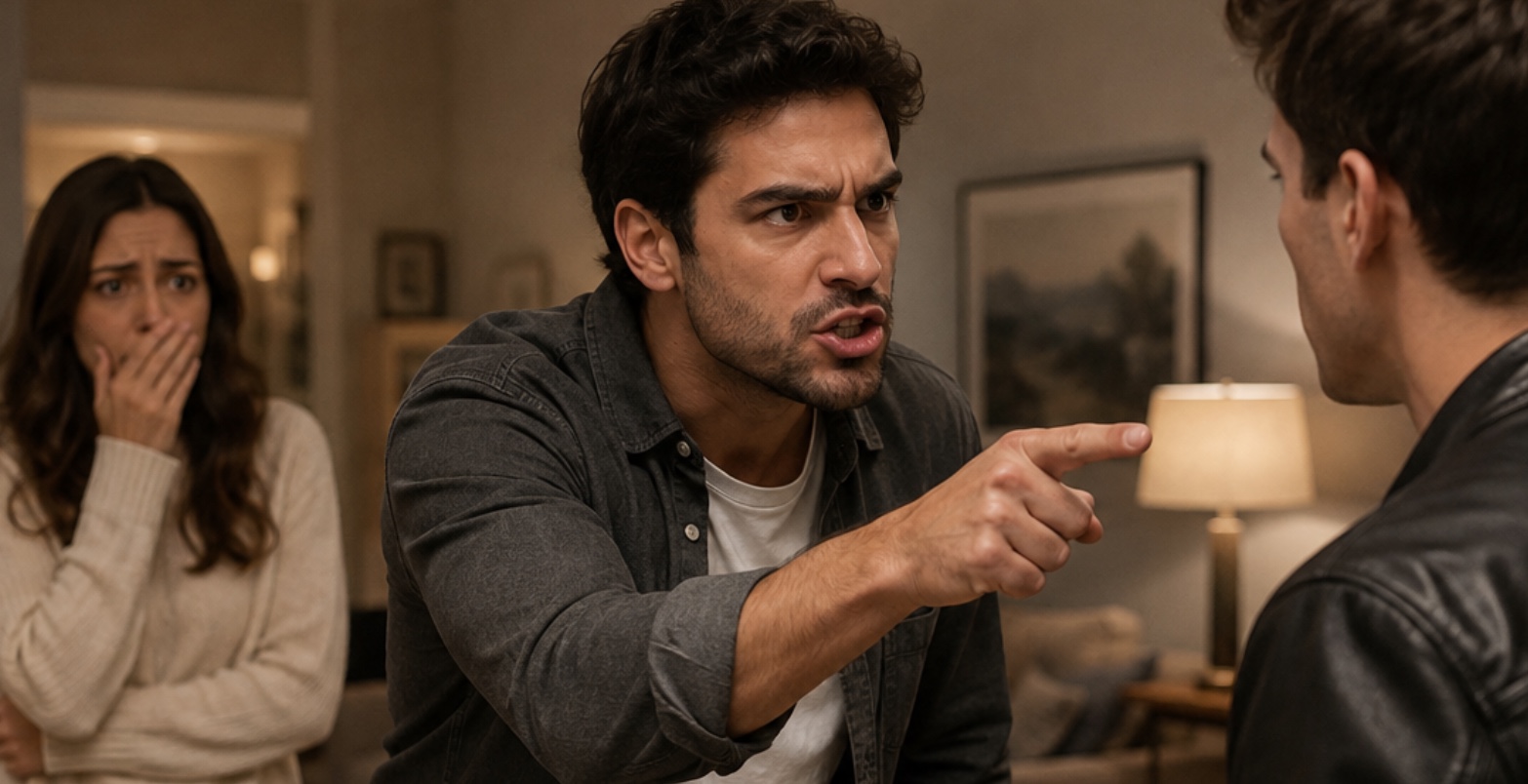
“I didn’t give you permission to speak,” Artyom cut her off. “I’m not finished. That ‘rat’ worked a physically demanding tour today, came home exhausted, took a shower, then stood at the stove and cooked dinner. The dinner you, Milana, are poking at with that disgusted look on your face. And the two of you have humiliated her every five minutes since she walked through the door. Every five minutes. I counted.”
“Artyom, come on!” Kirill threw up his hands. “I was joking! That’s my sense of humor!”
“Humor,” Artyom repeated.
He paused.
“You know what my mistake was? The first time you called my wife a rat, I kept quiet. And silence means agreement. If I said nothing, then I might as well have called her one myself. That’s what I won’t forgive—myself, not you.”
“Just listen—”
“Shut your mouth. Both of you. I’m talking now. As the husband of the woman who owns this house.”
Milana opened her mouth and immediately closed it again.
Kirill’s face turned dark red as he leaned forward.
“Who the hell do you think you’re talking to? I’m your brother.”
“You’re the one who came here as a guest,” Artyom reminded him. “Veronika went out of her way for you, and you insulted her. GET OUT!”
He stood up, stepped toward the table, and removed Milana’s nearly untouched plate of meat from in front of her.
Then, just as calmly, he took Kirill’s plate and carried both into the kitchen.
“The evening is over,” he said when he returned. “I’m not discussing whether you’ll stay one night, one week, or one month. You’re getting up now, taking your wife, and leaving this house.”
“What kind of circus is this?” Kirill exploded. “So nobody’s allowed to joke anymore?”
“Joke all you want. About your own wife. Remember what you called her the day before yesterday?”
 
Artyom didn’t repeat the word.
He simply looked at his brother.
Milana slowly turned her head toward her husband.
The look on her face made Kirill shrink into the back of his chair.
“What… what did you tell him?” she hissed.
“I didn’t tell him anything!”
“Pack your things,” Artyom said.
“I’ve been drinking!” Kirill stood up, searching his pockets. “Where am I supposed to go? I had two glasses!”
“No one told you to drive,” Artyom shrugged. “Leave the car here. Sleep inside it—the seats fold down. Or walk a kilometer down the road. There’s a hotel for drivers. Bed, shower, everything civilized.”
“You’re serious?”
“I’m rarely not serious. You simply never noticed.”
Milana was already snatching her handbag from the chair.
She had gone pale and said nothing, but her silence was loud. Her lips moved slightly as if she were mentally counting every grievance.
Kirill fussed around searching for his keys, only to discover that he had been holding them in his hand the entire time.
Ten minutes later, they stood in the hallway.
They muttered under their breath and snapped at one another, but neither dared start another argument out loud.
The door closed softly behind them.
Artyom turned the lock.
A car starter howled in the yard.
 
Kirill apparently decided to drive after all.
The gray car turned around, one wheel clipping the edge of the lawn, then disappeared down the road with only one functioning brake light blinking behind it.
Artyom returned to the kitchen.
Veronika stood at the counter drying her hands with a towel and watching him.
He walked over and wrapped both arms around her tightly.
“Well,” she murmured into his shoulder. “There’s an awful lot of meat left. I’ll never eat all of it.”
“The meat is excellent,” Artyom said, kissing her temple. “The wine’s already open. And neither of us is in a hurry.”
They returned to the table alone.
Not another word was said about his brother or sister-in-law, as though the two of them had never come at all.
Veronika added more potatoes to her husband’s plate. Artyom poured the wine.
The house became normal again.
About half an hour later, the phone rang.
Artyom glanced at the screen.
His mother.
He answered and immediately spoke first.
“Hello. I’ll say this right away: if you’re calling to defend Kirill, I’m hanging up.”
 
A hurried stream of words came through the speaker.
Artyom listened for three seconds, then ended the call.
The dial tone sounded.
He placed the phone back on the table and pulled his plate closer.
“Here,” Veronika said, handing him his wine glass.
He settled beside her, stretched out his legs, and smiled.
“All right. I’m ready to hear about your adventures in the catacombs. Every detail. What did you mean when you said there was water on the lower level?”
“Knee-deep. One man decided he was a submarine,” Veronika laughed. “You know, I was about two steps away from acting out my own little drama tonight. I was planning ketchup in somebody’s face and maybe a cutting board across somebody’s cheek. Dramatic. Beautiful. Plenty of splatter.”
“Ketchup in the face? Whose face?”
“Depends. I had a fairly wide range of targets.”
Artyom snorted and nearly spilled his wine.
“Thank you for letting me speak first.”
 
“Thank you for speaking at all. And quickly. You know me—I don’t tolerate things for years. I simply don’t know how. But it’s nice when the person beside you doesn’t force you to fight every battle alone.”
“Took me a while to catch up,” he admitted. “A whole twenty minutes.”
“By family standards, that’s lightning speed.”
They clinked glasses.
Outside, the apple trees stood dark against the night. Somewhere far away, traffic hummed along the highway.
Inside the house it was warm, quiet, and very clean—in every sense of the word.