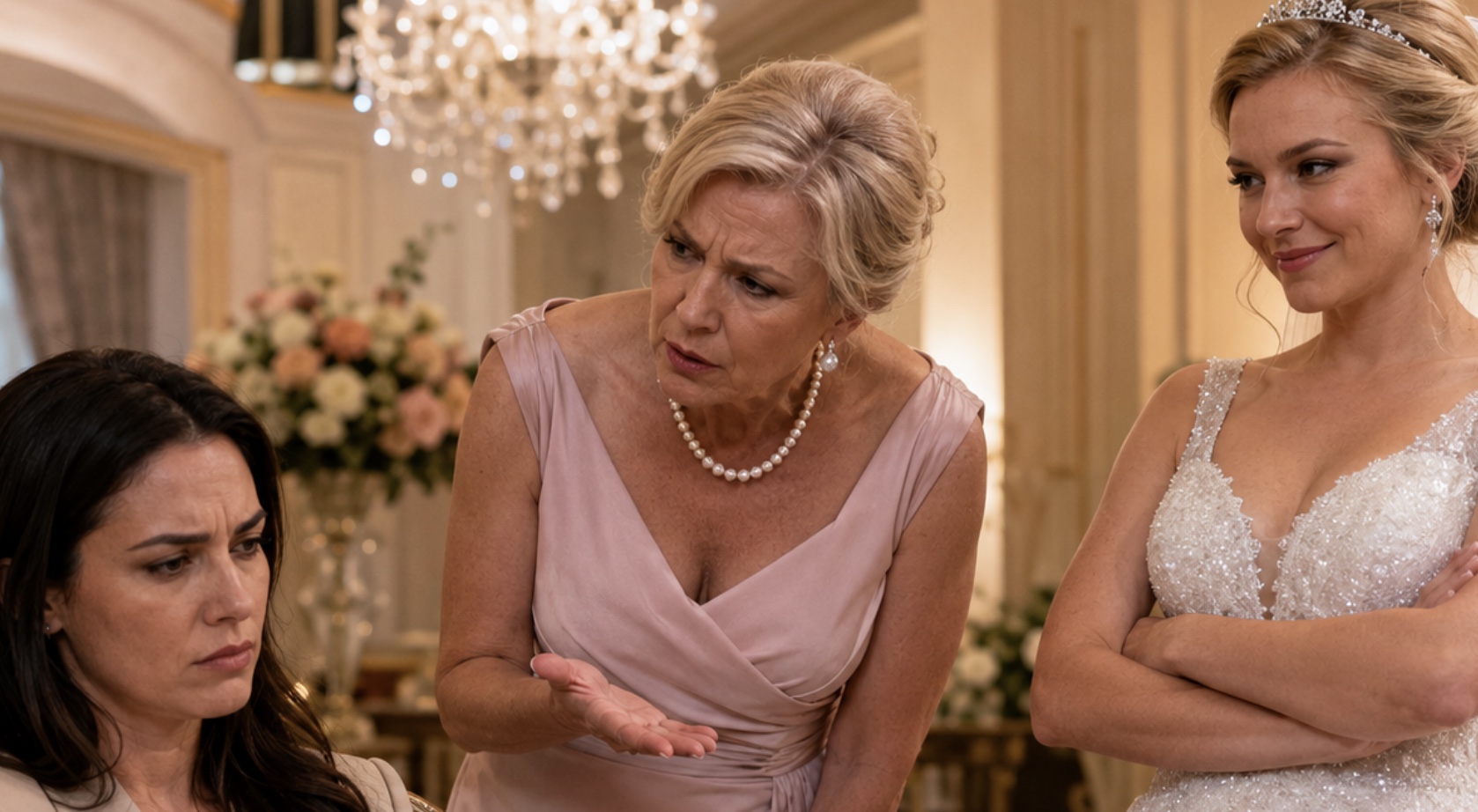
— Sveta, have you completely lost your conscience? Your sister’s wedding is about to fall apart because of you! — her mother shouted into the phone.
Svetlana froze in the middle of the office. Her coworkers at the neighboring desks suddenly became unusually absorbed in their computer screens. She turned toward the window, tightened her grip on the phone, and tried to keep her breathing steady.
Five minutes earlier, Alina had called and casually mentioned that “Mom had already arranged everything.” That was how Svetlana found out that her parents had paid deposits for the restaurant, the wedding host, and the photographer. And they were planning to cover half of the remaining expenses with Svetlana’s money.
They had simply decided it for her.
Without asking.
“Mom, wait…” Svetlana began.
“There’s nothing to wait for! Everything has already been booked, and the deposits have been paid!”
 
Svetlana closed her eyes and slowly exhaled.
Svetlana was thirty-five. She held a senior position at a large company, was paying a mortgage on a two-bedroom apartment in a good neighborhood, and had quietly carried the role of the family’s dependable problem-solver for years.
“You’re the sensible one in this family,” her father used to tell her when she had first started working. “We can always count on you.”
Svetlana had grown used to hearing those words. At first, she had even been proud of them.
Her younger sister, Alina, had been raised under very different expectations. Their parents first explained away her irresponsibility as part of her creative personality. Later, they blamed her youth. After that, they said she simply “hadn’t found herself yet.”
Alina was forgiven for debts, being late, abandoning courses, and quitting jobs.
Svetlana never complained. She simply continued taking care of her own responsibilities.
When Alina announced her engagement, Svetlana was genuinely happy for her. Her future brother-in-law, Dmitry, seemed calm, polite, and decent. Caught up in the excitement, Svetlana transferred some money to her sister for the wedding dress and offered to help with the preparations.
“Tell me what you need and I’ll help where I can,” she wrote in a message.
Alina replied with hearts and smiling emojis.
 
Then the wedding plans began to grow.
Their mother started talking more and more often about a riverside restaurant, a live violinist, an outdoor ceremony, and a banquet for nearly one hundred guests.
Svetlana listened with growing surprise. Dmitry worked as an ordinary manager, while Alina had recently quit her job.
“Mom, how are they going to afford all of this?” Svetlana asked carefully one day.
“Don’t worry about it,” her mother replied dismissively. “We’ve thought everything through.”
Svetlana did not push the subject. She assumed her parents must have savings or some kind of financial plan.
She was used to trusting her family, even when that trust required more effort than she liked to admit.
A family dinner was arranged for Friday evening.
 
Her mother had set the table neatly with their favorite pastries, salad, and tea served in porcelain cups. Everything looked warm and familiar, but there was a slight formality to the atmosphere, the kind that usually appeared before a serious conversation.
Svetlana sensed trouble the moment she sat down.
“We wanted to discuss the wedding expenses,” her father began, avoiding her eyes.
Her mother spoke calmly and efficiently, as though she were reading from a prepared list.
The riverside restaurant had already been booked and the deposit paid. The host, photographer, and decorators had also been hired. The remaining amount came to almost half a million rubles.
“That will be your share,” her mother said simply.
Svetlana stared at her for a moment.
“Mom, did anyone ask me before making all these bookings?”
“You’re her older sister,” her mother replied, as though that explained everything.
“You have a good, stable job,” her father added.
“Are you really going to refuse money to your own sister?” her mother asked quietly, disappointment heavy in her voice.
Svetlana explained that she had a mortgage, monthly bills, insurance payments, and other financial obligations. Half a million rubles was not an amount she could simply pull from nowhere.
“Take out a loan,” her mother suggested without hesitation. “It’s not that much. You’ll pay it off eventually.”
Something shifted inside Svetlana at that moment.
 
It was not exactly hurt. She knew how to forgive hurt.
It was not exhaustion either. She had lived with exhaustion for years.
This was something sharper: anger at the realization that no one had asked her. They had made a major financial decision on her behalf and now expected her agreement as if it were automatic.
She finished her tea in silence and went home without giving them an answer.
Svetlana happened to meet Dmitry’s mother the next day through mutual acquaintances.
Valentina Sergeyevna was a pleasant, talkative woman, and Svetlana was relieved to discuss something unrelated to family finances.
But a few minutes into the conversation, Valentina Sergeyevna smiled warmly and said:
“It’s wonderful that you agreed to cover the wedding costs. Alina said you had promised long ago to give them their dream wedding as a gift. That’s incredibly generous of you.”
Svetlana smiled automatically while her thoughts raced.
She had never made such a promise.
 
She had never even suggested anything close to it.
That evening she called a friend, who hesitated before revealing something she had heard through mutual acquaintances.
Apparently, Alina had been telling people that Svetlana would not only pay for the wedding but would also help the newlyweds with the down payment on an apartment afterward.
Some of the more expensive vendors had reportedly been chosen precisely because, as Alina had told several people, “Sveta is paying for everything.”
Svetlana sat in her kitchen for a long time that night, staring through the dark window.
For years she had believed her role in the family was something honorable.
The responsible one.
The dependable one.
The person everyone could rely on.
Now those descriptions sounded different.
Behind them was another word, a much less flattering one.
Wallet.
That was how they had begun to see her.
Not as a sister.
 
Not as a daughter.
But as a source of money with a salary and a good credit history.
Her mother called another family meeting a week later.
Once again, there were pastries and porcelain cups on the table.
But this time the atmosphere was tense.
Her mother cried, dabbing her eyes with a lace-edged handkerchief.
“I never thought my own daughter would turn her back on the family at a time like this,” she said, her voice trembling.
Her father sat stiffly and spoke slowly, emphasizing every word.
“Family isn’t about keeping accounts. We have always helped one another. Don’t you understand that?”
Alina remained silent, staring to the side with the wounded expression of someone who believed she had been deeply wronged.
Svetlana listened without interrupting.
 
Then she took a folded sheet of paper from her bag and placed it on the table.
“These are my monthly expenses. Mortgage, utilities, insurance, savings for renovations. You can look at them yourselves.”
Her mother looked away.
Her father cleared his throat.
“I’ve been helping this family financially for years,” Svetlana continued calmly. “But I am not taking out a loan to pay for someone else’s wedding.”
“How can you call your own sister ‘someone else’?” her mother snapped.
Svetlana did not raise her voice.
“If you couldn’t afford this celebration, why did you book everything without asking me first?”
The room fell silent.
The clock on the wall continued ticking.
A car passed outside.
No one answered.
After that meeting, Svetlana gave them her final answer.
No.
There were no tears and no dramatic ultimatums.
 
Just a firm, unmistakable refusal.
Her parents and the engaged couple had to redo their plans quickly.
They canceled the riverside restaurant and lost part of the deposit. They found a more modest banquet hall across town. The guest list was cut almost in half, removing distant relatives and coworkers Alina had invited mostly to make the celebration look bigger.
They canceled the live music. They kept the same photographer, but dropped the additional day of photography.
For several months, the family maintained an almost theatrical silence toward Svetlana.
Her mother went weeks without calling, and when she finally did, the conversations were short and cold.
Her father looked at Svetlana with disappointment whenever they met.
Alina stopped messaging her entirely.
To family acquaintances, their mother would say in a quiet voice that was always loud enough to be repeated:
“I do have an older daughter. Unfortunately, she grew up heartless.”
Svetlana heard about those remarks from other people and chose not to respond.
 
The wedding still happened.
It took place in early September in a small banquet hall decorated with white balloons and a simple buffet.
Guests danced, laughed, and congratulated the newlyweds.
Alina looked radiant in her wedding dress.
Dmitry could barely take his eyes off her.
Nothing terrible happened.
The wedding was simply more modest than Alina had originally imagined.
And life went on.
 
A year passed.
The whole family gathered for their father’s birthday. It was a quiet celebration at home, with cake, tea, and old family photographs spread across the sofa.
At some point, Alina came and sat beside Svetlana.
Her pregnancy was already visible, and she moved carefully, as though she was still getting used to the changes in her body.
“You know,” she began without looking directly at her sister, “I was furious with you back then. I thought you were just being stingy.”
Svetlana remained silent and waited.
“But now I understand,” Alina continued after a pause. “We should have planned according to what we could actually afford. It was our wedding. We were responsible for it.”
Svetlana nodded.
Something warm but slightly sad stirred inside her.
 
“The important thing is that you understand that now,” she said softly.
That difficult autumn had changed Svetlana too.
She stopped preparing herself in advance for everyone else’s requests. She stopped feeling guilty whenever she spent money on herself.
Her mortgage continued according to plan. Her renovation savings slowly grew. And for the first time in years, she allowed herself to take a short vacation by the sea simply because she wanted one.
She did not stop helping the people she loved.
But from then on, help was something she chose to give.
It was voluntary.
Not a duty.
A choice.