Zoya Andreyevna died in March, quietly, in her sleep.
Elena found out that morning when her cousin called. The woman’s voice broke almost immediately. Aunt Zoya had lived alone for about twelve years, ever since Uncle Viktor passed away. She had remained independent, doing her own shopping and taking care of the house without asking anyone for help.
Elena visited her about once a month. She would bring something tasty, sit with her over tea, and listen to stories about the neighbors or about how furniture used to be made properly in the old days. Zoya Andreyevna was one of those rare people who somehow left you feeling a little better after spending time with them. There was no obvious reason for it. You simply did.
Elena knew nothing about the will.
The notary called her a week after the funeral. Zoya Andreyevna had left her niece the savings she had carefully accumulated over the course of her life. The amount was more than Elena expected—just over nine hundred thousand rubles.
For several days, Elena could hardly get used to the idea.
It wasn’t really the money that affected her. It was the realization that Aunt Zoya had been thinking about her all this time, quietly and without ever mentioning it.
Alexander reacted to the news very differently.
“Nine hundred thousand is a solid starting point,” her husband said that same evening.
He didn’t sound greedy or rude. He simply spoke like a man whose mind had immediately switched into calculation mode.
“A starting point for what?” Elena asked.
“I’ve been thinking about starting my own business for a long time. A small construction materials warehouse. Nothing huge at first, but it has potential. The market is good for it right now.”
Elena worked as an analyst for an insurance company. She understood numbers well—probably better than many people who were absolutely convinced they understood them.
“Show me the calculations,” she said.
Alexander brought them to her a few days later.
The spreadsheet looked impressive. It contained attractive projections, confident estimates, and a break-even point in the eighth month.
Elena studied it carefully. Then she went through it again.
“You haven’t included the possibility of warehouse rent increasing during peak demand, extra logistics costs if suppliers fail to deliver on time, or a reserve for cash-flow shortages during the first three months,” she said. “If you remove the optimistic assumptions and use more realistic market figures, the break-even point moves to somewhere between fourteen and sixteen months. And your working capital will probably run out before then.”
Alexander stared at her.
“So you don’t believe in me.”
“I believe in you. I don’t believe in these numbers.”
“Which means you won’t give me the money.”
“No, I won’t. This is Aunt Zoya’s money. She saved it her entire life. I want to keep it as an emergency reserve—for unexpected expenses, medical treatment, or anything genuinely serious. Not for a business plan that doesn’t even include a proper safety margin.”
Alexander stood up and paced across the room.
“Fine,” he finally said. “Then I’ll find another way.”
“Find one,” Elena replied. “That’s your right.”
A week later, Alexander announced that he was taking out a loan.
He borrowed two hundred and fifty thousand rubles from a bank and another hundred and fifty thousand from a friend. Elena only learned about the second loan after the fact. Alexander apparently didn’t think the details needed to be discussed with her.
That was when Elena suggested putting their arrangement in writing.
At first Alexander looked offended.
“Why do we need something like that? We’re married.”
Elena explained calmly that it wasn’t about distrust. She simply wanted everything to be clear. If the business succeeded, wonderful—the paper would sit untouched in a drawer. But if things went badly, she didn’t want arguments later about who was responsible for what.
“That’s humiliating,” Alexander said.
“It’s honest,” Elena replied.
He thought about it, shrugged, and eventually wrote the statement himself on an ordinary sheet of paper. It said that he was starting the business entirely on his own initiative, financing it from his personal sources, and accepting full responsibility for any debts and financial obligations connected with it.
He dated and signed it.
Elena folded the paper and placed it in a folder.
Not because she was expecting disaster.
She simply had a habit of thinking ahead.
For the first three months, Alexander was full of energy. He came home late, spent hours on the phone, and constantly talked about suppliers, deliveries, customers, and rent.
Elena listened when he wanted to talk.
She didn’t give advice because he didn’t ask for any.
Then something began to change.
Alexander grew quieter.
He wasn’t openly withdrawn or rude. His answers simply became shorter, and he smiled less often.
Elena noticed, but she didn’t interfere.
One evening she asked:
“How are things at the warehouse?”
“Fine. We’re dealing with everything.”
“All right.”
She didn’t ask again.
The letters started arriving in October.
The first one Alexander took from the mailbox himself. He brought it home and quickly put it in a drawer. Elena only caught a glimpse of the bank logo on the envelope.
Then another letter arrived.
And another.
Soon there were late-night phone calls. Alexander would step into the hallway, lower his voice, and return with a hard expression on his face.
One night Elena woke around two in the morning and heard him speaking quietly outside the bedroom.
She couldn’t make out the words.
The next morning, she asked:
“Who called you in the middle of the night?”
“A business partner. Different time zone.”
As far as Elena knew, Alexander had no partners in different time zones. A construction materials warehouse was mostly a local business.
Still, she didn’t press him.
Nina Pavlovna’s birthday was celebrated at a restaurant. Elena’s mother-in-law preferred restaurants because, as she often said, hosting at home was too much work. At a restaurant, everything looked beautiful and nobody had to clean afterward.
They had reserved a small private dining room.
There were about twenty guests—relatives, several of Nina Pavlovna’s friends, and a few colleagues of her husband, Gennady Ivanovich.
Elena wore a blue dress she had bought two years earlier and hardly ever used. She tied her hair back simply and secured it with a few pins.
When they arrived, Gennady Ivanovich shook her hand and said something kind about how she and Alexander always made any gathering look better.
Elena smiled.
The dinner was warm and noisy.
There were toasts, laughter, stories, and one slightly inappropriate joke that Nina Pavlovna pretended not to hear.
Alexander sat beside Elena, drinking wine and laughing with the others. For the first time in months, he seemed almost relaxed.
Elena ate her salad and thought it was turning into a pleasant evening.
It was rare to have a night when she didn’t need to analyze anything or solve anyone’s problems.
She could simply sit and listen.
Then Nina Pavlovna stood with her glass for another toast.
She thanked everyone for coming, joked about getting older, and said that the most important thing in life was having loved ones nearby.
Then she looked directly at her son.
“My Sasha carries so much on his shoulders,” she said.
Her tone changed. It was no longer festive. It became sympathetic, almost sorrowful.
“Running a business is difficult. Not everyone would dare to do it, and not everyone could handle the pressure. But he has the business, the family, and he handles everything himself.”
The guests nearest to her gradually fell quiet.
“I’m so proud of my son,” Nina Pavlovna continued. “And I understand how hard things are for him. Especially when there’s no understanding at home.”
She didn’t say it loudly.
But in the silence between toasts, everyone heard.
Alexander lowered his eyes.
Gennady Ivanovich cleared his throat.
One of Nina Pavlovna’s friends, a woman wearing a pink jacket whom Elena had met only once before, looked at Elena with obvious curiosity.
Nina Pavlovna continued.
“Our Lena is a smart girl. She has a good job. But marriage means supporting one another. And Sasha is struggling—debts, unreliable partners, and his wife…”
She left the sentence unfinished.
Instead, she paused meaningfully and lifted her glass.
Elena sat perfectly straight.
Her face remained calm.
Her hands rested on the table.
What she felt wasn’t exactly anger.
It was something colder.
Sharper.
Nina Pavlovna had just announced to twenty people that Alexander was in debt and that his wife had failed to support him.
She had done it during her own birthday toast, smiling as though she were expressing maternal concern.
Alexander continued staring into his glass.
Gennady Ivanovich cleared his throat again.
The woman in the pink jacket opened her mouth as though she wanted to say something, then thought better of it.
Elena slowly placed her fork on the edge of her plate.
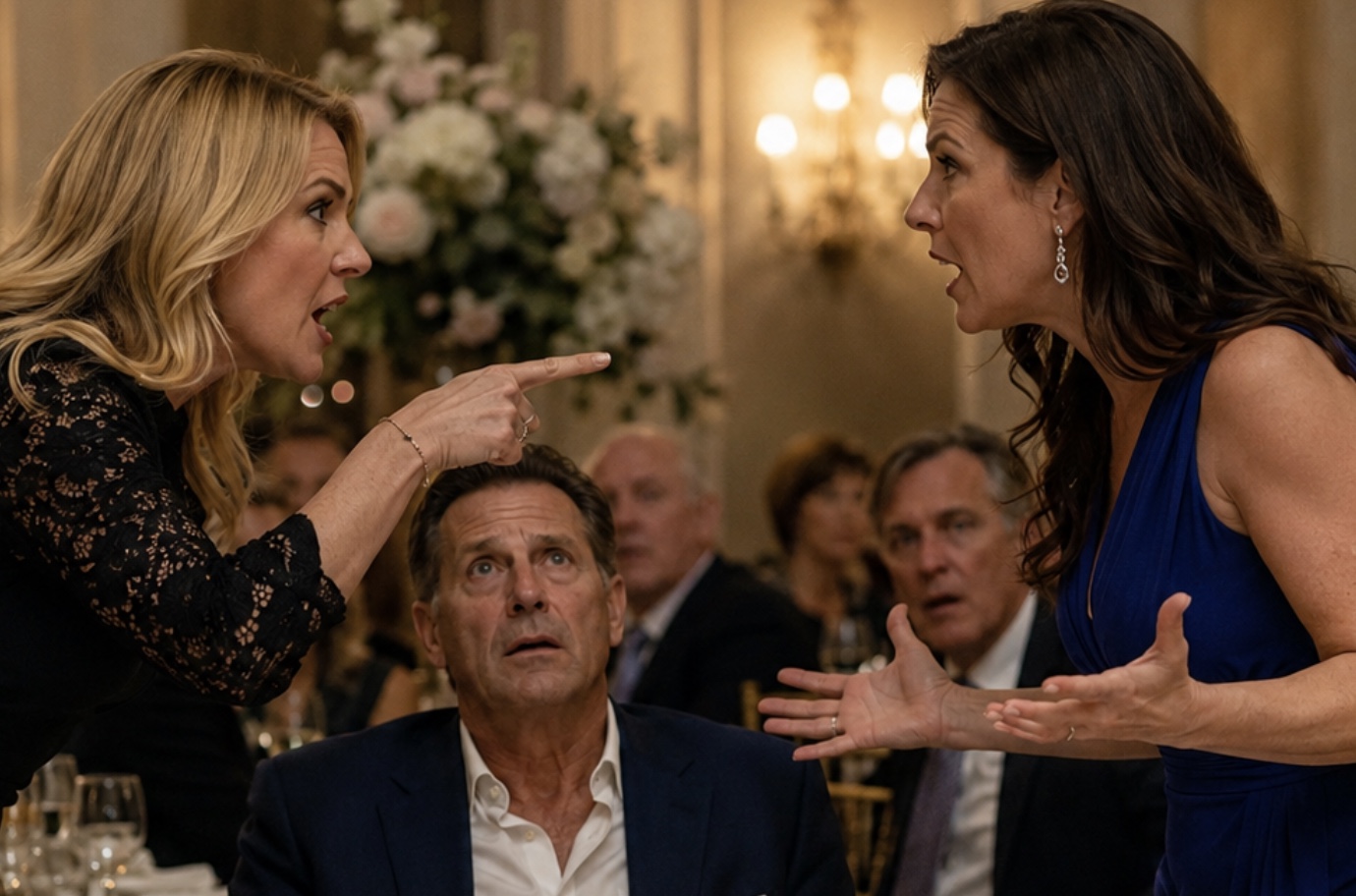
“Nina Pavlovna,” she said evenly, “you just said several things that need clarification.”
Her mother-in-law turned toward her with the irritated expression of someone who had been interrupted in the middle of an important speech.
“What exactly, Lenochka?”
“The debts. You said Alexander has debts and that his partners are letting him down. I’d like to ask him directly. Is that true?”
The room became completely quiet.
Alexander looked at his wife.
Then at his mother.
“Sasha,” Elena repeated. “Is it true?”
He hesitated for a moment.
“There are certain difficulties.”
“How much are these ‘certain difficulties’?”
“Elena, maybe this isn’t the time…”
“Nina Pavlovna chose to discuss it in front of everyone,” Elena replied calmly. “So apparently this is the time.”
Her mother-in-law tried to intervene.
“Lenochka, I only meant that Sasha is having a hard time and that a family should—”
“Nina Pavlovna,” Elena said, looking directly at her, “you just told everyone that I don’t support my husband. Since you decided to start this conversation publicly, I’d like to finish it publicly.”
Gennady Ivanovich touched his wife’s hand.
Nina Pavlovna fell silent.
Elena turned back to Alexander.
“Sasha, how much do you owe?”
He slowly placed his glass on the table.
“Around six hundred thousand,” he said quietly.
Someone at the table gasped.
Elena nodded.
She picked up her glass of water, took a sip, and set it down again.
“I see. Thank you for telling me.”
Nina Pavlovna stared at her now without any trace of her earlier festive confidence.
“Lenochka, surely you understand that Sasha needs help. You could…”
“Nina Pavlovna,” Elena interrupted, “Alexander and I have a written agreement about this matter. He wrote it himself, in his own handwriting. I’m not going to discuss every detail here, but I can tell you one thing: what you’re suggesting is not my responsibility.”
The woman in the pink jacket was now openly fascinated.
Nina Pavlovna stared at Elena.
“You don’t understand. Sasha worked hard. He put everything into this business, while you stood on the sidelines and watched. Is that what a wife does?”
Her voice was naturally loud, and everyone could hear her.
“I didn’t know he was drowning,” Elena said. “Alexander kept telling me everything was under control whenever I asked.”
Alexander lifted his head.
“You didn’t ask.”
“I asked you once. You told me you were handling it. After that, I stopped interfering because that was exactly what you wanted.”
“A normal wife doesn’t wait for permission!” Alexander suddenly raised his voice.
Several guests flinched.
“You saw something was wrong. You saw the letters. You heard the calls. And you said nothing!”
“You asked me not to interfere with your business.”
“That’s different!”
“How is it different, Sasha?” Elena asked calmly. “When I tried to help with the calculations at the beginning, you said you didn’t need my advice. When I asked how things were going, you told me everything was fine. What exactly was I supposed to do?”
“Not turn your back on me!”
“I didn’t turn my back on you. I respected something you and your mother now seem to have forgotten: this was your decision. Yours, Sasha. Not mine.”
Nina Pavlovna stood up.
Almost exactly as she had when she gave her birthday toast, except now there was no glass in her hand.
“So you’re refusing to help my son.”
“Nina Pavlovna,” Elena replied, “in this conversation, Alexander is my husband, not your little boy. He is an adult who made his own decision. His debts are his debts. I didn’t create them.”
“But you can pay them!”
“I can. And I won’t.”
Nina Pavlovna went silent.
Then she spoke slowly, emphasizing every word.
“You have money. Your aunt’s money. It’s just sitting there doing nothing while Sasha is in this situation.”
“Aunt Zoya Andreyevna’s money,” Elena corrected her, “is not sitting there doing nothing. It is an emergency reserve. Aunt Zoya saved it over the course of her entire life. She did not save it so I could pay off debts from a business I warned was financially risky from the very beginning.”
“So family means nothing to you,” Nina Pavlovna concluded.
Elena was silent for a moment.
Then she asked:
“Why do you think being family means paying for someone else’s decisions?”
Nobody answered.
Alexander looked at his wife differently now.
The anger had disappeared from his face, replaced by something Elena had no desire to interpret.
An older man Elena didn’t know quietly said something to the guest beside him. The man nodded.
The woman in the pink jacket took a sip of water and looked away.
Nina Pavlovna looked around the table as if searching for someone who would support her.
Gennady Ivanovich was studying the tablecloth.
Alexander’s cousin Svetlana, who sat opposite Elena, suddenly became extremely interested in her phone.
“Why is everyone silent?” Nina Pavlovna asked.
She no longer sounded triumphant.
She sounded confused.
“Nina,” Gennady Ivanovich said quietly, “enough.”
“What do you mean, enough? He’s my son!”
“Exactly,” he replied. “Your son. Elena is his wife, not his emergency bank account or his emotional safety net.”
Nina Pavlovna opened her mouth, then closed it.
She looked at her husband for a long moment before slowly sitting back down.
Alexander had remained silent.
Finally, he spoke without looking up.
“Elena, I understand you have the agreement. I understand you were right about the risks. But you could have… I don’t know. Asked again. Insisted.”
“You told me very clearly: this is my business, don’t interfere,” Elena replied. “I respected your decision. Do you only want me to respect your decisions when they turn out well?”
Alexander had no answer.
“And there’s something else,” Elena continued. “You just raised your voice at me in front of everyone after your mother publicly blamed me for your problems. I want you to understand that what happened here tonight isn’t just an embarrassing moment at a birthday dinner.”
Alexander looked up.
“It showed me how you actually think. You believe that when you told me not to interfere, I was supposed to ignore you. You believe I should have guessed when things became serious. And now you think I should pay because I failed to guess.”
“Elena…”
“I understand now.”
She carefully placed her napkin beside her plate, took the handbag hanging from the back of her chair, and stood up.
“Nina Pavlovna, happy birthday,” Elena said evenly. “Gennady Ivanovich, thank you for the kind words you said earlier.”
He nodded briefly.
Elena left the private dining room.
The hallway outside was quiet. Music from the main restaurant reached her only faintly.
The cloakroom attendant handed her coat to her.
Elena put it on and stepped outside.
The November air was cold and damp.
She stopped on the steps, buttoned her coat, and ordered a taxi.
During the ride home, she didn’t think about anything in particular.
She simply watched the wet city lights through the window—blurred streetlamps, shop windows, traffic lights shining against the dark pavement.
The driver remained silent, which she appreciated.
At home, Elena took off her shoes and hung up her coat.
She went into the kitchen and switched on the kettle.
While the water heated, she opened a desk drawer and took out the folder.
She found Alexander’s handwritten statement.
She read it again.
Then she put it back.
Alexander returned two hours later.
He unlocked the door with his own key and spent a long time removing his shoes in the hallway.
“Elena,” he called.
“I’m in the kitchen.”
He came in, sat down, and remained silent for nearly a minute.
“I should have stopped my mother earlier,” he finally said. “When she started talking about the debts.”
“Yes,” Elena replied.
“I didn’t think she would go that far.”
“Neither did I.”
Alexander looked at her.
“Are you leaving?”
Elena held her cup with both hands.
Outside, something made a low rushing sound. It could have been the wind, a passing car, or the neighbor upstairs.
“Yes,” she said.
There was no anger in her voice.
No relief either.
It was simply a fact she had understood somewhere between the restaurant hallway and the taxi ride home.
“I don’t want to live in a place where I’m seen as an emergency wallet. Where staying silent becomes betrayal and respecting someone’s decisions becomes cruelty. I’m tired of trying to guess rules that change depending on whether things are going well for you or badly.”
Alexander stared at the table.
“I didn’t want it to become like this.”
“I know,” Elena said. “But it did.”
She finished her tea, stood up, and placed the cup in the sink.
“The debts are yours. I have your written statement. We don’t really have much property to divide because the apartment is rented. I think we can settle everything without unnecessary complications.”
Alexander didn’t argue.
Maybe he couldn’t find the words.
Maybe he understood there was nothing left to argue about.
Elena filed for divorce two weeks later.
Alexander signed the papers without protest.
The money Zoya Andreyevna had left her remained untouched.
Elena never spent it rescuing the very business she had warned against from the beginning.
She rented another apartment.
It was smaller, but it belonged entirely to her private world.
She arranged everything exactly the way she wanted.
She even bought a large ficus she had wanted for years. Alexander had always complained that big plants made a room feel crowded.
The ficus took its place in the corner beside the window and seemed perfectly happy there.
Alexander’s handwritten statement remained in the folder.
Sometimes Elena thought she should throw it away. The marriage was over, the issue was settled, and there was no practical reason to keep it.
But she never did.
Not because she was holding on to resentment.
She kept it as a reminder to herself that sometimes the most important thing you can do for another adult is respect the choice they insist on making—even when you already know where that choice is likely to lead.
Zoya Andreyevna, Elena thought, would probably have understood.