Irina stood by the kitchen window, watching the janitor rake up the last yellow leaves scattered across the courtyard. October had always felt special to her. Her birthday fell in the middle of the month, and for years she had dreamed of celebrating it properly. For the first time in seven years, it finally seemed possible.
“Misha, what do you think about throwing a real party this year?” she asked her husband, who was sitting at the kitchen table reading the news on his tablet. “We’ve paid off the mortgage. We can finally afford to enjoy ourselves.”
Mikhail looked up from the screen. A flicker of concern crossed his face.
“What kind of party are you talking about?”
“I’ve already thought it through,” Irina said, turning toward him as her face brightened. “We could rent a boat for the evening, invite my friends, and arrange a beautiful dinner. Just imagine it—the Moscow River, the city lights…”
“How much would that cost?” Mikhail interrupted.
“Not that much,” Irina replied hesitantly. “Maybe a hundred and fifty thousand rubles. Two hundred at most. But it would be unforgettable.”
Mikhail placed the tablet on the table and rubbed the bridge of his nose. Irina knew that gesture very well. He always did it when he was preparing to say something she would not like.
“Ira, you remember that my mother’s anniversary is in November, don’t you? She’s turning seventy. If we spend all that money on your celebration, what are we supposed to give her? And how will we pay for her party?”
Irina felt something tighten inside her.
It was always the same. There was always something more important than what she wanted.
“Misha, I’m turning thirty-five. That’s a milestone too.”
“Of course it is, sweetheart. But Mom… she’s my mother. And seventy is a completely different age. Maybe we could postpone your big celebration until next year?”
“Until next year?” Irina’s voice rose. “And what happens if there’s another reason to postpone it then? Your father’s birthday? Some other emergency?”
“Don’t be dramatic. We just need to set our priorities.”
“I can see perfectly well what our priorities are,” Irina said, turning sharply back toward the window. “For seven years, we saved for the apartment. For seven years, I denied myself everything. And now that we can finally afford something, I’m being told to wait again.”
“Ira, try to be reasonable.”
“Reasonable?” She turned around, and Mikhail saw tears shining in her eyes. “When am I allowed not to be reasonable? When am I allowed to want something for myself?”
The next several days passed in tense silence. Irina pretended she had forgotten about the conversation, but Mikhail noticed her browsing websites advertising riverboats and restaurants. He saw her exchanging messages with her friends and quickly locking her phone whenever he approached.
On Wednesday, his mother, Elena Nikolaevna, came over. As usual, she arrived without warning, carrying a bag of homemade pastries and a full set of plans for the evening.
“Irochka, how are you?” she asked, kissing her daughter-in-law on the cheek. “Misha told me you wanted to celebrate your birthday. That’s lovely, of course, but you understand…”
“What exactly am I supposed to understand, Elena Nikolaevna?”
“Well, this is a very important year for me. I’m turning seventy. Can you imagine? Relatives will come, former colleagues too. Everything has to be arranged properly. You’re still young. You have so many birthdays ahead of you.”
Irina slowly placed her cup on the table.
“So my birthday can wait?”
“I wouldn’t put it that way,” Elena Nikolaevna replied. “Maybe you could celebrate more modestly. Go to a little café with your girlfriends. It would be wiser to save the money for my anniversary.”
“I see,” Irina said quietly.
Mikhail sat beside them without saying a word. He simply stared down at his plate.
That evening, after his mother left, Irina locked herself in the bedroom. Mikhail could hear her speaking on the phone, but he could not make out the words. When he knocked, she said she was tired and wanted to sleep.
The next morning, he woke up alone.
A note was waiting on the kitchen table.
“Flew to Turkey with Katya for the weekend. Don’t worry.”
Mikhail read the message several times, unable to understand what he was seeing.
Turkey? What weekend trip? They had never discussed going anywhere.
He tried calling his wife, but her phone was unavailable. He sent messages, but none of them went through.
The weekend dragged on unbearably slowly. Mikhail could not relax. He called Katya’s mother, trying to figure out what had happened. It turned out that the women really had flown to Antalya after finding a last-minute holiday package.
“Don’t worry, Mikhail Andreyevich,” Katya’s mother reassured him. “The girls needed a break. I heard you’d been having some family problems.”
Irina returned on Sunday evening, tanned, refreshed, and surprisingly calm. Mikhail met her at the airport with a bouquet of flowers and a long list of questions.
“How could you just leave like that? I was worried sick!”
“I left you a note,” Irina replied evenly as she pulled souvenirs from her bag. “Here. I brought you a T-shirt.”
At home, she began showing him photographs—blue water, palm trees, elegant dresses, and sunsets over the sea.
“We stayed at a five-star hotel,” she said as she scrolled through the pictures on her phone. “There was a spa, massages, amazing restaurants. Do you know how long it’s been since I felt that happy?”
“And how much did all of this cost?” Mikhail asked cautiously.
Irina took a credit-card statement from her wallet and handed it to him.
“You wanted to save money on my birthday so you could celebrate your mother’s anniversary. I hope you’re satisfied now.”
Mikhail stared at the total and could hardly believe his eyes.
Two hundred and fifty thousand rubles for three days.
“Ira, have you lost your mind? Where did we even get that kind of money?”
“Credit card,” she said with a shrug. “The limit is high. It wasn’t a problem.”
“Not a problem?” A chill ran down Mikhail’s back. “I’ve already paid the restaurant deposit for Mom’s party. I ordered flowers and hired a host. And now we have your debt to pay off too!”
“My debt?” Irina raised her voice for the first time that evening. “It’s our debt. Or am I not allowed to spend our money?”
“You are, but you should have discussed it with me first!”
“Did you discuss it with me when you decided your mother’s anniversary mattered more than my birthday?”
Mikhail dropped onto the sofa and covered his face with his hands.
“Ira, how are we supposed to repay this?”
“The same way we paid off the mortgage for seven years,” she replied, sitting beside him. “We’ll find a way. At least now you understand that I’m a living person too. I have needs and wishes of my own.”
“But two hundred and fifty thousand…”
“Misha,” Irina said more softly, “I wasn’t trying to punish you. I’m simply tired of always coming second. I’m tired of being told that my wishes can wait while everyone else’s wishes must be fulfilled immediately.”
Mikhail looked at her.
There was no anger or triumph in her expression. There was only exhaustion and a painful vulnerability.
“For seven years, we saved for this apartment,” Irina continued. “I gave up vacations, beautiful clothes, and nights out with my friends. I never complained because I understood that buying a home mattered to both of us. But when we finally had the chance to do something for me, I was told it could be postponed. That there were more important things.”
“But my mother…”
“Your mother has lived for seventy years, and she has celebrated her birthday every year. What about me? When was the last time I celebrated mine the way I truly wanted?”
Mikhail thought about it.
She was right.
For the past several years, Irina’s birthdays had been simple—a dinner at home, a modest present, and sometimes an evening at a café with friends. She had never complained. She had accepted it all without making demands.
“I didn’t think about it,” he admitted.
“You didn’t think because you’re used to me understanding everything and agreeing to everything. But sometimes I want to be demanding too. Sometimes I want my wishes to matter. I’m tired of always being the easy, convenient wife.”
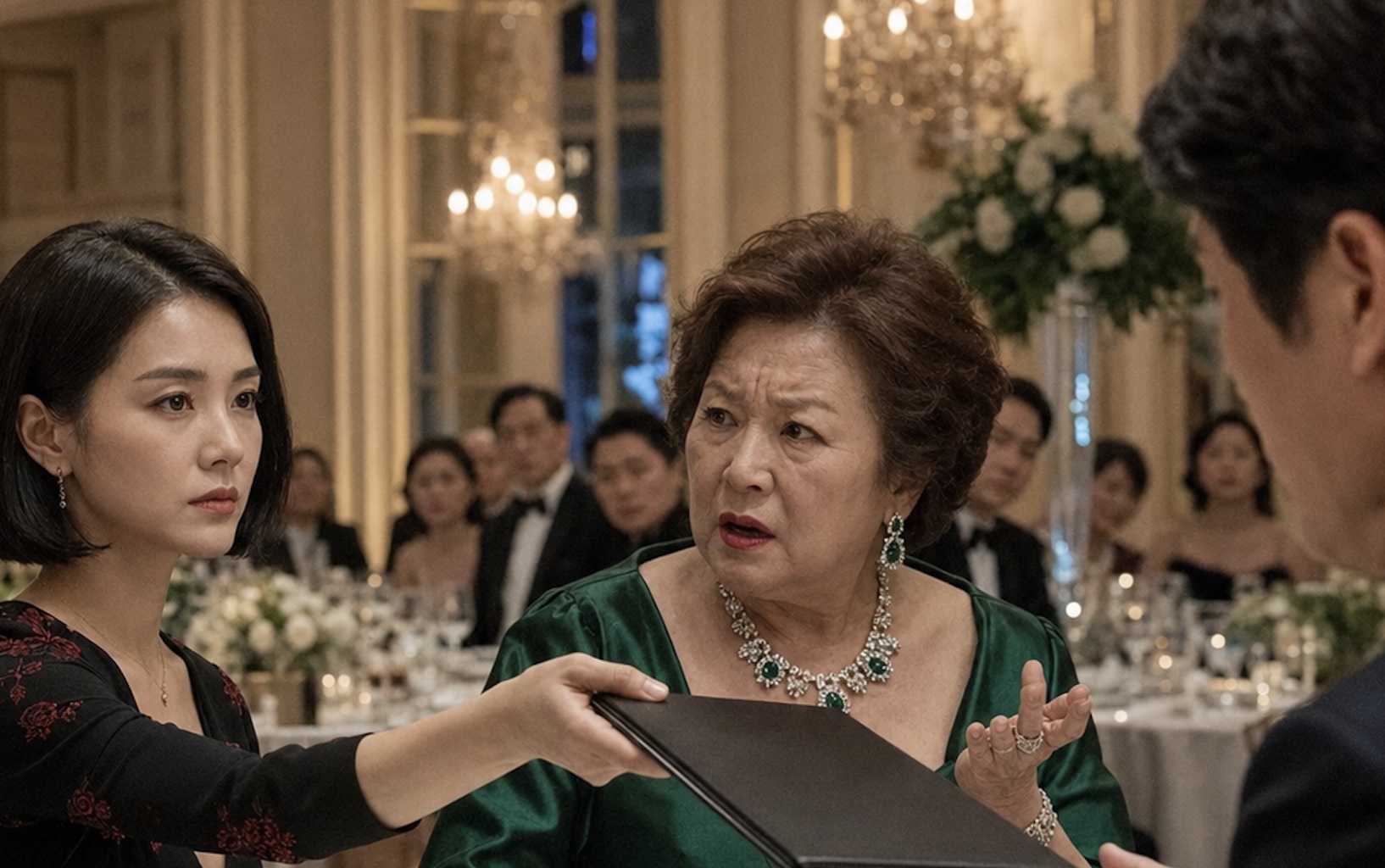
A week later, Elena Nikolaevna’s anniversary arrived. The restaurant was decorated with flowers, and relatives, friends, and former colleagues filled the room. Irina came wearing a new dress she had bought in Turkey. She looked tanned, elegant, and confident.
During the banquet, Elena Nikolaevna approached her.
“Irochka, Misha told me about your trip. That wasn’t very nice, was it?”
“What exactly wasn’t nice, Elena Nikolaevna?”
“Spending that much money. Flying away without asking anyone…”
“Mom,” Mikhail said as he came over carrying two glasses, “please don’t start. Irina had every right to take a holiday.”
“But the money…”
“We’ll earn more money. My wife’s trust is worth far more to me than any amount of cash,” Mikhail said firmly.
Elena Nikolaevna looked at her son in surprise.
“But I didn’t mean…”
“I understand, Mom. We’re a family, and in a family, everyone’s wishes deserve equal respect.”
Irina slipped her arm through her husband’s.
“Thank you,” she whispered.
“I should be thanking you,” Mikhail replied. “You finally made me see what I was doing.”
That evening, after they returned home, Mikhail opened his laptop and began searching online.
“What are you doing?” Irina asked.
“I’m looking for a riverboat to rent next year for your birthday. A proper one, with panoramic windows and a beautiful interior.”
“But we still have the credit-card debt.”
“If we book early, it will be much cheaper. We can save a little every month. By next October, you’ll have the best birthday celebration of your life.”
Irina came up behind him and wrapped her arms around his shoulders, resting her face against him.
“You know, the boat isn’t that important to me anymore.”
“Why not?”
“Because now I know that my wishes matter to you. That means more than any party.”
Mikhail turned to face her.
“I’m sorry it took me so long to understand.”
“What matters is that you understand now,” Irina said with a smile. “Better late than never.”
The next day, they created a repayment plan together. They also began putting money aside for future celebrations—her birthdays, his birthdays, their anniversaries, and even small spontaneous pleasures.
They had finally learned something important: happiness should not always be postponed until later. It has to be built in the present, one day at a time, by listening to each other and respecting what matters to both people.
As for the credit-card statement that had caused the first serious argument of their marriage, they kept it in a box with other family papers.
It became a reminder that there are no important and unimportant wishes in a loving family.
There are only people learning how to hear one another.