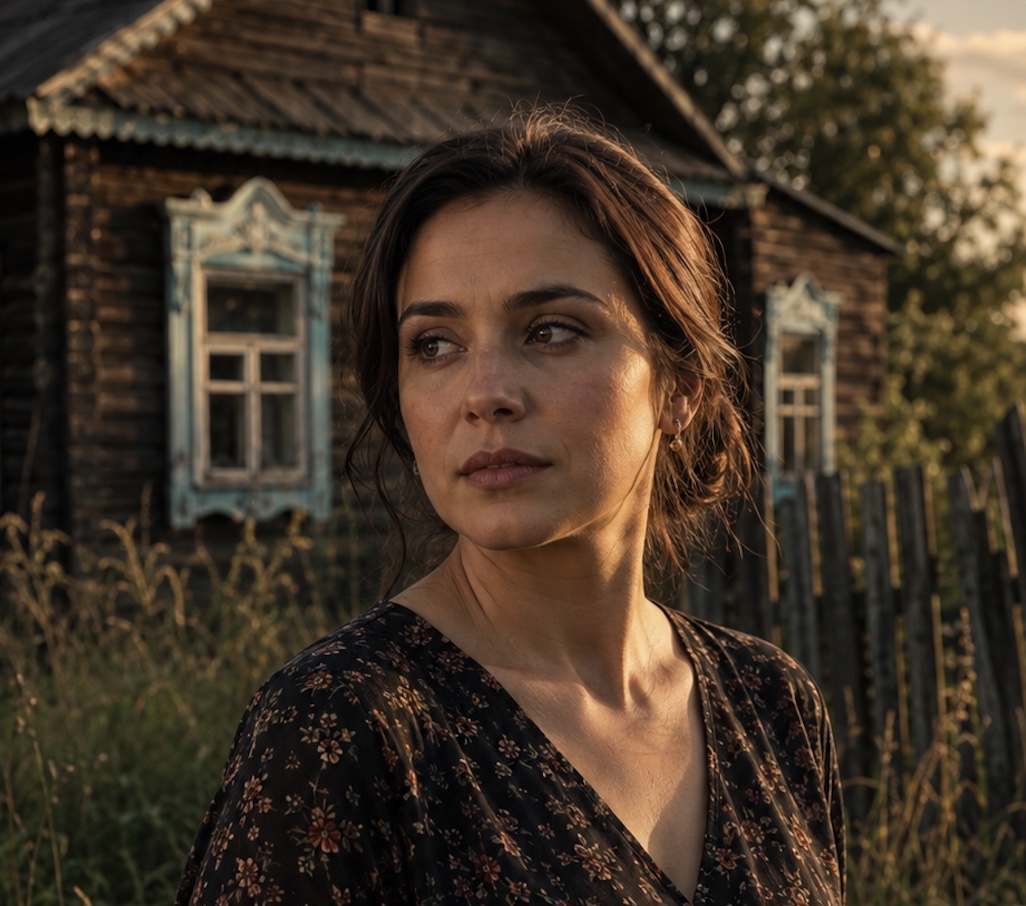
Larisa was staring at her laptop screen when a message from the director popped up in the company messenger.
“Everyone to the meeting room. Urgent!”
She closed the layout of the new mobile game she had been working on and, already sensing something was wrong, headed to the meeting.
“Due to recent developments, it has become extremely difficult for the company to continue growing in the Russian market,” Andrey Viktorovich said in a flat voice, without lifting his eyes from the papers in front of him. “Western investors have pulled out, major clients have frozen their budgets. The decision has been made to shut the company down.”
Larisa felt as though the floor had disappeared beneath her.
Four years as creative director. A team of twelve people. A monthly salary of three hundred thousand rubles. Everything collapsed in a single moment.
“Severance pay will be issued in accordance with the labor code,” the director continued. “I’m sorry, everyone. The circumstances are beyond our control.”
That evening, Larisa reached home in a state of complete numbness. The two-room apartment in a new building greeted her with its familiar comfort: the IKEA sofa she had bought, the television she had paid for, the dishwasher installed with her money.
“Gena, I’m home!” she called, taking off her coat.
Gennady came out of the bedroom in sweatpants and a T-shirt. At twenty-seven, he still looked boyish: thin, with permanently messy hair.
“How did it go?” he asked without looking up from his phone.
“Badly. The company is closing.”
Her husband raised his head and looked at Larisa in surprise.
“What do you mean, closing?”
“Exactly that. They gathered everyone together, said there was no money, and that was it,” Larisa sat down on the sofa and rubbed her temples. “I still can’t believe it. This morning we were discussing a new project with a client from Yekaterinburg.”
Gennady said nothing, typing something quickly on his phone.
“Gena, are you listening to me?”
“I’m listening, I’m listening,” he finally put the smartphone aside. “It’s just… unexpected.”
“For me too.”
In two years of marriage, Larisa had grown used to being the one who handled the family’s finances. His cashier’s salary at a Sberbank branch was modest, while her income paid for their summer trips to Turkey, Zegna suits, and new appliances. Larisa had always considered it fair: after all, the apartment was his, a wedding gift from his parents. And besides, wasn’t money in a family supposed to be shared?
“Well, it’s fine,” Gennady said after a pause. “You’ll find something new.”
“Of course I will. It’s just that the market is difficult right now. It might take some time to find the right position.”
“Yeah.”
Something in his tone made Larisa uneasy, but she brushed it off as tiredness. His job was stressful too: dealing with clients all day, complaints, queues.
The next day, while Gennady was at work, she began sending out her resume. The IT industry really was going through a hard period: many companies were cutting staff or freezing hiring. By evening, she had received only two replies, both polite formal rejections.
“How is the job search going?” Gennady asked when he came home.
“Quiet so far. But that’s normal. The market has dropped.”
“I see,” he went into the kitchen and took a yogurt from the fridge. “How much money do we have?”
“What do you mean?”
“Savings. In case the search takes longer.”
Larisa thought for a moment. In truth, they did not have much saved: only one hundred and fifty thousand rubles on the card. Everything else had gone toward daily expenses, vacations, restaurants, clothes. They had never tried to save. Why would they, when their income allowed them to enjoy life?
“There’s about one hundred and fifty thousand. Enough for a couple of months until I find a job.”
“A couple of months…” he shook his head disapprovingly. “Lara, what if you don’t find one?”
“I will. I have strong experience and a good portfolio.”
“But what if you don’t?” he raised his voice. “What then? Am I supposed to support you?”
Larisa stared at him, stunned.
“Gena, what is wrong with you? We’re family. I supported you for two years when your salary was fifty thousand.”
“First of all, you didn’t support me, you helped me. Second, that was mutual support, not dependency!”
“Dependency?”
“What else would you call it? Sitting around without a job, spending my money…”
“Your money?” Larisa laughed. “Gena, seriously? We couldn’t even live half a month on your salary!”
“But the apartment is mine!” he blurted out, then immediately fell silent, as if frightened by his own words.
A heavy silence filled the room. Larisa looked at her husband in confusion.
“Say that again,” she said quietly.
“Nothing. Forget it.”
“No. Say it again. About the apartment.”
Gennady sighed and straightened his shoulders.
“The apartment is mine. And I’m not going to feed freeloaders here!”
Larisa stared at her husband for a long time, trying to understand when exactly he had turned into such a snob. Just a week earlier, he had kissed her in the mornings, asked for advice about work, complained about his difficult boss. And now he was standing in the middle of the kitchen with a stone face, calling her a freeloader.
“So I’m a freeloader,” she repeated. “Interesting. And when I bought you a forty-thousand-ruble suit for your bank interview, was I a freeloader then too?”
“What does that have to do with anything?”
“And when I paid eighty thousand for your English courses?”
“Lara, don’t twist things.”
“I’m not twisting anything. I’m simply trying to understand your logic. When I have money, we’re a family and everything is shared. When I don’t, I’m a freeloader in your apartment.”
Gennady turned toward the window.
“It’s not about money.”
“Then what is it about?”
“It’s about the fact that I’m not going to support an unemployed wife. That’s a hard line for me.”
He pronounced the word “support” with particular disgust, as if he were talking about something shameful. Larisa felt a cold anger rise inside her.
“Gena, you spent six months looking for a job after university. Who supported you then? Have you forgotten?”
“My parents.”
“Really? And who paid for groceries when we moved in together? Who bought the furniture, the appliances, the dishes?”
“You were working. You had money!”
“Yes, I was working. And what were you doing? Finding yourself?”
“I was studying! Doing an internship!”
“Right… an unpaid internship. For six months!” she stepped closer to him. “You know what hurts the most? It’s not that you don’t want to support me. It’s that you’re not even trying to hide it!”
“I’m honestly saying what I think.”
“Honestly? Then honestly answer me… do you even love me?”
Gennady fell silent. That silence said more than any words could have.
“I see,” Larisa said. “So it’s not about money. It’s about the fact that it was simply convenient for you to live with a woman who paid for everything and demanded nothing in return.”
“Don’t exaggerate.”
“What is there to exaggerate? For two years I was your sponsor, and now I’ve turned into a freeloader. How convenient.”
“Listen, enough!” her husband exploded. “I’m tired of this! I’m not going to listen to reproaches or support an unemployed wife!”
“You won’t?” Larisa laughed. “Excellent. Then I’m moving out.”
“Move out!”
“I will.”
“Then go already!”
“I absolutely will!”
They stood there shouting at each other like teenagers. Somewhere deep inside, Larisa still hoped that Gennady would come to his senses, apologize, say he had spoken in anger. But he stayed silent, his lips pressed tightly together.
“Well then…” she said softly. “Thank you, Gena. Thank you for showing me who you really are.”
The next morning, while her husband was at work, Larisa packed her things.
The bags were standing in the hallway when Gennady returned home.
“You’re leaving?” he asked when he saw the luggage.
“You told me to move out.”
“Well… I thought you were just angry.”
“Gena, I’m not angry. I simply realized I don’t want to live with a man who sees me as a freeloader.”
“Don’t be ridiculous.”
“I’m not. I’m just drawing conclusions.”
She picked up her bags and headed for the door.
“Lara, wait! Where are you going?”
That was a good question. Her parents lived in Ryazan, in a one-room Khrushchev-era apartment. Her friends were married and had their own problems. Renting a place in Moscow with her savings would be expensive and short-lived.
“I’ll figure it out,” she answered briefly and left.
At the nearest café, Larisa opened her laptop and began looking at rental listings. A one-room apartment in a residential district cost at least forty thousand rubles, plus utilities. That meant her money would last three months at most. And if she didn’t find a job quickly? What then?
Suddenly, an advertisement caught her eye: a house for sale in the village of Berezkino, one hundred kilometers from Moscow. Price: one hundred and twenty thousand rubles. The house was described as “in need of cosmetic repairs,” with a plot of land and utilities.
Larisa stared for a long time at the blurry photographs of a leaning fence and peeling walls.
One hundred and twenty thousand…
Almost all her savings. But it would be her house. A place where no one could call her a freeloader.
She quickly dialed the seller’s number.
“The house is being sold urgently,” the man explained. “My aunt died, and we’re dividing the inheritance among relatives. Nobody needs it. Everyone lives in Moscow.”
Larisa was sitting in a café near Kursky railway station, where she had come to meet Viktor Sergeyevich. The documents for the house in Berezkino lay on the table in front of her.
“What condition is the house in?”
“It’s a normal house, solid. My aunt lived there until the very end. She only went into the hospital a year ago,” Viktor Sergeyevich flipped through the papers. “You see, I need the money quickly to pay off some debts. That’s why the price is so low.”
One hundred and twenty thousand for a house with land in the Moscow region… it sounded suspicious. But Larisa had no alternatives.
“When can I see the house?”
“Right now, if you like. I have a car. I’ll take you there and show you. If you like it, we can sign everything immediately.”
An hour later, they were driving along the Yaroslavl highway in a battered Priora. Viktor Sergeyevich told her about his late aunt, Lidia Ivanovna, who had worked all her life as a teacher at the local school, never started a family, and lived alone.
“She was a neat, hardworking woman. She kept the house in order and even tended the vegetable garden until the very end.”
Berezkino turned out to be a typical village near Moscow: about twenty houses along a single street, half abandoned, half turned into summer cottages. Aunt Lidia’s house stood at the end of the street behind a tall wooden fence.
“Here it is,” Viktor Sergeyevich stopped the car in front of a crooked gate. “Large plot. A five-wall log house, built by her grandfather.”
Larisa got out of the car and looked around. The neighboring houses looked abandoned, with weed-covered yards and broken windows. But it was quiet and peaceful. Only the wind rustled through the bare branches of the birch trees that had given the village its name.
“Let’s go inside,” the seller suggested, taking out a bunch of keys.
The gate opened with a creak. Larisa walked along the path to the porch. The house looked old but strong: log walls, a high gabled roof, carved window frames. Ceramic pots with dried flowers stood on the porch.
“My aunt loved flowers,” Viktor Sergeyevich remarked as he unlocked the front door. “In summer, it was beautiful here.”
Inside, it smelled of old wood. Viktor Sergeyevich flipped the switch.
“The electricity is connected,” he explained. “There’s running water too, from a well in the yard. The heating is stove-based, but the house is warm.”
Larisa entered the room on the right. It was small but bright, with two windows. Simple furniture: a sofa, a table, a bookcase packed full. Framed photographs, embroidery, and children’s drawings hung on the walls.
“Gifts from her students,” Viktor Sergeyevich said. “My aunt worked at the school for forty years. Everyone in the village respected her.”
Next came the kitchen: also small, but with good furniture and a gas stove. There was a refrigerator, a dishwasher, even a microwave. Dried geraniums and violets stood in pots on the windowsill.
“And this is the bedroom,” Viktor Sergeyevich opened the door to the third room. It was darker there: one window, heavy curtains. A bed, a wardrobe, a dressing table with a mirror. Everything was very clean and tidy.
“The bathroom and toilet are in the extension,” he showed her the next door. “Everything is modern. It was done recently.”
Larisa walked through the house again, trying to imagine herself living there. Silence, peace, no one nearby. She could work remotely if she found a project. Judging by the router in the hallway, there was internet.
“How far is it to the station?” she asked.
“About fifteen kilometers. A bus comes three times a day, but it’s better to have a car.”
“Are there neighbors?”
“Uncle Kolya lives two houses away, a pensioner. There’s also a young family who bought a dacha, but they only come on weekends. Mostly, it’s quiet here.”
Larisa went out into the yard. The plot really was large: a vegetable garden, an orchard with apple trees, even a bathhouse. Everything was overgrown and neglected, but it was clear that there had once been order here.
“I’ll take it,” she said firmly.
“Seriously?” Viktor Sergeyevich even looked pleased. “I thought the village would scare you off.”
“It didn’t.”
The documents were completed within two hours in the nearest district center. The notary carefully reviewed the certificates and stamped the papers. By evening, Larisa had become the owner of a house in the village of Berezkino.
“Good luck to you,” Viktor Sergeyevich said goodbye at the railway station. “And don’t regret buying it. It’s a good house. My aunt took care of it.”
On the train back to Moscow, Larisa looked at the keys in her hand and wondered what on earth she had done. She had bought a house she had barely inspected, in a village where she knew no one. She had spent almost all her money on a gamble that could turn into a disaster.
But for some reason, she wasn’t afraid. On the contrary, she felt something close to relief.
The next morning, Larisa boarded a commuter train to Sergiev Posad with two bags and a backpack. The bus ticket to Berezkino cost almost nothing, and half an hour later she was already standing at her gate with the keys in her hand.
In daylight, the house looked completely different. The sun lit up the faded paint on the shutters, but the log walls seemed sturdy, and the metal roof looked new. Larisa opened the gate and walked along the path, studying the yard in the daylight.
“Oh, and who might you be?” a voice sounded behind her.
Larisa turned around. An elderly woman was looking at her over a low fence.
“Hello. I’m the new owner of this house. Larisa.”
“Oh, I see! I’m Valentina Petrovna, your neighbor!” the woman leaned on the fence. “I was wondering who was visiting Lida’s place. She’s gone now, you know.”
“Yes, I know. I bought the house from her relatives.”
“What relatives?” Valentina Petrovna asked in surprise. “Lida didn’t have anyone. She had no children, and her sister died before the war.”
Larisa’s heart skipped.
“What do you mean… no one? What about Viktor Sergeyevich?”
“Who is that?”
“The man who sold me the house. He said he was her nephew.”
Valentina Petrovna shook her head.
“My dear, Lida didn’t have any nephews! She told me a hundred times—she had no family left, everyone had died. She even made a will leaving the house to the local school. She wanted them to turn it into a library.”
Larisa’s ears began to ring. So Viktor Sergeyevich was… a fraud? And the house?
“What documents did he show you?” the neighbor asked.
“A certificate of ownership in his name, a technical passport…”
“Oh, dear girl, that’s fake!” Valentina Petrovna threw up her hands. “Lida left the house to the school! All the documents are with the administration. They’re still processing everything, lots of paperwork.”
Larisa sat down on the porch. So she had been deceived. She had spent almost all her money on a house that did not belong to her. The real owner was the local school.
“And they changed the locks too,” Valentina Petrovna noticed. “Lida had an ordinary padlock, and this one is modern. New keys too.”
“They changed them…”
“Definitely scammers! We need to call the police!”
“Yes, probably…” Larisa took out her phone, but her hands were trembling. “Can I go inside first? I want to look around.”
“Of course, dear. Just be careful. I’ll go find the district officer. Let him come.”
Larisa opened the door and entered the house. Inside, everything was exactly as it had been the day before: clean, orderly, books on the shelves. She went into the bedroom and opened the wardrobe. Clothes, linens, shoes… everything was still there.
Photographs stood on the dressing table.
In the bedside drawer lay documents: the passport of the late Lidia Ivanovna Kulagina, her employment record book, her pension certificate. And one more paper that made Larisa freeze… a copy of a will, certified by a notary a year earlier.
“I bequeath my house and land to School No. 15 for the creation of a library and museum of local history,” Larisa read. At the end were a signature and a notary’s seal.
So Valentina Petrovna had been right. The house belonged to the school. And Viktor Sergeyevich was nothing more than a fraud who had taken advantage of the fact that the inheritance had not yet been fully processed.
“Well? Did you find anything?” the neighbor asked, peeking through the doorway.
“I found a copy of the will… I was deceived…”
“I told you! The district officer said he’ll be here in an hour. Don’t worry!”
Larisa sat down on the bed and sighed heavily. She had no money, no house, no job. And on top of that, she had unknowingly been dragged into a fraudulent scheme.
“Don’t be so upset,” Valentina Petrovna sat down beside her. “They’ll find this Viktor and return your money. For now… maybe you can spend the night at my place? I have plenty of room. I live alone.”
“Thank you, but I don’t want to trouble you.”
“What trouble? Nonsense!” Valentina Petrovna patted her shoulder. “You know what? Let’s call the school director. Marina Viktorovna is a good woman, understanding. Maybe we can think of something.”
“Think of something?”
“Yes. Lida wanted to make a library in this house. But who is going to run the library? They need an educated, responsible person.”
Larisa lifted her head.
“You think…”
“Why not? You worked in Moscow, you have serious experience. And you’ve already moved into the house, so to speak. Let’s try. Stranger things have happened!”
Marina Viktorovna turned out to be an energetic and pleasant woman. She arrived in Berezkino an hour after Valentina Petrovna’s call, listened carefully to Larisa’s story, and shook her head.
“A classic scheme,” she said, flipping through the fake documents. “While the inheritance is still being processed, fraudsters manage to pull off their deals. But do you have all the documents from the purchase?”
“Yes,” Larisa took out the sales contract and receipt.
“Excellent. Then there is a chance you’ll get your money back. As for now…” Marina Viktorovna thought for a moment. “Valya said you worked in IT?”
“I was a creative director. But unfortunately, the company closed.”
“I understand. What is your education?”
“Philology at Moscow State University, then an MBA at Skolkovo.”
Marina Viktorovna gave a low whistle.
“Seriously. Listen, have you ever considered changing fields?”
“What do you mean?”
“Well, you’re a philologist by education. And we’ve run into a problem here: our librarian retired, and we can’t find anyone. The salary, of course, isn’t Moscow-level… about forty thousand. But this house…” she looked around the room, “you could live here. At least until everything is settled.”
“Are you serious?”
“Absolutely. Lidia Ivanovna dreamed of turning this house into a cultural center. A library, a local history museum, maybe some clubs for children. We need someone intelligent and enthusiastic.”
Larisa looked around. The bookshelves, the photographs of students, the silence beyond the window. A month ago, such a prospect would have seemed like the end of her career. But now…
“Can I think about it?”
“Of course. Just don’t take too long. The children are sitting without a library.”
That evening, after filing a police report and settling in for the night at Valentina Petrovna’s house, Larisa checked her email. Three rejections from IT companies, one spam message, and a strange letter from an unfamiliar address.
“Good afternoon! I found your resume on HeadHunter. We are a small creative agency specializing in regional projects. We are ready to offer remote project-based work. If you are interested, let’s arrange a call.”
Larisa reread the email twice. Remote work. That meant she could live anywhere… even in Berezkino.
“Valentina Petrovna, is the internet good here?”
“Oh, my dear, absolutely! They installed fiber optics last year. Better than in the city!”
The next day, the district officer called. Viktor Sergeyevich had been detained in Moscow while trying to sell another “inherited” house. They had found forged documents for several properties and a large amount of cash on him.
“You’ll get your money back,” the officer assured her. “Maybe not immediately, but as part of compensation for damages, definitely.”
A week later, the creative agency also replied: they offered her a project to develop tourism in small towns, remote work, seventy thousand rubles a month.
“Well, are you staying?” Marina Viktorovna asked when Larisa told her the news.
“I’m staying!”
“And will you take on the library?”
“The library too!”
Within a month, Larisa could no longer imagine any other life. In the mornings, she worked on projects for the agency. During the day, she welcomed schoolchildren to the library, helped them with reports, and told them about new books. In the evenings, she sorted through the late teacher’s archive, preparing materials for the local history museum.
Gennady called several times. He said he missed her, that he had been wrong.
“Lara, stop being offended already. Come home. We’ll fix everything.”
“Gena, I’m already home.”
“In the village? Are you serious?”
“More serious than ever.”
“But that’s… a step backward! You were a career woman!”
“I was. Now I’m a librarian and a designer. And I like it.”
The money for the house was returned in full. Viktor Sergeyevich received a prison sentence and was ordered to compensate all the victims. Marina Viktorovna officially appointed Larisa as the temporary manager of the house-museum, with the right to live there until the building’s final status was determined.
In May, when the apple trees in Lidia Ivanovna’s garden came into bloom, the official opening of the library named after honored teacher L.I. Kulagina took place. Reporters from the district newspaper came, along with regional officials and former students of the late teacher.
“Lidia Ivanovna would have been happy,” one of them said. “She always said the house should serve people.”
Larisa stood on the porch, accepting congratulations and thinking about the strange turns life could take. Six months earlier, she had considered success to be a salary of three hundred thousand and an apartment in Maryino. Now she earned less, lived in a village house, and yet… she was happier than she had ever been.
Valentina Petrovna came up to her with a bouquet of lilacs.
“Well, Larochka, do you regret that fate brought you to us?”
“I don’t,” Larisa smiled. “On the contrary, I’m grateful. Even to Viktor Sergeyevich.”
That evening, after the guests had left, she sat down at the table and began working on a new project: a concept for developing cultural tourism in the Moscow region. The first stars shone through the window, a nightingale sang somewhere in the garden, and her soul felt calm and bright.