Part 1. Ground Zero
Evening settled over the city like a heavy gray blanket, hiding the outlines of the apartment blocks in the residential district. Inside the apartment, everything was perfectly ordered—not the kind of order created for comfort, but the kind maintained through discipline.
Irina sat at a wide oak table, surrounded by blueprints and estimates. Numbers danced before her eyes, lining themselves up into neat, obedient rows. She loved numbers. They did not betray, they did not lie, and they always balanced if the right formula was applied.
Irina worked as a senior cost estimator for a major construction holding company, and her mind had long ago learned to perceive the world as one enormous Excel spreadsheet.
The click of the lock cut through the silence like a razor slicing paper.
Irina flinched.
Taras was not supposed to return from his business trip for another two days. He was working in the north, setting up industrial equipment, and rarely called, always blaming poor reception.
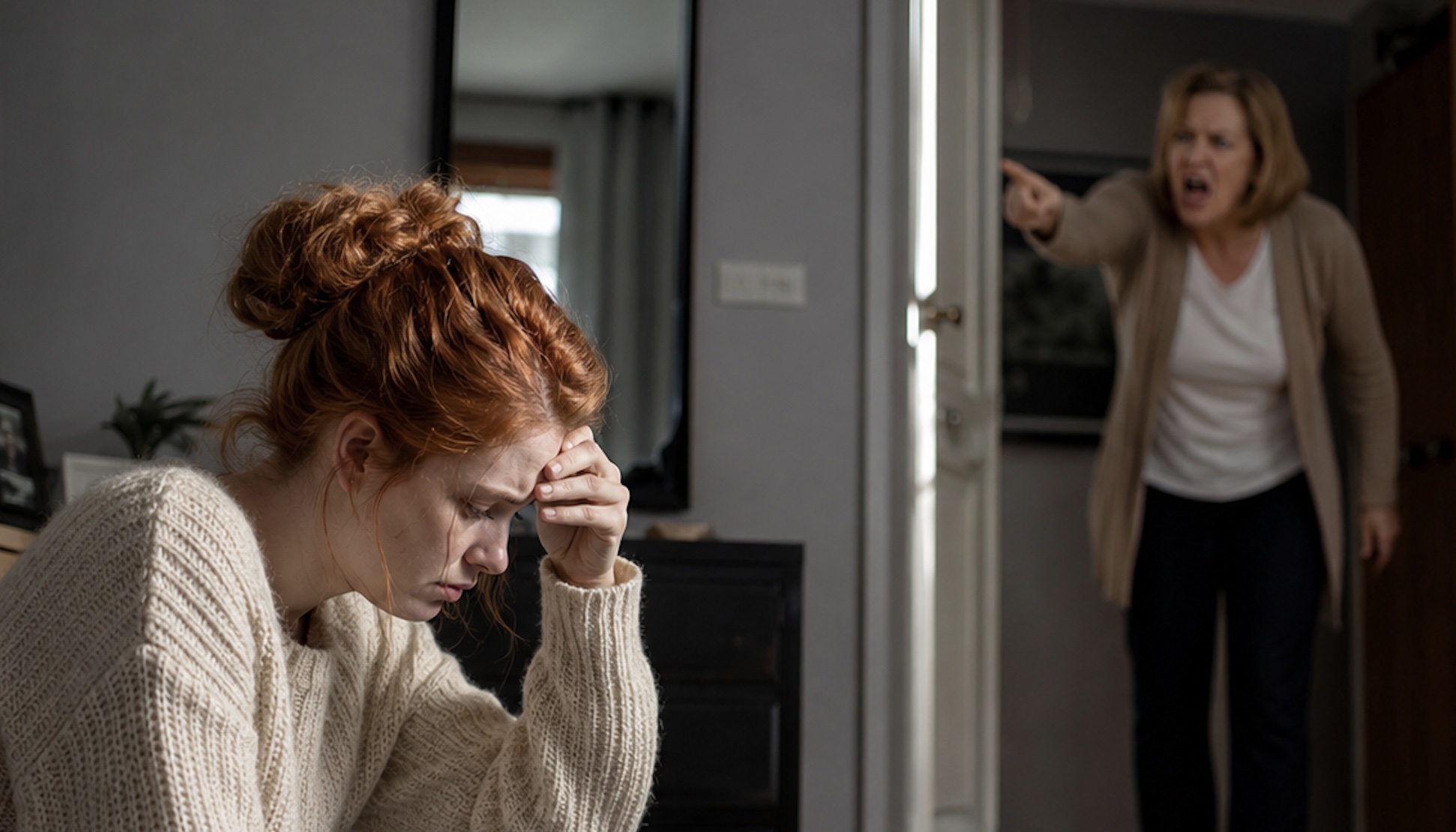
Into the hallway, without even taking off her shoes, stepped Regina Lvovna.
Taras’s mother.
A woman who believed her presence was a divine gift, one for which everyone around her was expected to pay triple.
She glanced around the corridor, curled her lip when she noticed Irina’s shoes standing slightly unevenly, and walked into the living room.
“Oh, you’re home,” she said instead of greeting her. “Good. Saves me from having to look for you all over the city.”
Irina slowly removed her glasses. Inside her, a dull irritation began to rise, like the hum of a transformer just before overload.
“Good evening, Regina Lvovna. Do you have a key? I thought we agreed you would call before coming over.”
Her mother-in-law smirked. She unbuttoned her coat and carelessly threw it over the back of the sofa—the very sofa Irina and Taras had spent three months choosing, comparing upholstery specifications.
“Agreed?” Regina Lvovna walked to the window and ran her finger along the sill, checking for dust. “My dear, agreements are made with equals. With freeloaders, one gives instructions.”
Irina felt the blood drain from her face.
The word “freeloader” struck her like a slap.
“I don’t understand what you mean. This apartment…”
“This apartment is registered in my name!” Regina Lvovna barked, spinning around sharply. Her face, usually hidden beneath a mask of polite respectability, twisted with triumph. “Taras had enough sense to transfer it to his mother before the wedding. So you are nobody here. An empty space. A zero without value.”
Irina knew about the documents. It had been presented as a formality.
Back then, Taras had said, “Ira, it just makes Mom calmer. Her blood pressure spikes when she feels she’s losing control. We’ll pay off the mortgage and transfer it back.”
They had paid it off.
Two years ago.
Irina had put every last ruble of the inheritance from her grandmother into the early repayment. But the documents were never changed.
Later. No time. Mom will be offended.
“We paid for this apartment together,” Irina said quietly, though there was a vibration in her voice now, the kind that comes before a storm. “My money…”
“Your money was rent!” her mother-in-law snapped, stepping up to the table and sweeping the blueprints onto the floor.
The papers scattered across the laminate with a dry whisper.
“Now listen carefully. Taras will come back and realize he needs a wife from his own circle, not this… engineering mouse. I’ve found him a perfect match. My friend’s daughter. A decent dowry. And you…”
Regina Lvovna drew in a deep breath, as if preparing to spit venom.
“You can pack your rags and get out of my son’s apartment right now!”
Part 2. The Explosion of a High-Pressure Boiler
Something clicked inside Irina’s head.
It did not crack. It did not break.
It switched.
As if the fuse holding back her rationality had burned out, releasing pure, undiluted destructive energy.
Rage.
Black, thick rage flooded her mind.
She looked at the scattered blueprints. At her mother-in-law’s smug face. At the sofa. At the walls covered in Italian plaster, which she, Irina, had chosen from catalogs while calculating every gram of material.
“Out,” Regina Lvovna exhaled. “By the time he comes back, I don’t want your smell in here.”
Irina stood up.
Sharply.
The chair flew back with a crash and hit the wall, leaving a dent.
“I beg your pardon?” Irina asked, and her voice broke into such a shriek that her own ears rang. “You’re throwing me out? Me?”
She grabbed the heavy ceramic pencil holder from the table and hurled it at the wall with all her strength.
It shattered into hundreds of pieces, leaving a deep scratch across the perfect plaster.
“Have you lost your mind?” Regina Lvovna screeched, recoiling. “That’s my property!”
“Yours?” Irina burst into laughter, and the sound was terrifying. It was the laugh of a person who no longer feared consequences. “The only things that are yours here are the concrete slabs and the stale air you dragged in with you!”
Irina rushed to the display cabinet.
Inside stood a collection of porcelain figurines her mother-in-law had given them on every holiday, proudly considering them the height of taste.
Irina hated those shepherdesses and geese.
“Porcelain. Two thousand rubles apiece!” Irina shouted, grabbing the first figurine. “Paid with my Mir card on February fourteenth!”
Crash.
The goose shattered across the floor.
“What are you doing, you hysterical lunatic?” Regina Lvovna tried to grab her arm, but Irina tore free with the strength of a wild animal.
“Get your hands off me!” she screamed so hard the veins stood out on her neck. “Curtains! Velvet! Belgium! Fifty-six thousand rubles! Receipt from September twentieth! My money!”
Irina yanked the heavy drape.
The curtain rod groaned but held.
She hung from the fabric with her full weight, growling from the effort. The sound of tearing cloth and crashing metal merged into a symphony of chaos. The curtain rod collapsed, nearly striking the stunned mother-in-law.
“You’re sick! I’ll call the orderlies!” Regina Lvovna pressed herself against the wall, red blotches spreading across her face.
“Call them! Call riot police if you want!” Irina moved around the room like ball lightning.
She grabbed the laptop—her work laptop, insured—and threw it onto the sofa, then rushed toward the enormous television.
“Sixty-five-inch TV! One hundred eighty thousand! Loan taken in my name, paid off by me!”
She seized a heavy floor vase, a gift from Taras’s colleagues, and raised it toward the screen.
“No!” her mother-in-law screamed.
Irina froze with the vase an inch from the screen.
Her chest heaved. Her hair had fallen out of its style. Her eyes burned with hellish fire.
Slowly, she lowered the vase. But instead of setting it down, she opened her fingers.
The dull crash against the floor vibrated through their feet.
“You want me gone?” Irina hissed, stepping close to her mother-in-law.
Regina Lvovna pressed herself deeper into the wall, feeling, for the first time, animal fear before this so-called gray mouse.
“I will leave. But I’ll take every ruble I put into this place. Every kopeck. I’ll calculate depreciation, inflation, and emotional damages.”
“Taras will kill you,” Regina Lvovna whispered, trying to regain control. “When he finds out what you’ve done…”
“Taras?” Irina spun around and grabbed a folder of medical documents from the table. “Taras will learn more than that. He’ll learn that you threw his child out onto the street. Granddaughter or grandson. Eight weeks along.”
She threw the folder into her mother-in-law’s face.
Ultrasound papers scattered like white birds.
“Pregnant?” Regina Lvovna froze for a second, but then a look of disgust appeared on her face. “Oh, don’t make me laugh. Picked it up somewhere while your husband was away in the north, I suppose, and now you’re trying to hide behind it? I don’t believe a word. Get out!”
“Oh, really…”
Irina suddenly became calm.
That was even more frightening.
Her rage had melted into something icy and crystalline.
“Fine. I’ll leave. But you’ll regret the day you weren’t born mute. Go to hell with your apartment.”
Part 3. The Scorched-Earth Calculation
Irina acted quickly and ruthlessly.
There were no tears.
Only dry, angry efficiency.
She ordered a cargo taxi and added a note: urgent, two movers needed.
While the vehicle was on its way, she methodically erased every trace of her comfort from the apartment.
Regina Lvovna locked herself in the kitchen and, judging by the muffled muttering, was calling someone to complain about the “possessed woman.”
Let her call.
Irina opened the wardrobe.
Taras’s clothes—do not touch.
Her clothes—into bags.
Next came the appliances.
Robot vacuum cleaner, a gift from her parents—into a box.
Coffee machine, bought with her bonus—into a box.
Microwave, her premarital property—into a box.
She went into the bedroom.
The mattress.
Orthopedic. Ridiculously expensive. Bought because Taras had back problems.
The receipt was in her name.
“Guys,” she said to the movers who had just arrived, sturdy men who had clearly seen worse, “we’re taking the mattress.”
“Ma’am, it’s huge,” one of them grumbled.
“Five thousand extra each if you get it out in five minutes,” Irina replied sharply.
The mattress disappeared.
The bed was left as a lonely frame.
Irina returned to the living room.
Regina Lvovna peeked out of the kitchen and saw the appliances being carried away.
“Are you robbing the apartment? I’ll call the police!”
“Call them!” Irina snapped, without looking up from unscrewing the designer wall lamps. “I have receipts for everything. Electronic copies. In the cloud. And you have nothing but your bile. By the way, we’re taking the chandelier too. Movers!”
Before their eyes, the apartment turned into a skeleton.
No curtains. No rugs. No small appliances. No mattress. No books.
Irina worked like a machine.
She even unscrewed the expensive LED bulbs that saved electricity and replaced them with old incandescent ones she found in the storage closet.
Let the meter spin.
Her jewelry and documents went into the suitcase.
Finally, she entered the bathroom.
Towels, robes, expensive cosmetics—everything vanished into bags.
She unscrewed the rainfall shower head she had bought herself, leaving only a bare hose sticking out.
“Curse you,” her mother-in-law hissed from the bedroom doorway. “Taras will come back…”
“Taras will come back to the hell you created,” Irina answered coldly.
She took a notebook from her purse, tore out a sheet, and quickly wrote down several figures.
“This is the approximate estimate of what I’ve taken. The rest will be handled in court, if you have the nerve to go there.”
She stuck the paper onto her stunned mother-in-law’s forehead.
“Get out!”
Irina left, slamming the door so hard that plaster dust fell from the ceiling.
She got into the taxi, and only when the car started moving did she allow herself to breathe out.
With trembling hands, she dialed a number.
“Hello, hotel? I need a room. For a week. Yes.”
Then she opened her messenger.
Contact: “My Love.”
Block.
Contact: “Mother-in-law — Witch.”
Block.
She needed time.
And a calculator.
Part 4. Debit and Credit Refuse to Balance
Taras returned three days later.
Tired, unshaven, smelling of machine oil and train stations, he dreamed of a hot shower under the rainfall head, Irina’s borscht, and their soft mattress.
The key turned in the lock.
Silence.
A strange, hollow silence.
Usually the apartment greeted him with the smell of food or the quiet sound of the television.
Now it smelled of dust and valerian.
“Ira?” he called, dropping his bag onto the floor.
His mother came out into the hallway.
She looked older somehow, rumpled and worn out. A ridiculous towel was wrapped around her head.
“Mom? What are you doing here? Where’s Ira?”
“Tarasik…” Regina Lvovna began in a tearful, theatrical voice, pressing a hand to her chest. “That… that unstable woman left. She abandoned you. She robbed us!”
Taras frowned.
He walked into the living room and froze.
The room looked as if a horde had marched through it.
A torn curtain rod lay in the corner. Wires stuck out of the walls where the lamps had been. The television stood on the floor, a crack across the screen—perhaps the movers had hit it after all, or perhaps his mother had “helped” for dramatic effect.
“What happened here?” Taras’s voice became low and dangerous.
“She had a fit! She attacked me!” his mother wailed. “I only came to check the flowers, and she… She said she didn’t need you, that she had found someone else, someone rich! She took everything! She almost killed me! Look, I have a bruise!”
She pointed at a barely visible spot on her arm.
Taras went into the bedroom.
A naked bed frame.
The wardrobe open, shelves empty.
Not a single one of Irina’s things.
“She said she found someone else?” Taras asked, turning back to his mother.
He had known Irina for seven years.
She did not know how to lie.
And she loved him.
“Yes! She shouted that you were a pauper, that the apartment wasn’t yours!” His mother grew more animated, sensing his attention.
“The apartment isn’t mine…” Taras repeated. “Mom, why would she say that?”
“Well… one word led to another… I reminded her who the owner was. So she would know her place!”
Taras rubbed his face with both hands.
He walked over to the table, where some papers were scattered. He picked one up.
It was a receipt from a hardware store, dated three years earlier.
Payer’s name: Irina Sokolova, her maiden name.
He took out his phone.
The subscriber is temporarily unavailable.
In the messengers, he had been blocked.
“She even stole the shower head!” his mother complained. “Can you imagine such pettiness?”
Taras looked at his mother and suddenly saw her as if for the first time.
Not as a caring mother.
But as a woman drunk on her own power.
“You threw her out,” he said.
It was not a question.
“I opened your eyes!” Regina Lvovna screeched. “She is not good enough for you!”
Taras silently turned and walked toward the door.
“Where are you going? Taras! I made dinner… well, I was going to, but the stove… Taras!”
He slammed the door.
Part 5. The Theorem of Payback
Finding Irina was difficult, but possible.
Taras knew her logic.
She would not go to her parents in another city and worry them.
She would go somewhere close to work, somewhere with stable internet.
He checked three nearby business-class hotels.
In the third one, in the lobby, he saw her.
She was sitting with her laptop, furiously typing. Beside her stood a cup of untouched tea.
He approached and sat across from her.
Irina did not even lift her eyes.
“There’s a three-hundred-ruble error in the estimate,” she said instead of greeting him.
“Ira.”
She raised her head.
Her eyes were red, but dry.
Her gaze was hard, assessing.
“Why are you here? For the keys? They’re at reception. I didn’t take anything extra. You can check the inventory.”
“Ira, what inventory?” Taras tried to take her hand, but she pulled it away as if from fire.
“Don’t touch me. Go back to your mommy. I’m sure everything is perfect there. Her apartment. Her son.”
“I didn’t know,” Taras said quietly.
“Ignorance of the law does not exempt one from responsibility,” Irina said sharply. “You allowed her to have that power. You didn’t transfer the documents. You are an accomplice.”
“I’ll fix everything.”
“How?” She smiled bitterly. “Will you glue the wallpaper back on? Restore my nerve cells? Or maybe make me forget how I was thrown out of the home where I painted every baseboard myself?”
“We’ll leave. Rent an apartment. Buy a new one.”
“With what money?” Irina turned the laptop toward him.
On the screen was a spreadsheet.
“Look. I audited our finances for the past five years. Your mother ‘borrowed’ amounts every month equal to a third of your income. For medicine, for sanatoriums, for repairs at the country house. Total: one and a half million rubles, not counting inflation. Plus the renovation in that damned apartment—another two million. All of that is money we could have put into our own home. We are bankrupt, Taras. Morally and financially.”
Taras stared at the numbers.
He knew he had been helping his mother, but he had never added it all up.
“And now the most interesting part,” Irina said, opening another file. “This is the estimated cost of maintaining your mother without your support. Her pension is twelve thousand. Utilities for a three-room apartment are eight. Medicine, food… She won’t have enough.”
“What are you getting at?” Taras’s voice went hoarse.
“I am filing for divorce. And for division of the property I can prove with receipts. As for you, go back to her. Support her. Be a good son.”
Taras was silent for a minute.
People walked around them, dishes clinked nearby, and his world collapsed.
“I’m not going back there,” he said firmly.
“I don’t care.”
“Ira, I love you.”
“No!” She slammed her palm on the table. “Love is action. Protection. Not ‘Mom feels calmer this way.’ You betrayed us. Me and…”
She stopped abruptly.
“And who?” Taras leaned forward. “Mom said something about pregnancy. Is it true?”
Irina turned toward the window.
“Yes. But that is no longer your problem. I’ll manage. I’ve calculated everything. I can raise the child alone.”
Taras stood up.
He walked around the table and knelt in front of her right there in the hotel lobby.
“Forgive me. I’m an idiot. A blind idiot. But I won’t let you carry everything alone. Give me a chance. One chance. Not for me—for logic. A child needs a father and resources. Together, we’re more efficient.”
Irina looked down at him.
In her eyes, anger and pragmatism were fighting each other.
“Conditions,” she said at last.
“Anything.”
“We rent an apartment. Your foot never steps inside that den again. Not a single kopeck to your mother beyond legally required support if she files for it in court. Full financial transparency. And tomorrow you go to a lawyer to document all of our assets.”
“Agreed.”
“And one more thing,” Irina narrowed her eyes. “You go there now, take your things, and tell her everything. To her face. Then you come back here.”
Taras returned to the apartment an hour later.
His mother was sitting in the kitchen, trying to heat water in a saucepan on the old stove. There was no kettle anymore.
“You’re back!” she smiled broadly. “I knew you would come to your senses. I was thinking we should change the locks…”
“We are not changing the locks, Mom.”
Taras walked into the room and started throwing his clothes into a sports bag.
“What do you mean? Where are you going?”
“I’m going to my wife.”
“To that…? She’s insane! She almost smashed my head in!”
“She was defending her dignity.”
Taras zipped the bag shut.
“You wanted the apartment to be yours? Congratulations. It’s yours. Fully and completely. Pay for it yourself. Repair it yourself. Live in it yourself.”
“You can’t abandon me! I’m your mother!” Regina Lvovna threw up her hands. “What am I supposed to live on? I have blood pressure problems!”
“You have a pension. If it isn’t enough, sell the apartment. You clung to it so tightly. Now use your asset.”
“Taras! I’ll curse you!” she screamed at his back.
He stopped in the doorway.
“And I forgive you, Mom. But you will not see your grandchild. Irina cannot be stressed.”
He left.
Six months passed.
The apartment stood half-empty.
Regina Lvovna sat on a rickety chair—the good chairs had been bought by Irina and taken away.
In her hands, she held a utility bill.
The debt was growing.
Her pension barely covered food and medicine.
She tried calling her son, but the number was always busy or unavailable.
Irina had not been bluffing.
In court, her lawyer, hired with the money saved by no longer “helping Mom,” proved that the renovation had significantly improved the living conditions and had been paid for with Irina’s funds.
Regina Lvovna was ordered to pay compensation in the amount of one and a half million rubles.
She had no money.
Bailiffs froze her accounts and property.
Now she lived in an apartment that officially belonged to her, but in reality had become her prison.
Selling it with the legal burden was impossible. Renting it out in that condition—no one wanted it.
In another part of the city, in a bright rented two-room apartment, Taras was assembling a baby crib.
Irina sat nearby with her laptop, but this time she was not calculating debts.
She was planning the budget for buying their own house.
“You know,” she said, biting into an apple, “according to my calculations, if we keep our current savings pace, we’ll be able to buy a cottage in two years.”
“I love your math,” Taras smiled, tightening a screw.
“And I love you,” Irina replied. “But if you forget to buy milk one more time, I’m introducing penalties.”
They laughed.
The anger had gone, leaving behind calm confidence.
The negative balance in their life had finally been closed.