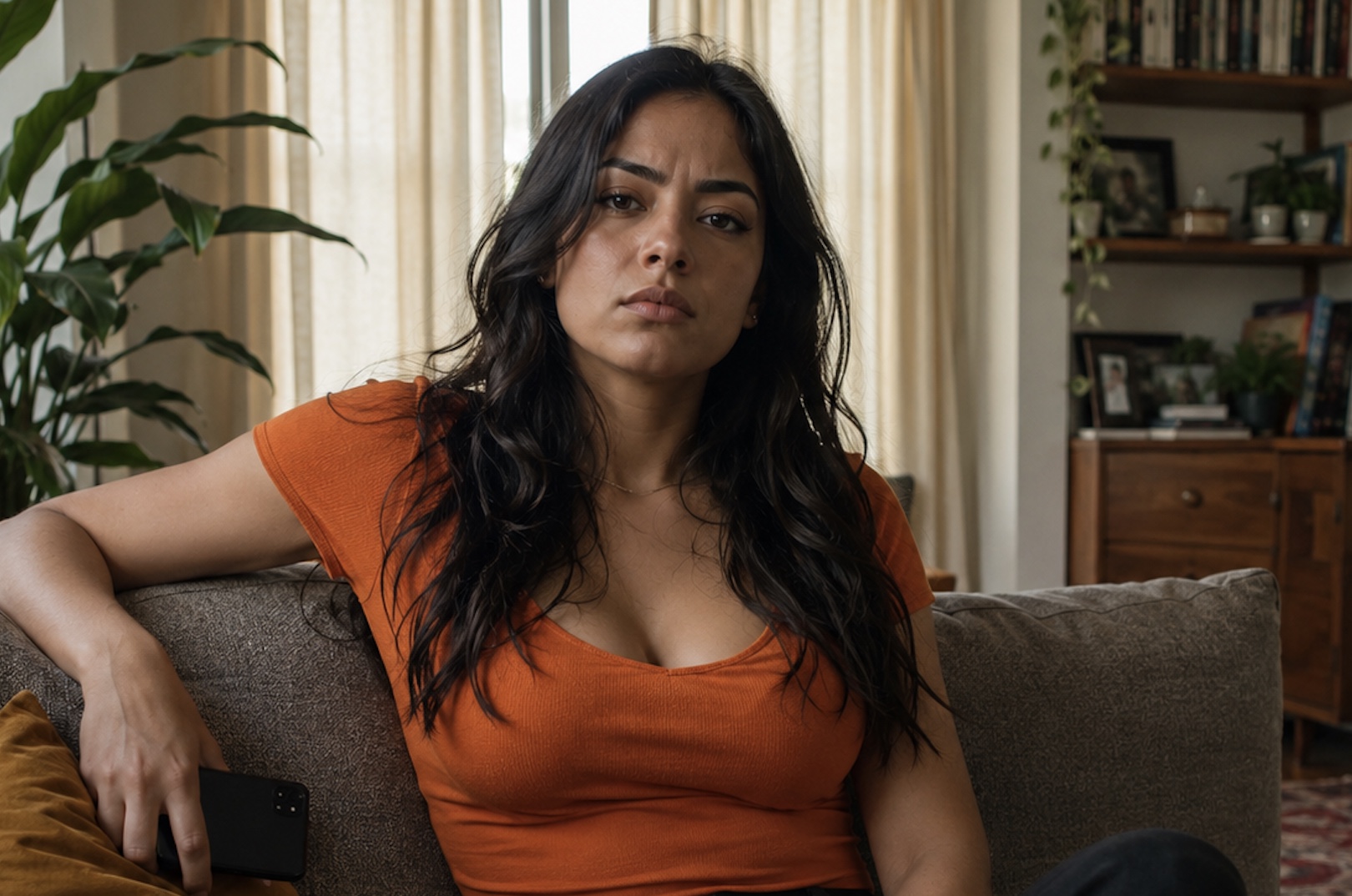
Zhanna said it so calmly, as if she were asking someone to pass the salt.
“Yuri Vasilyevich, surely you’re not going to get in our way?”
And in that moment, sixty-seven-year-old Yura realized that the nephew he had rescued from a dormitory two years earlier and brought into his two-room apartment on Sretenka had not brought home a fiancée. He had brought home a new landlady.
It had all started in September the year before last.
His younger sister Nina called. Her voice was pitiful, pleading — and Yura understood immediately: she needed something.
“Yura, help us out. Lyosha has finished university, but there’s no job placement, and in Saratov there’s nothing in his field. He needs to go to Moscow. Specialists are needed there. You have two rooms, and you live alone…”
Yura listened while looking into his study — a twelve-square-meter room with a drafting table, bookshelves reaching the ceiling, and an armchair by the window. He had worked for forty years as a bridge design engineer before retiring three years ago.
His mother had received that apartment back in 1986. After she passed away, he remained there alone — after his divorce from Tamara, who had taken their shared one-room apartment in Chertanovo as part of their settlement and never called him again.
“How long, Nina?” he asked, already knowing the answer.
“Just until he gets on his feet. Three or four months, no more.”
Three or four months.
Yura agreed.
Lyosha arrived with one suitcase and a backpack containing an ancient laptop with a cracked screen.
“Uncle Yura, I’ll find a job quickly, I swear. I’ll help around the house. I’ll even learn how to cook.”
His nephew was twenty-three. Thin, awkward, with a permanently surprised look on his face. Yura looked at him and saw young Nina — the same helplessness in the eyes, the same inability to settle into life.
At first, Lyosha really did try. He washed dishes, vacuumed, and once even made rassolnik soup — too watery, but edible. He went to interviews and came back discouraged.
“They want experience everywhere. But where am I supposed to get experience if no one hires without it?”
Yura nodded and poured him more tea.
By the second month, Lyosha’s laptop finally gave up completely. He sat over it, looking miserable.
“That’s it. Without a computer, I’m finished. No remote work, no test assignments, nothing.”
That evening, Yura couldn’t fall asleep for a long time. In the morning, he went to an electronics store and spent seventy-two thousand rubles of his own savings on a new laptop. When he handed the box to his nephew, Lyosha nearly cried.
“Uncle Yura, I’ll pay you back! I swear, every last kopeck!”
By New Year’s, Lyosha got a position at a company that developed mobile apps. They promised to pay him after the probation period; for now, it was an internship. Yura continued paying for the apartment, the groceries, and the internet. From time to time, Lyosha bought bread and milk, apparently considering it a serious contribution to the household budget.
In spring, the internship ended, and Lyosha was hired permanently. His salary became decent. He began staying late at work, coming home at night, and immediately shutting himself in his room — Yura’s former study, where the drafting papers now gathered dust in a corner behind the wardrobe.
“Uncle Yura, maybe I should start paying part of the utilities?” he asked one day.
“That would be good,” Yura replied.
Lyosha nodded.
And never brought it up again.
Yura didn’t remind him. He felt awkward asking his nephew for money. He told himself the boy was just starting out, that he needed money for himself, that once he saved a little and stood firmly on his own feet, they would talk.
They would talk later.
Summer passed. Autumn passed. A full year had gone by since Lyosha moved in — and nothing had changed.
By March of the following year, his nephew was already earning more than Yura had at the peak of his career. At least that was what Yura gathered from fragments of phone conversations: “release bonus,” “overtime pay,” “promotion to middle developer.”
And yet the groceries on the kitchen table were still bought by Yura. The utility bills still came in his name. And he was still the one carrying bags from the store up to the fourth floor — the old building had no elevator.
Yura kept waiting for his nephew to offer.
Surely a grown man couldn’t fail to understand that he was living completely supported by someone else. Surely he could see that his uncle was spending money. Surely he should have guessed on his own and said, “Uncle Yura, let me pay the utilities now.” Or at least start buying groceries. Real groceries, not just bread and milk.
But Lyosha did not offer.
And Yura did not ask.
He felt ashamed. After all, they were family, not strangers. How could he demand money from his nephew? Worse — how could he kick him out?
Nina would never forgive him. She would say he had thrown his own nephew out onto the street. And she would be right — where would the boy go? Renting in Moscow was expensive, and returning to Saratov meant having no work. So Yura endured. He thought: it will sort itself out. The boy will grow up. He will understand.
One evening, while Yura was going through receipts and calculating expenses, he came across the payment for the laptop.
Seventy-two thousand rubles.
A year and a half earlier.
Not a single ruble had been returned.
He wanted to speak to his nephew, but Lyosha came home excited, his eyes shining.
“Uncle Yura! I met a girl! She’s… she’s incredible!”
And once again, Yura kept silent.
Zhanna appeared in the apartment in early May.
She was tall, slim, with short hair and the sharp gaze of someone used to getting what she wanted. She worked as a manager in a chain of dental clinics — “building business processes,” as she put it.
“Very pleased to meet you, Yuri Vasilyevich!”
She swept her eyes over the hallway, the kitchen, the door to the room. Evaluating everything, like a realtor during a viewing.
“It’s cozy here. How many square meters?”
Yura told her.
Zhanna nodded as though memorizing the information for a report.
On her very first visit, she opened the refrigerator — just like that, without asking. She stood there looking at the shelves and said:
“Lyosha, there are only processed foods here. You need to buy proper groceries.”
Need to, Yura noted.
Not “let’s buy some.” Not “maybe we should go to the store.”
Need to.
As if it were her refrigerator and her kitchen.
For the first two weeks, Zhanna came only on weekends. Then on Fridays and weekends. Then every evening after work. And in June, Lyosha announced:
“Uncle Yura, Zhanna is moving out of her apartment. She has nowhere to live for now. Can she stay with us for a while?”
With us.
Yura noticed that phrase.
But again, he said nothing.
Within a month, Zhanna had settled in as if she had lived there all her life.
No — as if it had always been HER home.
Her jars and bottles appeared on the bathroom shelf — twenty of them, if not more. Yura’s razor and shaving cream were not merely moved aside; she removed them into the cabinet under the sink.
“Yuri Vasilyevich, I put your cosmetics in the cabinet,” she informed him in passing. “There isn’t enough room on the shelf, and I need my creams within reach.”
I need.
Not “sorry.” Not “do you mind?”
Just — I need.
Her dishes appeared in the kitchen — white plates with gold trim that she had brought from her parents’ place in Tula. Yura’s old cups, the ones he had used back when his mother was still alive, ended up on the top shelf of the cupboard.
“I moved your old mugs up there,” she tossed out casually. “They were chipped anyway. You’ll throw them away later, right?”
Yura wanted to object.
But the words didn’t come.
She said it so confidently, so naturally, as if she were doing him a favor.
In the mornings, Zhanna got up before everyone and made coffee in his coffee machine. Yura had bought it for himself on his sixty-fifth birthday. Thirty thousand rubles. He had spent a long time choosing it. Now the machine worked constantly — two coffees in the morning, two in the evening.
“Yuri Vasilyevich, you’re running out of coffee beans,” Zhanna said one day at breakfast. “And the filters need changing. And buy proper milk, not this cheap stuff.”
She said it without looking up from her phone.
As if she were making a list of errands for a servant.
Yura bought the beans. Two packages. And the filters. And the milk — the “proper” one.
Zhanna did not thank him.
She took it for granted.
One evening, Yura came home and discovered that his armchair — the very one by the window where he had read in the evenings for more than thirty years — was standing in the corner behind the wardrobe.
“Where is…” he began.
Zhanna came out of the room with a towel wrapped around her head after a shower.
“The armchair? I moved it. It was blocking the light. And anyway, it took up too much space.”
“That is my armchair. It stood by the window for thirty years.”
“Well, now it stands there.” She shrugged. “Lyosha, is dinner ready?”
And she walked away, leaving Yura staring at his armchair, shoved into the corner like unwanted furniture.
The conversation that changed everything happened in mid-July.
It was an ordinary evening. Yura was sitting on the sofa with a book — the armchair was still in the corner. For the first two weeks, he had moved it back to the window, only to find it pushed into the corner again. Then he gave up. He was tired.
Zhanna entered the room and sat across from him. Lyosha remained behind his closed door; the sound of his keyboard could be heard.
“Yuri Vasilyevich, we need to talk.”
Yura put the book down. Zhanna sat straight, hands folded on her knees — the posture of a negotiator.
“I’m listening.”
“Lyosha and I have made a decision. We’re getting married. In the autumn.”
“Congratulations.”
“Thank you.” She tilted her head slightly. “But there is one issue. We need our own home. A normal family home. You understand.”
Yura understood.
But he waited for her to continue.
“This apartment,” Zhanna looked around the room, “is perfect for a young family. Two rooms, central location, metro nearby. The renovation needs work, of course, but we’ll deal with that later. We’ve already found an option for you.”
“For me?”
“A one-room apartment in Biryulyovo. You sign this apartment over to Lyosha as a gift, and we buy you a one-room place. A quiet neighborhood, green. For a person your age, it’s just right. Peaceful, no unnecessary fuss. We’re even ready to help with the move. Morally, I mean. You’ll hire the movers yourself.”
Yura blinked.
Then blinked again.
“Zhanna, am I understanding correctly? You are suggesting that I move out of my own apartment?”
“Well, not exactly move out…” She smiled — the kind of smile people use when explaining the obvious to someone slow to understand. “Just… reconsider the situation. Lyosha has been living here for two years. He has invested in this home. Emotionally invested. He’s used to it. And we’ll be a family, children will come. But you — you’re alone. You don’t need so much space. And besides, surely you’re not going to get in our way?”
She said it as something self-evident.
As a fact that required no discussion.
Surely you’re not going to get in our way.
Yura was silent for ten seconds.
Maybe fifteen.
Zhanna waited, still smiling.
And then he laughed.
Not nervously. Not hysterically.
Truly laughed.
The laughter came from somewhere deep in his stomach, heavy and full. Yura laughed and could not stop, and the longer he laughed, the more confused Zhanna’s face became.
“Yuri Vasilyevich… I don’t understand what’s funny.”
He finally calmed down. Wiped his eyes. Looked at her carefully — the way he used to look at young engineers who tried to argue with calculations.
“Zhanna. Do you know how much this apartment is worth?”
She blinked.
“What does that have to do with—”
“Twenty-eight million. According to the latest valuation. Center, metro nearby — you said it yourself. This is my apartment. Mine — by documents, by law, by right.”
He rose from the sofa. Zhanna stood too, not automatically, but defiantly, straightening her back.
“Lyosha is a guest here. A guest I let in because my sister asked me to. A guest whom I fed for two years, whose utilities I paid, for whom I bought a laptop for seventy-two thousand rubles. Lyosha hasn’t returned a single ruble to me. Not ONE RUBLE in two years. And you,” he raised his voice slightly, “you are the guest of a guest.”
“You move my things, rearrange my furniture, tell me what milk to buy. And then you come to me and say I should move to a one-room apartment in Biryulyovo?”
“I thought we could come to an agreement like decent people,” Zhanna began, with not a trace of embarrassment in her voice. “Lyosha is your only nephew. Sooner or later this apartment will—”
“Stop.” Yura raised his hand. “Are you about to say that I should leave it to you? Is that it?”
Zhanna did not look away.
“And why not? You have no wife, no children. Lyosha is your only heir. Why drag it out? We can arrange everything now. A gift deed or whatever. You move to a one-room apartment, we stay here. Everyone is happy.”
Her voice did not even tremble.
She spoke as if she were offering a reasonable compromise.
“Everyone is happy,” Yura repeated. “I leave my own home, and you are happy.”
“Well, what’s so terrible about that? It’ll be easier for you. A smaller apartment means less cleaning, lower bills. At your age…”
“You know what?” Yura interrupted. “Enough. Here is what will happen. You have one week to pack. By next Saturday, I want you out of here. Both of you.”
Zhanna lifted her head sharply.
“You can’t throw us out!”
“I can. This is my apartment. My property. You are here without a contract, without registration, without any legal grounds.”
He went to the door of his nephew’s room and knocked.
“Lyosha! Come here. We need to talk.”
Lyosha came out looking like someone had pulled him away from something important. He saw Zhanna’s face — angry, tense — and became wary.
“What happened?”
“Your fiancée,” Yura said, “has just suggested that I move out of my own apartment. Make room for your young family. Sign it over as a gift. Did you know about this?”
Lyosha looked at Zhanna. She crossed her arms over her chest.
“Lyosha, your uncle is for some reason taking everything aggressively.”
“Uncle Yura, maybe you misunderstood…”
“‘Surely you’re not going to get in our way?’” Yura quoted. “‘We can arrange everything now. A gift deed or whatever.’ Did I misunderstand?”
Lyosha turned red.
“Zhanna, we agreed I would talk to him myself!”
“You would have dragged it out for another six months!” she flared up. “Are we supposed to keep living as three people? With your uncle? When we have children, where are we supposed to put them? In the hallway?”
“Children?” Yura gave a dry smile. “You aren’t even married yet, and already children?”
“What, we’re not allowed to plan?” Zhanna no longer hid her irritation. “Lyosha is twenty-five, I’m twenty-seven, we want a family. A normal family, in a normal apartment. Not this…” she waved her hand around the room, “cohabitation with a pensioner.”
Cohabitation with a pensioner.
Yura looked at her.
Then at his nephew.
“Lyosha. Did you hear that?”
His nephew was silent.
“I asked if you heard.”
“Uncle Yura, she didn’t mean it like that…”
“She meant exactly that.” Yura spoke calmly, but every word landed heavily. “So here it is. One week. Until Saturday. Pack your things and leave. Both of you.”
The week passed in icy silence.
Zhanna demonstratively avoided leaving Lyosha’s room unless necessary. When she did, she looked through Yura as though he were a wall. Lyosha tried to speak with his uncle twice. Both times, Yura gave the same answer:
“Saturday. I want you gone.”
On Thursday evening, Zhanna finally came into the kitchen while Yura was eating dinner.
“Yuri Vasilyevich.”
He raised his eyes.
“Do you understand what you’re doing?” She stood in the doorway, arms crossed. “You’re destroying a family. Your own family. Lyosha is your nephew, your only one. His mother is your sister. If you throw us out, they will never forgive you.”
“Possibly.”
“And you’ll be left alone. Completely alone. In this apartment. And when something happens to you, there won’t even be anyone to bring you a glass of water.”
Yura put down his fork.
“Zhanna. You haven’t lived here long. And already you’ve moved my things, rearranged my furniture, thrown away my cups. You give orders in my kitchen, use my appliances, tell me what to buy. And now you’re threatening me with loneliness?”
“I’m not threatening you. I’m stating a fact.”
“Good. Then I’ll state one too. On Saturday, you won’t be here. And if you don’t leave on your own, I’ll change the locks and put your things out on the landing. I have every right to do that — this is my property.”
Zhanna turned pale.
Then red.
She spun around and left, slamming the door.
Yura went back to his dinner.
On Friday evening, Nina called.
“Yura, what are you doing? Lyosha is panicking. They haven’t found an apartment in time. Where are they supposed to go?”
“Nina, your son lived with me for two years for free. For two years I fed him, paid for everything, bought him equipment. He didn’t return a single kopeck. And his fiancée came and told me to move out of my own apartment. To Biryulyovo. To sign a gift deed. So I wouldn’t get in the way of the young couple.”
Silence.
“She really said that?”
“Word for word. ‘Cohabitation with a pensioner’ — those were also her words. About me.”
Nina was quiet for a long time.
Then she said:
“Yura… I didn’t know. Lyosha said you simply had some… domestic conflict…”
“A domestic conflict is when someone doesn’t wash the dishes. When someone tries to evict you from your own apartment, that is something else.”
“I’ll talk to him.”
“Talk. But tomorrow they move out.”
On Saturday morning, Yura woke up to noises in the hallway.
He came out and saw Lyosha and Zhanna loading bags. Silently, not looking at each other. Apparently they had argued. Or perhaps there was simply nothing left to say.
“Where are you going?” Yura asked.
“To Zhanna’s parents,” Lyosha muttered. “To Tula. Temporarily.”
“I see.”
Zhanna walked past him toward the door. Lyosha lingered.
“Uncle Yura…” He stood there gripping the suitcase handle. “You understand that now I… that we…”
“What?”
“Nothing.” His nephew shrugged. “It’s just… Mom is upset. She thought we were family.”
Yura looked at him — twenty-five years old, a healthy grown man with a good salary, still hiding behind his mother. And behind an arrogant fiancée who decided for him where they would live.
“We are family, Lyosha. But family is not when one person carries the weight and another sits on his neck. And it’s not when a fiancée decides who gets to live where. And it certainly isn’t when I’m called ‘a pensioner someone has to cohabit with.’”
“She didn’t mean it like that…”
“She meant exactly that. Go, Lyosha. Your taxi is waiting.”
His nephew left.
The door closed.
Yura stood in the silence for a while. Then he went to the kitchen, took his cups from the top shelf — the very ones that had belonged to his mother. Zhanna had pushed them up there but had not managed to throw them away.
He placed them back on the shelf.
In their rightful place.
Two months passed.
Nina called once, dryly asked about his health, and the conversation ended there.
Yura never saw the money. Not for the laptop, not for the utilities.
In November, a wedding invitation arrived.
Yura threw it away unopened.
Winter passed quietly. Yura lived alone. Sometimes former colleagues called. Sometimes his neighbor, Klavdia Ivanovna, dropped by.
In February, he found a bag of Lyosha’s things in the closet. T-shirts, headphones, a charger. He threw them out along with the wedding invitation.
In March, Nina called. Lyosha was going to have a child, Zhanna was four months pregnant, they were renting an apartment in Tula, barely managing…
“Nina, if you want to ask me to let them move back in — no.”
“Yura…”
“Zhanna called me a pensioner she had to ‘cohabit’ with. That is not forgotten. Did she apologize?”
Silence.
“Exactly.”
September came.
The phone rang.
“Yura, a boy was born! Three kilos six hundred grams! They named him Yura — after you!”
Yura said nothing.
“Will you come see him? Lyosha wants to make peace. Zhanna has changed, motherhood changed her… She cries every day and says she was wrong. She asks for forgiveness.”
“She asks for forgiveness through you?”
“Well… yes. She’s embarrassed to call herself.”
“Then she isn’t asking very hard. Nina, tell Lyosha I’m happy for him. But I won’t come. And tell him one more thing — I have made a will. The apartment will be sold, and the money will go to an animal shelter. The notary has already handled everything.”
A long pause.
“You… you’re serious? Twenty-eight million — to dogs? And not to the grand-nephew who was named after you?”
“I’m serious. Dogs never tried to throw me out of my own home.”
“Yura, that’s cruel! The child is innocent!”
“The child is. His mother is not. And neither is his father, who sat on my neck for two years and never once said thank you. Let them earn their own apartment. Like normal people.”
He hung up.
A minute later, a message came from Nina:
“You’ll regret this. When you’re lying there alone, needed by no one, you’ll remember this conversation.”
Yura read it.
Smiled faintly.
Then he wrote back:
“I won’t regret it. And I won’t be lying alone — I’ll adopt a dog from a shelter. At least it will be happy that I gave it a home.”
He sent the message.
Then blocked his sister’s number.
He made coffee. Sat down in his armchair. Opened an animal shelter website on his phone.
He had lived within these walls for almost forty years.
And he would continue living there for as long as life allowed.
As for the money from the apartment, it would go to those who knew how to be grateful.
Not to Zhanna.
Yura smiled and began scrolling through photos of dogs.