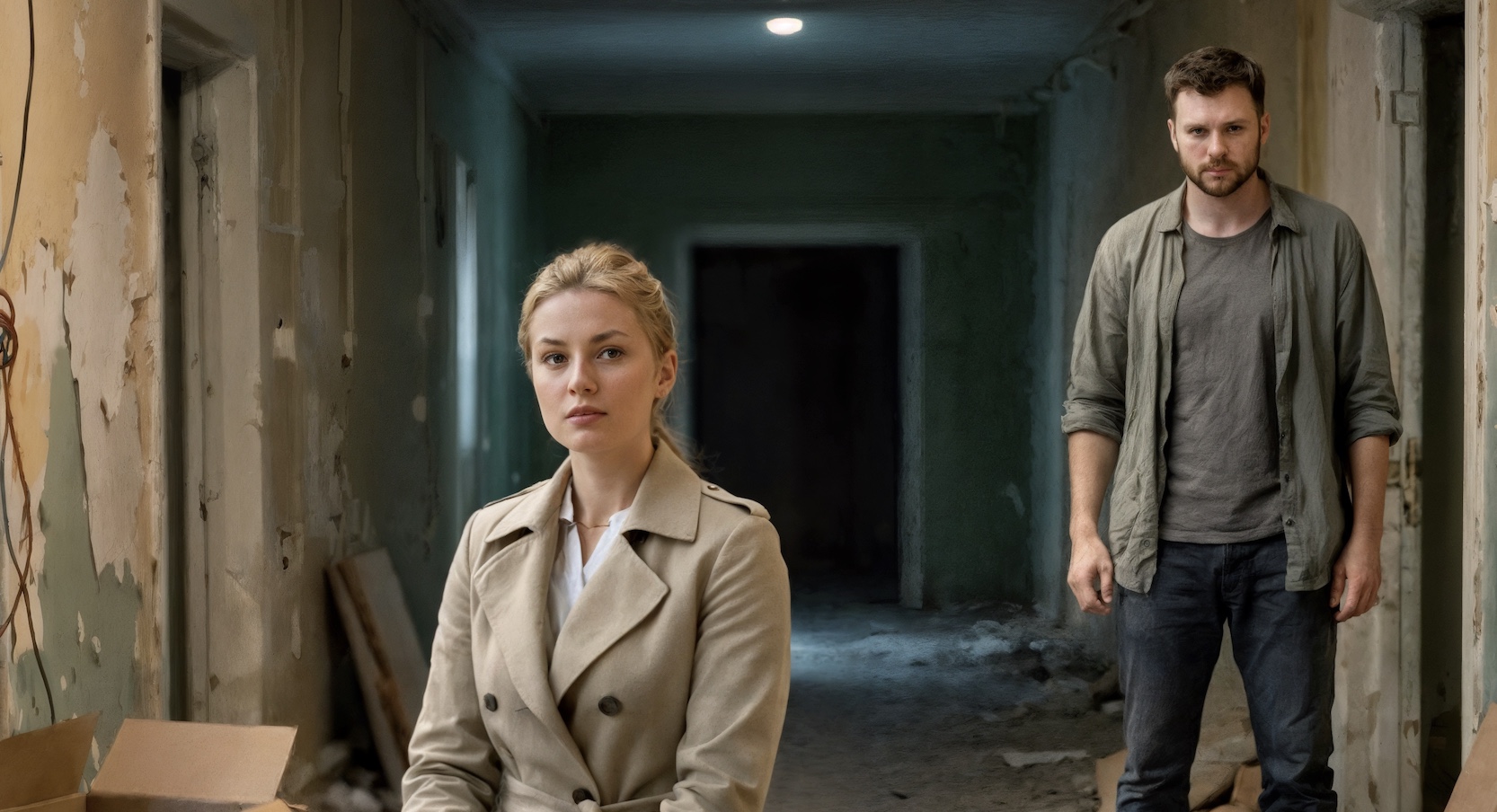
Kirill stormed into the apartment like a tornado—only this one didn’t sweep anything clean, it made a mess. He didn’t even take off his shoes. Straight into the hallway, where boxes of tile were stacked like barricades and paint cans reeked so sharply his throat burned. Anger slid down his face—thick and greasy, like yesterday’s oily soup.
“Get up and start cleaning! My mother isn’t going to sit in a pigsty!” he bellowed, his voice cracking into a shriek. To strangers he was usually all sweetness, honey on the tongue. Now he sounded like a rusty saw.
And that “pigsty”? That had been their reality for the last four months.
Renovation.
Renovation that Kirill had started—yet somehow Polina was supposed to finish it. Polina, who was working remotely while Kirill, in his words, was “doing strategy.” And of course, in this so-called “pigsty,” his mother—Marina Viktorovna—had been “sitting” for three weeks already. She’d come to “help,” but in practice she came to supervise, control, and criticize.
Kirill stood in the doorway. His hands trembled with righteous fury, but the fury didn’t really belong to him. He was just broadcasting someone else’s rage.
“You hear me?! Who am I talking to?! Or do you want Mom to faint again when she sees your dirt all over the floor?!”
And then—silence.
Not the quiet of a library. The kind that shouts.
In the entryway, right by the front door, on the only clean patch she had fought back from cement dust the night before, Polina was sitting. She wore a bright red coat, boots polished to a shine, and a small but meaningful backpack on her knees. Beside her stood a compact suitcase—not the kind you take on vacation, but the kind you take when you’re leaving for good.
She didn’t even turn her head. She sat there like a monument to being worn down, staring at the door. The door her husband was supposed to walk through—yet what arrived instead was a yelling boy.
“What, are you deaf?!” Kirill snapped, lifting his hand as if he were about to grab her by the shoulder and shake her out of her “coma-like laziness.”
Polina raised her palm, slowly, like a traffic cop ordering a car to stop. The movement froze him better than any wall.
“Don’t shout, Kir,” she said. Her voice was flat, weightless. Like ash. “Your mom is already waiting.”
He blinked, confused. “Waiting for what? Are you messing with me? Get up! Clean this up!” He kicked toward the suitcase.
“No,” Polina said—and that single word rang through the dusty, paint-stinking apartment like a gunshot. “You still don’t get it.”
She stood. Slowly. Straightened the collar of her coat. Adjusted her gloves. Then stepped close—so close he caught a scent that wasn’t paint, wasn’t fatigue. Something sharp and new.
Freedom.
“I thought you came to apologize,” she said, looking straight into his eyes—eyes hollowed out by his constant, never-ending you have to. “But you came to scream. And that’s when I knew I did the right thing.”
He stared at her, mouth open, unable to process. Men who are used to a woman always obeying, always swallowing her words, always offering the other cheek—those men are the most helpless when rebellion finally shows up.
“What right thing? What are you talking about, Polina?!”
Polina reached into her pocket and pulled out her keys—the keys that had once meant “home,” and now meant “trap.”
“Here. The keys. I only came back to grab my last suitcase. I moved out today. While you were at work. I packed only my things. I didn’t touch anything of yours. I even left the chair you bought—keep it. You’ll need it. For resting.”
Kirill stared at the keys. Then at the suitcase. Then at her calm face.
“Moved out? Where? What, you’re offended? Because of Mom? Polina, that’s not a reason! You’re my wife!”
“Exactly,” she said. “I’m your wife—not your housekeeper. And definitely not your slave. I’m exhausted. From your screaming. From your mother’s inspections. From this renovation that crushed me. And you… you didn’t choose me. You chose making sure your mother ‘doesn’t sit in a pigsty.’”
As if on a cue, a door creaked—the kitchen door.
“Kiryushenka! You’re home already? I can hear you making a scene out here,” Marina Viktorovna drifted into the hallway, neat as a magazine cover in her silky robe, nails immaculate. She expected to see her daughter-in-law humiliated and crying.
Instead she saw Polina—in her coat—standing in the middle of the construction chaos like the Statue of Liberty.
“And here’s Mom,” Polina said with a small nod. “Perfect. This is very convenient.”
She placed the keys into Kirill’s stunned hand. He didn’t feel their weight. He felt emptiness.
“Marina Viktorovna,” Polina said, turning toward her mother-in-law, “you were right. This house was a pigsty. Don’t worry—I left. Now you can enjoy your perfect cleanliness up close. You can deal with it yourselves.”
She stepped around Kirill, lifted her suitcase, opened the front door.
“Clean it up!” Kirill screamed after her.
Polina didn’t answer. She opened the door and walked out.
Kirill stood there holding the keys like a burning potato. Marina Viktorovna finally grasped what was happening, and her face began to contort with rage.
Polina was already heading down the stairs. She felt empty—yet the emptiness felt clean.
Five minutes passed. And then, just when Kirill was at his most stunned and Marina Viktorovna was drawing breath to start yelling at him, the front door swung open again.
It wasn’t Polina.
“Excuse us,” said a broad man in a uniform, surveying the renovation wreckage. “Is this Polina’s apartment? We’re here for the booking. Deep clean. We’re starting now, as agreed.”
Marina Viktorovna shot upright like a cobra.
“What cleaning?! Who are you?! We didn’t order anything! This is a renovation, not a brothel! Out!”
She rushed the door, trying to shove the men back outside. They remained calm, buckets in hand.
The door had not been opened by Polina. It was opened by the cleaning crew Polina hired—just to make a point:
Her hands were no longer meant to clean up this pigsty.
Kirill stood there with the keys in his hand, watching his mother—wearing her precious robe—pick a fight with the workers his wife had called. He felt completely destroyed.
He stood in the middle of the hallway with those keys—now nothing but metal, not a symbol of family. Marina Viktorovna froze like a pillar of salt, her perfect manicure trembling.
“Kiryusha! What was that?!” she hissed. “Where did she run? How dare she! Who gave her permission?!”
“Mom, quieter,” Kirill snapped, tossing the keys onto a tile box. “She… she said she moved out.”
“Moved out?!” Marina Viktorovna scoffed. “Where would that delicate princess even go? She has no money. That remote job of hers is something she does on her lap! She’ll hide at a friend’s place and come crawling back in a day, begging forgiveness.”
But Polina didn’t crawl back.
Kirill called. Texted. There were at least thirty messages—first furious: “Come back right now!”, then pleading: “Polina, we need to talk!”, and finally threats: “I’ll report you missing!”
Silence.
On the third day Marina Viktorovna declared triumphantly, “See, Kiryusha? Three days of silence. This isn’t escaping, it’s a tantrum. She’s punishing us. She’ll be back—where will she go? But when she does, it’ll be on my terms. First she scrubs the kitchen so she learns how to behave!”
That same day Kirill took his first real hit.
He worked for a construction company. He had a “super project”—a cottage development that was supposed to be his personal gold mine. He had poured all his savings into it and even took out a loan in secret, one Polina knew nothing about.
The blow came from where he least expected it: the local administration.
His project—which had already been approved—was suddenly stopped. First came petty paperwork nitpicks. Then came serious inspections. Then his accounts were frozen.
Kirill spun like a wounded animal.
“What is happening?! Everything was handled! Who did this?! Who buried us?!”
It never even crossed his mind that it was Polina.
Or rather—Polina’s mother.
Polina didn’t go to a friend when she left. She went to a glass skyscraper, to the top floor, where her mother sat—Lyudmila Grigoryevna. In business circles she was known as the “Snow Queen.” Emotionless with everyone, relentlessly loyal to her children. And the moment that Queen saw her only daughter being humiliated, something clicked.
“Dirty, you say?” Lyudmila Grigoryevna looked at Polina through the expensive frames of her glasses. “He screams at you and makes you clean for his mother?”
“He just… snapped, Mom,” Polina whispered.
“Snapped?” Her mother gave a cold, thin smile. “Making your wife clean a pigsty isn’t ‘snapping.’ It’s a system of humiliation.”
Lyudmila didn’t console her. She moved.
“I need a list of his investments and connections,” she said, pressing the intercom button. “And find me the most obsessive auditor you can—someone who loves digging through construction.”
Polina never asked for revenge. But her mother lived by one law: no one touches her children.
And now, when Kirill—broken, bleeding financially—came home, Marina Viktorovna was already waiting.
“Kiryushenka! You’re pale! What’s wrong?”
“Mom, it’s a disaster! The project… it’s shut down! I’ve been pulled off it! I don’t understand who did this!”
Marina Viktorovna, still furious about the runaway daughter-in-law, instantly latched onto her favorite target.
“It’s probably your Polina! Don’t even think about her! Forget that woman—this is nothing! Tell me how we save the project!”
Then the phone rang.
Kirill answered.
“Hello?”
A steady, steel-cold voice came through—one he recognized instantly.
“Hello, Kirill. This is Lyudmila Grigoryevna. Polina’s mother.”
Kirill went numb. All the blood drained from his face.
“Don’t bother looking for her. Polina is with me. And she’s not coming back,” the voice said—each word striking like a hammer. “And I’m calling because I got curious about the man who’s so obsessed with cleanliness.”
Marina Viktorovna edged closer, sensing danger.
“What do you want?” Kirill collapsed onto the sofa.
“I want my daughter to sleep and smile again. And you… you finally need to understand something,” she said. And then came the hardest blow of all: “You owe Polina. Two million rubles—her personal savings—which you invested into your failing project without her knowledge.”
Marina Viktorovna gasped. “What?! What money?!”
“Choose, Kirill,” Lyudmila Grigoryevna finished calmly. “Either you sell your dacha immediately and return her money. Or… you’ll see how I work again. And believe me, it will get far dirtier than any pigsty.”
The line went dead.
Kirill sat there, white as plaster. His man’s world—where he’d played the master—collapsed. And it wasn’t the humiliated wife who destroyed it. It was her calculating mother. Lyudmila hit him where he was weakest: money.
“Two million?!” Marina Viktorovna screamed, grabbing his shoulder. “You took her money?!”
Kirill stared at the peeling ceiling and understood: he hadn’t just lost his wife.
Now he was losing everything.
And it was only the beginning.
The apartment turned quiet. Graveyard quiet. Not because the renovation was finished—but because all the energy that had once boiled there left with Polina.
Kirill sat hunched on the edge of the sofa they never even moved from the wall. Marina Viktorovna wasn’t ordering him to clean anymore. Now she was screaming at him, spitting blame like poison.
“Your weakness! Your helplessness!” her voice shrilled. “How could you take her money?! Two million! What do we need this cursed renovation for now?! You had a wife!”
Of course she didn’t remember how she had humiliated Polina. Didn’t remember being the reason Kirill screamed about the “pigsty.” No—her memory conveniently erased those parts. Only one person was guilty now: her son. He was the man, he should have kept his wife under control.
“It’s her mother,” Kirill bleated, sounding like an abandoned kid goat. “That Snow Queen—”
“And what difference does it make?!” Marina Viktorovna snapped. “You’re broke now! And me? I’m supposed to live with you in this chaos?!”
That was it. The mask of the caring mother slipped off. Underneath was greed and selfishness.
Meanwhile Polina was high above the clouds.
She sat on a plane racing her toward wind and sun—toward Asia. Toward a small seaside town she’d dreamed of running away to when she was seventeen. Kirill used to sneer, “It’s dirty and dangerous. Stay home, Ms. Businesswoman.”
But now she had two million. The same two million Kirill had been forced to return after his mother sold the dacha. Her money—taken back the hard way. Fuel for a clean start.
When the plane landed, Polina turned off airplane mode. Warm, humid air wrapped around her. She breathed it in—deep. No paint. No cement dust. Just the ocean.
She stepped into a little café by the beach and ordered the first real coffee she’d had in months—coffee she didn’t have to choke down out of stress. She pulled out her phone. Kirill’s number. She’d kept it for one last move.
Her fingers trembled—not with fear, but with absolute certainty.
She typed one message. Short. Hard. Final.
“Your pigsty is not my problem. My life is mine. Goodbye.”
Then she attached a photo: a selfie against a turquoise ocean. The sun hit her eyes, but she was smiling—smiling the way she hadn’t smiled in three years. Bright. Free. Weightless.
Polina hit “Send,” and immediately blocked his number.
Forever.
Kirill’s phone, tossed on top of a tile box, pinged.
He grabbed it, saw her name, and his heart clenched. He expected a plea. An apology. A location.
Instead he read:
“Your pigsty is not my problem. My life is mine. Goodbye.”
Then he saw the photo—ocean, sunlight, and her face. Not tear-streaked. Not exhausted. Glowing.
She was free—and she wanted him to see it.
Marina Viktorovna leaned over his shoulder, saw the message and the picture.
“What is this?! Where is she?! On vacation?!”
“She… she left, Mom,” Kirill said, his voice hollow. “And she’s not coming back.”
“Not coming back?!” his mother screamed. “Are you stupid?! How are we going to live now?! The dacha is gone! Your project is ruined! You destroyed us!”
Kirill lowered his head. At last he understood: his real problem wasn’t Polina. Not dust on the floor. It was his own dependence and weakness. He was a child who only knew how to yell on command.
And Polina?
Polina turned out to be a warrior.
She set her phone down, took another sip of coffee. The ocean kept breathing—free.
“It was a good day,” she whispered. “A very good day.”
She felt no anger anymore—only lightness. In her mind she washed off every last smear of that “pigsty” and finally stepped out of it for good.
That mess now belonged to Kirill and his mother.