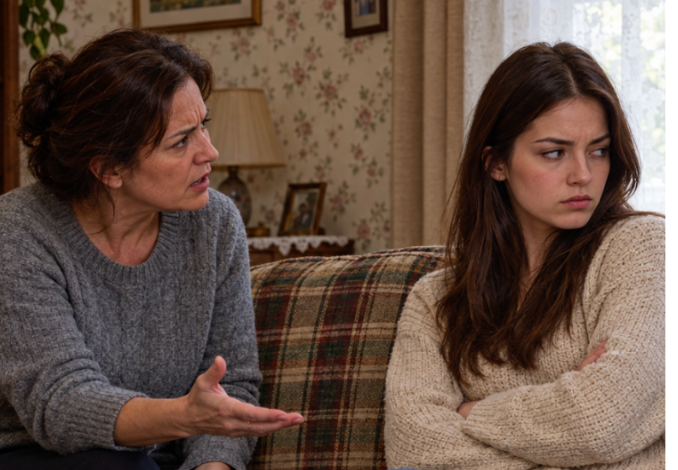
Svitlana spent almost two years saving up forty thousand hryvnias, only to find out in just a single minute—during a conversation with a girl she’d never even met—that it wouldn’t be enough.
The call came while she was at her summer house. It was the end of August, the heat refusing to let up, even in the evening, and Svitlana had been picking tomatoes since morning, trying to get to them before they split on the vine. Her phone jingled in the pocket of her apron. She wiped her hands on a towel for a long time before answering the unknown number.
“Svitlana Olehivna? Good afternoon, this is Iryna, the manager of the country restaurant. I’m calling about the wedding on September twentieth. I wanted to check when you’ll be able to pay the remaining amount.”
“What remaining amount?” Svitlana sat down on an upturned bucket.
“Seventy-five thousand. The bride said you’d be covering this part and left your number for contact.”
“Alysa said that?”
“Yes, Alysa Kovalchuk. You can pay in installments, if that’s easier for you, but we’d prefer at least half by the first of September.”
Svitlana thanked her, not even knowing why, and set the phone down on the bench next to a bowl of tomatoes. For a few minutes, she just sat there. Wasps buzzed over the garden beds, the faint smell of burning plant stalks drifted over from the neighbor’s plot, and all she could think was: she hadn’t made any arrangements with any restaurant.
She called her daughter.
“Alysa, I just got a call from the restaurant.”
“Oh…” There was some rustling on the line. “Mom, I’ll explain everything this evening, okay? I have a client right now.”
“Seventy-five thousand, Alysa. Can you at least give me a quick explanation?”
“Well, you did say you’d help us with the wedding.”
“I said I’d give you forty. The envelope has been set aside for a while now.”
“Mom, things just changed a bit. I’ll come over this evening, I promise. Gotta run.”
The line went dead. On the screen, “Daughter” still glowed with a little heart emoji—something Alysa had added herself while teaching her mom to use the new phone. Svitlana stared at that heart, realizing that while she’d been busy canning for the winter, someone else had already made decisions for her.
* * *
Alysa was her only child. When her daughter started first grade, her father packed his things into a sports bag, said he wanted to “live separately,” and never came back. For a few more years he’d send money for birthdays or the start of school, and then that stopped too. Svitlana never complained, not even to her own sister.
She worked at the water utility company, did accounts in the evenings for two little stores near the bus station, sewed costumes for Alysa’s school plays out of her own old dresses, and knew exactly which shop in town had buckwheat three hryvnias cheaper.
The hardest thing for her was saying one word: “No.” No to jeans like her friends had. No to summer camp by the sea. No to a phone with a camera in sixth grade. Every time she said it, Svitlana would lie awake at night, counting all the places she might be able to earn a little extra.
Once, when Alysa was about six, Svitlana came home from work to find her daughter in the middle of the room with a kitchen curtain on her head. Alysa was marching from the wardrobe to the window, humming something that sounded like a wedding march.
“I’m getting married,” she explained. “To Tyshko.”
The cat lounged on the couch, looking like a groom no one had even asked. Svitlana laughed until she cried, and later that evening, after her daughter had fallen asleep, she thought for the first time that one day this moment would really come. And how much she wanted that day to be beautiful for her child.
Now Alisa was twenty-six. She worked at an advertising agency, rented a one-bedroom apartment on the ninth floor with Vlad, and every Sunday she’d video call her mom, showing off either a new curtain or a plant she’d forgotten to water yet again. Svitlana liked Vlad. He was calm, quiet, and always asked before visiting if there was anything she needed from the city.
When the young couple announced in the spring that they’d applied for a marriage license, Svitlana set the table, baked her signature cheesecake with raisins, and at the end of the evening brought out an envelope from her room. Just a regular, old-fashioned envelope, on which she had written in ballpoint pen two years prior: ‘For Alisa.’
“There’s forty thousand in here,” she said, placing the envelope on the tablecloth. “I’ll give it to you properly, at the wedding, in front of everyone. But I want you to know now so you can plan. Spend it on the celebration, or something for your home—it’s up to you.”
Alisa burst into tears and threw her arms around her mother’s neck. Vlad was silent for a long moment and then quietly said, “Thank you, Svitlana Olegivna. We won’t let you down.” At the time, those words struck her as so moving.
* * *
In the beginning, the kids wanted to keep things simple. Just sign the paperwork and then have a small gathering in a cozy café near the park—thirty people or so. Alisa had even shown her mom photos of the place: wooden tables, string lights, wild grapevines draping the terrace.
But then Vlad’s mom, Larysa Hryhorivna, got involved with the preparations.
She owned a household goods shop at the market, laughed loudly, and truly believed weddings weren’t for two people, but the whole family. Svitlana had only met her twice, but both times she’d come home exhausted, as if she’d spent an entire day at the bazaar.
“Alisochka, what do you mean, a café?” Larysa Hryhorivna exclaimed when she heard their plans. “We have twenty-eight people just from my side! Aunt Hanya from the village, the godparents, the sponsors… Do you want them to remember until old age that they weren’t invited to Vlad’s wedding?”
“Mom, we wanted something quiet,” Vlad tried to protest.
“Quiet is for the library, son. You only get married once in a lifetime.”
Within a month, the guest list had grown to sixty. The little café with string lights was now an upmarket restaurant outside the city, with a large hall and a terrace over the pond. Now there was live music, a host, an arch made of white roses, a photo zone, and a three-tiered cake. Alisa told her mom about it all in bits and pieces, excitedly, but never once mentioned costs.
* * *
That evening, Alisa came home on the last minibus. She walked in and sat on a stool in the hallway without even taking off her shoes.
“Mom, I know it turned out messy. But we’ve already paid the deposit, you know?”
“How much does the whole banquet cost?”
Alisa didn’t answer right away.
“A hundred and seventy.”
“Thousand?” Svitlana repeated, although she’d heard clearly the first time.
“Well, what did you expect? Sixty people, Mom. Just the menu per person…”
“In the spring you figured it would all cost seventy. I remember, you showed me in your notebook yourself.”
“We have more guests now.”
“And who’s going to pay for all this?”
Her daughter glanced down at her sneakers.
“Vlad and his parents are giving eighty. We put in fifteen as a deposit from our own money. And the rest… we thought you would help.”
“I promised forty.”
“Mom, it’s your only daughter’s wedding!”
“That’s exactly why I told you in the spring how much I could give. So you wouldn’t make plans for things that don’t exist.”
“Come on, is it really so hard for you to add a little more?”
“A little more is five thousand. Maybe ten. But you’re asking for thirty-five extra on top of that.”
“But you have money set aside for new windows.”
Svitlana, who was filling the kettle with water, froze with it still in her hand.
“And how do you know how much I have for windows?”
“You said yourself you were saving up. That this autumn you would definitely replace them.”
“So you decided that the windows could wait.”
“I didn’t decide anything!” Alisa jumped up from the stool. “I just thought you would help. You always have.”
“I have helped,” Svitlana quietly agreed. “But helping and paying for decisions no one asked my opinion about are two different things, dear.”
Alisa left without finishing her tea. At the door, she threw back that now she’ll have to redo everything and be embarrassed in front of the restaurant. Svitlana stood by the window for a long time, watching her daughter walk to the bus stop under the streetlight. A cool evening breeze seeped in from the window frame—the same reason every autumn she had to stuff the cracks with cotton and tape them shut with paper strips.
That night, she again couldn’t fall asleep for a long time. Just like back when Alisa used to ask for jeans.
* * *
The next day, Larysa Hryhorivna called.
“Svitlana Olegivna, hello! Alisa told me that you’re having some misunderstanding about the money.”
“Hello. There is no misunderstanding. I promised forty thousand, and that’s what I’ll give.”
“But you understand, the restaurant is booked, the guests are invited. How do we tell them now?”
“And why did you assume I was willing to pay almost half?”
“Well, you know… parents usually split it evenly. We’re giving eighty, so are you.”
“Your eighty is you, your husband, and Vlad. On my side, it’s only me. And you have thirty guests, while I have eight.”
There was a moment of silence on the other end.
“It’s not about the money,” Larysa Hryhorivna finally said, her tone less cheerful. “The child is crying.”
“I’m not exactly singing either. But no one asked me before giving the restaurant my number.”
“Maybe we can come to some sort of agreement?”
“Of course. Let the kids choose a celebration within their own budget.”
They ended the call coldly, like two cashiers after an argument over change.
* * *
On Saturday, Vlad showed up. Alone, without Alisa, and asked Svitlana to come outside for a talk. They sat on a bench by the entrance, where a boy on the playground was energetically pushing a swing, its squeaks echoing throughout the courtyard.
“Svitlana Olegivna, I wanted to apologize,” Vlad began, fiddling with his car keys. “I didn’t know Alisa gave the restaurant your number.”
“But you knew about the seventy-five thousand?”
“I knew. I thought you two had already agreed.”
“She told you that?”
Vlad looked away.
“She said you probably wouldn’t say no. And I didn’t ask again. It just seemed easier that way.”
“Vlad, you two are about to become a family. Your own budget, your own decisions. You can’t make plans with someone else’s money, even if it’s your mom’s.”
“I understand.”
“And do you even want a wedding for sixty people yourself?”
He stayed silent for a long time, just looking at the swing.
“No,” he finally said. “I’ve only seen half of those people twice in my life. Alice and I just wanted something quiet. Then Mom started: you need this, and that, and it would be shameful without it. Alice got swept up in it all. But I didn’t want to start a fight.”
“So, to avoid upsetting Aunt Hania, you decided that I’ll have cold drafts coming in through the windows all winter.”
Vlad blushed.
“When you put it that way, it sounds really bad.”
“Because that’s exactly what it is.”
Before he left, he pulled a watermelon out of the trunk. “Mom sent this. Well, I bought it myself, but let’s say it’s from us,” he mumbled, and for the first time in a week, Svitlana smiled.
That evening, Alice called.
“Mom, why did you tell Vlad that we want your money?”
“Because you really were counting on it.”
“Now he wants to cancel the restaurant!”
“And do you want to keep it at any cost?”
“I just want a normal wedding! Like everyone else!”
“A normal wedding isn’t measured by the price of the banquet, Alice.”
“That’s easy for you to say. You’ve already had yours.”
Something clenched painfully inside.
“Yes, I did. In a factory cafeteria, with thirty people, and my mom cooked half the dishes herself. Your dad and I saved up for two years. But at least we knew what we could count on.”
Alice hung up.
* * *
They barely spoke for a week. Svitlana called several times, but her daughter answered briefly and always said she was busy. The restaurant sent another reminder about payment. Svitlana forwarded it to Alice and added: “My offer still stands. Forty thousand as a gift, no strings attached. Love you. Mom.” Two check marks appeared under the message, meaning it was read. There was no reply.
On Sunday, her daughter showed up alone and unannounced. Svitlana opened the door and immediately saw how tired she looked: her hair hastily tied back, dark circles under her eyes. Alice walked into the kitchen, sat in her old childhood spot by the fridge covered in magnets from the sea, and was silent for a long time.
“Mom, can I have some tea first?” she finally asked.
“Of course. What happened?”
“Vlad and I had a fight.”
“Because of the wedding?”
“Yeah. He said he won’t invite half the guests. And Larysa Grygorivna got offended and said if that’s the case, she won’t give any money at all.”
“So what have you decided?”
“Nothing. Vlad says we should cancel that restaurant. But I’ve already told everyone about the wedding: my girlfriends, colleagues. I even chose the dress for that hall, with a long train to walk down the terrace stairs.”
Svitlana sat down across from her.
“Alice, do you want to marry Vlad, or throw a party that will impress everyone you know?”
“Well, get married, of course.”
“Then why are the train and Aunt Hania suddenly more important?”
Alice didn’t answer. She spun her cup on the table, gazing out the window. Then, all at once, the words rushed out. She confessed she was fed up with all the planning. Every week there was a new expense: doves, a chocolate fountain, personalized candles for every table. Larysa Grygorivna always came up with something else that would be “shameful” not to have.
“We just wanted to sign the papers and have a small family gathering,” she said, her voice trembling. “Now I don’t even know half the guests.”
Svitlana paused, then asked:
— Do you remember when you married Tyshko?
Alisa looked up and laughed through her tears.
— In the curtain.
— In the curtain. There was only one guest, a cat, and even he was unimpressed. But you were the happiest bride I’ve ever seen.
Her daughter covered her face with her hands and sat like that for a long while, as Svitlana gently stroked her back just like she used to do when Alisa was a child.
— We’ll lose the deposit, — Alisa said quietly through her fingers.
— How much is it?
— Fifteen.
— It’s a pity, of course. But it’s better to lose fifteen thousand now than to spend half a year patching up the budget for a night you both don’t even want.
* * *
That same evening, Alisa spent a long time talking to Vlad on the phone out on the balcony. The next day, the two of them went to the restaurant together.
Turns out, things weren’t as hopeless as they’d thought. The restaurant manager, Iryna—the same one who had called Svitlana—offered a small fireplace hall with twenty-four seats and transferred their entire deposit there. She helped them redo the menu, suggesting what could be dropped without regret. They cancelled the host. The rose arch, too. They ordered a single-tier cake, but it would have those same cherries Alisa had loved since her childhood.
When her daughter told her about the new plan, for the first time in a long while, Svitlana heard joy in her voice instead of tension.
— Mom, can you imagine, we even have enough for the Carpathians! A whole week, in one of those wooden cottages with a stove!
— That’s wonderful.
— And Vlad says he likes it a hundred times better this way.
— And what about Larysa Hryhorivna?
— At first, she was offended. Then she agreed. She only said that Aunt Hania would ask why she wasn’t invited.
— Well, that’s her problem now.
Alisa laughed so brightly that something fell over on the other end of the line.
A week before the wedding, she brought her mother the invitations and a bouquet of asters from the market.
— Mom, I wanted to apologize, — she said right in the doorway. — I didn’t act well. You offered us your help and I, instead, decided I was entitled to more. I always thought you’d find a way out, fix things, borrow something from Aunt Liuba. I never even thought about what it cost you.
Svitlana didn’t say a word. She just hugged her daughter close, asters and all.
— And one more thing, — Alisa said into her mother’s shoulder. — Vlad and I realized we need to make our own decisions. Otherwise, everyone will be telling us how to live for the rest of our lives.
— That, my daughter, is worth more than any gift.
* * *
September twentieth was a warm, almost summer-like day. The maples in the park where everyone walked after the ceremony were just starting to turn yellow, and the photographer kept ushering the newlyweds from one tree to the next until Vlad finally begged for mercy. The korovai was baked by Svitlana’s sister the night before, so tall it barely fit in the car.
At first, Larysa Hryhorivna was tense. She sat upright, eyeing the empty corners of the hall that seemed to bother her. But after her third toast, she started chatting with Svitlana’s brother, danced with him, and by the evening, fixing her hair in the mirror, she confided to Svitlana:
— You know, this is even better. Just our people. No one’s sitting and counting what’s on the table.
When it was time for gifts, Svitlana stood up, took out the same envelope labeled “For Alisa” from her bag, and handed it over, just as she had promised back in the spring, in front of everyone. Vlad accepted it with both hands, and then, a little awkwardly, hugged his mother-in-law—for the first time ever.
Late at night, when the musicians were packing up their instruments, Alisa sat down next to her mother on the couch by the fireplace.
“Mom, thank you.”
“For what?”
“For saying no back then. If you had given us that money, we wouldn’t have stopped. We would have just kept adding and adding. And then we’d spend ages trying to clean up from just one night.”
“I thought you were still a little upset about it.”
“No. Back then, I was. But not anymore.”
Svitlana gently fixed a strand of hair that had come loose from Alisa’s hairpins, saying nothing. She didn’t need to.
* * *
The newlyweds brought back bryndza cheese from the Carpathians, a jar of blueberry jam, and a hundred photos—which Alisa later spent the whole evening showing her mother over video chat. The envelope was enough for both the trip and a new washing machine, since the old one that came with their rented apartment hopped around the bathroom like it was alive.
In October, Alisa invited both moms over for dinner. She made varenyky with potatoes and mushrooms herself, while Vlad set the table and somehow found two matching candles. They chatted about the photos, the neighbor’s dog that howls at their door every morning, and how Vlad got lost in the woods in the mountains. Nobody mentioned money.
At the door, Larisa Hryhorivna suddenly paused while Svitlana fastened her coat.
“Svitlana Olegivna, I wanted to apologize too,” she said without making eye contact. “I got a bit carried away back then. I thought the more people, the better the celebration. But it turns out that wasn’t true.”
“It’s good things turned out the way they did,” Svitlana replied.
“Yeah. And it seems the kids are happy.”
This time, their goodbye was quite different. Larisa Hryhorivna even slipped a jar of her homegrown peppers in tomato into Svitlana’s bag—“I had such a harvest this year, I have to give them away!”
And at the beginning of November, when the first frost hit at night, new windows were installed in Svitlana’s apartment. Vlad came home for the weekend, helped the workers carry out the old frames, and stood in silence for a long time staring at the wooden windowsills where Alisa once stuck her stickers.
That evening, for the first time in years, Svitlana didn’t have to stuff cotton in the cracks. She sat in the kitchen with tea, listening to the wind outside that couldn’t make its way in, and thought about how sometimes one well-timed “no” protects a family better than any amount of money. On the windowsill, where the cotton jar used to sit, now stood a wedding photo. Alisa in the picture was laughing just like she used to, in the curtain dress. Continued in the comments.