Katya’s grandmother gave her a keychain for her eighteenth birthday—a tiny brass house with a chimney and a little window. Back then, her grandmother said:
“This is for the keys to your own apartment. Remember, Katyusha: your own home is what matters most. Everything else comes later.”
For sixteen years, that keychain held keys that weren’t hers. First, dorm room keys. Then, the key to the room Katya rented with a friend. After that, it was studio apartments she rented on her own. For the past five years, it held the key to a studio in Bragin, with the landlord’s carpet on the wall and a fridge that hummed all night like a transformer.
Katya started saving for her own apartment at 24, when she got a job as a procurement specialist at a furniture factory. Every month, she put aside a third of her salary. Later, when she started earning more, she saved half. She opened a separate savings account and never touched it, even when she really wanted to.
At 28, she met Alexey. He was a tall, kind window installer who cheerfully told stories—like the time he installed a window on the twelfth floor with no harness. A year later, they got married, and Alexey moved into her rented studio.
“Katya, we’ll save up for an apartment in no time,” he would say. “I’ll start saving too. You know how much I make in the summer? It’s high season.”
And it was true—Alexey earned well during the summer. But somehow, none of that money ever made it into their joint savings.
“I give it to my mom,” he explained that first autumn. “She saves it for us. Don’t worry, she’s the safest bet. I’d just waste it myself. But Mom—she’s tough. She’ll save it all up and give it back to us for our apartment, all at once.”
Polina Andreevna confirmed this the very first time they visited.
“Katya, don’t you worry. Lesha’s money with me is just like in a bank. I’m watching every penny for you both. When you have enough for an apartment, I’ll give it all back. You’ll thank me for not letting it be spent.”
Katya believed her. Her mother-in-law spoke firmly, confidently, looking her right in the eye. And Alexey seemed honest, too. Why would he lie?
That’s how five years of marriage went by, and in total, it had been ten years since Katya started saving.
They still lived in a rented studio. Katya never went on vacation. When her friend Tanya got married in Sochi and invited everyone to the sea for three days, Katya refused: tickets, hotel, a dress—it was too much. She spent her thirtieth birthday at home with a store-bought cake and three girlfriends. For New Year’s, she and Alexey celebrated alone, with Olivier salad and tangerines. She only shopped for clothes once each season, always at sales, and made sure they lasted.
Alexey, on the other hand, regularly bought gifts. He gave his mother a massage chair worth eighty thousand for her birthday. For his sister Kseniya, a new phone. The next year, he paid for half of Kseniya’s wedding banquet.
“She’s my mom,” he would say. “She’s my sister. That’s sacred.”
Katya stayed quiet. She didn’t feel like she had the right to interfere—the money was his.
This spring, Katya’s grandmother passed away.
Her grandmother had lived in Rybinsk, in a one-room apartment on the Volga embankment, and every month Katya visited her by bus. She brought groceries, cleaned the windows, and listened to her grandmother’s stories from her youth. Her grandmother had long ago written a will. She left her apartment to her granddaughter.
During Katya’s last visit that winter, her grandmother suddenly took her hand.
“Katyusha, listen. When I’m gone, sell my apartment. Don’t cling to it—it’s just old walls. Sell it and buy something of your own. Finally, something that’s yours. Do you hear me?”
“Grandma, why are you saying things like that?”
“I’m just telling the truth. And another thing. Don’t give that money to anyone. Not your husband, not his family. I’ve lived a long life, I know how this goes. As soon as you have money, people will appear who need it more. Don’t trust them.”
Katya tried to make a joke of it, saying that Lyosha’s family isn’t like that. Her grandmother just shook her head.
Six months later, Katya inherited the apartment and sold it. It was hard. She lingered in the empty room for a long time, filled with the scent of her grandmother’s perfume and old books. Then she closed the door and handed the keys to the buyers.
Two million six hundred thousand was deposited into her account.
With her own savings, money set aside over ten years, she had about five million one hundred thousand in total. That was enough to buy herself a two-bedroom apartment in Yaroslavl. No mortgage. No debt. Her very own.
That night, Katya sat in the kitchen of the rented one-bedroom, staring at the bank statement and crying. She missed her grandmother every day. But right now, she was crying from relief. She had spent ten years denying herself everything. Now, that was finally over.
She found a two-bedroom in just two weeks. A brick building on Tutaeva, in the Zavolzhsky district, fifteen minutes’ walk from the factory. Fifty-two square meters, a big kitchen, windows overlooking a courtyard with old lindens. It cost four million seven hundred. She still had four hundred thousand left for renovations and furniture.
Katya arranged a deposit with the seller—an elderly woman who agreed to wait two weeks for the payment while Katya sorted out moving arrangements. That evening, she happily shared the news with her husband.
For some reason, Alexey didn’t seem happy. He was silent for a moment, scratching his head.
“Katya. Hey, what if we don’t rush it? Maybe wait at least a month? Let’s just wait.”
“Why? It’s a great apartment. Someone else might buy it.”
“Well… I want to ask my mom for advice. She knows a lot about apartments. You never know—maybe there’s something wrong. She can take a look and give us some tips.”
Katya was surprised, but didn’t argue. A month wasn’t really that long.
All week, Alexey was behaving oddly. He was extra affectionate, did the dishes himself, even bought her some chocolate. Then on Wednesday night, he suddenly asked:
“Katya, exactly how much do you have in your accounts right now? Down to the last ruble.”
“Why do you need to know?”
“Just so my mom can see. She’ll check if the price for the two-bedroom makes sense, and if you’ll have enough left for renovations. She’s really good at this stuff.”
Katya opened her banking app and showed him. Alexey took her phone and snapped a photo of the screen with his own.
“Why’d you do that?”
“Just so I don’t forget. Those are some long numbers.”
At the time, she found it almost touching—her husband was finally taking a serious interest in their future home.
A week later, Polina Andreevna showed up herself. No call, just Saturday morning with a cabbage pie in hand.
At first, they chatted about the weather. Then about Katya’s grandmother: her mother-in-law nodded sympathetically, sighed, and recalled her own mother. Before long, the conversation shifted to money.
“Katenka, so how much did you end up getting? From your grandmother’s place?”
“Two million six hundred.”
“Oh, wow. That’s nice. And how much did you have saved up on your own?”
— About two and a half million.
— Got it, — my mother-in-law quickly calculated something in her head. — And the apartment you picked out, how much does that cost?
— Four million seven hundred thousand.
— Okay. So you’ll still have quite a bit left over… Well, there’s definitely a good amount left.
— Four hundred thousand. For renovations.
— Four hundred, — Polina Andreevna repeated thoughtfully. — That’s if you’re buying a two-bedroom.
Katya grew wary.
— What’s wrong with a two-bedroom?
Her mother-in-law set down her fork, wiped her lips with a napkin, and glanced at her son, who was sitting next to her, diligently picking at his pie.
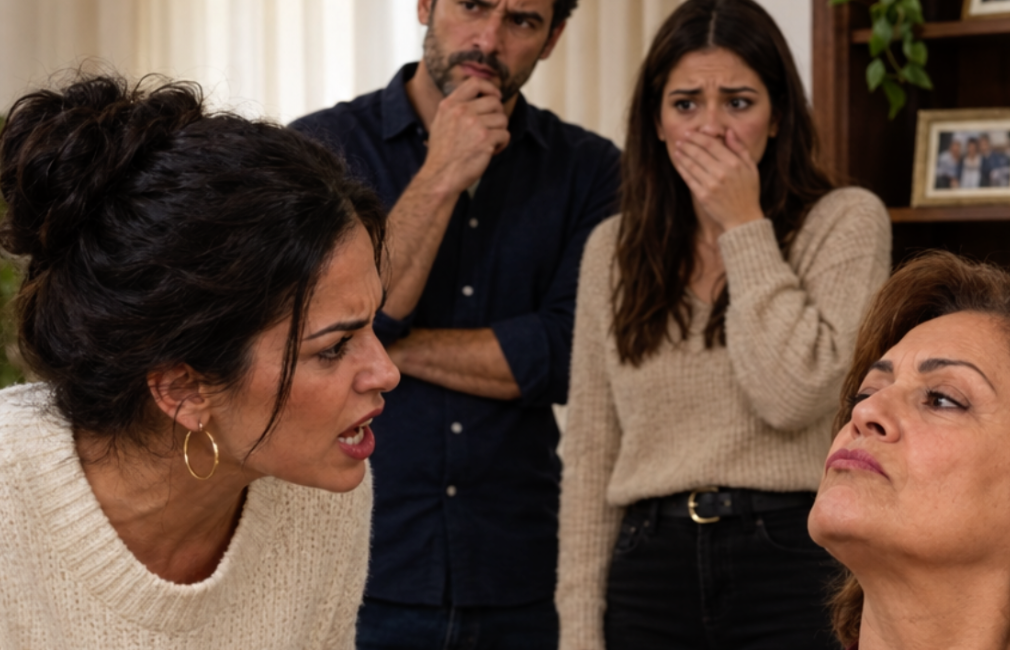
— Katya dear, here’s the thing. You know Ksyusha’s in a tough spot. She got divorced. Her husband—well, that good-for-nothing—left the rental, so Ksyusha moved back in with me. Now it’s the two of us in a two-bedroom. And you know, two adult women, each with her own personality, we argue every day. She leaves her hair in the sink, I put her cream in the wrong place. She listens to music at night, I’m up at six. It’s impossible, Katya. I’m losing my mind.
— I understand. That’s tough.
— Exactly. So here’s what I was thinking. Now that you have money, why don’t you buy Ksyusha a studio? Just a small one in the Dzerzhinsky district, prices there aren’t bad. A little over three million. Then you can get your own apartment later, in a few years. You and Lesha are still young, you can rent for a while, it’s no big deal. Things are much harder for Ksyusha right now.
Katya slowly placed her cup on the table. She felt like she must have misheard.
— Excuse me, Polina Andreevna. You’d like me to buy an apartment for Ksenia? With my own money?
— Well, with family money, — her mother-in-law corrected. — We’re all one family.
Katya turned to her husband.
— Lesha. Are you hearing this?
Aleksey finally looked up from his pie.
— Katya, come on. Mom has a point. It makes sense. Out of all of us, Ksyusha really has it the hardest. She’s alone, just divorced, nowhere to live. We have each other, we’re fine. We can rent for a couple more years and save up. It’s only fair.
— Fair?
— Yeah, it is.
Katya looked at her husband and barely recognized him.
— Lesha. I’ve spent ten years saving for this apartment. Ten years. I didn’t take vacations. I missed Tanya’s wedding in Sochi. I spent my thirtieth birthday at home with a store-bought cake. This is my fourth winter in the same old coat. And you’re telling me it’s fair to just give all that to your sister?
— But things are honestly much tougher for Ksyusha right now, — Aleksey said stubbornly. — She has absolutely nothing.
— Katya, — her mother-in-law interrupted in a gentle but firm voice. — Don’t say it like that. You’re married to Lesha. That means you’re part of our family. And in our family, we help each other. That’s your responsibility. You’re not a stranger.
— And why can’t Ksenia save up herself?
— What do you mean?
— I mean exactly that. Ksenia is twenty-nine. She works, she has her own clients—brows and lashes. She makes as much as I do, if not more. Why can’t she save for an apartment herself? I did it. It took me ten years.
Polina Andreevna flushed red.
— Enough. This is humiliating. Stop grilling me with these questions. Are you going to scold my daughter about how she lives and what she earns? That’s not for you to judge! You have an inheritance, you have money. That means you should help the family. That’s all there is to it.
“And where am I supposed to live?” Katya asked quietly. “Me and your son? We don’t have a place either. We’ve been renting for five years now.”
“Oh, come on now,” her mother-in-law waved her hand. “Alyosha is a hardworking man, he’ll take great care of you. You’ll save up. But first, we have to settle Ksyusha’s housing situation. That’s urgent. And we already have an option ready.”
She rummaged in her bag and pulled out a piece of paper folded in quarters. It was a printout of a listing. Studio apartment, twenty-four square meters, on Blucher Street, three million two hundred. At the bottom, handwritten: “Owner will go down 100k. Call before the 15th.”
“We’ve already checked it out,” Polina Andreevna said proudly. “Last Saturday. With Ksyusha and Alyosha. It’s a nice studio, bright, even has a balcony. Ksyusha really liked it.”
Katya looked at her husband. Last Saturday, Alexey had told her he was heading to a job, to a client’s dacha, to install some windows. He’d come home late, exhausted, and went straight to bed.
“Last Saturday?” she repeated.
Alexey blushed and looked away.
And then Katya finally understood everything.
He hadn’t asked her to wait a month just for his mom to see the paperwork for the two-room apartment. He’d already told his mother about her inheritance. Sent her a photo of her bank screen—so that’s why he needed all those “long numbers.” And her mother-in-law’s questions about the amounts were all just for show. The three of them had discussed everything without her. They’d gone to see the studio. Made a deal with the owner for a discount. Divided up her money. And all that was left for her was to agree.
Meanwhile, her mother-in-law kept going, smoothing the printout on the table:
“So, Katya, call up your seller and back out of the two-room. On Monday, we’ll go to the agency and register the studio in Ksyusha’s name. Alyosha already made arrangements with the realtor.”
Katya slowly stood up from the table.
“Polina Andreevna. Don’t you think you’re asking a bit much?!”
Her mother-in-law froze with the printout in her hand. Her face went pale. For five years she’d known Katya as quiet, polite, and yielding. Katya had never raised her voice to her. Never argued. Not even when her mother-in-law criticized her borscht or her hairstyle.
“What? What did you say?”
“I asked if you think you’re asking too much. You want me to spend my grandmother’s money and my savings from ten years to buy your daughter an apartment. A grown, healthy, working woman. And I’m supposed to keep renting for years. And you still get offended when I ask why she doesn’t save up herself.”
“Katya!” Alexey jumped up. “How dare you talk to my mom like that? Apologize right now!”
“I won’t.”
“Apologize, I said!”
“No, Alyosha. I have nothing to apologize for. I’m protecting my money. My grandmother’s money. And my own apartment, the one I saved up for ten years.”
“Do you even realize what you’re doing?” Alexey turned red to his ears. “You’re ruining the whole family! You’re destroying relationships! Mom has treated you like her own, and this is how you insult her! All because of money!”
“It’s your family that decided my money was everyone’s. I never agreed to that.”
Polina Andreevna stood up. Gathered the printout. Carefully folded it and put it back in her bag. Her lips were trembling.
“Well, that’s it,” she said in a cold, icy voice. “Everything is clear now. I will never let daughters-in-law like you into my home again. You will never set foot here. Lyosha, do you hear me? Your wife has insulted me.”
Katya turned to her.
“Wait, Polina Andreevna. Before you leave, please answer one question. Where is the money that Lyosha has been giving you for the past five years?”
Her mother-in-law stopped in the kitchen doorway.
“What money?”
“The money you were saving for us. ‘Like in a bank.’ ‘Every penny counts.’ You told me that yourself. Lyosha gave you most of his salary. For five years. By my count, that’s over a million. You promised it would come back to us for our own apartment. Well, here we are, ready to buy the apartment. Return the money. Then maybe we can talk about Ksenia.”
Silence hung in the kitchen. Her mother-in-law looked at her son. He stared at the floor.
“Lyosha,” Katya said. “Where’s the money?”
Alexey was silent for a long time. Then finally he forced out:
“Katya… There isn’t any.”
“What do you mean, there isn’t?”
“There just isn’t. Mom already spent it. A long time ago.”
“Spent it on what?”
“Well… On Ksyukha’s wedding. The banquet, dress, photographer—you remember how big that wedding was. Then we helped Ksyukha buy a car. Then mom got her teeth fixed, the implants. Then there was that massage chair… and other small things. Just, you know, life.”
“And all the times I talked about vacation, about Tanya, about a winter jacket—did you always know there was no money?”
Alexey didn’t answer. That was answer enough.
“Polina Andreevna,” Katya looked at her mother-in-law. “Are you planning to return the money?”
“Why should I answer to you?” her mother-in-law raised her chin defiantly. “It’s my son’s money. He gave it to me willingly. A son is supposed to help his mother. You have nothing to do with it. And don’t look at me like that. Nobody owes you anything. No one’s giving you anything back.”
She turned sharply and left. A minute later, the front door slammed.
Alexey’s phone vibrated on the table. It was lying face-up, and Katya saw a message from Ksenia: “So, did she agree? Don’t forget to call the landlord by the 15th!” followed by three smiley faces with keys.
Alexey quickly flipped the phone over.
Katya stood in the middle of the kitchen, frozen.
Suddenly, all those years flashed before her eyes. Tanya’s wedding in Sochi, which she watched on her phone, sitting in that very kitchen. Her own thirtieth birthday—just a store-bought cake. Holidays spent at home sorting out the closet. New Year celebrations with no trips. Her winter jacket with the sewn-up pocket. The gifts she didn’t buy for herself, just to put away an extra thousand in savings.
And all this time, her husband took his salary to his mother every month. And his mother used that money for dental implants, a massage chair, paid for her daughter’s wedding banquet. While Katya scrimped and saved, her husband was making life easier for his mother and sister. For five years. And all along, they told her, “Don’t worry, Mom is saving up for you.”
Now they’ve come for the last thing. Her grandmother’s apartment. The only thing that was truly hers, left for her.
“Lyosha,” she said. “I’m filing for divorce.”
Alexey looked up at her.
“What?”
“I’m filing for divorce. Tomorrow.”
“Over the studio? Seriously? Then don’t buy it if you don’t want to! I’ll tell Mom it’s not going to work out!”
“It’s about the last five years, Lyosha. You’ve been lying to me all this time. You knew there was no money and kept quiet. You told Mom about grandma’s inheritance before I could even process that she was gone. You went to look at a studio for your sister using my money, but told me you were at work. And now you’re demanding that I apologize. I’ve had enough.”
He stood there looking at her. Then his face suddenly turned angry.
“Fine, go ahead. But remember, your savings are ours. You saved them while we were married. I’ll find a lawyer. I’ll fight for half. And if you buy an apartment later, we’ll split that too.”
Katya didn’t reply. She went to the other room, took his backpack from the closet, and set it on the bed.
That evening, Alexey left to stay with his mother.
Katya called Tanya. Her friend listened to everything without interrupting even once. Then there was a long silence.
“Katya. I’ve been trying to tell you this for five years. Remember at my wedding, everyone asked where you were? Your Lyosha, at that very moment, was giving his mom a chair for eighty thousand. Even then, I thought—strange way for you guys to save money.”
“Why didn’t you tell me?”
“I did. You used to say, ‘Mom is saving for us.’ So I stopped. Katya, please don’t even think about changing your mind now. Do you hear me? Your grandma’s money is your grandma’s money.”
“I won’t change my mind.”
“Do you want me to come over tomorrow? With cake. A real one, not a store-bought one.”
Katya laughed through her tears. Tanya came the next evening, bringing a cake from the bakery on Svobody Street. They sat in the kitchen until midnight, calculating how much the renovation would cost, and browsing wallpaper options for Katya’s future bedroom online.
The next day, during her lunch break, Katya visited a lawyer. A young woman in glasses listened to her carefully and asked for supporting documents.
“Here’s the situation. The money from selling your grandmother’s apartment is yours. The apartment came by inheritance, so it’s your personal property, and the money remains personal if you can prove its origin with bank statements. The savings you had before the marriage are also yours—there’s your deposit statement from your wedding date. But whatever you’ve saved in the past five years from your salary—that’s joint property. Your husband could legally claim half of that.”
Katya nodded. This was what she’d been afraid of.
“But,” the lawyer continued, “you have a counterargument. He’s been giving his salary to his mother for five years, and that’s also joint money. For implants, his sister’s banquet, the chair—not for your family’s needs. If he takes you to court over your savings, you have the right to bring up all the shared assets he spent against your family’s interests. I can’t guarantee an outcome—it depends on the evidence—but your chances are good. Ideally, you two can agree. A notarized settlement: you keep your savings, you don’t ask him for compensation for the money he gave his mom. And you should buy your apartment after this, so there’s no room for dispute.”
Two days later, Alexey called her himself. At first, he threatened her.
“Just wait, Katya. You think you’re so smart? I found a lawyer, too. He said half of your savings belong to me. You owe me a million, you hear me?”
“Alright, Lesha. Go ahead, sue me. I’ll file a countersuit. For the 1.2 million you gave your mom over the last five years. With bank statements. Let the court see how that money was spent. Implants, Ksyusha’s banquet, the massage chair. Your mom can be a witness — I’m sure she’ll enjoy that.”
He fell silent. For a long time.
“You’d drag your own mother to court?”
“Not me. You, if you decide to split my money.”
A week later, he changed tactics. He showed up in the evening with flowers, shifting nervously on the doorstep.
“Katya. Let’s just forget it ever happened. Okay, I was wrong. My mom pressured me, Ksyusha kept whining. I messed up. Give me a second chance, please. I promise it’ll never happen again, honestly. We’ll buy your two-bedroom. I’ll bring my entire salary home, every last cent. Not a single ruble to my mom.”
“Lesha. And what about the money you gave your mom — is she going to pay that back?”
He lowered his eyes.
“Well… Katya. You know she doesn’t have it. She spent it.”
“Are you going to pay it back then? Even a little? Maybe ten thousand a month?”
“But she’s my mom. I was just helping her out. Why should I… No. That’s not right. It was my money, and I gave it to my mom as a gift. And a gift is a gift.”
Katya nodded.
“Then there won’t be a second chance. You just said it yourself.”
She closed the door.
The next day, Ksenia called. Katya stared at her name on the screen for a long time before answering.
“Hi Katya. Listen, I wanted to say… I honestly never asked for anything. It was all mom’s idea. She told me you offered yourself, that you had extra money. I thought you knew.”
“And you went to look at apartments thinking I was aware of it too?”
Ksenia was silent for a moment.
“Well… To be honest, I wouldn’t have said no if you bought it. Who would refuse that? But please don’t be mad at me, okay? It really is impossible to live with mom. She nags me every day.”
“Ksyusha, I’m not upset with you. But I’m not buying you an apartment. Start saving yourself, like I did.”
“Yeah, I know,” sighed Ksenia. “Now mom has let Lesha move in. There’s three of us in a two-bedroom. He’s sleeping on a cot in the hallway. It’s honestly a nightmare.”
After that conversation, Katya laughed for the first time in a week.
A couple of days later, Polina Andreevna called. Her voice was no longer cold, but almost pleading.
“Katenka. We all overreacted. It happens. Let’s settle this nicely. If you don’t want to buy the studio, fine. But at least give Ksyusha a down payment. Three hundred thousand. That way she’ll get approved for a mortgage. That’s not much for you. Would it be so hard?”
“No, Polina Andreevna.”
“At least two hundred!”
“No. Return the money Lesha gave you first. That’ll be more than enough for Ksyusha’s down payment. All the best.”
Her mother-in-law was still talking as Katya pressed the hang-up button.
Ten days later, Alexey signed the division agreement. Apparently, neither he nor Polina Andreevna wanted the court hearing to make it public where all his salaries had disappeared to.
At the notary’s office, he sat gloomy, reading every clause slowly, moving his lips. The notary, a calm, plump woman, asked twice if he understood that he was giving up any claim to his wife’s savings.
“I understand,” Alexey muttered. “She’s agreeing too. About mom’s money.”
“That’s right. It’s a mutual agreement.”
“Well, there it is.”
He signed his name, pushed the pen away, and finally looked at Katya.
“Satisfied?”
“No, Lyosha. I’m sad. But I’m calm.”
“Do you think I’m not sad? Five years down the drain.”
“Those five years—you spent them bringing things to your mom. That wasn’t about me.”
He agreed to sign the divorce papers at the registry office right after the settlement agreement was signed.
At the end of November, Alexey came to pick up the rest of his things: his winter jacket, some tools, a box of wires. By then, Katya was already packing her own stuff into boxes, and the one-bedroom apartment was half empty.
Alexey stood in the doorway, looking at boxes labeled “Kitchen” and “Books.”
“So, you’re really buying it?”
“I am.”
“On Tutayeva?”
“On Tutayeva.”
He was silent.
“Mom says you robbed us all. She says if not for you, Ksyuha would have been living in the studio by now.”
“What do you think?”
Alexey shrugged, grabbed the box of wires, and left without answering. Katya never found out what he really thought. Maybe he didn’t know himself.
Luckily, the seller of the two-bedroom on Tutayeva was understanding: Katya called her, explained the situation, and the seller agreed to wait a bit longer for the deposit. After signing the notary agreement, Katya paid the deposit, and a month after that Saturday conversation, she finalized the purchase. The apartment was registered solely in her name. All the money for the purchase came from her accounts: her grandmother’s and her own, as officially documented in the settlement agreement.
When the bank manager placed the last document in front of her and pointed where to sign, Katya paused for a second, pen in hand. She remembered her grandmother’s kitchen on Volzhskaya Embankment, her dry, warm hand, and her voice: “As soon as you have money, there will always be people who need it more.” Grandma was right. They appeared. Even faster than she expected.
Katya signed.
The divorce was finalized at the registry office in mid-December.
Alexey stayed with his mom and sister, still in the two-bedroom on Pyaterka, sleeping on a folding bed in the hallway. Friends said Polina Andreyevna now had two people to argue with—Ksenia, about hair in the sink, and her son, because he came home late and ate loudly. Someone else bought the studio on Bluchera.
They said Ksenia started saving up. By herself.
Right before New Year’s, Katya received the keys to her two-bedroom. Two keys on a simple metal ring—for the top and bottom locks—and a magnetic fob for the entrance.
That evening, she went to her empty apartment. She turned on the light and walked through the rooms, where it still smelled like someone else’s wallpaper and old parquet. She stood by the kitchen window. Out in the yard, old linden trees heavy with snow stood under the streetlight.
Then she pulled a little brass house with a chimney and window out of her pocket. She took the keys to her rental in Bragin off it and set them on the windowsill—she’d return them to the landlady that weekend.
And on her grandmother’s keychain, she hung her own