“Just the crib left,” Kristina said aloud, looking around the courtyard.
A small open-bed truck was parked near the building. Beside the entrance stood neatly arranged boxes filled with children’s toys, a parrot cage, a dog bed, bags of clothes, and several kitchen appliances. Everything had been packed carefully and methodically earlier that morning.
At that moment, a taxi pulled up to the curb.
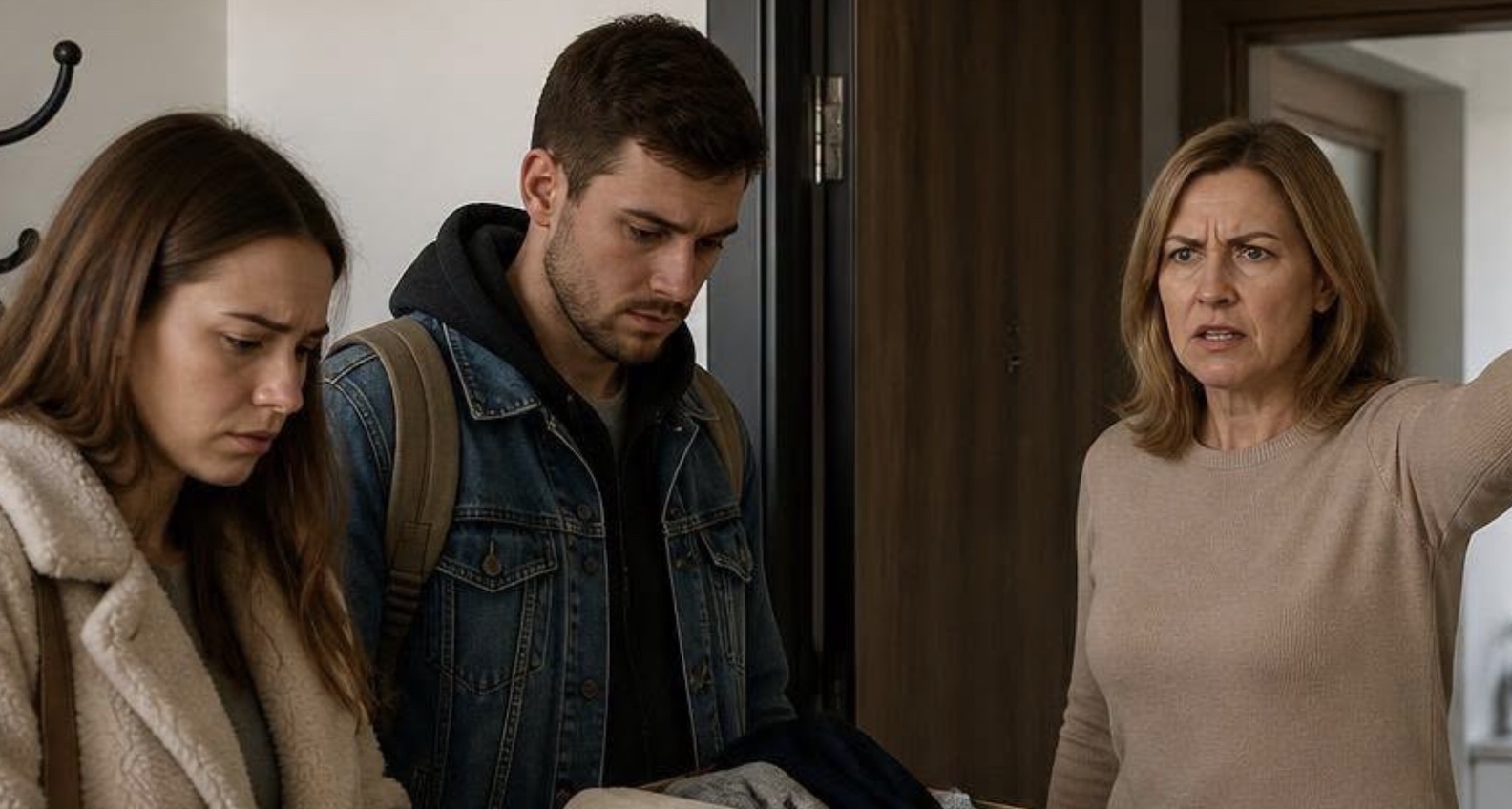
The door opened, and Svetlana stepped out wearing a light summer dress, her skin tanned from the sun and a beach bag hanging from one shoulder. Oleg climbed out after her, followed by their two boys. The family had just returned from a weekend at the lake.
Svetlana stared at the mountain of belongings.
Then she slowly looked at her sister.
“What is this supposed to be?”
 
Kristina held her gaze.
“My hospitality expired six months ago. Take your things and find somewhere else to live.”
Kristina was twenty-eight and had always been used to taking care of herself.
Her modest two-bedroom apartment on the seventh floor was her private little world. There was a favorite folding sofa beside the window, houseplants lined up along the windowsill, and a laptop permanently occupying one corner of the kitchen table, where she often worked until midnight.
Her job as a software developer provided a steady income, and every month she saved part of it toward a small plot of land about thirty kilometers outside the city. Someday, she hoped to build a little house there among the pine trees.
Nothing luxurious.
Just something peaceful.
Something that belonged entirely to her.
Her older sister, Svetlana, lived a very different life.
She had a husband, Oleg, two sons, a three-bedroom apartment in a newly built residential complex, and a constant feeling that their family needed just a little more.
The previous autumn, Svetlana and Oleg had made what they called a major life decision. They would sell their apartment and buy a house outside the city so the boys could grow up surrounded by fresh air and nature.
They found a buyer quickly.
The next purchase, however, became complicated.
There were legal delays, registration problems, paperwork, approvals, and endless excuses about why the deal needed a little more time.
One evening, Svetlana called.
 
“Kristina, I know this is inconvenient,” she began in the careful tone people use when they already know what favor they are about to ask. “But could we stay with you for maybe two months? Just the four of us. We won’t cause any trouble. The house deal is almost finished.”
Kristina was silent for a moment.
Then she said, “All right. Come over.”
She cleared her books, work desk, and favorite armchair out of the larger room and squeezed everything into the storage space. She brought in folding beds for the children and told herself she didn’t mind.
Svetlana was her sister.
They were family.
For the first few weeks, things actually went reasonably well.
Oleg tried not to get in the way. The boys behaved themselves. Svetlana cooked for everyone and even helped keep the apartment clean.
Some evenings were almost pleasant.
They ate dinner together, talked about old memories, listened to the children laughing, and filled the apartment with the smell of fried potatoes and home-cooked meals.
Kristina kept thinking the same thing.
Just a little longer.
Then everything would go back to normal.
The television was the first warning sign.
Oleg brought it home on a Saturday morning without asking anyone.
It was enormous, almost wide enough to cover an entire wall. Two delivery workers carried it into the living room and mounted it above the cabinet.
“It gets depressing without a proper TV,” Oleg explained casually. “You don’t mind us putting it here, do you?”
Kristina nodded.
What else was she supposed to say when it had already been installed?
A few days later, a dog appeared.
 
A reddish spaniel named Busya.
Then came a parrot in a tall cage. The cage was placed beside Kristina’s bedroom window because, according to Svetlana, “there’s more natural light there.”
The children’s belongings gradually spread across the entire apartment.
Building blocks.
Toy cars.
Balls.
Backpacks.
Board games.
Shoes.
Jackets.
Every evening when Kristina returned from work, something seemed to have changed.
A new shelf had appeared on a wall.
Her favorite chair had been moved into the kitchen.
A box had been placed in the hallway.
One evening, she discovered two strangers sitting at her dining table.
It was one of Svetlana’s friends and her husband.
“We’re just having dinner,” Svetlana called from the kitchen. “They won’t stay long. You don’t mind, right?”
Kristina didn’t even have time to answer before her sister came out carrying plates.
Then one evening, while walking past a closed door, Kristina heard Svetlana talking.
“No, honestly, we’re comfortable here. Kristina lives alone. She doesn’t really need that much space. And sooner or later the apartment will stay in the family anyway, you know what I mean.”
Kristina stopped walking.
For several seconds, she didn’t move.
 
Then she quietly went to the window and stared into the dark courtyard below.
She had not expected that.
Not even remotely.
Eight months passed.
No one talked about the country house anymore.
Not Svetlana.
Not Oleg.
The supposed property deal disappeared from conversation as if it had never existed.
Instead, Kristina’s apartment slowly began turning into Svetlana’s home.
First came new curtains.
Heavy burgundy ones that Kristina would never have chosen herself.
Then Svetlana suggested replacing the front door because the old one “didn’t close properly.”
After that, Oleg arranged for a contractor to come and measure the hallway for a built-in wardrobe.
The man walked around with a tape measure while Kristina sat silently in the kitchen drinking tea.
The breaking point came during a family dinner.
 
Their aunt and uncle were visiting, along with a cousin.
Svetlana had prepared the entire meal and was moving around the table like the hostess of the apartment.
She served potatoes, told a funny story, laughed, and then casually said, “Well, eventually this place will go to my boys anyway. Kristina doesn’t mind, do you?”
Their aunt nodded approvingly.
Oleg smiled.
The cousin reached for the bread.
Kristina placed her spoon on the table.
Not dramatically.
Not loudly.
She simply put it down.
“You need to move out within two weeks,” she said calmly.
The room went silent.
Then Svetlana laughed.
“Oh, Kristina. What are you talking about?”
Oleg snorted.
Their aunt waved dismissively, as if Kristina had made some awkward joke.
No one believed her.
No one even considered the possibility that she was serious.
Kristina picked up her spoon again and finished her soup.
 
Two weeks was plenty of time.
On Friday evening, Svetlana mentioned their weekend plans as casually as if nothing had happened.
“We’re going to Dima and Lena’s place for the weekend. We’ll be back Sunday evening.”
Kristina nodded.
Almost immediately afterward, she called a moving company.
She had been preparing quietly.
Cardboard boxes were already stacked in the storage room.
A thick black marker was sitting on the shelf.
The plan was simple.
Saturday morning, she started packing.
She sorted the children’s toys carefully.
Cars in one box.
Building sets in another.
Stuffed animals in a large bag.
 
She wrapped dishes in paper the way professional movers did.
Clothes went into separate bags, each clearly labeled.
Dog food and parrot seed went into another bag marked “PETS.”
Every box received a clear label.
“SVETLANA — KITCHEN.”
“CHILDREN — TOYS.”
“OLEG — PERSONAL BELONGINGS.”
The movers worked quickly and without unnecessary questions.
By lunchtime, almost everything had been removed from the apartment.
The parrot cage stood near the building entrance.
The dog bed was beside the boxes.
Kristina went downstairs, counted everything, checked the labels, and returned upstairs.
Then she changed the locks.
She had already purchased two new ones and watched several instructional videos on how to install them.
By Sunday evening, everything was ready.
When the taxi stopped outside the building, Kristina was waiting near the entrance.
Svetlana saw the belongings immediately.
Her voice rose.
“What the hell do you think you’re doing?”
“I’m calling the police!” Oleg shouted almost at the same moment, already reaching for his phone.
Kristina calmly opened a folder.
“This is the ownership certificate. The apartment belongs to me.”
Then she took out a key.
 
“And this is for a rental apartment I booked for you for three days. I paid for it myself.”
She held the key out to Svetlana.
“After that, you can figure things out on your own. I fulfilled my promise eight months ago.”
Svetlana didn’t call Monday.
Or Tuesday.
On the third day, she finally sent a short message.
“What you did was cruel. I hope you’re ashamed of yourself.”
Kristina read it once, put her phone down, and continued drinking her coffee.
The relatives reacted quickly.
Aunt Valya called on Wednesday.
“Kristina, how could you do that? Throwing a family with children out onto the street? She’s your sister.”
“They stayed with me for eight months, Aunt Valya. They asked for two.”
“But family is family. You have to be understanding.”
Kristina had been understanding for eight months.
She had no intention of being understanding forever.
A cousin wrote something in the family group chat about “heartlessness” and “putting money above relatives.”
Several people reacted with approval.
Others were more cautious.
A few pointed out that no one had the right to live indefinitely in someone else’s home without permission.
Kristina didn’t respond to any of them.
That evening, she made herself green tea with mint and sat by the window.
The apartment was quiet.
No television.
No barking.
No children running through the hallway.
 
No strangers talking behind closed doors.
Only the distant sound of traffic below and the steady ticking of the wall clock.
Kristina took a sip and closed her eyes.
Her apartment.
Her silence.
Her evening.
Almost a year passed.
Eventually, Svetlana bought another apartment.
It was a modest two-bedroom place in a nearby neighborhood, much smaller than what she and Oleg had originally imagined.
No one mentioned the dream of a house in the countryside anymore.
The sisters slowly began speaking again.
First came brief holiday messages.
Then occasional phone calls.
In December, they met for tea at their aunt’s house.
They talked about the children.
Work.
The weather.
Ordinary things.
The apartment was never mentioned.
Not once.
Without saying it aloud, both sisters understood that some boundaries were better left untouched.
Kristina renovated her apartment.
 
She replaced the wallpaper in the living room and painted the kitchen a pale gray.
Then she adopted a cat.
He was ginger, calm, slightly lazy, and named Arkhip.
He immediately claimed Kristina’s favorite chair beside the window and showed no intention of giving it back.
One spring afternoon, a friend called her.
“Kristina, could I stay with you for a couple of weeks? Just temporarily.”
“Yes,” Kristina replied. “But we’ll write down an agreement first. Move-in date, move-out date, and the conditions. We’ll both sign it, and then you’re welcome to stay.”
 
Her friend seemed surprised.
But she agreed.
She stayed exactly two weeks and left on the date they had written down.
That was when Kristina understood something simple.
Sometimes a signature on a piece of paper is worth more than unlimited trust.
Because sometimes clear boundaries are exactly what allow trust to survive.