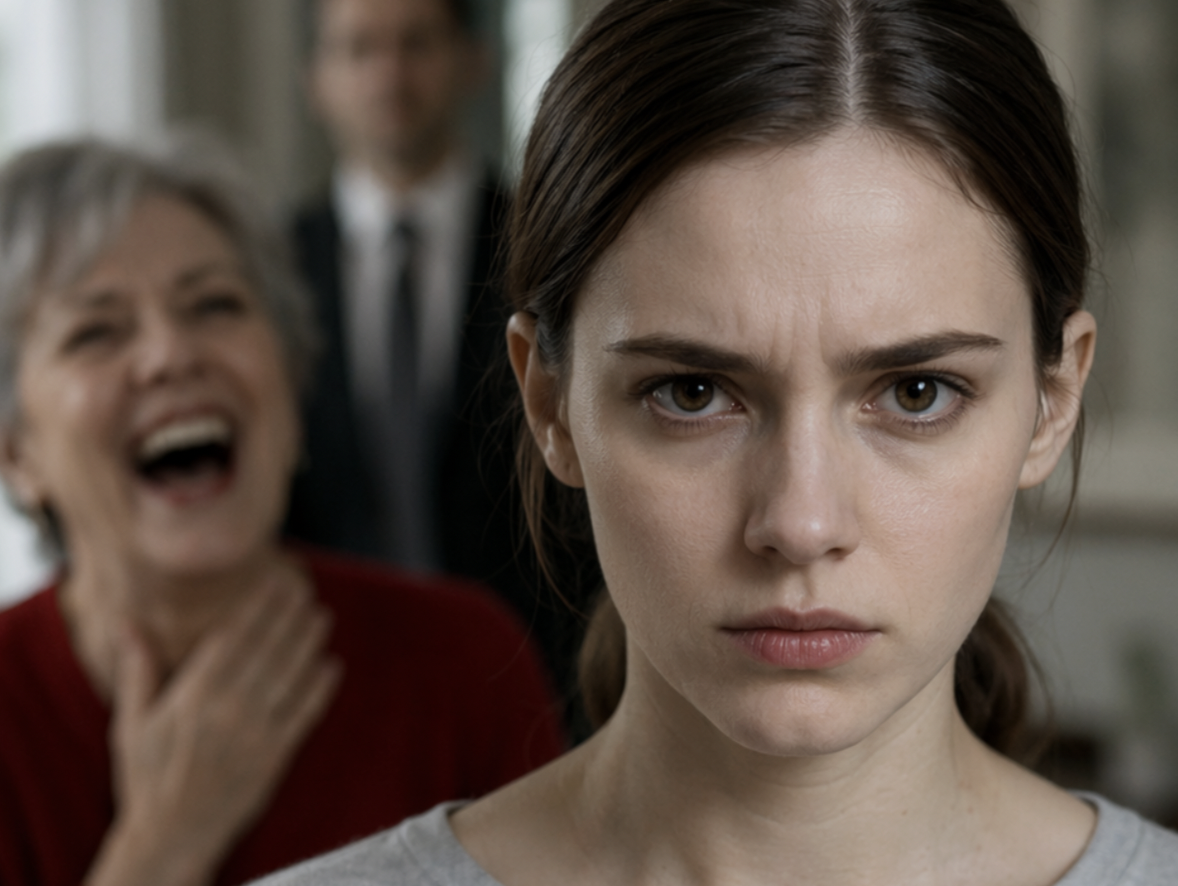
Anfisa stood at the stove, dreamily thinking that right now she could have been sitting in a cozy little restaurant on Pokrovka, eating a delicious warm salad with goat cheese and drinking expensive wine, instead of conjuring up fifteen portions of Olivier salad. She could have put on a beautiful dress, painted her lips, and looked like the wife of a successful man, instead of an exhausted cook with messy hair and mayonnaise stains on her house sweater.
“Oh, how delicious it smells! Mmm!” Marta Kirillovna sat enthroned at the kitchen table, sipping tea with jam. “Now that’s what I call food! Not like in your cafés and restaurants. They serve nothing but water there. For insane money! Better to eat at home: it’s filling, it’s clean, and you know exactly what you’re cooking with.”
Her daughter-in-law nodded and silently kept chopping carrots for the vinaigrette. Arguing with her mother-in-law was pointless.
When it became clear two weeks earlier that Marat was going to be promoted, she had suggested celebrating the occasion at a restaurant. But her mother-in-law had instantly seized the initiative:
“What nonsense! Even the walls rejoice at home! I’ll help you prepare everything.”
Of course, her “help” consisted exclusively of advice and criticism.
“And do you remember how Maratik performed in the school physics olympiad?” Marta Kirillovna went on. “Back then I told everyone that my son would go far! His brains are special. He has an analytical mind!”
For a second, Anfisa closed her eyes.
She had heard that story about the olympiad at least two hundred times. And the one about little Maratik assembling radio receivers. And the one about the third-grade teacher saying the boy had special abilities.
“And that Harpy saw his potential right away,” her mother-in-law continued. “A smart woman, whatever you say. Tough, of course, but fair.”
Her daughter-in-law smirked.
Behind Elena Viktorovna Gromova’s back, all the university employees called her exactly that… the Harpy. The woman had arrived as the new rector six months earlier, carried out a full staff review, sent half the old lecturers into retirement, and introduced new work standards.
Anfisa did not like her… too sharp, too categorical. But the results were plain to see: the university really had become more efficient.
“Just imagine,” Marta Kirillovna said, “dean of the faculty! And Marat is only thirty-four. At his age, most people are still working as assistants.”
“We’ve both been working at the university for eight years,” Anfisa quietly reminded her. “And we both have PhDs.”
“Well yes, of course, dear! I’m not belittling your merits. But you do understand that to lead, you need a special talent. Not everyone is meant to manage people.”
Anfisa took the pot of potatoes off the heat and began draining the water. The steam scalded her face.
Yes, she understood. She understood that her eight years of teaching experience, her scholarly articles, her dissertation on modern Russian literature… all of it meant nothing compared with Marat’s appointment. To her mother-in-law, she was simply the dean’s wife, the one who was supposed to prepare the праздничный table.
Though, to be honest, she was happy for her husband.
He really had proven himself to be an excellent organizer: students respected him, and colleagues listened to his opinion. He deserved this promotion. And now the salary would finally be decent. Maybe at last they would be able to afford their own apartment instead of continuing to scrape by in their half-ruined two-room flat.
“And do you remember, Anfisochka,” her mother-in-law sang sweetly, “how worried you were when Gromova arrived? You thought both of you would be laid off. But it turned out the opposite! She immediately understood what kind of talent she had growing right under her nose.”
“Mom, we’re home!” Marat’s voice rang out from the hallway.
Anfisa wiped her hands on a towel and quickly fixed her hair. Her husband walked into the kitchen with his younger brother Denis and two colleagues from the faculty.
“How are my hostesses doing?” The man kissed his wife on the cheek, then hugged his mother. “Smells delicious!”
“Anfisa is doing her best! She’s been standing in the kitchen all day, cooking for your guests.”
Marat looked pleased. Success suited him: he seemed to have grown in his own eyes, carried himself more confidently, spoke louder.
“Listen, maybe we should order some pizza too?” Denis suggested. “There’ll be a lot of people.”
“Why pizza?” Marta Kirillovna immediately cut in. “We have more than enough! Anfisa will lay out such a table that everyone will lick their fingers!”
Anfisa looked at her husband, hoping he would support the idea. But Marat was already nodding in agreement with his mother:
“Mom’s right. Why waste money? Fisa is a master at this.”
By ten in the evening, the apartment was buzzing with voices and laughter. The guests were having fun, laughing, dancing. The vodka and cognac bottles had noticeably emptied.
The hostess darted between the kitchen and living room, clearing empty plates, refilling drinks, and trimming the salads. Her shoes had rubbed her feet raw, her back hurt, but she held on. After all, today was a very important day.
“Fisa!” Marat shouted when she passed by again. “Run out and get cigarettes! Volodya’s run out.”
The woman stopped dead in the middle of the living room.
To the store? Now? Seriously? She was in house clothes, without makeup, tired to death.
“Marat, maybe one of the men could go?” she suggested quietly.
“What?” her husband narrowed his eyes angrily. “Are you the hostess or what? We have guests in the house and you’re being difficult.”
Anfisa pressed her lips together and went for her coat.
“And now make coffee,” Marat ordered when she returned from the store. “And bring cookies with it.”
“Maratik, tell us again about the appointment,” purred Marta Kirillovna. “How did Gromova tell you about it?”
Her husband straightened his shoulders and began recounting his conversation with the rector in great detail.
Out of the corner of her ear, Anfisa listened to his speech and smirked. The story was already sprouting new details: now it turned out Elena Viktorovna had practically begged him to accept the position.
“Fisa!” came the shout from the living room again. “Where’s the coffee? We’re dying of thirst out here!”
The hostess carried a tray of cups into the room. Her legs were throbbing with exhaustion.
“And now bring the cognac,” her husband commanded. “The one in the cabinet.”
“Marat,” the woman bent toward him, “maybe that’s enough? You have work tomorrow…”
“What?” He turned to her sharply. “Are you daring to tell me what to do? On the day of my appointment? Have you completely lost it?”
The colleagues exchanged awkward glances. Anfisa’s cheeks flared with shame.
“I just…”
“Bring the cognac and don’t get smart!” her husband snapped.
The woman brought the bottle, set it on the table, and wanted to leave, but her husband suddenly grabbed her by the arm.
“Wait! Pour it into the shot glasses. Carefully.”
Anfisa poured the cognac, feeling the guests’ eyes on her. Some were openly embarrassed by what was happening; others pretended not to notice.
“Anfisa,” Marta Kirillovna suddenly spoke up, “bring me my slippers from the bedroom. My feet are cold. And hurry up!”
Her daughter-in-law was stunned by such nerve. She straightened up and looked defiantly at the older woman.
“No. I won’t.”
Silence fell over the room. Marta Kirillovna blinked as if she had not understood the words.
“What did you say?”
“I said… no. I’m not a servant in this house. If you need your slippers, go and get them yourself.”
“What the… what are you doing?” Marat’s face turned purple with rage. “How dare you speak to my mother like that?”
“In exactly the same way you dare to order me around in front of guests,” Anfisa replied. Her voice sounded steady, though her heart was pounding like mad.
“You’ve completely lost your mind! My mother asked you…”
“My mother-in-law didn’t ask me for anything. She ordered me. Like a maid.”
Marta Kirillovna threw up her hands.
“Well, I never! Such ingratitude! After everything we’ve done for her!”
The guests sat frozen. Some stared into their shot glasses, some coughed awkwardly.
“So here’s how it’s going to be,” Marat said, pointing a finger toward his mother. “You are going to apologize to her right now. Right now! In front of everyone! And you’re going to bring my mother her slippers!”
“For what?” his wife asked.
“For being rude. For being disrespectful!”
“I won’t.”
“You won’t? Are you sure? Well then… pack your things,” Marat said coldly. “If you don’t know how to behave in decent society, then we have no future together. I’m divorcing you.”
Marta Kirillovna let out a satisfied chuckle. There was so much gloating in that sound that chills ran down her daughter-in-law’s spine.
“All right,” she answered, looking her husband in the eyes. “Agreed.”
And for the first time that whole evening, she smiled.
The guests immediately began to leave, awkwardly saying goodbye and muttering something about early mornings and business.
The hostess sat in the kitchen, trying not to pay attention to anyone.
Marat saw out the last guest and returned to the living room. His wife heard him whispering something eagerly to his mother.
“Do you think you scared me?” Fifteen minutes later her husband appeared in the kitchen. “Do you think I won’t go through with it?”
“No, I don’t think that,” Anfisa replied calmly. “You’ve already decided everything. And honestly, I’m even glad.”
Her husband frowned, clearly having expected a completely different reaction from his wife. Tears, perhaps. Pleas for forgiveness. Hysterics.
“Well, good! Tomorrow I’ll file the application at the registry office.”
“Go ahead.”
Marta Kirillovna peeked into the kitchen with a triumphant look.
“Son, don’t worry. It’s for the best. You’re a dean now, you need a wife worthy of you. Not this gray little mouse!”
Anfisa finished her tea and stood up.
“I’m going to pack my things.”
“Don’t rush so much!” Murat suddenly objected. “You can pack in the morning. Where are you going to go at night?”
“That’s none of your concern anymore. Clear?”
The woman went into the bedroom, took a small suitcase from the closet, and began packing the most necessary things. She wasn’t worried at all. A year ago she would have cried, begged, promised to change. Now she felt only a strange relief.
“Are you serious?” Marat stood in the doorway, watching his wife pack. “You’re really just going to leave like this?”
“And what? Did you expect me to cling to someone who doesn’t need me? Then you don’t know me at all, darling.”
“Don’t need you… I never said I didn’t need you.”
“You did. Just in different words.”
Anfisa put her makeup bag, phone charger, and a change of underwear into the suitcase. Marat was silent. Apparently, he was genuinely thrown off balance.
“Fisa, don’t make rash decisions. Let’s think…”
The woman looked at her husband in surprise.
“Marat, in front of guests you treated me like a servant. And your mother giggled when you said you wanted a divorce. You humiliated me. What is there to think about?”
“I was just drunk! I said the wrong thing…”
“But I was sober when I heard it! Besides, what a sober man thinks, a drunk man says. Haven’t you heard that?”
Anfisa zipped up the suitcase and headed for the door. In the living room Marta Kirillovna was clearing the table, humming something under her breath.
“Anfisa!” she called after her with a laugh. “And who’s going to wash the dishes?”
“I don’t know. But definitely not me!”
Outside, it was freezing, but the air felt easy to breathe. The woman called a taxi and went to her close friend’s place. Olga opened the door and anxiously invited her in.
“Fisa? What happened? Why do you have a suitcase?”
“I’m getting divorced,” Anfisa said shortly. “Can I stay the night?”
“My God, of course! Come in, tell me everything!”
The friends sat in the kitchen until three in the morning. Olga brewed tea, shook her head, cursed Marat and his mother.
Anfisa told the story and marveled… why wasn’t she crying?
Eight years of marriage had ended, and yet she felt as if she had been waiting for the divorce all along.
“So what are you going to do now?” Olga asked. “Look for another job?”
“No, I have a job. And I’m not going to change anything. Though I don’t know how things will be now… Marat is the dean.”
“So what? You’re a good lecturer, you write articles. He has no right to fire you because of personal problems!”
Anfisa nodded, though doubts were stirring inside her. She knew Marat. He was vindictive, so he would definitely try to drive her out of the university. And there was practically no other work in her specialty in the city.
In the morning, the first thing the woman did was check her phone. Her husband had called several times and sent one message:
“Come home, let’s talk.”
She did not answer him. Instead, Anfisa dialed the rector’s office.
“Hello, this is Anfisa Kruglova, lecturer at the Faculty of Philology. May I make an appointment with Elena Viktorovna?”
“And on what matter?” the secretary asked.
Anfisa was silent for a second, then answered confidently:
“Work-related. I have some proposals for the development of the faculty.”
Elena Viktorovna was waiting for her at nine the next morning.
“Come in, Anfisa Sergeyevna. Sit down,” the rector said, gesturing toward the chair opposite her. “Tell me what you wanted. But let me warn you right away, I don’t have much time. Only twenty minutes.”
The woman sat down, trying to look more confident than she felt.
“Elena Viktorovna, I wanted to talk about the prospects for the development of the Faculty of Philology. I have several ideas…”
“Stop!” the rector raised a hand. “Let’s start from the beginning. I already know what happened at your home the day before yesterday. News travels fast at the university.”
Anfisa’s face turned crimson immediately.
“I didn’t come here for that…”
“Then what did you come for?” Elena Viktorovna leaned back in her chair. “Do you want to know whether I officially finalized your husband’s appointment as dean?”
Anfisa nodded.
“Anfisa Sergeyevna, you yourself refused that position,” the rector said with a meaningful pause. “For three months I carefully studied the candidates for the dean’s position. You and your husband had roughly equal achievements: scholarly articles, student ratings, administrative experience. But your work on modern literature impressed me more. It was more innovative, more daring.”
The woman stayed silent, processing what she had heard.
“That’s why I called you in for an interview first. Remember?”
“I remember,” Anfisa replied hoarsely. “You asked whether I was ready for additional responsibility.”
“Precisely. And what did you answer?”
“That… that Marat and I were both worthy candidates. And that if the choice was between us, I would step aside for him. I didn’t want to compete with my husband.”
“Exactly!” Elena Viktorovna poured herself some water from a carafe. “I understood your choice. I respected it. Though I believed it was the wrong one.”
“Why wrong?”
“Because personal relationships should not influence professional decisions. You were the strongest candidate, but you refused the position for the sake of family happiness!” The rector looked straight into her eyes. “And so… did your expectations come true?”
The woman lowered her head. She wanted the ground to swallow her up.
“And now why have you come here, Anfisa Sergeyevna? For revenge? For justice? Or do you really want to work?”
“I want a chance. Just a chance to prove that I can do it.”
“This is not a lottery, my dear,” Elena Viktorovna said sharply. “This is not a sporting competition and not children’s tag. I am not going to cancel your husband’s appointment just because he turned out to be a bad family man.”
“I understand…”
“But!” the rector raised a finger. “I have always liked your professionalism. And your ideas for developing the faculty interested me. So I propose the following…”
Anfisa straightened up, listening intently to every word Elena Viktorovna said.
“For the next two weeks, you and your husband will each prepare development plans for the faculty for the coming year. Each of you your own. Then you will present them to the teaching staff and the student council. We will hold an open vote. Whichever project wins, that person will become dean.”
“But Marat has already been appointed…”
“He is on probation. Don’t forget that!” Elena Viktorovna stood up. “Do you agree?”
Anfisa felt excitement flaring inside her, along with the desire to prove herself, ambitions she had suppressed for so long.
“I agree,” she answered firmly.
“Excellent. But I have one condition. No one must know about our conversation. Officially, it will look like a competition of projects among lecturers.”
“And if he refuses to take part?”
“Then he automatically loses!” The rector extended her hand for a handshake. “We shall see, Anfisa Sergeyevna, what you are capable of without constantly looking back at your family circumstances.”
Anfisa shook the outstretched hand, feeling a strange lightness spread through her body.
“Thank you for the chance, Elena Viktorovna!”
“Don’t thank me too early. Show me results.”
For two weeks Anfisa worked like a woman possessed.
She rented a tiny studio near the university, lived on instant coffee and sandwiches, but every day she felt a surge of strength.
Her project for developing the faculty grew, filled out with details and new meaning.
She proposed creating a media center for student publications, establishing cooperation with major publishing houses, and opening a program in digital journalism. Anfisa carefully calculated the budget, found potential sponsors, and drew up a three-year plan.
Marat called only during the first three days: at first angrily demanding explanations, then begging her to come back, promising everything would be different.
The woman did not answer his calls. He found out about the project competition from the official announcement posted on the faculty bulletin board.
“What are you doing?” he confronted her in the corridor the day before the presentations. “Decided to compete with me? Did you come up with this stupid contest?”
“You’re mistaken,” she replied calmly. “I simply decided not to give up.”
“Would a good wife put obstacles in her husband’s way?”
“Ex-husband,” she corrected him. “The divorce papers have been filed, remember?”
Marat tried to say something else, but she did not listen.
On the day of the presentation, the assembly hall was packed. All the lecturers from the faculty came, the student council, even some younger students. Elena Viktorovna sat in the front row, calm and stern as always.
Marat spoke first.
His project was solid, but predictable: standard measures to improve academic performance, purchasing new equipment, optimizing schedules. He spoke confidently, but without fire.
Anfisa went up on stage when her turn was announced. There was silence in the hall. Everyone was expecting something unusual.
She presented her project convincingly. The woman spoke about student startups, international exchanges, and how to turn the philology faculty from a dull academic department into a modern center of media education.
“We can remain what we are. Or become what we could be. The choice is yours.”
The applause was long and loud. Anfisa saw the students’ admiring faces, the approving nods of her colleagues.
Marat sat pale, his lips pressed together.
The vote was by secret ballot. The result was announced by the rector herself:
“Seventy-three votes for the project of Anfisa Sergeyevna Kruglova. Twenty-one for the project of Marat Olegovich Kruglov. Congratulations to our new dean!”
Anfisa stood on the stage, unable to believe what was happening.
Colleagues came up to her, shook her hand, congratulated her. The students formed a line to ask questions about the new programs.
Marat disappeared immediately after the results were announced. Marta Kirillovna also left the hall with a displeased expression.
“Congratulations,” Elena Viktorovna approached Anfisa when the hall was almost empty. “You handled it brilliantly.”
“Thank you. For everything!”
“You should thank yourself. I only gave you the opportunity.”
That evening Anfisa invited Olga over. On the table lay the contract with the dean’s job duties.
“Well, are you satisfied?” her friend asked.
“You know,” the woman looked out the window at the evening city lights, “I think this is only the beginning.”
Suddenly a message arrived on her phone from an unknown number.
“I watched the recording of your presentation. Impressive. I’d like to discuss cooperation. Igor Semyonov, editor-in-chief of Sovremennik.”
Anfisa smiled and began typing a reply. Tomorrow would be a new day, full of possibilities. And she intended to use every one of them.
Justice had prevailed. Now she was where she belonged. At last.