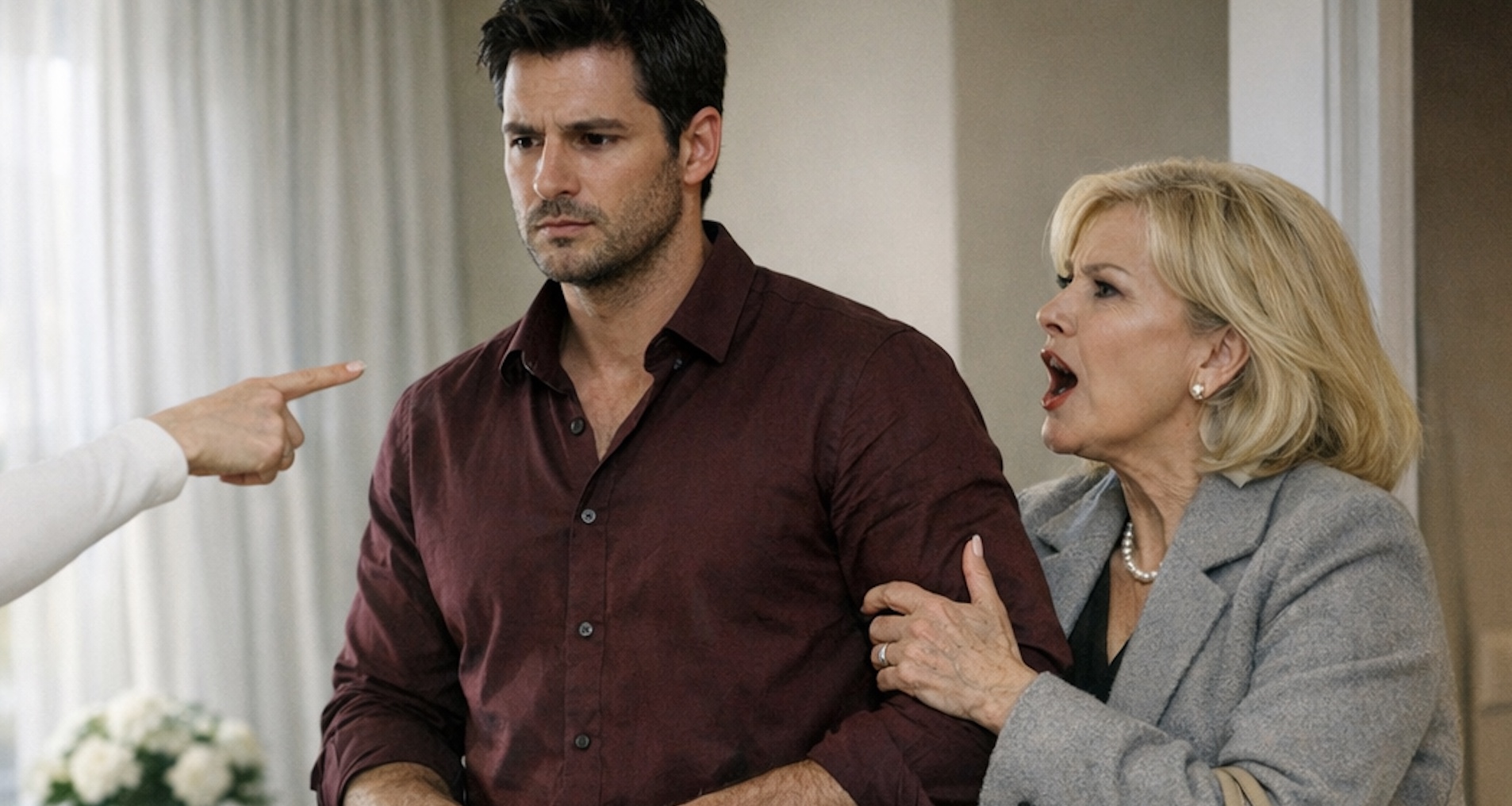
“Is this what you feed my son? Cabbage water? Anton needs meat. He’s a man, he works, and you’re starving him!”
My mother-in-law’s voice sliced through the kitchen like a blade. I stood by the stove, my legs throbbing after a twelve-hour shift. Five years of marriage had turned into one endless test of whether I was good enough to be the “perfect wife.” And every weekend, when Margarita Vasilievna came over for another inspection, I failed all over again.
Slowly, I dried my hands on a towel and turned around.
She stood in the middle of the kitchen with her hands planted on her hips, her sharp eyes sweeping across the counters as if hunting for dust, crumbs, or one unwashed cup she could use against me.
Anton sat at the table.
My lawful husband was bent over his phone, chewing the sandwich I had made for him fifteen minutes earlier. He did not even bother to look up. As usual.
“Lena, look at his collars!” Margarita Vasilievna snapped, pulling one of Anton’s shirts from the laundry basket and shaking it in the air like evidence in a courtroom. “How many times have I told you? Collars have to be scrubbed by hand with soap. The machine doesn’t do it properly. He works in an office. People see him. And his socks? Why aren’t they ironed?”
I took a deep breath. Something heavy twisted inside my chest.
I worked full-time as a senior cashier. I took extra shifts so we could pay off the loan faster. I came home exhausted, cooked dinner, scrubbed floors, did laundry, kept everything afloat.
“Margarita Vasilievna,” I said, forcing my voice to stay calm, “I iron his shirts and trousers. I do not have the time or energy to iron socks. If Anton thinks that matters, the iron is in the closet.”
She gasped so dramatically you would have thought I had suggested sending her son to hard labor.
“Did you hear the way she spoke to me?” she cried, turning toward Anton. “She tells him to do it himself! Since when does a man come home from work and iron his own socks?”
Anton finally dragged his eyes away from his phone. He sighed heavily, as though he had been interrupted in the middle of solving a global crisis. Then he looked at me with irritation.
“Lena, why do you always have to start this? Mom has a point. I’m the face of my department. You could make more of an effort. Is it really that hard to spend five extra minutes scrubbing a shirt?”
That was the moment something inside me snapped.
The foolish little hope I had been clinging to—that we were a real family, that this marriage meant something—crumbled into dust.
I looked at him. At this thirty-two-year-old man sitting in a warm apartment I paid half for. Eating food I had bought and cooked. Waiting while two women argued over who should wash and press his dirty clothes.
“Make more of an effort?” I repeated, my voice suddenly calm in a way that even surprised me. “I work just as much as you do, Anton. I pay half the mortgage. I cook, I clean, I wash your clothes. And you cannot even clear your own plate from the table.”
“Do not raise your voice at my son!” Margarita Vasilievna exploded, tossing the shirt onto the table. “You are a terrible wife! He looks like an orphan living with you! Thin, wrinkled, exhausted! I did not raise him for this!”
I looked at both of them.
At my mother-in-law, red with outrage.
At my husband, chewing in silence, avoiding my eyes like a coward.
And then it came to me all at once—cold, sharp, and strangely freeing.
I do not want this anymore.
Without another word, I turned and walked into the bedroom. I opened the closet and pulled out the large travel bag Anton used for business trips.
“What are you doing?” my mother-in-law called from behind me.
I did not answer.
I simply opened the wardrobe and started throwing in his things. Shirts. Jeans. Underwear. I stuffed everything in without folding it, without caring what got wrinkled.
“Lena, have you lost your mind?” Anton appeared in the doorway. “What are you doing with my stuff? We were supposed to go see friends.”
I zipped the bag shut, dragged it into the hallway, and dropped it by the front door.
Then I straightened up and looked Margarita Vasilievna directly in the eyes.
“Enough. I am not your son’s mommy, and I am not his maid. If you hate the way he lives so much, then take your precious boy back.”
“What nonsense are you talking?” she gasped, clutching a hand to her chest. “You are throwing your husband out? Are you insane?”
“No,” I said evenly. “For the first time in a long while, I’m perfectly sane. I’m throwing out a tenant who confused his wife with unpaid household staff.” Then I turned to Anton. “Your mother is right. You need special care. Hand-washed shirts. Rich homemade soups. Ironed socks. I’m done providing all that. Find someone else.”
Anton went pale. Fear flashed in his eyes as he took a step toward me.
“Lena, what are you doing? Mom was just giving advice. Let’s calm down. Mom, go home. We’ll sort it out ourselves.”
“No, Anton,” I said. “We already have.”
I walked to the door and threw it open. Cool air rushed into the hallway.
“The exit is right there. I’ll file for division of property through the court. Everything by the law. And now both of you—out.”
“No one will ever want you with a temper like this!” Margarita Vasilievna screamed, snatching up her handbag. “Hysterical woman! Come on, son! She’ll be crawling back to us on her knees!”
Anton hesitated.
He looked at me.
Then at his mother.
He did not apologize. He did not fight for our marriage. He did not even try.
He simply picked up the bag and followed her out like an obedient little boy.
I watched their backs for three seconds.
Then I slammed the door.
Turned the key twice.
Latched the bolt.
And leaned against the door with my eyes closed.
The apartment fell silent.
No one criticizing my soup.
No one demanding clean shirts.
No one sighing over crumbs on the table.
My hands were shaking from the adrenaline, but inside I felt lighter and lighter, as if I had finally set down a burden I had been carrying for five long years.
The next morning, I woke up without an alarm.
I did not jump out of bed to make breakfast. I stretched slowly across the empty mattress.
Then I went to the kitchen in an old pair of pajamas and, for the first time in years, made tea for myself and no one else.
I sat by the window.
Rain tapped softly against the glass.
And I felt warm. Calm. Free.
My phone lit up on the table.
Anton was calling.
I did not answer.
I just watched his name disappear from the screen.
My life belonged to me now.