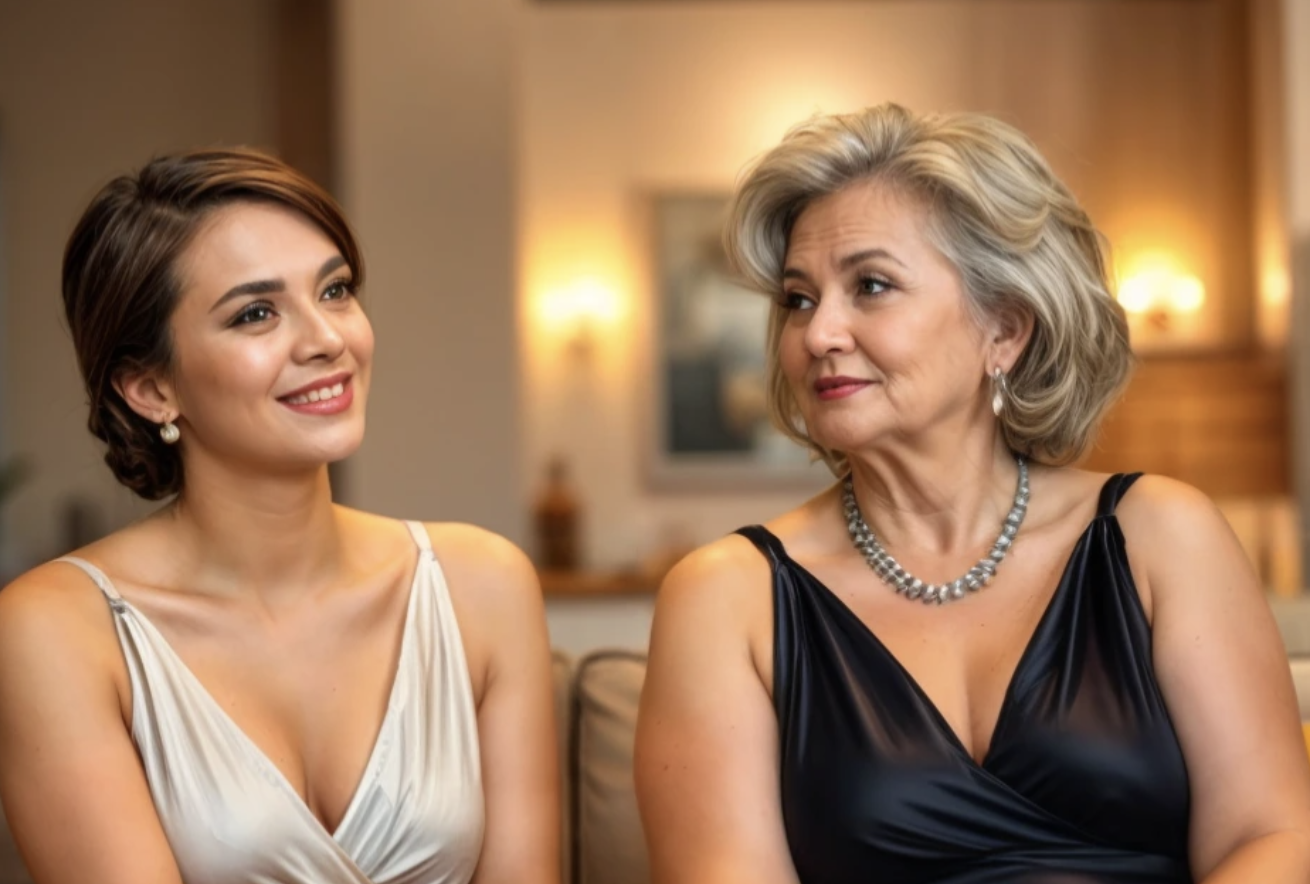
Ruslan sat opposite the elderly woman, staring hard at her face as if he hoped to find a clue there—or a justification for what he was doing. But in her eyes he saw only quiet, calm appraisal: the gaze of someone who had lived a life not without bitterness, yet with dignity. And in that moment Ruslan felt himself losing the thread of the conversation. Why had he started all this in the first place? Why had he chosen her?
“Look,” he began again, trying to make his voice sound confident, “I need to leave. And my wife… needs care. I asked around, made inquiries… to see if there was someone suitable.”
The old woman gave a short snort—almost inaudible, but it was enough to make Ruslan falter.
“Is this… criminal?”
“No! Of course not—nothing criminal!” he assured her hurriedly, nearly waving his hands with agitation. “It’s just that my wife has always worked like a horse—like a real draft horse. She was hardly ever home. And apparently something in her broke… The doctors say she doesn’t have long.”
He fell silent for a second, gathering his thoughts, as though every word cost him effort. Though in truth—it was a relief. As if he were shrugging off a heavy burden.
“And I’m a human being too. So many years beside this… beside such a workhorse. I’d like to rest. To get away. And if she suddenly dies while I’m gone…” He spread his hands, as if asking for understanding. “Don’t worry—I’ll explain everything, show you how to look after her. You’ll know everything you need.”
“So you’re ready already?” the woman asked, watching him closely.
“Ready,” Ruslan nodded, and a satisfied smile flickered at the corner of his mouth. “It would be best if the house were already prepared for your arrival…”
He didn’t finish the thought out loud, but that smile said plenty—about the freedom he’d been waiting for so long, and about plans that didn’t include a sick wife.
“And don’t think anything bad!” he hurried to add, noticing the expression on her face. “I’ll pay you more than any caregiver gets. I understand—you need money. From what I’ve heard, the doctors say she has no more than two weeks. A month at most. And I’ll be back in a couple of weeks.”
Sofiya Andreevna watched him as he left the apartment. She saw him get into his foreign-made car and drive away. “Probably to his mistress,” she thought. “Youth, youth…”
And though there was no condemnation in her heart, a thought still flashed: “At least wait until your wife dies. Is it really that unbearable?”
But what was it to her? She truly needed the money—especially after getting out. After everything that happened. After prison.
Her daughter didn’t even know she was free. Sofiya hadn’t written or called. Her daughter was still young, with her own life; her granddaughter needed to study, build a career. Why drag them into it? So people could whisper: there she is—the ex-con grandmother, out of the colony… Their reputation was tarnished enough already.
Sofiya even stopped replying to letters. She refused visits. And once she wrote her daughter a strange, cold letter, asking her not to come, not to send anything. She blamed her for choosing that husband, and said it was because of her that Sofiya had ended up in prison.
Of course, she didn’t really think that. But she knew: better that her daughter be hurt, cry, and then forget. Better she live on without carrying the shadow of the past.
Sofiya Andreevna had been imprisoned for poisoning her son-in-law. In court they asked if she felt remorse. And she answered simply:
“If I could, I’d poison him again.”
Those words stayed in the transcript. And the son-in-law’s relatives, hearing them, did everything they could to make sure the court gave her the maximum sentence.
Meanwhile Larisa lay in her room, listening to voices behind the wall. Someone had come, and they were talking with Ruslan. Then the doorbell rang, and there were more voices. She wanted to get up, go out, see who it was. But she had no strength. None at all. And even before, she’d had little. Today Ruslan forgot to bring food—no breakfast, no lunch.
She had been lying like this for more than three months. The doctors only shrugged. They said her body was tired, that it had simply stopped wanting to work as before. No clear diagnosis, no real treatment—only general recommendations: vitamins, proper nutrition, positive emotions, and all that.
Ruslan was unhappy. Larisa remembered the day he was getting ready to go to a ski resort with his friends—and she suddenly took to her bed.
“Rus, don’t worry,” she tried to calm him. “It happens—I got a little sick. You’ll go next time.”
“I don’t want next time! I want now!”
“But then we might need money for treatment… I can’t spend it right now.”
“So you’re saying I should work, just to spend it all on you?”
“But you know—I always worked, I always saved…”
“You? In seven years you worked one year, and even then in different places.”
“Because I can’t work where I’m not valued!”
“Well, looks like nobody valued you anywhere…”
He left, slamming the door. And Larisa regretted those words a thousand times. Why had she offended him?
He came back only the next day. Larisa didn’t ask questions—back then she could still move around the house. But now everything was different.
The door to the room creaked. A woman stood in the doorway. Gray hair, calm eyes, neat clothes.
“Hello, Larisa.”
“Hello… Who are you?”
Larisa’s voice was weak, almost a whisper. She wanted to be strict, but couldn’t.
“I’m your caregiver. Your husband hired me.”
Larisa closed her eyes, then opened them again.
“And where is he?”
The woman shrugged.
“Left.”
Larisa didn’t ask anything else. She already knew. He was waiting. Waiting for her to die—so he could be free. Free for a new life, a new woman, a new happiness.
Sofiya Andreevna sat down beside her. In her eyes there was more than professional detachment—some deep, inner strength shone there.
“My name is Sofiya Andreevna. I’ll make you some tea now, and then I’ll feed you.”
Larisa gave a humorless little smile.
“And did he allow you to feed me? Maybe he wants me to die faster?”
“He hired me to be a caregiver. That’s all. No other conditions.”
The woman left, and Larisa lay staring at the ceiling. Tears rose, but she held them back. Don’t cry. Don’t show weakness.
Ruslan had always been strange. He only wanted to work where he would be valued and respected. Larisa had treated it indulgently—after all, she supported their family. She had two sewing studios; she worked around the clock, managed everything. When the girls got sick, she covered their shifts. She didn’t complain. She didn’t fight. She just did it.
They bought the apartment with her money. The money piled up because Larisa thought, “I need to earn more before I get pregnant.” But pregnancy never came. And then she slowly began to notice that Ruslan disappeared more and more often. That he wasn’t home in the evenings. That he talked about business trips, meetings, friends.
And when she ended up in bed—when he stopped even pretending—she understood: it wasn’t her imagination. It was real. She had just refused to see the truth for too long.
“Let me help you sit up,” Sofiya Andreevna said gently, coming back with a mug of tea. “Sorry—I’ll use ‘you’ informally.”
Larisa shook her head.
“No need. I don’t want anything.”
Sofiya Andreevna sighed and sat down beside her. She knew that sometimes the strongest person is the one who stays silent.
“You know,” Sofiya Andreevna said, looking at Larisa with deep pain in her eyes, “my daughter almost lost her life because of her husband too. She hid everything—afraid of people’s judgment. Covered bruises, forced smiles, and the child… the child suffered in silence. But what could she do? Her husband was the boss. Not some clerk or manager—the chief of police.”
She paused, as if letting the words settle in the air, pierce all the way to the heart.
“So I had to вмешаться. I couldn’t watch her suffering anymore. I know my herbs well. Pouring my son-in-law a cup of tea he wouldn’t get up from—it was no harder for me than making ordinary broth.”
Larisa sat with her eyes wide open, stunned by what she’d heard.
“You… you…”
“Oh, I’m no butcher, no,” Sofiya said softly, handing her the hot tea. “Drink. It’s good for you. After it you’ll want to eat, your strength will come back. Don’t be afraid.”
The woman stood up, and Larisa, still dazed, whispered:
“And no one found out?”
Sofiya smirked, but it wasn’t mockery—it was the bitterness of lived years.
“Why wouldn’t they? Do you think my current employer came to me by accident? He knew I had ten years of prison behind me. He was sure I wouldn’t help you. As if a person who’s been through hell can’t be kind.”
Half an hour later the woman brought dinner—simple, but fragrant, warming food.
“Shall we sit at the table?” she suggested.
“What? I can’t…” Larisa started, but Sofiya cut her off:
“That’s what you decided.”
And they ate dinner together. After Sofiya cleared the dishes, Larisa gathered her strength and asked:
“And your daughter? Where is she now? Does she help you? Does she come?”
A sad shadow passed over the woman’s face. She was silent a long time before answering.
“No. I don’t want her ruining her life because of me. I want her and my granddaughter to live peacefully, without extra troubles and memories of me.”
Little by little, as if on their own, the words began to flow between them easily and freely. Sofiya told Larisa the story of her whole life—about pain, betrayal, and love that ended in prison. Larisa listened closely, feeling every line, every sigh. She couldn’t understand how such a kind, fair woman could have spent so many years behind bars. And the letter Sofiya had once written her daughter—Larisa knew only in general terms: what words were there, what accusations…
That was when Larisa understood for the first time: this woman wasn’t an “old lady” at all. She was only sixty-two—an age when you can still hope for warmth, for meetings, for memories. And Larisa suddenly wanted to do something—anything—to help this woman. To restore at least a little justice. But how, when she herself lay like a broken doll, unable even to get out of bed?
She remembered the doctor’s words:
“If you’re nauseous—eat. If it hurts to move—move. If you’re scared—laugh.”
But how do you laugh when you’ve been betrayed? When the world has collapsed and beside you there’s only cold and loneliness?
Two weeks passed. And at some point Larisa suddenly felt something strange and new—a desire. A simple human desire to go outside, breathe fresh air, feel the sun on her skin.
“Sofiya Andreevna,” she said quietly, “maybe we could go down into the courtyard?”
The woman smiled.
“If we can’t walk—we’ll crawl.”
And Ruslan, meanwhile, was getting nervous. Marina wasn’t answering his calls. Today he again couldn’t persuade her to go to the beach. She kept saying the same thing: “I’m tired of it. I don’t want to.”
How could she be tired of it? It was she who wanted to go to the sea for a whole month. He wouldn’t mind spending time at home… well, not at home, of course, but somewhere else where no one knew them.
A тревожное suspicion crept into his head—in recent days she’d been flirting too often with other men vacationing on the coast.
Decisively stepping toward a taxi, Ruslan headed for the hotel.
Marina really was in the room. And she wasn’t alone. When she saw him, she lightly slid off the knees of a local handsome guy and looked him straight in the eyes.
“Aren’t you supposed to be at the beach?”
“And as you can see, I decided to come back. What’s going on?”
Marina shrugged and blew a kiss to her new acquaintance, who walked calmly out of the room, brushing past Ruslan.
“What are you expecting now—that I should get lost?”
“More or less. Listen, I don’t think you understand at all who you are to me. And I’m not going to become anybody. You’re an empty person. After a month of talking to you, there’s nothing left to say. And considering you live off your wife and can’t do anything yourself… tying my life to yours would be madness.”
Marina began packing her suitcase.
“Where are you going?!”
“Home. And don’t worry—by the time you come back, Larisa will probably already be dead. But I don’t want to be the next one. Not for any money.”
She didn’t even look back.
Ruslan was left alone. He sat on the edge of the bed, clutching his head in his hands. How did it happen? How could everything collapse like this?
He was sick of the resort to the core. He decided to return home earlier than planned—especially since the money was running out.
At home, a surprise awaited him. Larisa’s car wasn’t in the parking lot. “Strange,” he thought. He had clearly told the old woman her job was to ensure the patient’s swift death. Maybe someone had already realized the owner was gone and stolen the car? Or Sofiya forgot to lock the door?
He looked up—the window of Larisa’s room was open. So the old woman was inside. Airing the place out, probably. Though maybe it was time to renovate—the whole apartment stank of medicine.
As he climbed the stairs, he was already dialing the police to report a possible car theft. But at the very moment the key turned in the lock, the door opened.
Larisa stood on the threshold. Dressed. Clean. In a beautiful dress. The aroma of home-cooked food drifted from the apartment.
“You…” was all Ruslan managed.
“Yes, me,” she said calmly. “Come in. Just don’t start. All your things are in your room. Pack up. I’ve filed for divorce.”
Ruslan stood as if struck by lightning.
“But why?! I love you!”
Larisa laughed—not bitterly, not cruelly, but almost cheerfully.
“Go. Quickly—before I change my mind.”
She began to close the door, but suddenly stopped. Behind Ruslan, two figures appeared—a woman in her thirties and a young girl, looking around in confusion.
“Svetlana!” Larisa cried happily. “Hello! You came?”
“Of course! We were so worried… Are you sure Mom didn’t hurt you?”
“No, of course not! I explained everything. Well—are you ready? She doesn’t know you’re here.”
All three walked past Ruslan, who stood there like a statue.
“You’re still here?” Larisa turned. “Go with God.”
And the door closed behind them.