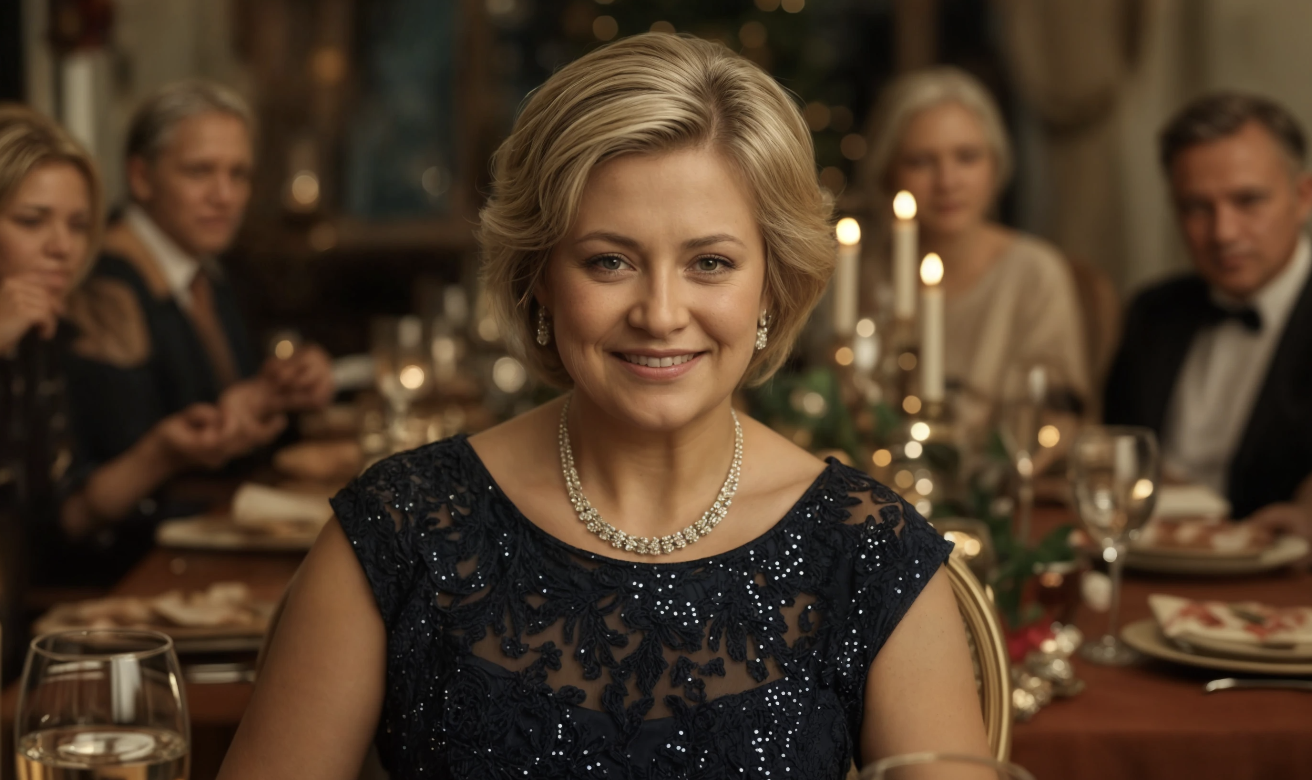
“Mom, what are you saying?” Olga froze with the phone in her hand, feeling a chill run down her spine. Her mother-in-law’s voice, always so confident and commanding, now rang with barely restrained anger, like a taut string ready to snap at any moment.
She was standing on the veranda of her dacha, where the air was saturated with the smell of damp earth and fallen leaves. Autumn had firmly taken over the Moscow suburbs, covering the garden with a carpet of golden and crimson foliage, and Olga had just finished cleaning up after the summer. The dacha had come to her from Aunt Vera—the only relative who had always treated her like a daughter. Aunt Vera had passed away quietly in September, leaving in her will this modest plot with a wooden house by the forest, and Olga, having poured all her savings into it, had turned it into a real oasis of peace. New shutters on the windows, a cozy gazebo with a swing, even a small pond with lilies—this was her dream, brought to life through sweat and care.
And now this call. Her mother-in-law, Tamara Petrovna, had phoned without warning, as always, at the most inconvenient moment. Olga pictured her sitting in her city apartment, back straight, with that stern look that could pin to the spot anyone who dared argue.
“Did you hear what I said, Olya?” Tamara Petrovna’s voice grew a bit softer, but the same steel rang through it. “New Year’s is right around the corner, all the relatives are getting together, and of course, our home renovations just had to drag on. Your dacha is perfect. Spacious, fresh air, forest nearby. And you, as hostess, will set the table. For everyone. It’s a family affair, isn’t it?”
Olga sank down onto the veranda step, gripping the phone so tightly her fingers turned white. Family affair. The words echoed in her head, bringing back memories of past holidays: noisy feasts in her mother-in-law’s apartment, where she, Olga, was always in a supporting role—helping in the kitchen, clearing the dishes, smiling through her exhaustion. And now, when she finally had her own place, her own space—this. A threat wrapped in concern.
“Tamara Petrovna,” Olga began carefully, trying to keep her voice calm, “I understand that New Year’s is an important holiday. But the dacha… it’s my dacha. I’ve only just finished settling it, I’ve put so much effort into it. And… I wasn’t planning on guests. Not that many, anyway.”
The pause on the other end was heavy, like a sky before a storm. Olga heard her mother-in-law take a deep breath, and that sound, so familiar, sent a wave of irritation through her. How many times had she heard that sigh—before yet another lecture on how to run a household properly, how to raise children, or even how to choose clothing?
“Olya, dear,” Tamara Petrovna spoke again, and there was a note of reproach in her tone now, as if she were addressing a stubborn child. “You don’t think this is just for me, do you? It’s for Semyon. For your husband. He grew up in a big family, where being together is sacred. And you… you want him to feel lonely? To have our relatives whisper: ‘Look, Olga’s cut Semyon off from everyone’? No, my girl, that won’t do. Either you set the table—with salads, hot dishes, everything the way it should be—or… well, you understand. Semyon is my son, and I know what’s best for him. He’ll listen to his mother.”
Olga’s heart clenched. Semyon. Her husband, so reliable, so loving, but always—always—with that weakness when it came to his mother. He never argued with Tamara Petrovna, never contradicted her; he just nodded, smiled, and later apologized to Olga: “She’s lonely, sunshine.” And she forgave him, because she loved him, because she believed that family meant compromise. But now, here at the dacha, with the wind whispering in the birch crowns, compromise felt like betrayal.
“I’ll talk to Semyon,” Olga said at last, her voice sounding firmer than she’d expected. “We’ll decide together.”
“Oh, of course, talk to him,” Tamara Petrovna laughed, but there was no warmth in that laugh, only a faint mockery. “Just remember: if you refuse, Semyon will see who his real family is. Goodbye, Olya. And think it over carefully—New Year only comes once a year.”
The line went dead. Olga stared at the phone as if it could give her answers. The evening air had grown cooler, and she shivered, hugging herself. The dacha, her sanctuary, suddenly seemed vulnerable—a tiny island in an ocean of other people’s expectations.
She spent that evening deep in thought. She lit the fireplace in the living room—old, weather-worn, but so cozy, with the smell of burning wood that always soothed her soul. Sitting in the rocking chair with a mug of tea, she remembered how it had all started. Seven years ago, at a student party, she had met Semyon—tall, with a warm smile and eyes full of tenderness. He worked as an engineer at a factory, she was a schoolteacher, and their life flowed calmly, like a river on a quiet day. Children were still only in their plans, but the home they shared, full of warmth—that they were building together.
And then Aunt Vera. Her sudden passing left Olga not only the dacha, but also a sense of guilt: why hadn’t she visited more often, hadn’t helped? But instead of grief, determination came. Olga took out a loan, added her savings, and turned the dilapidated little house into a place where one could breathe freely. Here, far from the city’s hustle, she was learning to be herself—planting flowers, reading books in a hammock, dreaming of the future. And now that freedom was under threat.
The door creaked, and Semyon walked in. He’d come from the city later than he’d promised, with a bag of groceries and a tired smile. He took off his jacket, hung it on the hook by the door—a familiar ritual that always gave Olga a rush of warmth.
“Hey, love,” he said, bending down to kiss the top of her head. “How was your day? You look thoughtful.”
Olga set her mug down on the side table and turned to him. In the firelight, his face looked softer, dearer, but she knew: it was time for the truth.
“Semyon, your mom called,” she began quietly, watching his reaction. “About New Year’s. She… wants to have the celebration here, at the dacha. With all the relatives. And she said…” Olga hesitated, but decided not to sugarcoat it. “She said if I refuse, I’ll be popped out of the family like a cork from a bottle.”
Semyon froze, letting the bag drop to the floor. His brows knitted together, and something flickered in his eyes—surprise, maybe, or irritation.
“What? She said that?” He sat down opposite her, rubbing his temples. “Olya, I’m sorry. Sometimes she just… goes too far. You know what she’s like: a lonely widow, her whole life wrapped up in memories of big family gatherings. But that’s no excuse for blackmail.”
Olga nodded, but inside she felt a stir of relief—he hadn’t rushed to defend his mother, hadn’t brushed it off. That was new.
“I understand,” she said softly. “Your mother has always been the center of the family. But this dacha is mine. I’ve put my soul into it, Semyon. Not even the money—my soul. And New Year’s… I wanted to spend it with you. Just the two of us. A tree, champagne, snow outside the window. No fuss, no crowd.”
He took her hand, interlacing his fingers with hers. His palm was warm, reassuring.
“I know, sunshine. And that’s what I want too. Let’s think of how to tell Mom. Maybe we can offer an alternative? Get everyone together in the city, or…”
“She won’t accept an alternative,” Olga cut in, bitterness slipping into her voice. “She said you’d listen to her. That your real family is them.”
Semyon frowned, and this time real anger flared in his eyes—rare, but genuine.
“Our family is you and me, Olya. Us and, maybe one day, our children. Mom… she loves me, but sometimes she forgets I’m an adult. I’ll talk to her. Tomorrow. And tonight it’s just us. Dinner, wine, and no phone calls.”
They had dinner by candlelight—simple food, but it tasted like a feast. Semyon told her about work: about a new project, about colleagues who joked about his “dacha idyll.” Olga laughed, and for a moment the world narrowed to this little house that smelled of pine and comfort. But before bed, lying in her husband’s arms, she thought: what if he can’t do it? What if Tamara Petrovna breaks his will again?
The next morning dawned clear—the sun pushed through a light haze, painting the garden in golden tones. Olga woke first, brewed coffee, and stepped out onto the veranda. Semyon was still sound asleep, and she didn’t wake him, savoring the quiet. Birds chirped in the bushes, the wind rustled the leaves—this was her world, and she didn’t want to give it up.
The phone rang closer to noon. Semyon, already dressed, sat at the table with a mug in his hands. He glanced at the screen—“Mom”—and sighed.
“I’ll answer,” he said to Olga, and there was resolve in his voice. “It’ll be fine.”
Olga nodded but went out into the garden so she wouldn’t hear. She was watering the flowers when snatches of the conversation reached her: “Mom, this isn’t fair… Olya has the right… No, I’m on my wife’s side…”
Her heart pounded faster. When Semyon came out to her, his face was tense, but his eyes were clear.
“She’s offended,” he admitted, putting his arm around her shoulders. “Said I’ve changed, that you turned me against her. But I explained: this is our home, our life. We’re spending New Year’s here, just the two of us. And for the relatives—we’ll do something else. Maybe a restaurant in the city.”
Olga pressed herself against him, feeling tears prick her eyes.
“Thank you, Semyon. I was so scared…”
“There’s nothing to be afraid of,” he kissed her temple. “We’re a team. Always.”
But the joy didn’t last long. That evening, as they walked through the forest gathering mushrooms, Semyon’s phone buzzed again. A message from his aunt—Tamara’s younger sister, Aunt Lyuba: “Olenka, your poor mama is in tears. How could you? Semyon has always been his mother’s boy, and now… Think about the family!”
Olga read the text over her husband’s shoulder and felt a stab—not of anger, but of exhaustion. Family. The word wrapped around her like a net, dragging her backward.
“Ignore it,” Semyon said, but there was a shadow of doubt in his voice.
The days began to fly by. November brought the first frosts, and the dacha was wrapped in white rime. Olga threw herself into preparing for New Year’s: she bought a small tree, hung garlands, baked trial batches of pastries. Semyon helped, and their evenings were full of laughter and plans. But the calls from her mother-in-law didn’t stop. Sometimes she called Semyon, complaining about her loneliness; sometimes she rang Olga, dropping hints: “You don’t want Semyon tormented by guilt, do you? The relatives are expecting a celebration…”
One evening, after an especially hard day at work, Olga snapped. She picked up the phone and dialed Tamara Petrovna herself.
“Hello, Tamara Petrovna,” she began, trying to keep her tone even. “Let’s talk. About New Year’s. About the dacha.”
Her mother-in-law answered at once, her voice full of fake warmth.
“Olya! Finally. I thought you’d forgotten me altogether. So, what did you decide? How many people for the table? There’ll be at least twenty of us, no fewer.”
Olga took a deep breath, looking out the window at the snow-covered birches.
“I’ve decided… no. The dacha isn’t for that. This is my place with Semyon. We want to spend the holiday quietly. But… we’re inviting you and the aunts out for lunch. In the city, at a café. So everyone can see one another.”
The pause was long. Then Tamara spoke, and there was no mask left in her tone—only cold rage.
“Lunch in a café? Are you serious? After everything I’ve done for you two? Semyon is my son, and if you think you can tear him away from me…”
“This isn’t about tearing him away,” Olga interrupted, and her voice grew stronger. “It’s about respect. For my boundaries. For our choice.”
“Respect?” Tamara snorted. “Girl, respect is earned over years. And you… you’re still the newcomer here. And if Semyon chooses you over me—don’t say I didn’t warn you. I know how to talk to him. He’ll come back to me, you’ll see.”
The conversation ended as abruptly as it had begun. Olga put the phone down and sat at the table, feeling empty. But into that emptiness stepped Semyon—he had heard the end of the call and now stood in the doorway, looking guilty.
“Olya, I’m sorry,” he said, coming closer. “I didn’t think she’d…”
“She always does,” Olga replied quietly. “But you… are you on my side?”
He knelt before her, taking her hands in his.
“Always. I swear. Tomorrow I’ll go to her. Myself. And I’ll explain everything, once and for all.”
They embraced, and for a moment Olga believed him. But deep down a doubt stirred: what if Tamara broke him again? What if New Year’s turned not into a holiday, but into a fault line?
A week passed. Early in the morning, Semyon left for the city, promising to be back by lunchtime. Olga drifted around the dacha, trying to distract herself: she cleared snow from the paths, hung new curtains. But her thoughts spun like snowflakes in the wind. What if her mother-in-law used all her old tricks—tears, memories of his childhood, hints about her loneliness? Semyon was weak when it came to that; she knew.
Around noon he called: “It’s okay, she just needs time. She agreed to the café.” Olga exhaled, but the relief didn’t last. That evening, as they sat down to dinner, a courier arrived with a parcel from Tamara—a box of New Year’s decorations and a note: “For your dacha. To make it cozy. From Mom.”
Olga opened the box: inside were old baubles, tinsel, even handmade paper snowflakes. Memories of holidays in her mother-in-law’s home came flooding back—the same decorations, the same smell of mandarins. But instead of warmth, anxiety came: it wasn’t a gift, it was a reminder. “I’m still here. And I’m not giving up.”
“They’re pretty,” Semyon said, picking up a bauble. “Mom put thought into this.”
“She did,” Olga echoed, a shadow in her voice. “But why now?”
He shrugged, but she could see it—his doubts had returned. The night was restless: Olga tossed and turned, listening to her husband’s breathing, while her thoughts ran ahead into the future—to a New Year full of guests, noise, and the loss of herself.
The morning of December 31st was frosty and sunny. Olga woke up to the smell of coffee—Semyon was bustling in the kitchen, humming to himself. They had decided: no guests, just the two of them. The tree in the corner of the living room sparkled with lights, on the table were Olivier salad, herring under a fur coat, champagne chilling in the fridge. The perfect plan.
But closer to lunchtime, the doorbell rang. Olga peeked out the window and froze: standing on the porch was Tamara. Alone, in a fur coat, a bag in her hand. Her face was pale, her eyes red from crying.
“Semyon!” Olga called, and he ran up and looked outside.
“Damn…” he whispered. “I didn’t give her the address. How did she…”
The door opened, and her mother-in-law stepped in without asking permission. There was a storm in her eyes—a mix of hurt, resolve, and something else Olga couldn’t make out.
“Son,” Tamara threw her arms around him, and he awkwardly patted her on the back. “I couldn’t bear it. New Year without you… that’s death for me. Please, forgive me. I won’t boss anyone around, I won’t demand anything. I’ll just be here with you. With your family.”
Semyon looked at Olga, pleading in his eyes. Olga felt the ground slip from under her feet. New Year’s was beginning not with a celebration, but with a choice—and she knew: if she said “no,” she might lose not only her mother-in-law, but a piece of her husband too.
“Fine,” she forced out, her voice trembling. “Stay. But just for today.”
Tamara smiled, with a hint of gratitude. They sat down at the table, and the evening flowed by: toasts, conversation, laughter. But beneath that surface, Olga felt tension—like thin ice underfoot. And when the clock struck midnight and the three of them clinked glasses, her mother-in-law quietly said to Semyon, “You see, son, family is when everyone is together. And your Olya… she’ll come to understand.”
Olga heard it. And at that moment, under the chime of the clock, she decided: enough. But how? And what would happen tomorrow, when “just for today” tried to turn into “forever”?
“Either you set the New Year’s table for the whole family at your dacha, or you’ll be popped out of our family like a cork from a bottle!” her mother-in-law had brazenly declared.
The time after midnight dragged slowly, like thick syrup saturated with the aroma of mandarins and sparkling wine. Outside the dacha, snow was falling—soft, relentless, covering the forest with a white blanket that seemed endless and pure, unlike the turmoil of feelings raging inside Olga.
The table was modest but full of heart: herring under a fur coat cut into thin slices, smoked chicken with crispy skin, salads sparkling with bright vegetables, and a bottle of champagne Semyon had bought at a small shop on the way there. Tamara sat opposite, her fur coat tossed carelessly over the back of the chair, a glass in her hand that she kept lifting to her lips without taking her eyes off her son. Olga noticed that gaze—the clingy, possessive look that slid over Semyon as if checking whether he’d slipped away from her for good.
“To the New Year,” Tamara said, raising her glass once more, her voice, usually sharp as a winter wind, now sounding muted, almost gentle. “To family. To everyone being together, like in the old days. Remember, Semyon, how your father and I used to gather all the relatives in our old apartment? Snow outside, laughter in the room, and nobody felt lonely…”
Semyon nodded, smiling faintly, but Olga saw how his fingers tightened around his glass. He was sitting beside her, his shoulder pressed to hers—a light but firm reminder that he was here, with her. The evening had begun awkwardly: Tamara, once inside, had first looked around with a slight squint, commenting on every little thing—“Such cute curtains, Olya, but something darker would be better for winter,”—then had helped arrange the salads, though her help felt more like an inspection of a battlefield. Olga tried to stay composed, pouring wine, serving her guest slices of pie, but inside she was shrinking in exhaustion. This was supposed to be her New Year, her dacha, and now there was someone else’s shadow at the center of it.
“Of course I remember, Mom,” Semyon said, and there was a note of nostalgia in his tone, but Olga caught something else too—weariness, perhaps, or resolve. “Those evenings were magical. But times change, don’t they? Now we have our own home, our own traditions. Olya and I want New Year to be… ours. Intimate, you know?”
Tamara froze, her glass suspended in midair. Olga felt the air in the room thicken, as if the snow outside had seeped indoors, wrapping everything in a cold hush. Her mother-in-law slowly set her glass down, her lips pressing into a thin line, and her eyes—that same piercing gaze—fixed on her son with a mix of surprise and hurt.
“Ours?” she repeated quietly, and in that single word Olga heard echoes of every past conversation, every hint and reproach. “Semyon, dear, what do you mean? We are family. I’m your mother. And Olya… she’s a sweet girl, but isn’t New Year the time for everyone? For the aunts, uncles, cousins? They’re all waiting, calling me, asking, ‘Tamara, where are we going this year?’ And I… I don’t know what to tell them. That my son is hiding at a dacha, far away from his own people?”
Semyon set his glass down and turned to face her fully. Olga saw his shoulders straighten, saw that same rare but stubborn flame light up in his eyes—the one she had glimpsed during their first arguments, when he was learning to stand up for them as a couple. Under the table he took Olga’s hand and squeezed—warm, silent reassurance.
“Mom,” he began calmly but firmly, as if he’d rehearsed these words all night, “I love you. You gave me life, raised me, taught me to value family. And I’m grateful for every holiday, every toast at your table. But listen: Olya is my wife. This dacha is her legacy, her work. We’re not hiding—we’re building our own life. And New Year… it shouldn’t be a battlefield. We invited you to a café, we offered options. Why did you come like this, unannounced? Why didn’t you call first?”
Tamara looked away, her fingers nervously crumpling the napkin on the table. Olga braced herself for an explosion—for the tears her mother-in-law wielded so skillfully whenever she felt control slipping from her. But instead, Tamara simply sighed—deeply, wearily, like a woman suddenly aware of the weight of her years.
“I got scared, son,” she admitted, her voice devoid of its usual theatrics, holding only quiet truth. “I was afraid of losing you. After your father died… you were everything to me. And then Olya came along—beautiful, smart—and you left, into your own life. I thought if I didn’t hold on tighter, it would all fall apart. This dacha… it seemed like a chance. A chance to be at the center again, to feel needed. But I… overdid it. I’m sorry.”
Her words hung in the air, and Olga felt the tightness in her chest loosen a little. It was an admission—not perfect, not complete, but real. Semyon was silent for a moment, taking it in, then leaned forward, his voice softer but no less steady.
“Mom, you’ll never lose me. You’re part of me, always will be. But family isn’t chains, it’s… threads that connect us and still let us be free. Olya gave me that freedom—to understand who I am outside your shadow. And I want you to see that. Not through blackmail, not through tears. Through respect. We’re spending this New Year here, the three of us. And tomorrow… tomorrow we’ll think about new traditions. For everyone.”
Tamara nodded slowly, her eyes glistening—not with manipulative tears, but with something closer to relief. Olga, unable to resist, squeezed her husband’s hand tighter. In that moment she saw not an enemy in her mother-in-law, but a woman—lonely, stubborn, yet capable of taking a step back. The evening continued: they talked about the past, about funny stories from Semyon’s childhood, about plans for spring. Olga joined in—quietly, but confidently—telling them how she’d planted roses by the pond, and Tamara even smiled: “You know, Olya, when I was young I had a garden too. I could help with pruning, if you’ll let me.”
Midnight had long since passed when they finally went to their rooms. Olga and Semyon lay down in their bedroom upstairs, where the bed smelled of fresh linens and pine from the tree in the corner. Tamara settled into the guest room downstairs—modest but cozy, with a view of the snowy garden. In the dark, Olga whispered to her husband:
“You were amazing today. I’m proud of you.”
Semyon turned toward her, his hand sliding around her waist.
“You’re the one who gave me the strength, Olya. Without you I’d have… caved. But now things are different. I promise.”
She nodded in the dark, feeling sleep wash over her. Outside, the snow kept falling, erasing the tracks of the old year, and in that silence Olga, for the first time in a long while, believed that morning would bring not a storm, but a sunrise.
The morning of January 1st was crisp with frost. Sunlight filtered through the rime on the windows, bathing the room in golden light, and Olga woke to the smell of coffee wafting up from downstairs. Semyon was still asleep, his breathing even and calm, and she, throwing on her robe, went down the creaking stairs.
In the kitchen, at the stove, stood Tamara—in the apron Olga had left on a hook, a spatula in her hand. Pancakes sizzled in the pan, golden and fluffy, the air filled with the scent of vanilla and browned butter.
“Good morning, Olya,” her mother-in-law turned and smiled—unexpectedly warm, without her usual hint of superiority. “Hope I’m not up too early? I woke with the first light and thought: New Year’s is New Year’s. Pancakes with honey, just like when Semyon was a boy. He always loved them.”
Olga paused in the doorway, unsure what to say. It was… so unexpected. Yesterday evening felt like a dream, and now here was its continuation in the form of pancakes and a quiet morning. She nodded, pouring herself coffee from the pot on the table.
“Morning. Thank you. Smells… wonderful.”
They sat at the table, just the two of them, until Semyon came down, rubbing sleep from his eyes. The pancakes melted in their mouths, honey dripping onto their plates, and conversation started on its own—about the weather, about plans for the day, about how Tamara had gone skiing in forests like these when she was young. Olga listened, chiming in now and then, and slowly the tension melted away, dissolving into this simple, homely ritual.
After breakfast, Tamara began to pack—reluctantly, but without drama.
“I’ll head back to the city,” she said, pulling on her fur coat by the door. “I don’t want to get in the way of your weekend. But… Semyon, Olya, let’s think about next year. Maybe not all the relatives, but… closer to you? At that café you suggested. Or here, but properly—invited ahead of time.”
Semyon hugged his mother, and Olga saw real reconciliation in that embrace—with no strings attached to the past.
“Of course, Mom. We’ll talk it through. And come by more often—just for tea. No occasion needed.”
Tamara nodded, her eyes briefly filling with tears, which she blinked away quickly. She kissed Olga on the cheek—lightly, almost shyly—and stepped out onto the porch, where the car waited, half-buried in snow. The door clicked shut behind her, and the house was theirs again—Olga’s and Semyon’s.
The days after New Year’s flew by in a whirl of everyday life. Olga returned to her job at school, where the students shared their holiday stories, and Semyon to his projects at the factory, but evenings they spent at the dacha, fixing it up further: building shelves in the shed, planting new shrubs along the fence. Calls from Tamara came less often, but were warmer—she shared recipes, asked for gardening advice, even invited Olga over for tea in the city “just to chat about women’s things.” Olga agreed, and that visit—in the cozy apartment with a view of a snowy park—became a turning point.
They talked for hours: about Aunt Vera, about how Olga had lost her parents young, about the loneliness that hides behind a façade of strength. Tamara listened without interrupting and, in the end, said:
“I’ve been blind, Olya. I thought I was helping, but in reality… I was smothering you. I’m sorry. You’re a good wife for my son. And maybe, someday… a good mother to our grandchildren.”
Those words touched Olga more deeply than she’d expected. Grandchildren—a dream, still distant, but so alive in that conversation.
Spring came early, with the first snowdrops in the forest and the thawing of the pond. The family—renewed, redefined—began forming new traditions. They decided to spend the following New Year’s Eve alone together, but with something for everyone: little notes with wishes slipped into a bottle they’d bury in the garden, and a dinner at a café with the closest relatives—not a crowd, but a circle of those who respected boundaries.
Tamara came for Easter, helped dye eggs and baked kulich using her own recipe, then left without lingering. Olga noticed how her mother-in-law looked at the dacha now—not as a territory to conquer, but as her son’s home, where she was welcome, but not entitled.
One day in June, when the garden was in full bloom with roses, Olga and Semyon sat on the veranda watching the sunset. She held an old photo album in her hands—Aunt Vera in her youth—and beside it was a new picture, just printed: the three of them at New Year’s, with smiles that looked genuinely happy.
“You know,” Olga said, leaning against her husband’s shoulder, “I thought the dacha was just a place. But it turned out to be a symbol. A symbol that you can rebuild from scratch.”
Semyon kissed her temple, his voice low and steady with that same quiet confidence.
“And we did rebuild. A family—not just by blood, but by choice. With Mom, with you, with me. And there are still so many holidays ahead.”
The sun dipped lower, painting the sky pink, and in that moment Olga felt peace—deep, like the roots of the old birches in the forest. New Year’s lay ahead, but now it promised not a storm, but harmony—the kind born from understanding, from boundaries that are respected, and from love that does not demand sacrifice.
A year passed, and once again New Year’s knocked quietly at their door, full of anticipation. The dacha welcomed them with garlands of lights and the smell of pine, and their guests this time were not the whole clan, but a chosen few: Tamara with her sisters, Lyuba and Nina—just six of them around the table. Olga set it herself—with Tamara’s pancakes, her own salads, and champagne that Semyon bought from the same little shop.
Conversation flowed easily: about the future grandchildren they hoped for, about summer plans, about how the garden had blossomed. Under the chime of the clock, Tamara raised her glass:
“To us. To our new family. And to everyone feeling at home—wherever they are.”
Olga clinked glasses with her, and in that gesture was the whole story: from threats to reconciliation, from hurt to warmth. The snow outside fell as before, but now it seemed not like a barrier, but like a bridge—to a future where traditions are created together, not imposed from above.
Later, in the quiet after midnight, when the guests had left, Olga and Semyon stepped out onto the porch. Stars glittered above the forest, the frosty air stung their cheeks, and she whispered:
“Happy New Year, my love. And to our life.”
He wrapped his arms around her, and the world shrank to that embrace—strong and steady, like their love