Shoes You Can’t Dance In
Three weeks before the wedding, my younger sister sent me a photo of her feet. There was a band-aid on her right heel and two more on her left. Under the picture, she wrote: “Stas says to put up with it. At least we’ll look like a perfect couple in the photos.”
I called Anna and asked her why she wouldn’t just buy different shoes. She sighed and told me her fiancé wanted her to seem taller at the ceremony. Anna is 154 cm tall, and since childhood, one of her feet has been slightly different from the other, but before meeting Stanislav, she never thought it was a problem. She loved wearing bright dresses, went out dancing, laughed at herself, and was never shy about photos. Now, she was picking shoes that she couldn’t even wear for five minutes without pain.
“Tom, please don’t start,” she asked. “It’s only a little longer. He’s looking forward to the wedding so much.”
My name is Tamara, I’m thirty-eight, and over her twenty-nine years, Anya has called me too blunt more than once. So I swallowed my next comment about Stas and headed out to choose a dress for myself. I’d put off picking my own outfit until the very last moment—after all, I have two school kids at home, work is hectic, and every evening my sister calls with new wedding plans.
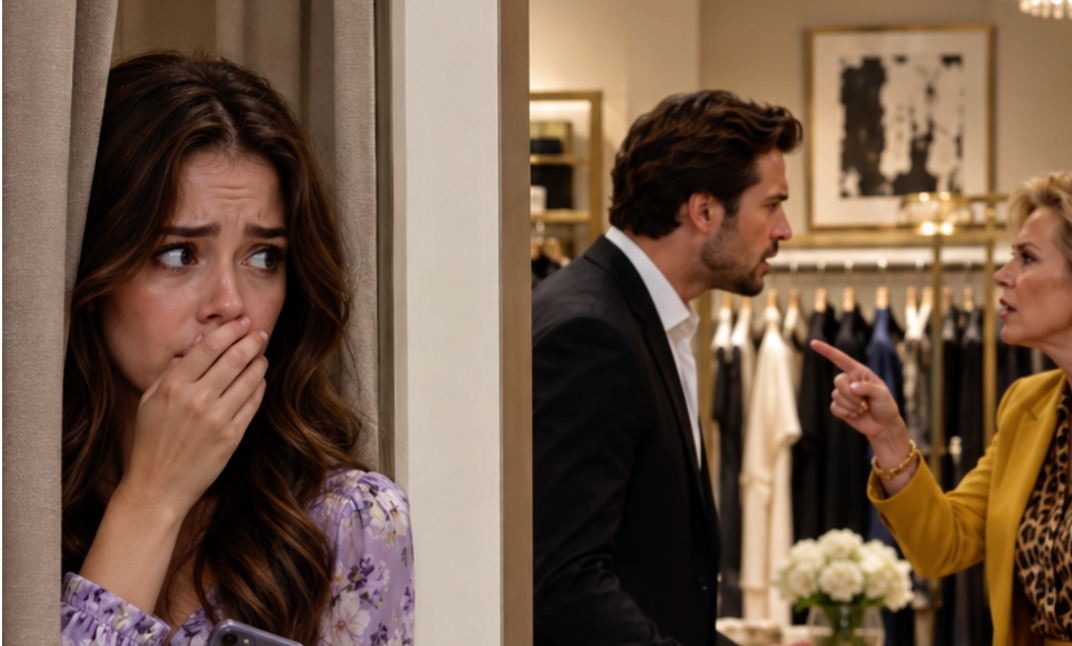
The boutique took up half of the second floor in the shopping center. Evening dresses hung on the right, men’s suits were for sale on the left. The fitting rooms were separated by light partitions and opened into a shared hallway with mirrors. The saleswoman brought me a dark green dress and offered a different size if the zipper didn’t close.
I managed to put it on and glanced at my phone, spotting a message from Anya: “Stas’s mom is asking, once again, to move their table closer to the musicians. I don’t know how to please everyone.” As I began to reply, I heard a hanger fall behind the neighboring curtain, followed by a man’s annoyed voice:
“Mom, I asked you not to discuss that here. And don’t say her name out loud.”
I recognized the voice before he finished the sentence. It was Stanislav—the very person who, just this past Sunday, had helped our dad move the garden bench and called Anya his lucky star.
Behind the curtain, they were already assigning roles
“As if I don’t understand,” responded his mother, Lidia Nikolaevna. “Turn around, let me see the sleeves. The main thing is that she doesn’t get upset before the wedding.”
“How can I not upset her if she’s always asking whether I love her?” Stas was speaking louder than he should have. “I’m tired of faking excitement. Next to me, she acts like a schoolgirl. And her walk, too. At the wedding, I’ll have to adjust to her pace again.”
I wanted to fling open the curtain. But I remembered Anya’s shoes, her bandages, and how she always stood up for her fiancé. If I started a scene now, he’d say I misunderstood everything. I set my phone on the little bench, started an audio recording, and stayed where I was.
“Just hold out for a month,” said Lidia Nikolaevna. “Her father owns two window workshops and a store. He started with one garage, now look at the orders he gets. You’ve already been put in charge of selling their products. After the wedding, you can ask to manage the department.”
“Sergey doesn’t let me near any of that. He checks every document like it’s my first day at work.”
Sergey is our brother. He handled the orders at our father’s business and—long before the engagement—warned us that Stas had trouble meeting deadlines. We always thought our brother was being unnecessarily strict with our soon-to-be relative.
“Sergey isn’t your boss,” declared Anya’s future mother-in-law. “The real boss is Boris Petrovich. His daughter can convince her dad. Then we’ll get Maksim a job in the warehouse, and find a spot for Yulia in the store. How much longer should my children work for other people?”
“Yulia doesn’t know anything about windows,” Stas smirked.
“She’ll learn. The main thing is they pay decent money. And her father promised to help you and Anya get a car. Just make sure, if he gives you the money, put it in your name instead of just the car.”
Behind the partition, I heard the crinkle of a package. Staring at the green hem of my dress, I tried to process what I’d just overheard. Dad never promised a car. Anya had been saving money for months to renovate the kitchen in her own place—she’d never mentioned any extra spending.
“What if she doesn’t quit her job after the wedding?” Stas asked. “Anya’s stubborn, she likes her own calculations.”
“Just tell her being at home is calmer. Once there’s a baby, she’ll want to stay anyway. And then you’re free to build your career. And stop bringing up her legs all the time—at least until you’re married. She might change her mind, you know.”
“I don’t say anything like that. I just give advice on what to wear. Someone has to explain what looks good on her.”
I suddenly realized I was gripping the dress clasp in my fist so tightly that it was digging into my palm. I heard the saleslady approaching in the aisle. I quickly turned my phone face down so nobody would notice I was recording. Stanislav stepped out to the mirror, Mom asked the saleslady for another jacket. They started chatting about sleeve lengths, and only then did I finally let myself move.
The last thing I heard him say was:
“Anya’s paying for this suit, right? I still haven’t paid off the last one.”
“Of course,” Mom replied shortly. “Tell her a groom should look presentable. For her family, it’s nothing.”
I waited until they went to the register, took off the dress, hung it back up, and asked the saleslady to hold it until tomorrow. Then, I sat by a window in the mall, checked the recording in my headphones, and only after that did I call my sister.
“Anya, are you alone right now? I need to talk to you. Not over the phone.”
She answered that she was waiting for Stas by the restaurant to go over the wedding menu. As soon as she heard my voice, she immediately asked:
“Did he say something about me? Tom, be honest. Is it about my legs again?”
I felt ashamed for having kept quiet these past months. I’d watched my sister slowly disappear from her old life, but convinced myself it was all just pre-wedding busyness.
The recording I wanted to turn off
We met at our parents’ place that evening. Dad, Boris Petrovich, hadn’t changed out of his work clothes yet—there was a thin line of sawdust on his shirt cuff from checking new window frames. Mom, Nina Sergeyevna, was recovering from an illness and resting on the couch. She looked worried when she saw Anya without her usual smile.
“What happened, girls?” Mom asked. “Please tell me it’s not another argument about the guest list.”
I explained where I’d been and put my phone on the table. At first, Anya just sat still and listened. Then she began fidgeting with her bag strap. When Stas started talking about her walk, Mom reached out a hand to her, but Anya pulled away—she wanted to hear the rest on her own.
Dad stood by the window. When he heard the part about the management job plans, he turned around sharply and said:
“So, decisions about what I owe have already been made behind my back? I’ve watched this guy miss deadlines for three months now, and he’s talking about where his sister is going to sit!”
“Dad, please,” Anya asked. “Let’s finish listening.”
Lidia Nikolaevna’s voice once again advised her son not to pay attention to his fiancée’s appearance until after the wedding. Anya flinched, and I had to pause the recording—she just couldn’t sit there calmly any longer. Mom took her to the kitchen, poured her some water, and stayed with her.
“He promised he’d never do it again,” my sister told us through tears. “One time, he said in front of everyone that I didn’t look good in a group photo. Everyone laughed. Then he apologized and gave me earrings. I thought he hadn’t meant to hurt me. And the shoes… I bought them myself, only because he kept asking if I could look a bit taller.”
Dad asked us to call Sergey. My brother arrived an hour later and listened to the recording while Anya was with Mom. He didn’t smile once, not even when he heard people—who’d never worked in their field—picking out departments for themselves.
“I’ll fire him tomorrow,” Dad said. “Let him learn that living off others won’t work.”
“That’s not how it should be,” Sergey replied. “We hired him with an employment contract. If we let him go just for talking in the shop, he’d have every right to complain. I’m at fault here too: I didn’t want to make a fuss about his lateness because I felt sorry for Anya. But now—no more special treatment. Just the regular rules for everyone.”
My sister came back into the room and heard those last words. She was silent for a long time before finally speaking:
“I don’t want him to be punished because of me. And I don’t want to ask for anything on his behalf ever again. I just wish I could figure out how to go on with my own life.”
That night, Anya stayed at our parents’ place. Before going to bed, she took off the ring Stas had given her when they got engaged and put it in a small case. I set up a spot for myself on the guest room sofa nearby. She asked me if she’d really have to call every guest and explain why her fiancé didn’t love her anymore.
“You don’t owe anyone an explanation for what you heard,” I told her. “Just let them know the wedding isn’t happening.”
“I can’t bring myself to say those words out loud yet,” she admitted. “Give me a couple of days.”
In the morning, she called Stas and asked to postpone the registration: she said her mom needed help at home, and she herself needed time to sort things out. He got irritated, asked about the restaurant deposit, and even before the call ended reminded her to convince Dad to make him the boss.
She ended the call and showed me a message that came in a minute later: “Mom says Maksim has already told everyone at work. Don’t stall with your dad.” For the first time, Anya didn’t reply.
While he was demanding a promotion
The following days turned out to be even harder than expected. Anya’s friends messaged about gifts and dresses for the celebration. The restaurant called to confirm the seating chart. Meanwhile, Stas came to our parents’ house several times and left flowers and notes at the gate. In one, he promised to change; in another, he demanded to know why Dad wasn’t discussing his new position with him.
I kept urging Anya to cancel all the bookings. One day, I even grabbed her phone, ready to answer the restaurant manager myself. Anya snatched it back so sharply that we both were startled.
“Tom, I’ve spent nearly two years living by someone else’s rules,” she said. “Please, don’t decide things for me now—even if you mean well.”
I had nothing to argue back with. The next day I went with her to the restaurant, but it was mostly Anya who did the talking. The banquet contract was in her name, so she sent in the official cancellation and asked for a breakdown of the expenses. Part of the deposit was refunded, but we had to pay separately for the custom decor that had already been agreed upon. There was no issue with the photographer—we worked things out without any argument. As for the wedding dress, which had already been altered to fit her, she decided to leave it at her place for now, still in its garment bag.
Meanwhile, at Stas’s job, his usual lenient schedule came to an end. Sergey and the HR manager began to demand that he arrive on time and check documents like everyone else. After yet another late arrival, they asked him for a written explanation. When the deadline passed and his reasons were found insufficient, he was given a warning. His father didn’t intervene at all.
Stas came to visit Anya with a big box of pastries. I accidentally caught them in the hallway. He was speaking almost gently, promising never to criticize her clothes again and even agreeing that the wedding could be small. For a moment, I thought maybe he wasn’t scared of losing his job, but of losing the woman he loved.
“We’ll work everything out, you and me,” he said, taking my sister’s hands in his. “I can start over. Just explain to Sergey that he doesn’t need to make a laughingstock of me at work. Let them take back the warning, and then we can talk to Dad about getting a promotion.”
Anya gently pulled her fingers free. Stas frowned and asked why she was acting so cold if he had come to make peace. At that moment, Mom walked in from the kitchen, and Stas immediately switched his tone, suddenly talking about how concerned he was for her health. Five minutes later, he was already asking her to tell Dad that “it’s not worth ruining young people’s future over small things.”
After he left, Anya silently opened the box of pastries. There were four eclairs inside, even though Mom had always told him not to bring her sweets. My sister put the box in the fridge and said she was definitely canceling the wedding after all. Not because I talked her into it. Because even now, he still couldn’t talk to her without calculating his own interests.
Stas didn’t find out about the cancellation right away. A week later, he sent a proposal to a client to install windows in a small residential complex, but hadn’t checked the delivery dates with the factory first—even though that was required of everyone. In his letter, he promised something the workshops simply couldn’t do. The client asked for confirmation, received a corrected proposal, and chose another supplier. It was unpleasant for the company, but no one made a family drama about it at work.
HR asked Stas for an explanation about this new mistake and gave him a set amount of time to respond. In his explanation, he admitted to sending the email without approval: he wanted to show initiative. Given the existing warning and the circumstances of this new violation, the company terminated his employment for repeated failure to fulfill his duties. He was given his documents and final paycheck. Stas threatened to challenge the decision, but the first person he called wasn’t HR or Sergey—it was Anya.
“Your family is destroying me,” he said. “If you love me, you’ll help me get my job back. We were supposed to get married!”
She listened for a long time, then finally asked why, in three weeks, he hadn’t once wondered how she was coping on her own. Stas replied that she should be ashamed of asking such questions, given his situation. That’s when Anya suggested they meet on Saturday to resolve the wedding question once and for all.
The Last Attempt to Reach an Agreement
My sister asked me to come along to the meeting. We picked a small café next to the park, where families with kids sat at nearby tables. I sat a bit off to the side: Anya wanted to handle the conversation herself, but was nervous her fiancé would once again force her to justify herself.
Stas walked in with flowers and a new, unusually serious look on his face. When he noticed me, he paused by the table, but then sat down and set the bouquet next to Anya.
“I went too far,” he said. “And so did you. We both had a tough month. Let’s just forget it and start over.”
Anya asked what exactly he was proposing they forget. Stas dropped his gaze, took some time to find the right words, and eventually answered that sometimes he lost his temper because of work, but he really just wanted to make her happy. He spoke gently, didn’t interrupt, and I noticed my sister gripping the ring box in her pocket.
“If you really want to start over,” she said, “answer one question for me. Would you still want to be with me if my father didn’t own the workshops and couldn’t get you a job anywhere?”
Stas paused, adjusted the bouquet, and then said resentfully:
“Why invent impossible scenarios? Your family has a business, I have skills. It’s normal to take advantage of opportunities—not pretend money doesn’t exist. And anyway, if Sergey didn’t nitpick every detail, everything would be fine.”
Anya took out her phone, but didn’t put it on the table—she didn’t want anyone nearby to overhear the recording. She handed Stas one earbud and played the part where he discussed her appearance and future positions with his mother. Stas slowly pulled out the earbud.
“Where did this come from?” he whispered.
“From the store where you tried on the suit,” I replied. “I was on the other side of the partition.”
He accused me of eavesdropping and then told Anya that this conversation with his mother meant nothing. He insisted that people often vent to loved ones and end up saying too much. My sister listened calmly until he said:
“You know how I feel about you. You really shouldn’t get upset every time someone mentions your height. Even after the wedding, I’d help you look better.”
Anya unzipped her bag, took out the ring box, and set it in front of Stas. The ring was inside.
“I don’t need that kind of help anymore. There won’t be any banquet. I canceled the order, notified the guests, and will tell the registrar I won’t attend. You can keep the ring.”
Only now did he realize this wasn’t just an argument or another attempt to get his attention. Stas stared at the ring box, then started talking about the company again: if the wedding is really off, maybe at least Sergey could give him a recommendation? Anya got up, put on her coat, and told him he’d have to handle his work issues on his own.
A cool wind was blowing outside. We walked past the window of a shoe store, and my sister stopped. There was a mannequin with shoes that had a low, sturdy heel. She looked at them, smirked, and suddenly said:
“Can you believe I spent an entire month treating my heels for someone who didn’t even want to dance with me?”
We didn’t go back to the café. That same evening, Lidiya Nikolaevna called my dad, and the next day she showed up without an invitation. She insisted that the conversation in the fitting room was nothing, that Stas would come to his senses, and that “decent people don’t abandon a groom during tough times.” My dad went to the gate alone, didn’t call Anya, and calmly explained: it was his daughter who decided to call off the wedding, her personal life was her own business, and he hadn’t invited anyone from Stanislav’s family to work with him. Lidiya Nikolaevna had to leave without even speaking to her would-be in-laws.
On the day we were supposed to be at the registry office
At first, evenings were especially hard for Anya. She was used to picking out clothes based on Stas’s opinion, waiting to see if he’d compliment her new shoes or hairstyle. Now the phone stayed silent, and the quiet in her apartment felt foreign. She spent more time with our parents, helped mom, and sometimes stayed at my place overnight when the kids asked her to read bedtime stories.
One day we went to the pool. Years ago, Anya used to swim regularly, but Stas always said she should do something “more feminine.” In the locker room, she hesitated over her new swimsuit for a while, but then headed to the pool before I did. She didn’t make any big promises to herself—she just started going twice a week.
Her ex-fiancé messaged her a few more times from different numbers. He complained that Maksim was upset about missing out on the job, and that Yulia had already told friends she was joining the family business. Anya didn’t reply. One day our brother told us he’d seen Stas at an interview with another company: he was trying for a manager position, even though they were only offering him a regular job. We didn’t discuss how his search ended.
On the day their wedding was supposed to happen, I stopped by Anya’s place with a box of homemade pies. She met me in a short green dress. By the mirror stood those same high-heeled wedding shoes—she was planning to donate them at a charity fair with some other things she didn’t need anymore. On her feet were a pair of comfortable, light-colored shoes.
“Where are you off to?” I asked, putting the box on the kitchen table.
“I have theater tickets,” she said. “Mom and Dad are coming with me. I also got a seat for you, if your kids can let you go. Just don’t say the dress is too short. I know it is.”
I laughed, and she walked over to the mirror to fix her hair, not tugging at her hem for the first time. In the hallway was a bag with the shoes that were supposed to make her taller. Anya picked it up, turned off the light, and opened the door. On the stairs, she looked back at me:
“Well, what are you waiting for? We’ll be late for the first bell.”
We went down together. She walked fast and confidently, and for the first time, I didn’t have to slow down for her uncomfortable heels.