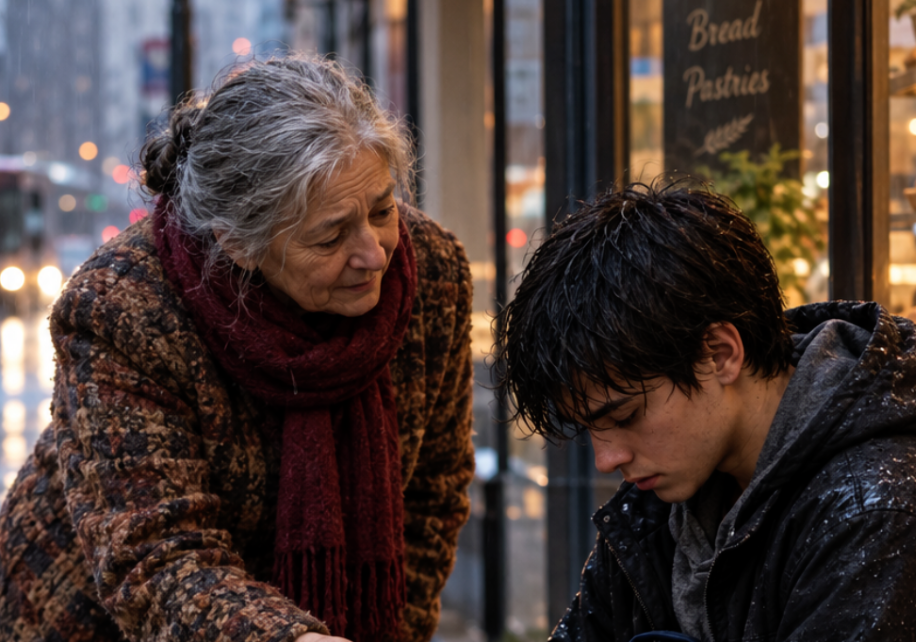
The worker had just unscrewed the first screw when an elderly woman in a gray coat rushed out from the bakery. Holding onto the doorframe, she didn’t look at the stairs, but stared intently at the old wooden sign they were about to remove from the facade.
“Please, wait a moment. The owner hasn’t made a final decision yet…”
“He has,” replied the manager, checking the list of tasks. “We’re updating the entire facade. Don’t worry, Zinaida Matveevna, you’ll like the new sign even more.”
“Nikolai, ask the worker to come down. We’re keeping that sign,” ordered Timofey Sergeyevich, the bakery’s new owner. Zinaida Matveevna had only known him for a few days and didn’t understand why he was standing up for the old board.
“We’ll replace the mounts, clean the wood. Don’t throw the sign away,” he added, giving the pensioner such an attentive look that she suddenly felt awkward. “You want the sign to stay, too, don’t you?”
Ten years earlier, Timofey had stood on the same porch, but back then, he wore a soaked jacket and had only three hundred forty rubles in his pocket.
A Ticket Home
In the fall of 2016, Zinaida Matveevna turned sixty-six. She was receiving her pension but still running her small bakery. Her husband had passed away a few years prior, and they had no children. No one waited for her at home, but at the bakery, familiar faces stopped by every day.
That October evening, the rain barely let up. Zinaida Matveevna was about to lock the door when she noticed a thin young man with a sports bag sitting on the bench outside. He sat with his head down and didn’t even try to shelter himself from the water pouring off the canopy.
“Who are you waiting for?” she asked.
“No one. Sorry, I’ll leave now,” he replied, getting up. His face showed he barely had any strength left.
The pensioner invited him in to warm up. The young man sat by the radiator and shared his name—Timofey—and that he was nineteen. He had worked at a construction site for three weeks, helping the finishers and cleaning up debris. The foreman had promised to pay him on Friday, but then blamed a client payment delay and stopped returning his calls.
That morning, a neighbor from his hometown had called: Timofey’s mother was seriously ill and in the hospital. The last bus home would leave late that night. A ticket cost over eighteen hundred, but Timofey only had three hundred forty rubles left.
Zinaida Matveevna made him some tea and gave him two potato pies. Timofey tried to ask how much he owed, but she waved it off saying the pastries were leftovers from the evening batch anyway.
At that moment, a neighbor came in for a loaf of bread. Noticing the unfamiliar young man and overhearing part of the conversation, she pulled the shopkeeper aside to the counter.
“Matveevna, don’t even think about giving him money. We hear stories like this every day near the train station. Today it’s ‘my mother’s in the hospital,’ tomorrow it’s ‘my grandmother’s in the village.’ Next thing you know, you’ll be left with nothing yourself.”
Zinaida Matveevna hesitated. She had been deceived before by people who promised to pay her back. Plus, she needed to buy new baking trays the next day: the old ones had warped from the heat, and the pies were burning.
“Do you have your papers with you? I’ll go pay for the ticket myself at the station. If you really need to get to your mother, that’s how you’ll go.”
Timofey took out his passport and asked if he could make a call because his phone was dead. He couldn’t reach his mother, but the neighbor answered. Zinaida Matveyevna overheard the woman say that Timofey’s mother was already wondering when her son would arrive.
They walked together to the bus station. The elderly woman bought a ticket for him at the counter, and she also slipped some money for food into his jacket pocket. Timofey tried to give the money back.
“You’ve already got your ticket, but you’ll need to eat on the way,” she replied. “Call me when you arrive. I wrote my number on the bag.”
Zinaida Matveyevna walked home on foot. She had hardly any money left that she’d saved for baking trays. The next morning, her helper, Klavdiya Petrovna, heard about the trip and threw up her hands in disbelief:
“You keep saying you can’t afford new equipment, and here you are sending strange boys across the country! You could have at least asked for a receipt.”
“Maybe it was foolish,” admitted the owner, checking a tray with a burnt edge. “But he’s got only one mother. How could I live with myself if he had to stay here because of money?”
The next evening, Timofey called: he’d arrived, seen his mother, and bought her everything she needed. In the spring, he called again to offer to pay back the money, but Zinaida Matveyevna refused. Later, her old number stopped working. Timofey lived hundreds of kilometers away, but he kept the bag with the bakery’s address.
Bakery On the Brink
By autumn 2026, Zinaida Matveyevna could barely manage her shifts. The dough mixer kept breaking, the oven needed repairs, and the landlord raised the rent. There was barely enough money for flour, bills, and wages.
Klavdiya Petrovna found her one evening poring over the accounts and sat down beside her.
“Matveyevna, that’s enough. We’re not young anymore. Sell the business while there’s still someone who wants to buy it. You have a pension—you could finally live in peace.”
“And where would you go? I can’t let you down.”
The bakery was put up for sale as a working business: equipment, furniture, ingredients, recipes. The space was rented, so the buyer would have to negotiate separately with the building’s owner. Zinaida Matveyevna was most afraid that her staff would end up out in the street.
The first serious potential buyer was the owner of a small chain of stores. His name was Anton Borisovich. He arrived with his assistant, inspected everything in detail, and loudly listed all the things that would need to be changed.
“Maybe people are used to your pastries, but these days the customers are different,” he said, opening the refrigerated display case. “We’ll set up ready-made baked goods, coffee to go. No need for two salespeople per shift. And your Klavdiya… well, her age, you understand.”
At that moment, an elderly customer peeked in—the one they always saved some day-old bread for. Klavdiya quietly handed her the package. Anton Borisovich noticed and smirked:
“So you just give food away for free? No wonder there’s no profit. That won’t happen with me, don’t expect it.”
As he was leaving, Anton Borisovich pointed at the wooden sign above the entrance.
“That’s the first thing we’ll take down. Our chain isn’t a museum for old-fashioned feelings.”
After he left, Zinaida Matveyevna stayed sitting by the window. A few days later, the supplier warned her he would only deliver new flour after she paid off her debt. Meanwhile, pies for the weekend had already been ordered and paid for.
She borrowed money from a friend and fulfilled the orders, but she knew she couldn’t keep managing this way. Anton Borisovich, through an intermediary, sent word: if she took too long to make a decision, he’d lower his offer even more.
The Price That Wasn’t in the Advertisement
Timofey saw the ad thanks to a friend. The photo showed the old door and a wooden sign above the entrance. He zoomed in, studying the faded lettering for a long time, and then called the intermediary.
Timofey’s mother had recovered. He himself had learned the bakery trade, worked as shift supervisor, saved up money, and opened a small baked goods spot—then even a second one. He worked so hard that at times he would step in for sick employees, but he always paid salaries on time. He remembered all too well what it felt like when his first wages were delayed.
His mother advised him not to buy the bakery just out of gratitude. Timofey agreed, and asked the accountant to check the numbers and the technician to look over the equipment. The building’s owner said he was ready to make a separate rental contract with Timofey. Later on, they agreed that Timofey would cover any work required for the internal wiring, with the landlord’s permission.
Zinaida Matveyevna didn’t recognize the now-grown young man. At their second meeting, he calmly said:
“I won’t hide it from you: the way things run here needs to change. The old oven will have to be replaced. But I want to keep your pastries, and your team, if they’re willing to join me.”
“Anyone can make promises,” the owner snapped unexpectedly. “The last one also talked nicely. And then he counted my Klavdiya as part of the old furniture.”
Timofey offered Klavdiya Petrovna a separate conversation about her schedule and pay. She insisted on written terms, and he agreed. They discussed how she’d finish her work for the former owner and sign a new employment contract.
It seemed like everything was settled. But a week before signing, the technician found dangerous sections of the old wiring. The replacement couldn’t wait, which meant extra expenses. The accountant advised Timofey against moving forward with the purchase. Through the intermediary, Zinaida Matveyevna heard that the deal was now up in the air.
That same evening, Anton Borisovich called.
“Well? See for yourself now? My offer still stands, for now. But the equipment cost needs to be recalculated. And the space must be vacated quickly—none of your get-togethers,” he said.
Timofey reviewed his costs, decided against expanding the second retail spot, and postponed buying a delivery van. Three days later, he returned with a revised repair estimate, but he kept the promised amount for the pensioner unchanged.
“I’m not asking you to just take my word for it,” he told Zinaida Matveyevna. “Read everything over with your own expert. Decide only after that.”
Zinaida Matveevna went over the paperwork together with the accountant and the lawyer. She sold off the equipment, furniture, and leftover products, shared her recipes, and agreed to let the bakery keep its name. Timofey set up a separate lease agreement with the building’s owner. As soon as the money arrived in her account, she paid off all suppliers and employees.
Klavdia Petrovna finished her work with the former owner by mutual agreement and signed a new employment contract with Timofey. He offered the young baker Nikita to stay in his old position while learning to work with the new oven. So, the bakery welcomed a new owner, but the familiar faces behind the counter didn’t disappear.
The Final Inspection
During the renovation, Zinaida Matveevna came to collect her personal belongings and found workers by the sign with a screwdriver. She asked them to wait, the manager objected, but Timofey stopped the work. He instructed them to keep the sign and only replace its fastenings, then turned to the pensioner:
“Do you remember, one autumn, buying a ticket home for a boy? He also ate two potato pies here.”
She lifted her head. Timofey pulled a folded paper bag from his pocket. The bakery’s name was still visible on it, and at the bottom was a long-unused phone number written in her handwriting.
“My mother kept it. She said it should stay with me until I learned to help someone the same way. Zinaida Matveevna, it was me sitting here that day. Timofey.”
She looked at the bag, then at his face. It took her a moment to recognize him, but then she noticed the familiar way he bit his lip shyly, just like he used to do when he was embarrassed for having no money.
“Timosha… Why didn’t you tell me right away?” she whispered. “I would have remembered if you had reminded me.”
“I was afraid you wouldn’t want to take the full price, thinking maybe I was trying to pay you back. But I was buying a running bakery. Everything’s fair.”
Klavdia Petrovna appeared in the doorway. Hearing the conversation, she gasped:
“So that’s the one? The boy I scolded you about back then? What a story…”
In the main room, Timofey invited Zinaida Matveevna to come by once a week if she wanted—not to work at the oven, but to try out new pies and share old recipes with the young bakers. She agreed, but first asked what would happen to the sign.
“It’ll stay,” he replied. “It’s the most important thing here to me.”
Above the Door
Six weeks later, the bakery reopened: with a repaired oven and new tables. Klavdia Petrovna greeted customers, Nikita pulled fresh pies from the oven. Zinaida Matveevna visited not at dawn, as before, but at ten o’clock, bringing a box of homemade apple pastilles.
Timofey wasn’t waiting for her alone. His mother, Lidiya Stepanovna, stood by his side. She hugged the pensioner so warmly, it felt like they’d known each other for years, though they had just met.
“You sent my son to me back then,” she said. “I was so afraid the whole way that he’d get lost in a strange city all alone. But he came home with your bag, and kept saying he’d met a woman who helped buy him a ticket.”
Timofey led Zinaida Matveevna out onto the porch. The sign had been reinforced from the back, the letters lovingly restored, and it was returned to its old place. A new sign had been added nearby, but right above the door now read: “No strangers here.”
“My husband made this sign,” Zinaida Matveyevna said quietly. “I told him, who names a bakery like that? But he answered that it’s not just customers who come here. And now you’ve managed to preserve it.”
In the evening, just before closing time, an elderly man walked into the shop. He picked out a loaf, spent a long time counting out his coins, and then shyly asked if he could save his purchase until tomorrow. Klavdiya Petrovna looked over at Timofey. He nodded, and she placed the loaf and a couple of today’s pastries into a bag.
“Here, take these. It’s our opening day, we’re giving treats today,” she told him. The man left, read the sign, and adjusted the bag in his hand. Timofey watched from the window, then went back behind the counter to help put away the bread in the trays. Tomorrow, the bakery would open early again.