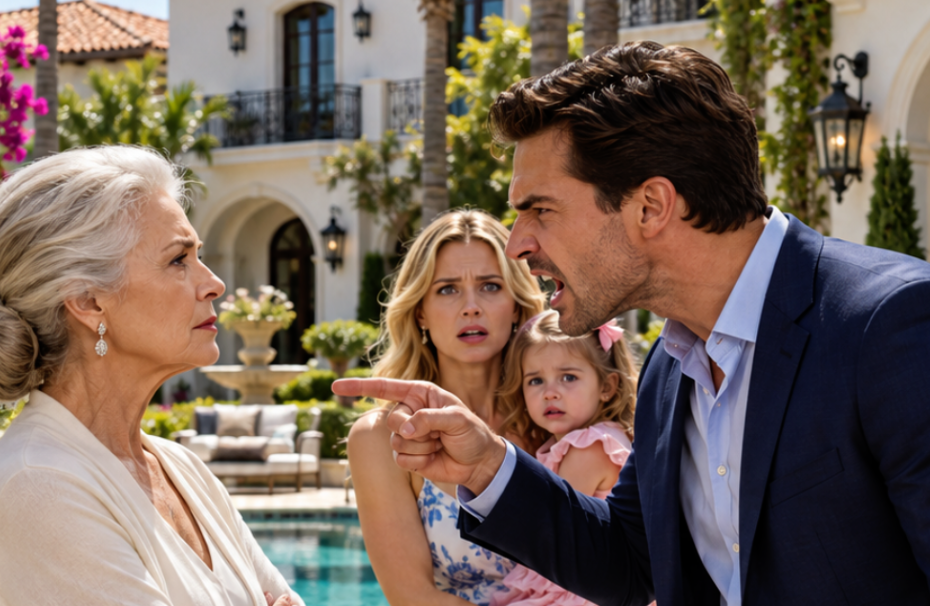
The first time my son tried to throw me out of my own house, he brought my three-year-old granddaughter along so I would feel too guilty to fight back. The second time, he brought a real estate lawyer. And the third time? He brought the Sarasota police department, claiming his sixty-one-year-old mother had suffered a severe cognitive decline and needed to be placed under immediate conservatorship.
What Preston failed to grasp was that I had spent thirty-four years married to his father, Richard Hale—a man who had turned the emotional diminishment of women into an Olympic sport. I knew the choreography of manipulation down to its subtlest cadence. But even with all my hard-won cynicism, I could never have anticipated the secret lurking behind my son’s desperate crusade to seize my home. The property was merely the tripwire. Beneath it lay a thirty-two-year-old crime that would dismantle the defining grief of my life.
—
In Sarasota, Richard Hale was the developer everyone knew. He wore tailored bespoke suits, smiled beside charity galas’ oversized ceremonial checks, and donated lavishly to civic boards to ensure no one ever scrutinized how he conducted business behind closed oak doors. To the community, he was a pillar of industry. To me, he was an architect of slow erosion, a man who spent decades convincing me that the ground beneath my feet existed solely by his permission. Whenever I voiced an opinion, he dismissed me as sentimental. Whenever I corrected an administrative oversight, he reminded me that he was the visionary.
Yet it was my invisible labor that kept his empire afloat. I was the one who quietly reviewed the covenants, balanced the escrow accounts, tracked the shifting tax laws, and managed our private family investments. Richard relished the podiums and the cameras; I made sure the checks cleared and the balance sheets held. But invisible labor has a tragic flaw: those who feast upon it eventually convince themselves the meal prepared itself.
Our only child, Preston, was raised in his father’s shadow. By thirty-five, he had inherited Richard’s defining creed: human worth was calibrated solely in liquid assets, and anyone who appeared vulnerable was a resource waiting to be strip-mined.
When our marriage finally disintegrated, Richard assumed I would crumble. Instead, I quietly hired counsel, divided our marital assets without a scene, and walked away with my grandmother’s bone china, my reliable sewing machine, and my self-respect. Richard kept the lakefront mansion, the offshore boat, and the sycophants. I moved into a peeling, drafty one-bedroom apartment directly behind a commercial laundromat.
The exhaust vent rattled like an antique tractor, and my bedroom window looked out upon a stained brick wall. But every morning, the coffee I brewed tasted entirely of freedom. No one sneered at the cinnamon in my oatmeal. No one demanded an audit when I brought home fresh hydrangeas. My apartment was modest, but my life belonged to me.
Preston visited once. He leaned against my warped laminate counter, smirked, and said, “Seriously, Mom? Dad would have given you an allowance if you’d just played nice. At your age, you can’t afford to be reckless.” His wife, Kendra, hovered behind him, eyeing my secondhand dining table with thinly veiled pity.
I smiled, folded my linen dishtowel, and said nothing.
What neither of them knew was that my grandmother, Ada, had bequeathed me two neglected commercial parcels decades before. I had kept them in my name alone, carefully managing their leases throughout my marriage. Following the divorce, I sold them. The once-sleepy corridor had become prime commercial frontage. Combined with three decades of disciplined personal savings, the sale gave me an independence neither Richard nor Preston could fathom.
I purchased a walled Mediterranean villa near Sarasota Bay. The white stucco walls gleamed beneath the Gulf coast sun; tall arched windows flooded the stone hallways with amber light; and outside, a courtyard fountain murmured peacefully beside a swimming pool bordered by lemon trees. Behind the main residence stood an elegant, light-filled guesthouse that I immediately earmarked as a painting studio. The deed carried a single name: Evelyn Hale. Paid in full.
For nearly a month, I knew absolute tranquility. Then my well-meaning neighbor, June Whitaker, posted photographs from our quiet housewarming dinner on social media.
—
Preston’s black SUV surged through my wrought-iron gates the following Saturday morning without warning. He emerged with Kendra and little Lila, marching through my front door before I could even set down my watering can.
They wandered the corridors like prospective buyers appraising a foreclosure. Preston admired the vaulted cypress beams; Kendra ran her manicured fingers across the kitchen’s quartzite counters; Lila splashed her hands in the fountain.
“Well, this solves our problem,” Preston announced casually, leaning against my mantle. “Kendra and I have completely outgrown our rental. We’ll take the main house, Mom, and you can take that detached unit out back. It’s far more manageable for someone your age.”
I stood in the center of the foyer, stunned by the sheer gall of it. “When did I ever invite you to live here, Preston?”
His smile curdled into familiar disdain. “Don’t be difficult. Families help each other. You don’t need five bedrooms, and you certainly can’t maintain a property like this alone.”
“The answer is no,” I said evenly. “This is my home.”
“Then we’ll have to do this the hard way,” Preston snapped. He pulled out his phone, dialed the non-emergency dispatch line, and looked me dead in the eye. “I need an officer dispatched. My elderly mother is experiencing acute confusion, and she’s refusing family intervention while occupying an unmanageable property.”
Twenty minutes later, Officers Daniel Brooks and Elena Ruiz stood in my living room. Preston immediately launched into a rehearsed monologue about my alleged mental deterioration following the divorce. But Officer Brooks was a seasoned investigator. He took one look at my serene demeanor, the pristine house, and my straightforward, articulate answers to his standard competency questions.
Then I handed him a blue leather binder.
Inside were the clear title, the certified closing statement, and an unfiled petition my attorney had pulled from the county records only twenty-four hours earlier. Officer Brooks’s jaw hardened as he read.
“Mr. Hale,” Brooks said, turning to my son, “did you file an emergency ex-parte guardianship petition claiming your mother was cognitively incapacitated?”
Kendra gasped. Preston’s face turned the color of damp chalk.
“And why,” Officer Brooks continued, his voice dropping an octave, “does the proposed conservatorship include an immediate deed transfer of this real estate to an entity called Bayhaven Residential Holdings—an entity where you are listed as the managing partner?”
Preston stammered about family protection, but Brooks cut him off, ordered him off the property, and warned him that another step toward harassment would result in immediate criminal trespass charges. As they retreated down the driveway, little Lila waved tearfully from the SUV window. I waved back with trembling fingers, but as their taillights vanished, my knees gave out. I didn’t weep from fear. I wept because my only child had looked at his mother and seen nothing more than a balance sheet to be liquidated.
—
My attorney arrived within the hour. Naomi Bell was thirty-two, sharp-eyed, exceptionally capable, and possessed an innate intolerance for bullies. When she reviewed Preston’s filings, her face grew grim.
“This isn’t just Preston’s greed, Evelyn,” Naomi said, laying out the paperwork. “Someone attempted to initiate an eight-hundred-and-fifty-thousand-dollar home equity credit application against this property using your identity last week. The corporate structuring behind Bayhaven Residential bears the distinct thumbprint of Richard Hale.”
I felt the familiar chill settle over me. “Richard.”
“We challenge the petition immediately, freeze your credit across every bureau, and subpoena their financial records,” Naomi said firmly. As she spoke, she touched my hand. There was an intense, fierce gentleness in her gaze—a quiet empathy that reminded me achingly of my grandmother Ada.
The preliminary court hearing occurred nine days later. Richard appeared beside Preston, exuding his trademark boardroom polish. He approached our table, leaning down to hiss, “You’re making a public fool of yourself, Evelyn. Preston was only trying to ensure your security.”
“Mr. Hale,” Naomi interrupted, fixing him with a stare as cold as glacial ice, “speak to my client again without my permission, and I will seek an immediate restraining order.”
The judge dispatched the matter swiftly. Naomi presented my clean medical evals, my independent banking assets, and the fraudulent loan attempt. The judge dismissed the guardianship petition with prejudice, rebuking Preston’s counsel for wasting the court’s time. But outside the courtroom, the victory felt hollow. Preston glared at me with pure venom, while Kendra lingered by the doors, looking ill and terrified.
Three nights later, Kendra arrived at my gates alone, clutching an overnight bag and weeping.
Over chamomile tea in my kitchen, the truth came tumbling out. Preston was drowning. He had gambled recklessly on high-risk speculative commercial loans backed by Richard’s hollow promises. He was nearly one and a half million dollars in personal debt. When the creditors closed in, Richard had offered him a lifeline: declare Evelyn incompetent, secure the villa’s equity to satisfy the immediate collectors, and flip the property.
“Preston records everything,” Kendra whispered, sliding a USB thumb drive across the quartz island. “He records his calls with his father. I copied them before I packed Lila’s bags and left him.”
That night, Naomi brought forensic accountant Marcus Reed into my living room. We listened to Richard’s unmistakable baritone instructing our son: *“Find her pressure points, Preston. When the alternative is losing her family, your mother always signs whatever is put in front of her. Just make sure she doesn’t start poking around into the old corporate settlements.”*
Marcus paused the audio. “Settlements? That explains the recurring disbursements I flagged in Richard’s historical ledgers.”
He turned his laptop screen toward me. Beginning in the spring of 1994, Richard’s primary development corporation had sent recurring monthly payments—originally five thousand dollars, later ballooning higher—to an offshore-backed domestic trust.
“Thirty-two years of payments,” Marcus said. “The line item simply references a sealed archival docket marked ‘C.M.'”
My chest seized. The room seemed to contract until all oxygen vanished. February 1994 was the month my daughter was born.
Charlotte.
She had arrived six weeks prematurely during an emergency cesarean section while I was slipping into septic shock. When I woke from the anesthesia, Richard sat beside my bed, pale and hollow-eyed, telling me our baby girl hadn’t survived the delivery. He had refused to let me view her body, insisting the trauma would destroy my fragile state. There had been a closed white casket, a private burial, and thirty-two years of suffocating silence during which I mourned a child I never held.
“Marcus,” I whispered, my voice breaking like dry kindling. “When exactly did those payments begin?”
He checked the ledger stamps. “March 15, 1994. Three weeks after your hospital admission.”
—
I spent that night on my knees before my cedar trunk, clutching a yellowed, hand-knitted white baby bonnet bearing a tiny embroidered *C*. Deep beneath the winter linens, I unearthed a long-forgotten envelope my grandmother Ada had given me before her death in 1995: *FOR EVELYN. WHEN YOU ARE READY TO ASK QUESTIONS.*
Ada’s elegant cursive practically burned into the parchment. She had documented her failed attempts to locate Charlotte’s medical death certificate, noting that the hospital staff had spoken of an emergency infant transfer to a regional neonatal surgical unit—a transfer Richard had sworn never occurred. At the foot of the page, Ada had written a single name: *Thomas Mercer.*
When Naomi reviewed the letter the following morning, she turned ghost-white. She excused herself to the courtyard, where I watched her weep through the French doors.
The subsequent investigation accelerated at breakneck speed. Marcus’s subpoenas revealed that in 1994, Richard’s development company had been facing complete bankruptcy. Desperate for solvency, Richard had brokered a private arrangement with Thomas Mercer, an infertile industrialist whose family foundation secretly underwrote complex, closed adoptions. Richard had accepted a massive equity injection disguised as an offshore investment, signed forged parental relinquishment papers while I lay semi-conscious in intensive care, and told me our baby was dead.
The cruelty was incomprehensible. He had funded his rise to wealth with our daughter’s life, watching me weep over an empty grave for three decades while he balanced his ledgers.
The criminal authorities swiftly convened a grand jury. Confronted with the paper trail, wire recordings, and forged relinquishment affidavits, Richard’s defenses collapsed. Facing felony elder exploitation, wire fraud, and falsification of vital records, he broke down during an evidentiary deposition.
“I had no choice,” he sobbed across the conference table, his manicured hands shaking. “The business was going under.”
“You don’t get to measure your cruelty, Richard,” I said, leaning across the mahogany table with an icy clarity I had never possessed in our marriage. “The people you destroyed carry that measure. And your debt is finally due.”
Preston, stripped of his father’s protection and facing bank fraud charges, pleaded guilty to lesser counts. When he called me from his attorney’s office, weeping and begging for forgiveness, I told him the truth: “I love you, Preston. But loving you does not mean saving you from your own choices. Real love requires accountability.”
—
Yet the greatest revelation was still to come.
Two weeks after Richard’s formal indictment, Naomi came to the villa alone. She carried a small, velvet-lined mahogany box. Her hands trembled so violently she could barely turn the clasp.
“Evelyn,” she whispered, tears streaming down her face. “I was adopted by Thomas and Margaret Mercer in March 1994. My name was changed from Charlotte to Naomi after my parents divorced and my mother remarried. I spent years searching for my birth mother, believing she had abandoned me for cash.”
She opened the box. Inside lay an infant hospital identification band: *HALE, BABY GIRL. FEB 1994.* Beside it was an official DNA analysis confirming our biological relationship at ninety-nine point nine percent.
“When your accountant introduced us for your property purchase, I took the case because I wanted to see who you were before I confronted you,” Naomi choked out, falling to her knees beside my armchair. “I’m so sorry, Mom. I’m your Charlotte.”
Thirty-two years of phantom mourning, thirty-two birthdays celebrated in cold cemetery silence, vanished into the salt of our tears. I pulled my daughter to the floor, holding her as though the entire world might dissolve if I let go. We wept until our throats were raw, the pain of three decades washing clean in the afternoon light of the home my son had tried to steal.
A year later, the courtyard of my villa was alive with laughter.
Strings of warm Edison bulbs illuminated the garden. Kendra, now divorced and rebuilding her life as a certified home stager, sat with June Whitaker by the fountain. My four-year-old grandson, Oliver—Naomi’s son—chased his cousin Lila across the lush grass, their shrieks of delight echoing against the stucco walls.
The detached guesthouse had been completely transformed. It was now the headquarters of the Ada House Foundation, a sanctuary offering free legal counseling, financial literacy seminars, and art therapy to women escaping coercive, abusive partnerships.
Oliver came sprinting up the terrace steps, his sneakers flashing with red LEDs. He skidded to a halt, opened his small hand, and presented me with a slightly crushed yellow dandelion plucked from the garden lawn.
“For you, Grandma Evelyn,” he beamed. “Mommy says yellow flowers mean sunlight.”
I smiled, my throat tightening as I took the little blossom and placed it into an antique crystal vase beside my grandmother Ada’s china.
Richard had stolen thirty-two years of my daughter’s life. Preston had tried to strip away my dignity and my home. Both men had operated under the fatal delusion that patience in a woman is synonymous with weakness. But they had failed.
My son had set out to steal my sanctuary. Instead, his arrogance had led me directly back to the daughter I had mourned for half my life. As the Sarasota evening breeze swept the fragrance of lemon blossoms across the terrace, I looked at my daughter, my grandchildren, and the life I had built with my own hands. We were whole. And we were finally home.