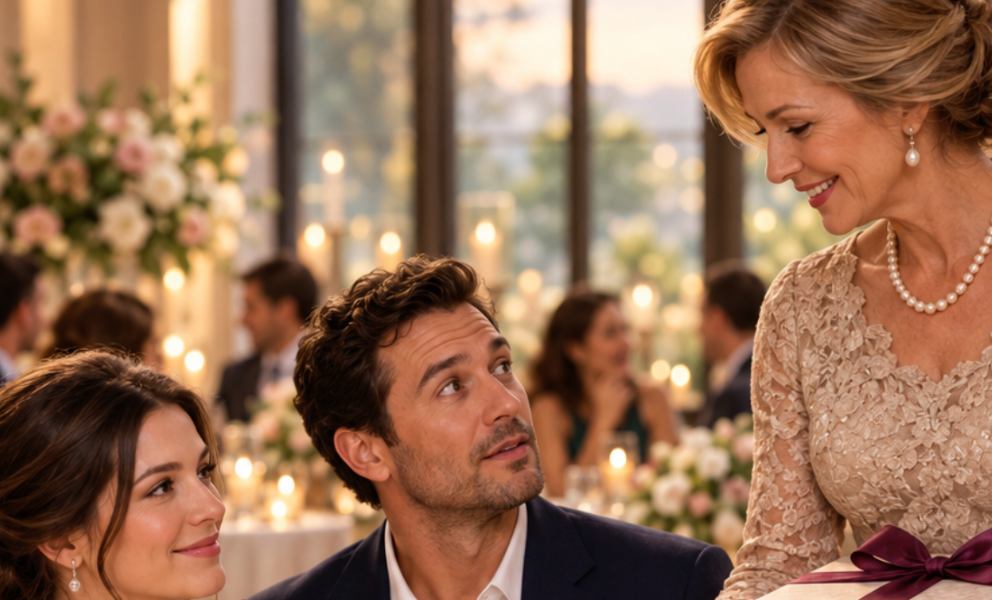
“Please don’t get the wrong idea, Tatyana Yuryevna, I’m not a gossip. But as a man, I can’t be part of this. It’s just not right,” Evgeny said, nervously fidgeting with the strap of his camera bag.
In the quiet reading room of the city library, his voice echoed loudly. Tatyana, the department head, slowly took off her glasses. She was fifty-five. For thirty of those years, she’d carried her husband’s last name—and for exactly as long, her mother-in-law, Zinaida Pavlovna, had been trying to prove it was a huge mistake.
“Let me see, Zhenya,” Tatyana said calmly.
The photographer pulled a flash drive from his pocket and plugged it into the library laptop. A folder appeared on the screen, titled, “Kolenka and Larochka. True Love.” Tatyana clicked the mouse. Smiling, laughing young faces stared back at her: her husband Nikolai and Larisa. The very same Larisa who had left Kolya a year before he met Tatyana. The photos changed one after another to the tearful soundtrack from an old French film.
“Zinaida Pavlovna ordered me to make a slideshow,” Evgeny explained apologetically. “She said it’ll be the main surprise at your thirtieth wedding anniversary banquet. She told me, ‘Let the guests see who my son really loved, not the one he ended up spending his life with.’ And what’s more, she invited Larisa to the party. When I read the plan, I felt sick. I know you—you picked out such great child psychology books for my wife and me… Anyway, I can’t go along with this. How about I just say the projector broke?”
Tatyana stared at the screen. Inside, there was no panic and no hysteria. Only a cold, ringing clarity. For thirty years, she had put up with her mother-in-law’s pursed lips. For thirty years, she had swallowed those biting remarks for the sake of her husband. “Tanechka, this soup is a bit too heavy, Kolya likes clear broths, just like Larochka used to make.” “Tanechka, this top forgives you, but Larisa always knew how to wear clothes.”
“No, Zhenya. The projector will work flawlessly,” Tatyana said, closing the laptop slowly and looking at the photographer with an intense, steely gleam in her eyes. “But we’ll be making a few changes to the presentation. Will you help me put together a different video?”
“Are you kidding? I’ll stay up all night if I have to!” Evgeny exclaimed with passion.
That evening, Tatyana sat on the floor of her living room, surrounded by dozens of old photo albums. Next to her was her twenty-nine-year-old daughter Olya, a medical lab technician, carefully scanning the pictures with a portable scanner.
“Mom, I don’t get why you just don’t call off this whole circus,” Olya snapped, angrily tossing another photo into the box. “Why don’t you call Dad and tell him his mother is planning a public humiliation? This is toxic at the highest level!”
“Because, Olya, your father has always insisted, ‘Mom is just a complicated person, but she means well,'” Tatyana sighed. “If I cancel the party, I’ll be the hysterical one who got scared of ghosts from the past. Zinaida Pavlovna will spin it like she just wanted to reminisce about youth, and I ruined everything. No. You have to treat an illness radically. Open the wound in front of witnesses.”
Olya paused and looked at her mother.
You know, Mom, constant stress takes a toll on your sleep, your blood pressure, your whole body. For thirty years you’ve endured Grandma’s humiliations for the sake of keeping the peace. That’s not wisdom. You have the right to finally stand up for yourself! You can—and should—always fight for your own dignity! You can’t give up and let people walk all over you, even if that person is family.
Tatiana smiled softly at the corners of her mouth and gently stroked her daughter’s cheek.
That’s why, Olya, we’re preparing our response today. Open the next folder.
They leaned over old photographs. Suddenly, Olya froze. In her hands was a candid shot, a little overexposed at one edge. 1996. They were dirt poor. The photo showed the tiny kitchen of their first battered Khrushchyovka apartment, which they bought on credit. Vladimir Semyonovich, who had stopped by to help with renovations, had taken the shot by chance. Nikolai, thin and exhausted from working two shifts, was asleep right at the table, his head on folded arms, and Tatiana was gently draping her knitted sweater over his shoulders.
The next photo—year 2000. The neurology ward was dimly lit by pale winter sunlight. Tatiana’s father had suffered a stroke. In the photo, taken just before Tatiana left for the pharmacy, Nikolai was feeding his paralyzed father-in-law pureed soup with a spoon, with incredible tenderness and care.
Olya suddenly sobbed. Tears fell onto the scanner glass.
Mom… you two are so… real. God, the way he looks at Grandpa. The way you look at Dad. Who cares about Larisa and her hair bows?!
Tatiana hugged her daughter, feeling a prickly lump rise in her own throat. Yes. This was their life. Not picture-perfect smiles by someone else’s fancy car, but sleepless nights together, renovations by hand, scraping together every penny for Olya’s tutors, illnesses, losses, and quiet joys. They’d grown around each other like two trees on a cliff. And Tatiana wouldn’t let some selfish woman cut those roots just for show.
Saturday evening at ‘By the Fireplace’ restaurant kicked off with noise and celebration. About forty people gathered—family, colleagues, and old friends.
Nikolai, dressed up in a suit for once, looked happy and a little shy. At fifty-seven, he was still strong and broad-shouldered. As deputy chief engineer for the city’s heating network, he was used to solving broken pipes and freezing neighborhoods—but he was totally lost when it came to women’s intrigues. He gazed adoringly at his wife. Tatiana looked stunning tonight: a fitted sapphire-blue dress flattered her figure, and that same spark glimmered in her eyes—the spark he’d fallen for thirty years ago.
Zinaida Pavlovna, decked out in amber jewelry, sat at the head of the table like an empress. She accepted congratulations with a patronizing air, as if this was her personal triumph.
The banquet hall doors creaked and a woman entered. Surrounded by a cloud of heavy, cloyingly sweet perfume, in a shimmering gown and with perfectly styled hair. It was Larisa.
An awkward silence settled over the table. Many of those present remembered her. Vladimir Semenovich, the best man at Nikolai and Tatyana’s wedding, choked on his sparkling water and frowned.
Nikolai turned pale. He looked over at his mother.
“Mom? What is she doing here?”
Tatyana quietly but firmly squeezed her husband’s hand under the table.
“I know everything, Kolya,” she whispered so only he could hear. “Don’t interfere just yet—trust me.”
“Kolya dear, why are you reacting like this?” Zinaida Pavlovna sang out loud enough for everyone to hear. “We’re all adults here. Larochka is part of our youth—part of our history. She just happened to be in town, and I thought on a day like today we should all forgive old grievances. After all, first love never rusts, right, Larochka?”
Larisa approached the table with a coy smile. For months, Zinaida Pavlovna had been convincing her that Nikolai was unhappy in his marriage, always reminiscing about their youth, and living with his wife simply out of habit. Having just gone through a painful divorce, Larisa wanted desperately to believe that, after thirty years, someone was still waiting for her.
“Hello, Kolya. Hello, Tatyana. Congratulations. You two… it’s impressive you stuck it out this long.”
Tatyana didn’t flinch. She elegantly raised her glass:
“Come in, Larisa. Take a seat. We’re glad to have everyone here who wants to witness the strength of our marriage.”
Zinaida Pavlovna jerked her shoulder irritably. She didn’t like her daughter-in-law’s reaction—no drama, no tears. But she still had an ace up her sleeve.
An hour later, when the guests had relaxed, Zinaida Pavlovna stood up and tapped her fork against a crystal glass.
“Dear guests!” Her voice, trained after years of teaching at the music school, filled the room. “Thirty years is a long time. Life is complicated. There are mistakes, there are compromises. But true feelings always live on in our hearts! I’ve prepared a special surprise for your anniversary,” she smiled at Tatyana, staring straight into her eyes. “Evgeny, if you would start!”
The lights went out. A white screen descended. Larisa sat up, chest out, ready for her big moment. Nikolai clenched his fists, but once again, Tatyana placed her hand over his. “Sit,” she mouthed silently.
The music began, but it wasn’t a French chanson. It was a quiet, piercing instrumental melody from an old Soviet film.
A message appeared on the screen: “Love is not what once was. Love is what we have built.”
Then a photograph from 1996 flashed on the screen—the one. Nikolai, exhausted and asleep at the table, and Tatyana gently covering him with her sweater.
The room gasped.
Then the photos began playing one after another. There was Nikolai, covered in soot after the heating system accident on New Year’s Eve, hugging little Olya. Tatyana, her eyes red and tired, putting up cheap wallpaper in their first apartment. The photo from the hospital room where Nikolai is feeding his paralyzed father-in-law. And the two of them, already streaked with gray, standing together at the dacha in the rain, sharing a single old jacket, laughing with the genuine joy only truly happy people know.
This wasn’t a glossy fairytale scene. It was the true chronicle of a heroic story called ‘family.’ The sound of stifled sobs filled the room. Women reached for their handkerchiefs. Even the tough Vladimir Semyonovich’s eyes suspiciously sparkled with tears.
The slideshow ended with a photo taken just a month ago: Nikolai and Tatyana looking into each other’s eyes, and the warmth, respect, and tenderness between them said more than any words ever could.
The lights came back on. Zinaida Pavlovna sat with her mouth open, red patches spreading across her face. Larisa shrank into her seat, her shiny dress suddenly seeming like cheap tinsel compared to the real, deep life just shown on screen.
Tatyana stood up slowly. A ringing silence swept the room.
“Zinaida Pavlovna promised you all a surprise,” Tatyana spoke up, her voice calm and clear. “And she delivered. Zinaida Pavlovna wanted to remind us of the past. But our family isn’t just a handful of youthful photos. It’s thirty years we’ve lived together: raising a daughter, burying loved ones, fighting through hard times and sickness, and, every time, choosing each other.”
Tatyana turned her gaze to her now-pale mother-in-law and the shrinking Larisa.
“Today, there are people here who tried to turn our anniversary into the funeral of a living family. People who have spent years belittling my work, my loyalty, and my husband’s choice. I openly ask those people to leave this hall. Right now.”
“How dare you!” Zinaida Pavlovna shrieked, jumping up. “Kolya! Do you hear what she’s saying?! She’s kicking your mother out! And Larochka came in peace—she’s always loved you…”
“Enough, Zina—shut your mouth!” Vladimir Semyonovich suddenly thundered, slamming his fist on the table. He stood up, heavy and red with rage. “Loved? Really?” he sneered. “It was Larisa who left Kolya for a man with a car and money. Don’t rewrite history, Zinaida. We all remember how she sold him out for imported clothes, and now that she’s left with nothing, she comes running back for an easy life!”
Larisa jumped up, knocking over her chair, her face twisted with anger and shame. Without saying a word, she grabbed her purse and, heels clacking, almost ran for the door.
Zinaida Pavlovna was gasping for air.
“Kolya… Son… You’re going to let them talk to me like this? I’m your mother! I just wanted what was best for you! She’s not right for you, she’s mean and calculating…”
Nikolai stood up slowly. In that moment, he seemed taller than usual. The usual gentle forgiveness was gone from his eyes; instead, there was the same unyielding determination he showed when making tough decisions during emergencies.
“That’s enough, Mom,” his voice was quiet but so grave the whole room seemed to stop breathing. “Thirty years is enough.”
“What?” Zinaida Pavlovna blinked in confusion.
“I forgave you everything. Your barbs, your scorn for the woman who gave me a daughter, a home, and thirty of the best years of my life. I thought you’d accept it. I was blind and weak to let you trample my wife. But today you crossed the line. You tried to spit on the most sacred thing I have—my life with Tanya.”
“Kolenka…” his mother pressed her hands to her chest, struggling to squeeze out a tear.
“Leave, Mom.”
“You’re kicking out your own mother because of that woman…?”
“Get out!” Nikolai shouted so loudly the glasses rattled. “And remember this. Until you admit what you’ve done and apologize to Tanya, don’t call or visit us. I will never let you humiliate my wife again.”
Zinaida Pavlovna stood for several seconds, gasping for air, realizing her power and years of manipulation had crumbled in an instant. She looked at her son’s unyielding face, at her daughter-in-law’s calm and dignified expression, then turned, lifted her chin high with pride, but shuffled her feet slightly from shock as she left the hall.
The doors closed. Silence fell over the restaurant.
Olya was the first to stand. She raised her glass, tears streaming down her face, but her smile was radiant.
“I want to toast my parents. To people who didn’t chase after some mythical love, but cherished and protected it every day. To my mom, who showed me what true female pride means. And to my dad, who proved he’s a real man, always ready to stand up for his family. Happy thirtieth anniversary, Mom and Dad!”
The room erupted in applause. People stood, glasses clinking. Some were crying, others laughing. Evgeny, the photographer, leaned against the wall, wiping his eyes with his sleeve, forgetting all about his camera.
Nikolai turned to Tatyana. He took her hands, kissed each finger, just like he did many years ago in their tiny kitchen.
“Forgive me, Tanya. For taking so long to finally wake up.”
Tatyana smiled. Her eyes were shining.
“The important thing is that you’re awake now, Kolya. Now let’s celebrate.”
Nikolai smiled back and reached out his hand, inviting Tatyana to dance. Their old favorite song began to play, and the guests stepped aside respectfully. For the first time in thirty years at their family celebration, there was no room left for old grievances or a mother’s scorn.