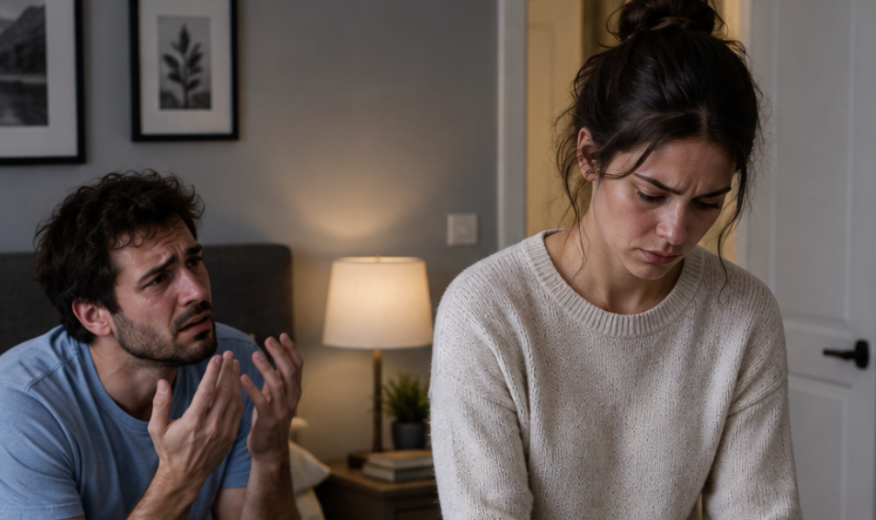
On Saturday, at half past nine in the morning, Liliya stood in the middle of her kitchen wearing home shorts, holding the measuring tape in her teeth, and trying to type in the width of the wall space on her phone at the same time.
Their old fridge had been living its own wild life for the past two weeks. One moment it would start to hum as if about to take off, then suddenly fall completely silent for hours, making Liliya press her finger into the butter to check if it was still cool. After checking it, the repairman said it could be fixed, but there was about as much sense in doing that as replacing the engine in a twenty-year-old washing machine.
So, Liliya had found a model that fit their budget, and now she was trying to figure out if it would fit between the kitchen cabinet and the wall.
“Seventy-one point eight…,” she muttered, looking at the tape. “Of course. The niche is seventy-two. Fridge manufacturers must do this on purpose just to give people gray hairs before they buy.”
At the table, Anton was scrolling through his phone.
About ten minutes ago, they had already managed to argue. Or more accurately, Anton again tried to bring up the conversation they’d been having for three days now.
He found a used motorcycle for a little over eight hundred thousand rubles. He’d saved just over a hundred thousand himself. He suggested taking out a loan for the rest.
And it was supposed to be Liliya who took out the loan.
Her payroll bank had just sent her a personal offer for seven hundred thousand with a lower interest rate than what Anton had been offered.
Liliya had been answering the same thing for three days:
“No.”
Right then, Anton put his phone down, screen facing the table.
Even from behind, Liliya noticed this move.
Usually, he didn’t let go of his phone even during breakfast. That meant he was getting ready to say something important.
“I’ve thought everything through,” he announced.
Liliya wrote in her notes: “72 cm.”
“Congratulations.”
“Lilya, I’m serious.”
She straightened up.
“So am I. Exactly what am I congratulating you about?”
Anton was silent for a second.
Then he said:
“Divorce? Be my guest.”
And he looked at his wife.
Not just looked—he froze.
The expression on his face made it clear that a totally different scene was supposed to begin.
Most likely, Liliya was supposed to drop the measuring tape.
Then ask: “Are you serious?”
Then sit down across from him.
Maybe even cry.
And then Anton would graciously agree to discuss the motorcycle one more time and give their marriage one last chance.
Liliya looked at her husband for a few seconds.
“Alright.”
“Alright what?”
“Divorce.”
Anton frowned slightly.
Liliya closed the measuring tape, put it in the kitchen drawer, and walked into the hallway.
There, she grabbed a stool, climbed onto it, and opened up the storage above.
“Where are you going?” Anton called from the kitchen.
“For the suitcases.”
He even laughed.
“Lilya, come on, stop.”
She took down a large suitcase, then a second one.
“Hold this.”
Anton automatically took one.
Only when his wife walked past him into the bedroom did he realize something wasn’t going as planned.
“Are you seriously packing your things right now?”
“So far I’ve only brought the suitcases. I’ll start on my things now.”
“I just said that we could get a divorce!”
“No. You said, ‘Divorce? Be my guest.'”
“It was just a figure of speech.”
“You have very roomy figures of speech. Seven hundred thousand roomy.”
Liliya opened the wardrobe.
She reached up to the top shelf, grabbed a stack of Anton’s t-shirts, and packed them into the suitcase.
Anton stood in the doorway.
“You’re not even going to talk?” he asked.
“We’ve already talked for three days.”
“About the motorcycle.”
“And now about the divorce. Your turn is over.”
She took out a pair of jeans.
Anton walked into the room and sat on the edge of the bed.
“You can’t make a decision like this in five minutes.”
Lilia didn’t even turn around.
“I can’t.”
“Exactly.”
“That’s why I didn’t make it in five minutes.”
Anton stopped smiling.
Lilia opened the bottom drawer of the dresser.
That drawer held the things they’d referred to for the past few years as ‘Anton will sort this on the weekend.’
Cords.
Adapters.
Some power supplies.
Headphones with missing ear pads.
Cables whose purpose not even the owner could recall, but absolutely could not be thrown away.
“This is yours too.”
“Wait. Don’t just dump the wires in a pile.”
Lilia looked at him.
“They’ve sat in a pile for eight years and that was fine with you.”
“Those are good cables.”
“Which ones?”
Anton pulled one out.
He checked the connectors.
“This one… actually, it’s important.”
“For what?”
“I don’t remember. But it is important.”
“Perfect. It’s going with you.”
She found a box and started putting the cables in it.
Anton no longer looked as confident.
And up until that morning, confidence was the one thing Anton never lacked.
Three days ago, when he first showed Lilia the listing, the motorcycle wasn’t presented as a simple purchase—it felt more like destiny.
“Look at this machine,” he said.
Lilia looked.
The motorcycle was beautiful. There was no denying that.
Anton zoomed in on the photos, talking about the engine, the mileage, the owner, and some especially valuable panniers.
“How much?” she asked.
“Eight hundred twenty.”
“Thousand?”
“No, rubles, Lil.”
She looked at him.
Anton laughed:
“Of course thousand.”
“How much do you have?”
“A little over one hundred twenty.”
“Great. Only seven hundred left to save.”
“Well, I have an idea.”
The word “idea” always made Lilia cautious.
After more than nine years with Anton, she knew: if words like “idea,” “plan,” or “we just need to do the math” showed up, credit was sure to be lurking close by.
Anton showed her her own banking app.
Actually, he showed her a photo of her banking app’s screen—the photo she herself had sent him just the day before when they were discussing new appliances.
The bank was offering Lilia a consumer loan of up to seven hundred thousand.
“We could use it through you,” Anton said. “You get a good rate. We’ll pay back from the joint account.”
“No, we won’t.”
“Why not?”
“Because it’s you who wants the motorcycle.”
“So what? We’re a family.”
Lilia actually smirked at that.
“Wonderful. I’ve wanted a new kitchen for two years now. So you need the kitchen too, right?”
Anton immediately grew serious.
The kitchen was a sore spot.
The apartment itself was over twenty years old—Lilia had inherited it from her grandmother even before meeting Anton. Two rooms, in a regular residential neighborhood, nothing fancy, but it was her own.
After Anton moved in, they gradually renovated the rooms, replaced the plumbing, windows, and doors.
They left the kitchen for last.
Then they bought a car on credit.
After that, Anton changed jobs, and his income was unstable for the first few months.
So, they decided to pay off the car first.
Lilia didn’t argue.
The kitchen cabinets were still holding up. One drawer only closed after a gentle nudge with the knee, but that hardly got in the way of daily life.
Three months ago, they finally paid off the car loan.
They made a deal: no new debts for at least a year. Save up a decent amount, then focus on renovating the kitchen.
Lilia remembered that conversation perfectly.
Anton, as it turned out, remembered it more selectively.
“The kitchen still works,” he said. “But that motorcycle could be gone by tomorrow.”
“The motorcycle also works without you. For someone else,” she replied.
“You’re just taking this to the extreme on purpose.”
“I’m just trying to understand the rules. If I want something, we wait. If you want something, we take out a loan?”
“That’s different.”
Lilia had asked then:
“How is it different?”
Anton couldn’t explain.
But he could get offended.
He actually thought his wife had changed too much over the past few years.
When they first met, Lilia was twenty-seven and Anton was thirty.
They dated for nine months, then Anton moved in with her. About a year later, they got married.
Back then, Lilia really was more easygoing about most things.
But not because she was a different woman.
It’s just that eight years of marriage to Anton provided a solid financial education, even for someone who’d never cared much about economics before.
Her husband’s first big passion was photography.
One day, he came home after a colleague’s wedding and announced:
“I figured out what I want to do.”
Lilia thought he was talking about a job.
Anton really did study photography for a while. He watched tutorials, practiced, even shot two friends’ weddings.
Then it turned out that shooting weddings wasn’t just a stroll with a camera—it was twelve hours on your feet, editing thousands of photos, and a bride asking three days later why the pictures weren’t ready yet.
The camera gradually ended up on the shelf.
Two years later, Lilia helped him sell it.
Then came the home recording phase.
Anton explained that making commercials, jingles, and voice-overs brought good money.
Suddenly, their apartment was filled with a microphone, a stand, headphones, an audio interface, and a bundle of cables—all of which were now about to be passed on to someone else.
Lilia especially remembered the professional microphone that cost thirty-two thousand.
She found out about the purchase by accident, when she opened their shared card app and saw the deduction.
“Did you buy a microphone?”
“Yes.”
“Did we talk about this?”
“There was a discount.”
“Anton, that’s thirty-two thousand.”
“Exactly. It would’ve been more without the discount.”
“How exactly does spending thirty-two thousand somehow save us money?”
“I saved almost nine.”
Lilia just stared at her husband for a while.
Then she said:
“You know, if we don’t buy a yacht tomorrow, we’ll save millions.”
Anton got offended.
The microphone got a few months of use.
The equipment stayed behind.
Next came the exercise bike.
For the first two weeks, Anton worked out every other day. After a month, just on Sundays. Soon enough, the handlebars became a handy spot for shirts.
Lilia never made a scene about his hobbies.
They had a simple rule: after covering necessary expenses and their shared contribution, each could spend whatever was left of their personal money however they liked.
Want a camera? Go for it.
If you want ten fishing rods, that’s your choice.
If you want to learn to play the bagpipes, just try to finish by nine in the evening.
But Anton found more and more that his personal funds just couldn’t keep up with the scale of his dreams.
And when that happened, that dream somehow turned into a family project.
Over the past six months, Lilia started noticing this more and more sharply.
While Anton was coming up with his next hobby, she was left to deal with the aftermath of his last idea.
She would look for buyers for the gadgets.
She answered messages.
She packed up boxes.
She compared prices.
She calculated the payments.
She reminded him when the car insurance was about to expire.
She sorted out why money had disappeared from their joint card.
She listened to explanations about how another purchase was ‘not an expense, but an investment.’
At some point, she caught herself thinking something unpleasant: more and more often, it was simpler when Anton didn’t take up a new hobby.
Because every new passion her husband picked up meant more work for her.
That’s when Lilia stopped putting all their spare money in one place.
She continued transferring the usual amount for groceries, bills, the car, and their general funds just like before.
But whatever was left after her share of family expenses, she started setting aside in a separate savings account.
She wasn’t hiding family money.
She didn’t take anything away from their joint funds.
For the first time in many years, she was simply keeping her spare money somewhere Anton wouldn’t suddenly discover a discount for his next ‘lifelong project.’
Her husband never asked about it.
Until Saturday.
Lilia was just about to close the second suitcase when Anton said:
“Alright. Let’s stop this circus, okay?”
She looked up.
“What circus?”
“With the stuff.”
“You suggested a divorce.”
“I did NOT suggest a divorce!”
“Then what did you suggest?”
Anton stood up.
“I said it in the heat of the moment.”
“You put your phone down, got comfortable, and looked right at me. That’s a very organized way to be emotional.”
He paced around the room.
“Lilya, anybody can say something during an argument.”
“That’s true.”
“See?”
“And someone else can hear it.”
Anton let out an exasperated sigh.
“That’s not the real problem. You turn every recent purchase into a full accounting session. You used to be a lot easier to deal with.”
Lilia sat on the edge of the armchair.
“Do you know why?”
“Because you’re trying to control everything now.”
“No. It’s because before, after your ideas, I didn’t have to handle the consequences.”
“What consequences?”
In silence, Lilia pointed at the box of cables.
Anton looked at it.
“Let’s not lump everything together right now.”
“It is all together. It’s literally in one box.”
He wanted to reply, but didn’t get the chance.
Lilia went on:
“Who sold the camera?”
“We sold it together.”
“I wrote the ad. I answered the buyer. I went to meet them.”
“Because I was working.”
“Who’s been asking for two months to list the exercise bike?”
Anton glanced at the bike, which now had two shirts draped over it.
“I use it.”
Lilia looked too.
“Of course. Especially for hanging shirts.”
Anton took one off the handlebar.
“Don’t twist things.”
“I’m not twisting anything. I’m just tired of being in charge of liquidating your dreams.”
That line actually sounded almost funny.
Anton even gave a short chuckle.
But Lilia didn’t smile.
— For the past six months, I keep wondering why, at home, I more and more just wish you’d stop coming up with new ideas. That’s not right. I should be glad my husband has passions and hobbies. But now, when I hear, “Lilya, I’ve been thinking…” I automatically start checking the balance on our card.
Anton slowly sat down.
— Six months?
— About that.
— And you never told me?
— I did.
— When?
— When I asked that we discuss big purchases first. When I suggested splitting our personal expenses. When I told you, after the microphone thing, that you shouldn’t buy gadgets for yourself from our joint account. And when we sold the car and agreed not to take out any more loans for a year.
— Those were conversations about money.
— And what did you think they were about?
Anton rubbed his chin with his hand.
— Wait. What separate account are you talking about?
Lilya realized he’d finally caught on to what she really meant.
— Just a normal savings account.
— And how much is in there?
— That’s not important.
— So you’re hiding money from me?
She immediately shook her head.
— No. I transferred everything we agreed on into our shared account. Our shared savings are still there untouched. The only thing going into my separate account was whatever I had left from family expenses.
— But before, you used to add that to our joint savings too.
— I did, yes.
— And you didn’t even tell me about the change.
— Did you tell me about the microphone?
Anton fell silent.
— Exactly, said Lilya. At least I didn’t spend that money. I saved it.
After that, he paced around the apartment for about five minutes.
Then he suddenly stopped and burst out laughing.
It wasn’t a happy laugh—more like someone who thinks they’ve finally found the answer.
— God, Lilya. Fine. That’s it, I get it now. I messed up. I never actually wanted a divorce.
Lilya kept folding socks.
— Got it.
— There. So, we’re done here.
She looked up.
— Done with what?
— This.
He gestured at the suitcases.
Lilya looked at him, genuinely surprised.
— Anton, just because you didn’t actually want a divorce doesn’t make this any better.
— What do you mean?
— If you did, at least you’d be honest.
— So what is it now?
— Now it’s a grown forty-year-old man trying to scare his wife with divorce so she’ll get him a loan for a motorcycle.
— That’s not why.
— That’s exactly why.
— I just wanted you to understand that you can’t keep putting your foot down all the time.
Lilya zipped up the suitcase.
— See, you said it again.
— Said what?
— You didn’t want to work things out. You wanted me to be scared and give in.
Anton opened his mouth, but couldn’t find an answer right away.
His phone buzzed in his pocket.
He took it out, glanced at it, and quickly put it away.
Lilya caught a glimpse of the name on the screen.
Rustam.
— Him?
— Who?
— The mastermind.
Anton tensed up.
— What mastermind?
— The divorce idea.
For a few seconds, they just looked at each other.
— Why do you think that?
— Because when you think for yourself, you usually just suggest another loan. Psychological tactics are not your thing.
Anton finally managed a small, sheepish smile.
— I talked to him yesterday.
— I figured as much.
— He just said…
— I’m really curious.
Anton reluctantly admitted:
— That sometimes a woman needs to be reminded that a man can leave too.
Lilya nodded slowly.
— Very helpful advice.
— He just got divorced himself, so he’s got experience.
— Anton, just because someone recently drove into a lamppost doesn’t make them a driving instructor.
This time, Anton actually laughed for real.
But Lilia didn’t stop, no matter what.
By lunchtime, there were two suitcases and a box of wires standing by the door.
Lilia also put aside a few items that just wouldn’t fit into the suitcases.
A massage gun, about the size of a small power tool.
A cocktail making set she bought after their vacation in Turkey.
A go-karting helmet.
Anton had only gone go-karting once — for a colleague’s birthday. After that, he decided he would go regularly, and having his own helmet was more ‘hygienic.’
That helmet spent four years on the top shelf of their closet.
“Where should this go?” Lilia asked.
Anton looked at the pile of belongings.
“I can’t take all of this today.”
“You have a car.”
“I’m going to Rustam’s place. He has a studio apartment.”
“Then he’ll be especially thrilled,” she answered.
“Leave some of it here for now.”
Lilia raised her eyebrows.
“What, the valuable possessions?”
“Don’t start.”
“I’m not starting. I’m finishing.”
In the end, they agreed that Anton would take his clothes, essentials, and the box of electronics today.
He would come back later for the helmet, the cocktail set, and the exercise machine.
By four o’clock, the apartment felt unusually quiet.
Anton went into the hallway a few times, then came back and moved things around.
Then he stopped at the kitchen door.
Lilia was once again measuring the space for the fridge.
“You’re not even upset?” Anton asked.
She lowered her measuring tape.
“I am upset.”
“Doesn’t seem like it.”
“And what is it supposed to look like?”
Anton just shrugged.
Lilia looked at him more closely.
“You know, it seems like you’re still waiting for the ‘right’ reaction from me.”
“I’m not waiting for anything.”
“You are. You just don’t even know what you want anymore.”
He grabbed the suitcases and left.
For the first two days, Anton barely texted.
Lilia didn’t either.
She ordered a new fridge, cleaned out the closet where his things had been, and for the first time in years, threw away three bags of random junk without holding a family consultation about every stray cable.
On the third day, Anton came by.
He brought over pastries from the bakery—Lilia’s favorite.
“I’m not taking the motorcycle,” he announced as soon as he came in.
“Okay.”
“I mean it. That’s it. End of discussion.”
Lilia put the kettle on.
“Anton, I never asked you to give up the motorcycle.”
“What do you mean you didn’t? This all started because of it.”
“It started before that.”
He sat down at the table.
Lilia explained again.
This time, she was calmer than on Saturday.
She didn’t want a husband with no hobbies.
She didn’t want to have to answer for every cup of coffee.
The problem wasn’t Anton spending money on himself.
The real problem was that when he ran out of money, Anton would start figuring out why both of them needed to pay for things.
And if his wife didn’t agree, he tried to push his solution through.
On Saturday, it turned out that ‘solution’ was a divorce.
“But I apologized.” Anton said.
“Yes.”
“And?”
“An apology doesn’t take away what you did.”
Anton fell silent.
“Can I come back?”
Lilia shook her head.
“No.”
“Not at all?”
“Not at all.”
He looked at her like he was just now realizing that what happened on Saturday wasn’t over.
“Over one sentence?”
“No. Over everything that came with that sentence.”
Anton left, looking gloomy.
Two days later, he came back again—for the exercise machine.
By that time, Rustam had already started to notice a downside to ‘men’s freedom’—it takes up a lot of space.
First, two suitcases turned up in his hallway.
Then came the box with all the equipment.
Then Anton showed up with his shoes.
Soon after, it turned out he needed some space in the bathroom.
Next thing you know, a stationary bike showed up in Rustam’s one-bedroom apartment.
“Are you serious?” Rustam asked as Anton hauled it into the room.
“Where else am I supposed to put it?”
“Sell it.”
“It’s a good piece of equipment.”
“But do you even use it?”
“It’s not a real bicycle.”
“Exactly. You can’t even ride away on it.”
Anton set the machine up against the wall.
Rustam looked at the bike, then at the couch, then back at the bike.
“So, are you planning to stay with me for long?”
“I don’t know yet.”
“Got it.”
“What do you mean, got it?”
“Nothing. I just think I understand Liliya a little better now.”
Anton turned around.
“For the record, this was your idea.”
“I told you to show that you’re not a pushover.”
“Well, I showed it.”
“Especially to me. You’ve already displayed half the closet at this point.”
By the end of the first week, Rustam had stopped using the phrase ‘but at least I’m a free man.’
Because for some reason, the free man was now asking where to put the drying rack, if a shelf could be cleared in the fridge, and why freshly washed towels didn’t smell like they did at home.
Anton called Liliya again on Sunday.
“Can I come by tonight?”
“Why?”
“I want to talk.”
“Come over.”
He arrived without gifts.
Liliya liked that better.
He sat in the kitchen and glanced at the new fridge.
“So it fit after all.”
“With three millimeters to spare.”
“I told you a normal-sized one would fit.”
“You said: ‘Anything will fit in there.’”
Anton smirked.
Then his face got serious.
“I realize now how stupid I was.”
Liliya didn’t answer.
“With the motorcycle. And with everything else, really.”
“Alright.”
“I can change everything.”
“Change what exactly?”
Anton thought for a moment.
“No more loans. I won’t buy anything with our joint funds without you. I’ll sell the equipment.”
“That sounds rational. But I don’t want to come back.”
He looked at her.
“Why? I’m finally doing all the things you wanted.”
Liliya shook her head.
“That’s exactly why.”
“What do you mean, ‘that’s why’?”
“You still think if you just check off the right boxes, I’m obligated to put everything back the way it was.”
“But how else do you fix mistakes?”
“You should fix your mistakes. But just because you fix something doesn’t mean you get back what you had before.”
Anton sat there in silence.
“I don’t want to be in a marriage where, in a serious argument, someone pulls out divorce like it’s a trump card,” Liliya said. “Today it’s a motorcycle. In two years, it’ll be something else. Am I always supposed to wonder—are you really leaving, or are you just checking to see if I’m scared enough?”
“That won’t happen again.”
“Maybe. But I don’t want to find out.”
This time, he didn’t argue.
He picked up his go-karting helmet and cocktail set.
He paused by the door.
“I’ll grab the microphone later, too.”
“It’s already in the equipment box. You took it on Saturday.”
Anton thought for a second.
“Oh, right.”
Liliya couldn’t help herself:
“Thirty-two thousand, Anton. That’s something you should remember.”
He laughed.
And for the first time all week, they parted ways without fighting.
A few days later, the motorcycle ad disappeared.
Anton noticed all by himself.
At first, he assumed the seller had just taken the listing down.
He called.
Turned out, the seller had increased the price and then sold the motorcycle to someone else.
Anton told Rustam about it that evening.
Rustam was trying to make his way to the window, weaving around boxes and the exercise bike.
“So the motorcycle’s gone?”
“Gone.”
“And the loan?”
“Gone.”
“How about your wife?”
Anton looked at him.
“Very funny,” he said.
“I’m just summing up my advice session,” the other replied.
Rustam sat down on the sofa.
He was silent for a few seconds, then said:
“Listen, I really did give you some terrible advice.”
Anton opened a bottle of mineral water.
“You did.”
“I was just angry after my divorce, back then.”
“A bit late to clarify.”
“Agreed.”
He glanced at the box of audio recording equipment.
“Does all this work?”
“It works.”
“The microphone?”
“Especially the microphone.”
Rustam perked up.
“Let’s record a podcast.”
“About what?”
“How not to give family advice.”
Anton looked at him.
“You can lead the first episode on your own.”
“Why?”
“You’ve got more material.”
A month later, Lilia and Anton calmly agreed on how to handle the remaining shared matters. They decided to sell the car once they found a buyer and planned to split the money equally. Their joint savings were also divided in half—Lilia didn’t take a single ruble more than her share. Her personal savings account stayed hers, with only the money left after agreed family expenses going into it over the years.
Anton didn’t argue anymore.
Maybe it was the first thing in a long time that Lilia didn’t have to explain to him twice.
A few weeks later, he finally put some of the audio recording equipment up for sale.
He kept the microphone.
Rustam really did convince him to record a few humorous episodes.
They called the first one:
“Don’t threaten your wife with divorce if your suitcase is still in the attic.”
Lilia found out about it from a mutual friend and laughed so hard she had to put her cup down.
By then, the new fridge fit perfectly in the kitchen.
There were exactly three millimeters left to the cabinet.
And Lilia decided, for now, not to order a new kitchen.
Not because she changed her mind.
For the first time in years, she just didn’t want to immediately improve something, sell, close, calculate, or fix things after someone else’s ideas.
She just lived a couple of months for herself.
And one day, she noticed something strange.
Saturday mornings no longer started with the words:
“Lilia, I’ve been thinking…”
Now, the most unexpected event might be the fridge making a loud noise dropping ice at night.
And, as it turned out, Lilia was perfectly fine with that.