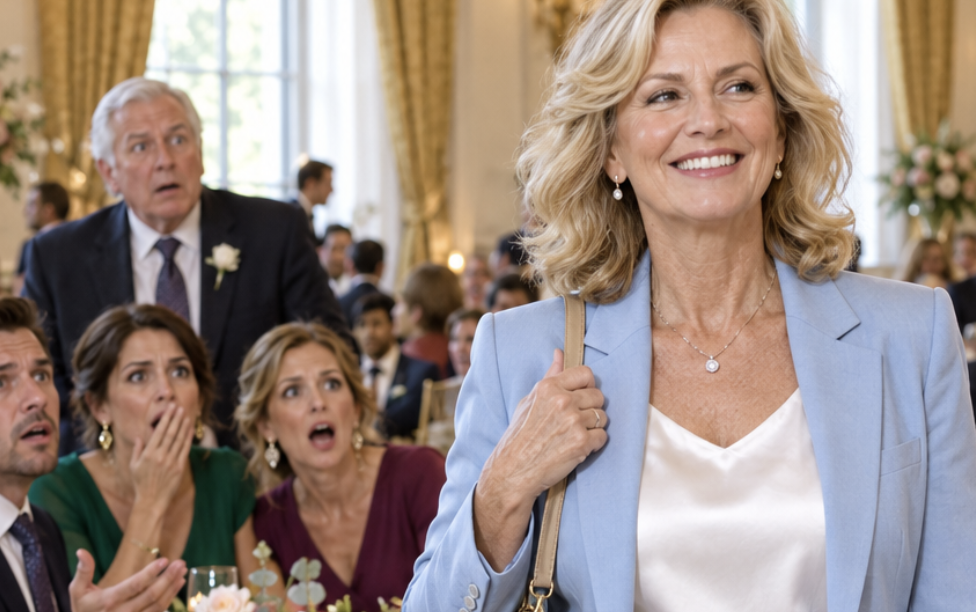
Lyudmila was only planning to turn off the timer.
Vadim’s tablet was on the kitchen table beside the cutting board. About ten minutes earlier, her husband had been watching some review on it, then left to take a work call and left the screen on.
Lyudmila washed her hands, reached for the tablet—the fish was baking in the oven and the timer was starting to grate on her nerves—when a message from Rimma Fyodorovna popped up.
“Tell Stas not to be stingy and to get good cognac. Lyuda’s going to take care of the bill anyway.”
Lyudmila read it once.
Then she read it again.
The timer kept beeping.
She turned it off, put the tablet back, and opened the oven.
The fish was done.
But it seemed that the family banquet was only just starting to get interesting.
There were still two days left until the dinner at the restaurant.
The gathering was Rimma Fyodorovna’s idea. Her youngest son, Stanislav, had landed a great job in Nizhny Novgorod and was planning to move there with his wife Irina and their two kids. They’d already rented an apartment, were packing up belongings, and had scheduled a moving truck for next week.
Rimma Fyodorovna decided that before they left, the closest family should definitely get together.
Lyudmila actually liked the idea.
She herself suggested a restaurant not far from the center—a place with good food, nothing too fancy, and a private room where all fourteen people could sit at one large table without having to shout over someone else’s wedding.
But Lyudmila made one condition clear from the start.
Let’s not have that situation where one person collects money from everyone later, she told her husband. Each adult pays for themselves. Parents pay for their kids. It’s simpler that way.
Vadim was sitting on the couch at the time, scrolling through the restaurant menu.
“I really don’t care,” he replied. “It’s fine.”
For Lyudmila, that was the end of the discussion.
She and Vadim had always kept their finances pretty straightforward. They’d lived together for six years, four of those married, and long ago realized: it’s easier to agree once than to argue every month over who spent too much on the car, makeup, or fishing gear.
Both would transfer an agreed amount toward their joint expenses: groceries, utilities, household purchases, vacations. The rest was personal money.
That went for bonuses, too.
A month ago, Lyudmila received a generous quarterly bonus. She immediately set some aside, and planned to use part of it in the fall to buy a new laptop. Vadim knew about this.
But, as it turned out, he saw things a bit more broadly.
Over dinner, Lyudmila didn’t say anything to him.
Vadim came back to the kitchen, tried the fish, and asked:
“Did you add salt?”
“I did.”
“Then it’s fine.”
She looked at her husband.
From the outside, he seemed like a completely ordinary person. Eating potatoes, telling stories about how the printer at work broke down, and asking whether he should buy a watermelon tomorrow.
Nothing gave away the fact that, meanwhile, this very person had already made plans for her bonus money.
After dinner, Vadim went to take a shower.
Lyudmila picked up her phone and called the restaurant.
“Could you please tell me, we have a reservation for fourteen people on Saturday under the name Korolyov. Is it possible to have separate bills instead of one total bill?”
The manager checked the reservation.
“Of course. It’s best to let the waiter know at the beginning of the evening.”
“And if someone asks to combine everything into one bill?”
“We’ll combine them if the guests agree.”
“Then please note: do not combine my orders with anyone else’s without my consent.”
The woman paused for a second.
“Alright.”
Lyudmila thanked her and ended the call.
She didn’t want to start a domestic argument two days before Stanislav’s going-away party.
She could have shown the message to Vadim right away. He would definitely say his mother misunderstood everything, that he meant something else, that Lyudmila was getting worked up over nothing.
And then they would have a fifteen-minute argument at the restaurant terminal.
Lyudmila decided to find out exactly what he really “meant.”
Already the next day, it became clear that it wasn’t just about the cognac.
That evening, Vadim once again left his tablet in the kitchen. Lyudmila didn’t open it, but the notifications from the family chat just kept coming.
“Are the seafood dishes any good there?”
“Stas wants to try a steak.”
“If we’re getting cognac, let’s not buy the cheapest one.”
“I checked out the desserts—they look gorgeous.”
Lyudmila especially liked Aunt Tamara’s message:
“Since Lyudochka is treating us, there’s no reason to hold back!”
At that moment, Lyudochka was sitting right opposite, eating an apple, and this was the first she’d heard that she was, apparently, hosting everyone.
Next came Rimma Fyodorovna’s reply:
“She got a good bonus. That money isn’t a big deal for her.”
That phrasing actually made her laugh.
Lyudmila remembered how just a week ago, the same Rimma Fyodorovna spent half an hour explaining to a market vendor why parsley for a hundred rubles a bunch was simply outrageous.
Other people’s money was always, somehow, less of a big deal.
On Saturday, Lyudmila took longer than usual to get dressed.
It wasn’t because she was nervous.
She was deciding whether or not to take her wallet.
In the end, she put her keys, some lipstick, tissues, and five thousand rubles in cash into a small bag. She left her bank card at home.
Her phone, too.
She did it on purpose.
At the door, Vadim glanced at her purse.
“You’re traveling light today.”
“What should I put in it? A towel?”
“No, it’s just your bag is usually bigger.”
“No big moves today.”
He shrugged.
Lyudmila almost always paid with her phone. The card could sit in a drawer for weeks without being used.
Vadim knew this perfectly well.
They were the first to arrive at the restaurant.
Gradually, the others followed.
Rimma Fyodorovna showed up dressed up and happy, hugged Stanislav, and spent ten minutes asking Irina whether everything was packed for the kids’ trip.
Then came Aunt Tamara with her husband Nikolai, cousin Oleg with his wife Svetlana, and Lena with her husband Artyom and their ten-year-old son.
Fourteen people in all.
Lyudmila even thought the evening just might go smoothly.
For about the first seven minutes, it did.
Then the menus arrived.
Rimma Fyodorovna opened hers and immediately said:
“No one’s pinching pennies tonight. Stas doesn’t move away every week.”
Stas gave a little grunt.
“Mom, I’m just moving to Nizhny, not Mars.”
“So what? It’s still far.”
Lyudmila pretended to study the salad section closely.
Stanislav asked the waiter about the steak.
“Is the one with the marbled beef any good?”
“Yes, it’s one of our most popular.”
“Then I’ll have that.”
Irina was flipping through the seafood and fish section.
“Can I order the platter for two just for myself?”
The waiter smiled:
“You can. It’s just pretty big.”
“No worries, I’ll manage.”
Meanwhile, Aunt Tamara pointed out an appetizer she described as “mysterious for that price,” but after Rimma Fyodorovna said, “Go for it, you only live once,” she ordered it anyway.
Oleg became interested in the cognac.
“Is this one any good?”
Nikolai leaned over to look.
“It’s good. The price, though, isn’t.”
“But we’re splitting the bottle among everyone.”
“Well, in that case, why not.”
A minute later, they were discussing getting two bottles.
Lyudmila watched.
When someone knows they’re not paying, the menu suddenly seems full of exciting choices.
Homemade hot dishes start to feel boring.
Ordinary salads seem way too simple.
And even a mid-priced cognac can look almost like an insult to family tradition.
The waiter patiently took their order.
Then he paused and asked:
“Excuse me, but how would you like the bills arranged? One check or separate?”
Lyudmila lifted her eyes from the menu.
She had been waiting for that exact question.
Rimma Fyodorovna didn’t even look at anyone else.
She just waved a hand at Lyudmila.
“All together. Lyudmila will handle it.”
Now things at the table got truly interesting.
Lyudmila opened her bag.
She looked inside.
She moved the tissues around a bit, even though she knew full well there was no phone in there.
Then she looked up.
“Oh.”
Vadim turned to her.
“What?”
“I left my phone at home.”
Rimma Fyodorovna didn’t realize how serious this was just yet.
“So what?”
“That’s how I pay for things.”
Lyudmila closed her bag.
— So it looks like you’ll have to pay for the banquet yourselves.
The silence was so profound, you could hear the bartender pouring ice into a metal bucket behind the next door.
Stanislav was the first to pull himself together.
He turned to the waiter:
‘Excuse me, has my steak already started cooking?’
— No, the kitchen is still waiting for confirmation on the main courses.
‘In that case, let me look at something else.’
Irina quickly found the right page too.
‘And please hold off on the seafood platter for now.’
‘Of course.’
‘I just realized… it’s going to be a bit heavy for the evening anyway.’
Oleg took the menu back.
‘We haven’t confirmed the cognac either, right?’
— No, we haven’t.
‘Perfect.’
Nikolai coughed into his fist.
‘Honestly, I have to drive tomorrow.’
‘But you’re only driving in the morning,’ Tamara reminded him.
‘Which is why I still need to drive.’
Vadim stared at his wife for a few seconds.
Then he leaned in closer.
‘Why did you set this up?’
Ludmila also kept her voice low.
‘Set up what, exactly?’
‘This little show with the phone.’
‘There was no show. You told your mom that I was paying for everything.’
He fell silent.
Ludmila went on:
‘If you’re so eager to keep your promise, you have your phone right there.’
Vadim glanced automatically at the phone next to his plate.
Then at the menu.
Then back at the phone.
For the first time that evening, he actually started to calculate carefully.
Ludmila could almost see the gears turning in his head.
Fourteen people.
Starters.
Main courses.
Alcohol.
Desserts.
Kids’ meals.
A few salads.
Two bottles of cognac, which just a minute ago seemed absolutely vital for a proper send-off for the younger brother.
Vadim scrolled through his banking app.
His face didn’t change, but his enthusiasm for footing the group bill faded visibly.
‘Maybe paying separately really would be easier,’ he said.
Rimma Fyodorovna turned to her son.
‘Vadik, come on, what’s all this? Lyuda could treat the family just this once.’
Ludmila looked at her mother-in-law.
‘I could.’
‘See?’
‘If it was my own decision.’
Rimma Fyodorovna pressed her lips together.
‘I don’t see what difference it makes.’
‘It makes a big difference. When I say, “I invite you all and I’m treating,” it’s a gift. But when I find out at the restaurant that someone has already decided for me how much I’ll spend, that’s a whole other story.’
‘No one decided for you.’
Ludmila smirked.
‘Then why was Stas told to get the good cognac and not to hold back?’
Rimma Fyodorovna fell silent.
Vadim jerked his head around.
‘You read our messages?’
‘A message popped up on your tablet. I didn’t even have to open anything.’
‘What message?’ Stanislav asked.
‘No message,’ Rimma Fyodorovna said quickly.
Ludmila looked at him.
‘The message saying you could order the good cognac, because I’d cover the total bill.’
Stas blinked.
‘I never asked for that.’
‘I know.’
That was actually true.
Ludmila wasn’t angry at Stanislav.
He genuinely believed that his older brother and sister-in-law had offered to pay for the banquet.
Rimma Fyodorovna had passed along the information that way.
Irina set her menu aside.
‘Wait. We were told that Lyuda was hosting.’
‘I found the restaurant,’ Ludmila answered. ‘But Vadim and I agreed right away: every adult pays for themselves, and parents cover their own kids.’
Suddenly, several people turned to look at Vadim at the same time.
Vadim reached for his glass of water.
“I told Mom that if it’s inconvenient to split the bill, Lyuda can pay first and then everyone else will transfer their share,” Vadim said.
Lyudmila turned to him.
There it was—the missing part of the plan.
“Did you discuss this with me?” she asked.
Vadim didn’t respond.
“I see,” Lyudmila said.
Rimma Fyodorovna decided to help her son out:
“They could just send the money later. What’s the big deal?” she chimed in.
Lyudmila pulled a napkin from her bag.
“Did you actually tell the relatives that they’d need to pay you back afterward?” she asked.
Her mother-in-law looked at her, now a little less confident.
Another awkward pause settled over the table.
Aunt Tamara suddenly found the bread basket very interesting.
Oleg adjusted his watch.
Svetlana started scrolling through something on her phone.
The answer was obvious.
Rimma Fyodorovna had never told anyone about returning the money.
On the contrary.
She had even managed to convince the family that Lyudmila was treating everyone because she got a bonus and that money was “no big deal” for her.
Lyudmila didn’t press the subject.
“Alright, we’re here to see Stas off, not do accounting. Let’s just each pay for ourselves like we originally agreed,” she said.
The waiter, who had been professionally studying his notepad all this time, perked up.
“In that case, I can give you separate bills for each family,” he offered.
“Perfect,” said Lyudmila.
And that’s when things got really funny.
Stanislav swapped his steak for a regular meat with vegetables.
Irina changed her seafood platter order to just fish.
Oleg decided cognac was totally unnecessary.
“A glass of wine each will do just fine,” he suggested.
Nikolai quickly agreed:
“That’s what I said all along.”
Aunt Tamara decided to skip the second appetizer.
“Who needs so much food? We won’t even finish the first course,” she claimed.
Just five minutes ago, the idea of not finishing all the food hadn’t bothered her at all.
Svetlana closed the dessert menu.
“I don’t eat sweets at night,” she declared.
Lena glanced at her.
“But last week you ate two pieces of cake at my place,” she pointed out.
“That was during the day,” Svetlana replied.
Even Rimma Fyodorovna started to be more careful.
“A salad is enough for me. I’ll think about a main course later,” she said.
Lyudmila could barely keep from laughing.
Apparently, the power to pay for your own cravings had a miraculous healing effect.
Appetites were noticeably adjusting right before everyone’s eyes.
Yet, after that, the evening suddenly became surprisingly normal.
The first twenty minutes were a little awkward.
Then the kids began arguing over who would get to sit by the window in Stanislav’s new car.
Nikolai shared a story about how, twenty years earlier, he’d moved to another neighborhood and had to transport a wardrobe on the roof of his Zhiguli.
Stanislav showed everyone photos of his soon-to-be home.
Irina talked about finding a good school nearby.
Even Rimma Fyodorovna gradually started to thaw.
By the time the main courses arrived, she was already making plans with her grandchildren for when she would visit their new home.
Lyudmila looked around the table and realized the celebration wasn’t any worse just because everyone was paying for themselves.
No one was left hungry.
No one was counting the pieces of bread.
All that disappeared were two extra appetizers, a huge seafood set, an expensive steak, and the alcohol people had started eyeing a lot more after learning Lyudmila would be paying.
When it was time to settle up, the waiter brought over several separate checks.
Each family quietly settled their bill.
Lyudmila pulled out some cash.
Vadim was surprised.
“You have money?”
“Enough to cover my own dinner.”
“And your phone?”
“At home.”
He gave her a long look.
“Did you leave it there on purpose?”
Lyudmila slipped the bills into the check folder.
“Of course.”
“So this was all an act, then?”
“No, an experiment.”
“And what’s the result?”
She nodded over at Oleg, who was just telling the waiter:
“No dessert for us, we’re absolutely stuffed.”
“Pretty clear result, I’d say.”
Vadim offered a wry smile, though it was obvious he still wasn’t in the mood to laugh.
The total of all the families’ bills ended up almost half of what those enthusiastic early orders seemed to predict in the first fifteen minutes.
And interestingly enough—there was still food left over.
Stas left feeling satisfied.
As he was leaving, he caught up to Lyudmila near the coat check.
“Hey, just so you know, we really didn’t mean to treat ourselves at your expense.”
“I didn’t think that at all.”
“Mom said you and Vadim were treating everyone.”
“I figured it out.”
Stanislav grimaced.
“It turned out a bit awkward.”
“Well, now you know: if anyone tells you a third person is paying, make sure you check with that third person first.”
He laughed.
“I’ll remember that.”
Once home, the first thing Lyudmila did was grab her phone from the nightstand.
There weren’t too many missed calls.
Just one work call.
Two were ads.
And three messages from the family chat.
Vadim took off his jacket and went to the kitchen.
Lyudmila put the kettle on.
For a few minutes, neither of them said a word.
Then Vadim spoke up:
“I really did tell Mom that you could pay.”
“I figured as much.”
“My plan was to collect everyone’s share afterwards.”
Lyudmila turned to him.
“How, exactly?”
“Well… people would send the money.”
“Who would?”
“What do you mean?”
She unlocked her tablet, found that specific message, and set it in front of him.
Then she showed him a few other notifications she’d already spotted.
“Lyudochka is treating.”
“She got a bonus.”
“She won’t miss that money anyway.”
Vadim read them.
Then he scrolled back a bit further.
His expression completely changed.
“Mom…”
“Exactly.”
“I told her everyone would pay her back afterward.”
“And she told everyone else not to worry about paying anything.”
He stared at the screen for a bit.
Lyudmila poured hot water into the mugs.
“Tell me honestly: if I’d grabbed my phone and paid for everything today, would you have actually called Aunt Tamara tomorrow and asked for the money?”
Vadim didn’t answer right away.
“I would have.”
Lyudmila looked at him.
“Everyone?”
He sighed.
“I’m not sure.”
“See, I don’t think you would’ve either. Mom would have said it was awkward. Stas is moving—he’s got extra costs. Aunt Tamara would’ve taken it the wrong way. Then someone would have sent two thousand instead of four, and in the end, half the bill would’ve landed on me.”
Vadim sat down at the table.
“That sounds about right.”
“Honestly, it wasn’t even the bill that made me mad.”
“So what was it?”
“It was the fact you two decided my money could just be promised to everyone else without even asking me first.”
He nodded.
He didn’t argue.
And Lyudmila appreciated that more than any explanation.
After a minute, Vadim said:
“I screwed up.”
“Yeah.”
“Badly?”
“Pretty decently.”
He smiled wryly.
“Thanks for going easy on me.”
“You’re welcome.”
Lyudmila sat down across from him.
“Vadim, I don’t want to be doing these tricks every single time. If we agreed our personal money is personal, then you don’t make promises about my money. And I won’t promise yours. Not even to your mom. Not even to Stas. Not even if someone is planning to pay it all back later.”
“I understand.”
“Good.”
And with that, their conversation was over.
No marathon family court session.
No dramatic silent treatment.
No trying to force each other to apologize seven more times.
But still, Lyudmila decided to see just how well her husband really understood.
She got her chance a month later.
It was Rimma Fyodorovna’s birthday.
She suggested everyone gather at her place and asked Vadim to stop by the store for groceries and a cake.
“We’ll settle up later,” his mother said.
Previously, Vadim would have just paid for everything with the family card and mentioned it to his wife after the fact.
But this time he came to Lyudmila in the evening, phone in hand.
“Mom’s asking me to shop tomorrow. It’ll be about eight thousand, she says she’ll pay me back later. I’ll pay with my card, okay?”
Lyudmila looked at him.
“Of course.”
“I just wanted to tell you ahead of time.”
“That’s the right thing to do.”
He was already walking to the next room when she added:
“See? This time you didn’t even have to forget your phone at home.”
Vadim burst out laughing.
“If you remind me about this one more time, I’ll start giving you your salary in cash.”
“Try getting access to my salary first.”
“Alright, alright. Don’t start.”
At Rimma Fyodorovna’s birthday, nobody brought up the restaurant topic.
But a few months later, a message popped up in the family chat.
Rimma Fyodorovna invited everyone for Sunday dinner at a café.
She wrote the time, the address, and on a separate line:
“Everyone pays for themselves, so there are no surprises.”
Lyudmila read the message over breakfast.
Vadim saw it too and glanced over at his wife.
“So, what do you think?”
Lyudmila reacted to the message.
“Nothing.”
“Not even a comment?”
“Why? Everything’s perfectly said.”
And it really was.
Sometimes people don’t need long talks about boundaries, respect, or the family budget.
Sometimes all it takes is one dinner out, a few separate checks, and a phone that — conveniently — was left at home.
And their relatives discovered something else after that night.
When everyone knows for sure they’re paying for themselves, nobody seems to worry about whether the cognac is good enough anymore.