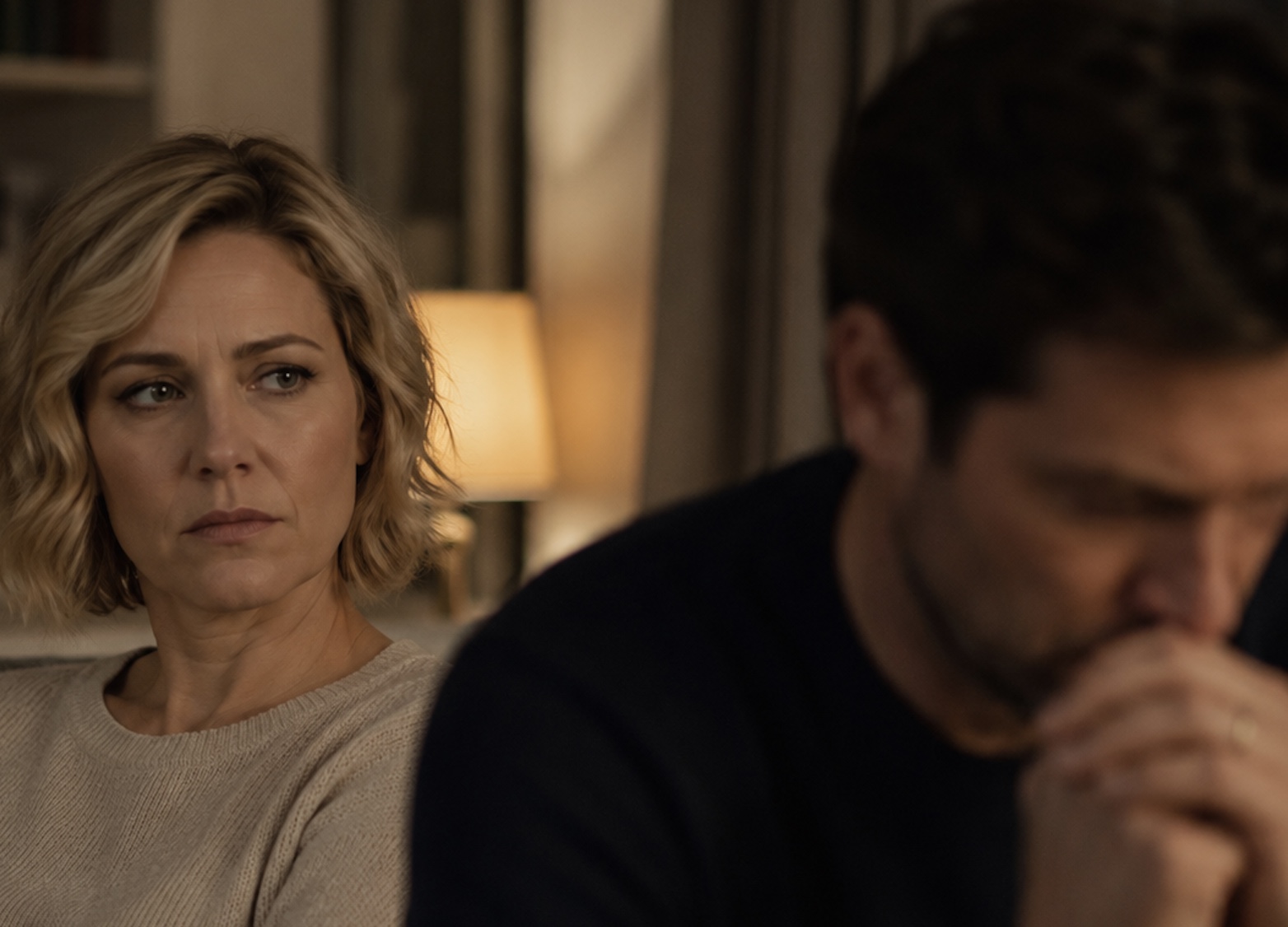
Marina was sitting in the kitchen of her new apartment, sorting through old photographs of her grandfather. She had grown up within these walls. Every scratch on the parquet floor held a piece of her childhood; every crack in the ceiling carried someone’s story. Her grandfather was now living with her mother, Galina Petrovna, and the apartment had been left to Marina.
Anton came in, placed a mug on the table, and sat down across from her. His face looked serious, as if he had been preparing himself for an important conversation. Marina smiled at him gently, warmly — the way people smile when they still believe.
“Marina, I’ve been thinking,” he said. “We should agree on money right away, so we don’t argue later.”
“Of course,” she replied. “Let’s talk about it. We’re just starting to live together, so it’s better to discuss everything from the beginning.”
“I suggest we keep separate budgets. Each of us pays for our own things, and shared expenses are split fifty-fifty. Fair and transparent.”
Marina fell silent for a moment. Something pricked inside her — not painfully, but like a cold draft brushing her cheek. Still, she decided that fair meant fair. He wasn’t being greedy, she told herself. He was simply being practical.
“All right, Anton. I agree. Half and half means half and half.”
He nodded and went into the other room. Marina remained at the table for a long time, looking through the photographs. In one of them, her grandfather was holding her in his arms — a tiny three-year-old girl with a bow in her hair. She pressed the photo to her chest.
The first two weeks went smoothly. They took turns buying groceries and split the utility bills. Marina even felt relieved: no conflicts, no resentment. Everything seemed mature and reasonable.
Then the washing machine broke.
Marina called a repairman. The bill turned out to be quite expensive. She went to Anton with the receipt in her hand.
“Anton, here’s the receipt for the repair. Your half is four and a half thousand.”
“Wait a minute,” he said. “The washing machine is in your apartment. It’s your property. What does that have to do with me?”
“You use it too. Every day. You wash your clothes in it.”
“Marina, the apartment belonged to your grandfather, so the appliances are your responsibility. I’m not going to invest money into someone else’s property.”
Marina stood there with the receipt in her hand, feeling her patience stretch tight — but not snap. Not yet. She folded the receipt and slipped it into her pocket.
“All right,” she said quietly. “I’ll remember that.”
A month later, Marina developed a terrible toothache. She couldn’t sleep all night, and by morning her cheek was swollen. The dental clinic agreed to see her urgently, but the treatment would cost twenty-eight thousand. Marina checked her account: after repairing the washing machine and paying the utilities, she had just over five thousand left until payday.
“Anton, I need help,” she said. “I have to get my tooth treated urgently, but I don’t have enough money until my salary comes in. Can you lend me some?”
“Lend you? Meaning you’ll pay me back?”
“Yes, I’ll pay you back from my salary. It really hurts. I can’t wait.”
“Marina, we have separate budgets. You agreed to that yourself. Your health is your expense. Call your mother or Dmitry. Let them help.”
She called her brother. Dmitry transferred the money within twenty minutes, without even asking what it was for. He simply said, “Hang in there, sis.”
And Marina understood the difference — the difference between blood and a stamp in a passport.
The tooth was treated. The pain went away. But another pain remained — quieter, deeper, aching somewhere inside. That evening, Marina sat down and opened a notebook for the first time. On the first page, she wrote one word: “List.”
Just “List.”
And then she began to write.
A week later, Marina asked Anton to drive her to work because her car was at the service station. Anton gave her a ride. The next day, he happened to be passing by her office and called.
“Should I pick you up?”
She agreed.
At the end of the week, Anton sent her a message:
“Gas for this week — 1,200. Send it to my card.”
“Anton, are you serious? I was on the way anyway. I picked you up because it wasn’t hard for me.”
“We have an agreement. Gas is an expense. You drove me, so you spent fuel. Be consistent.”
“Consistent? When I asked you to pay half for the washing machine, you refused. When I needed money for my tooth, you sent me to my brother. And now I owe you for gas?”
“These are different things. Don’t mix them up.”
Marina transferred him the 1,200.
Then she opened her notebook. Wrote it down. Closed it.
Her hands were steady. Her mind was clear — with a clarity that felt almost cold.
The next day, she enrolled in professional development courses. She paid for them herself. Anton didn’t even ask where she was going in the evenings.
Four months later, Marina received a promotion and a raise. With her own money, she replaced the old sofa, bought a new refrigerator, and added a microwave. She kept every receipt. Every single one — issued in Galina Petrovna’s name. Her mother didn’t object. She even praised her.
“Well done, my girl. Your grandfather would have been happy.”
Anton, meanwhile, took out a car loan without saying a word to his wife. Marina found out by accident when she saw the documents on the nightstand.
“Anton, what is this?”
“A car loan. A new car. My old one is falling apart.”
“You didn’t tell me.”
“Why would I? It’s my money. We have separate budgets, remember?”
Marina nodded.
She remembered.
She remembered very well.
In her notebook, she wrote: “Car loan. No discussion. His decision.”
That Saturday, Marina went to visit Nastya. Her old school friend lived on the other side of the city, and they hadn’t seen each other in a long time. Nastya opened the door, hugged her, and pulled her into the kitchen. Her little daughter — tiny, funny, with two ponytails — was crawling across the rug, dragging a stuffed cat by its tail.
Nastya’s husband came in carrying grocery bags. He placed them on the table, took out the food, and kissed his wife on the temple.
“I got you some cherries. And this too — I walked past the shop and saw it.”
He handed Nastya a small box. Earrings. Simple silver ones with turquoise.
“Oh, why did you do that?” Nastya blushed. “I already have earrings!”
“You have different ones. These match the dress you tried on yesterday.”
Marina watched them, and something tightened in her throat. Not from envy. From contrast. From realizing that life could be different.
It simply could.
“Nastya, tell me honestly. Have you and your husband ever had separate budgets?”
“You mean completely separate? No. Why would we? He earns, we spend. I earn, we spend. What difference does it make where the money comes from if we live one life together?”
“And if you need something for yourself?”
“I buy it. He does the same. We don’t ask permission, but we tell each other. That’s not interrogation — it’s interest.”
Nastya’s husband chuckled from the stove, where he was stirring something in a pot.
“Marina, if a man counts every penny his wife spends, he’s not really counting money. He’s measuring how much she matters to him. And usually, the answer is: not very much.”
Marina came home late. Anton was sitting in front of the television. He didn’t ask where she had been. He didn’t ask how she got home. He didn’t ask anything.
She went into the bedroom, opened her notebook, and underlined the word “List” with a thick line.
Marina celebrated her birthday at a restaurant. She invited Nastya and her husband, as well as her brother Dmitry. Anton invited his sister Svetlana and his mother, Tamara Ivanovna. The table was large and beautiful, covered with a white tablecloth. A waiter brought the menu.
The evening began pleasantly. Dmitry joked, Nastya talked about her daughter, and Nastya’s husband refilled everyone’s wine glasses. Svetlana kept glancing at Anton, while he ate silently, with a focused expression. Tamara Ivanovna sat with her back perfectly straight and looked at Marina with the sort of expression people usually hide behind polite smiles.
When dessert was served, Anton called the waiter over.
“One bill, please.”
“Wait,” Marina said, raising her hand. “Please split the bill. Mine separately: myself, my brother, and my friend with her husband. The rest separately.”
Anton froze. His fork hung in the air.
“What are you doing?”
“I’m paying for myself and for the people I invited. You invited your mother and sister, so you pay for them. We have separate budgets, remember? You insisted on it. And this is my birthday too, by the way.”
“What do you mean, yours? We’re husband and wife!”
“A husband and wife with separate budgets. Your words, Anton. I’m simply following the rules.”
Tamara Ivanovna turned pale.
“Marina, you are embarrassing the family. This is indecent.”
“No, Tamara Ivanovna. What’s indecent is a husband refusing to help his wife pay for urgent dental treatment. What’s indecent is charging her for gas when he was driving the same way anyway. What’s indecent is using the washing machine but demanding that only your wife pay for the repair. That is indecent.”
Svetlana grabbed Anton by the sleeve.
“Anton, what is she talking about? Is that true?”
Anton said nothing.
Dmitry looked at him with a heavy gaze and said quietly:
“I paid for my sister’s tooth, Anton. Aren’t you ashamed?”
“Dmitry, this is our business.”
“No. It stopped being just your business when you started saving money on the person who washes your shirts, irons them, cooks your food, and has never — not once — charged you a kopeck for it.”
Marina paid her part of the bill. Then she stood up and looked at Anton.
“Starting tomorrow, I will no longer wash your clothes, iron them, or cook for you. If you want those services, you’ll pay the rates. Laundry — five hundred rubles per load. Ironing a shirt — three hundred. Dinner — fifteen hundred. I’ve made a price list. It’s on the refrigerator. And yes, from today on, living in the apartment is also paid. The apartment is mine.”
“Have you lost your mind?” Anton jumped to his feet.
“No. I’m perfectly sane. For the first time this year, I am absolutely sane. I offered three times to reconsider our arrangement. Three times. You refused. So now we play by your rules until the end.”
She walked out of the restaurant. Nastya and her husband followed her. Dmitry stayed behind for a moment, looked at Anton once more, shook his head, and left too.
A week passed.
Anton tried cooking for himself and burned two frying pans. He tried ironing and scorched a shirt. He took his clothes to a laundry service, calculated the cost, and clutched his head.
That evening, he came to Marina.
“Marina, enough. Let’s go back to the way things were.”
“The way things were? You charging me for gas while I run your household for free? No.”
“Then let’s cancel the separate budget altogether.”
“Too late, Anton. I suggested that three times. You refused three times.”
“I didn’t understand then…”
“But I did. I understood that you don’t see me as a person. You see me as a function. A free one.”
He fell silent. Then his voice hardened.
“I need help with the car loan. The payment is due on Friday. I don’t have enough.”
“We have separate budgets.”
“Marina!”
She took out the notebook. That same notebook. She opened it to the right page and placed it in front of him.
“Here. Look. This is a list of all the free services I provided you over the past year. Laundry, ironing, cooking, cleaning, grocery shopping for things only you ate, small repairs I paid for myself. Total: nine hundred forty-seven thousand rubles. Let’s round it up — almost a million. Pay me back first.”
Anton stared at the pages. Lines, dates, sums. Everything neat, everything marked. His face shifted from surprise to confusion, then from confusion to anger.
“This is nonsense. A wife can’t invoice her husband for housework!”
“But a husband can invoice his wife for gas? He can refuse to help with medical treatment? He can take out a loan without saying a word? You chose these rules, Anton. I’m living by them.”
He slammed the door. Packed a bag. Left.
Marina filed for divorce three days later. She didn’t drag it out, didn’t wait, didn’t hope he would come to his senses. She simply filed. The documents were ready, and the notebook was attached.
Anton came back with Tamara Ivanovna. She was in a fighting mood.
“Marina, do you really think my son will leave empty-handed? He lived in this apartment. He has a right to a share! The furniture, the appliances — he used them too!”
“Tamara Ivanovna, the apartment belongs to my grandfather. The furniture and appliances were bought by me and registered in my mother Galina Petrovna’s name. She has all the receipts. Every purchase agreement is in her name.”
“That is vile!”
“No. That is foresight. I learned it from your son. He explained very clearly that everyone must take care of what belongs to them.”
Svetlana, who had come to support her brother, suddenly turned to him.
“Anton, is this true? Did you really charge her for gas?”
“Svetlana, stay out of it.”
“No, I won’t. You didn’t help her with her tooth? Her tooth, Anton? Do you know how much dental treatment costs?”
“Svetlana!”
“Mom, did you know about this?”
Tamara Ivanovna pressed her lips together.
“Every family decides its financial matters for itself.”
“Mom, this isn’t a financial matter. This is greed. Plain, ordinary greed. And I’m not going to support it.”
Svetlana stood up, walked over to Marina, and said quietly:
“I’m sorry for my brother. I’m ashamed.”
Marina nodded. She didn’t forgive — but she appreciated it.
The divorce was finalized quickly. Anton received nothing. The car loan remained his. The apartment belonged to Marina’s grandfather. The furniture and appliances were registered in Galina Petrovna’s name. The separate budget he had loved so much worked against him: everything he earned, he spent on himself, and he couldn’t prove he had contributed anything to their shared life. Not one receipt. Not one payment slip. Nothing.
After all the formalities, Marina stepped outside. Nastya was waiting there with her husband and their little daughter in a stroller, holding a balloon.
“Marina! It’s our Aliska’s birthday today — did you forget?”
“Oh my God, you’re right. I forgot.”
Nastya’s husband smiled and handed Marina a chrysanthemum — white, fluffy, with slightly curled petals.
“This is for you. I remember that you like them.”
Marina took the flower, breathed in its scent, and looked at her friend, her husband, and little Aliska sleeping in the stroller.
“Thank you. Thank you for everything.”
“Come with us,” Nastya said. “The cake is already at home. Dmitry said he’ll stop by too.”
Marina got into the car. They folded the stroller into the trunk. Nastya’s husband started the engine, and Nastya turned around from the front seat.
“So, free woman, how does it feel?”
“You know, Nastya… Light. Strangely light. A forgotten kind of lightness. As if I spent a whole year carrying a suitcase that didn’t even belong to me.”
Nastya’s husband gave a small laugh.
“A suitcase without a handle — too heavy to carry, too pitiful to throw away. But you threw it away. Well done.”
They drove off.
Anton stood by the entrance beside Tamara Ivanovna. His new car, the one he still had three years of payments left on, glittered in the parking lot. He had no apartment. Nowhere to return to — his mother lived in a one-room flat with Svetlana, who, after everything that had happened, could barely speak to him without clenching her teeth.
Tamara Ivanovna looked at her son.
“So what now?”
“I don’t know, Mom. I don’t know.”
“I told you to be softer with her.”
“You told me not to spend extra money on her!”
“Me? I never said that!”
“Mom!”
Svetlana, who had been standing a little apart, couldn’t hold back anymore.
“You did say it, Mom. I heard you on the phone. ‘Antosha, don’t give her money. She’ll get her hands on everything and throw you out.’ Well, now he has no money — and he’s been thrown out. Congratulations. Your motherly advice worked perfectly.”
Tamara Ivanovna opened her mouth, closed it, then opened it again.
She said nothing.
Anton got into his financed car. He turned the key. The dashboard lit up — and immediately a red warning light flashed: engine overheating. The car stalled.
He slammed his hands against the steering wheel and lowered his forehead into his palms.
And somewhere across the city, in a warm apartment, little Aliska was blowing out a candle on her cake. Marina clapped along with everyone else. Dmitry poured tea. Nastya’s husband cut the cake. Nastya took pictures.
And Marina thought: this is family. Real family. No price lists. No calculators. No notebooks. No receipts.
Just people who need you.
Not for something.
Simply because they need you.
The chrysanthemum stood in a glass on the windowsill — white and quiet, like a new beginning.