Marina was sitting at the kitchen table with a sketchbook open in front of her. The pencil moved smoothly across the paper, as if it already knew where it was supposed to go. Beside her, Alice was carefully coloring a picture, the tip of her tongue sticking out in concentration.
“Mom, is that a flower?” Alice asked, pointing at the sketch.
“It’s going to be a garden, sweetheart. A beautiful, beautiful garden with a fountain and swings.”
“Like our yard?”
“Much better than our yard,” Marina said with a smile, brushing a strand of hair away from her daughter’s forehead.
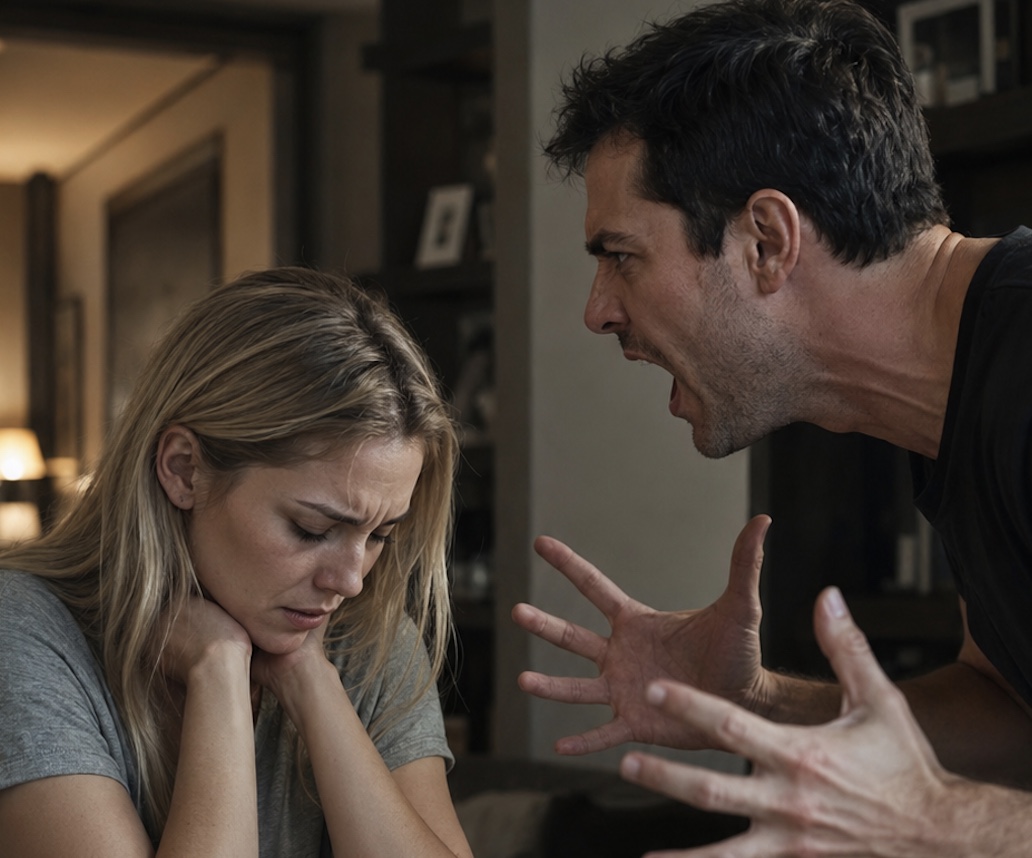
The front door slammed. Heavy footsteps sounded in the hallway. Marina quickly closed the sketchbook and pushed it under a stack of magazines. Alice lifted her head and froze.
“Is dinner ready?” Artyom walked into the kitchen and threw his keys onto the table.
“Yes, everything’s on the stove. I’ll heat it up now.”
“What are those magazines?”
“Just magazines. Alice was looking at the pictures.”
Artyom’s eyes slid across the table, then stopped on his daughter. Alice went back to coloring, carefully avoiding his gaze. Marina put a plate down, poured soup into it, and added a slice of bread.
“I spoke to my mother,” Artyom said before Marina even had a chance to sit down. “She’s coming tomorrow. Says she wants to see how you’re living here without supervision.”
“We’re living just fine, Artyom. The house is clean. The child is fed.”
“She knows better.”
Marina clenched her teeth but said nothing. She had learned long ago how to choose her moments. This was not the time, not the place, not the right tone. Patience was not weakness, she reminded herself every evening.
“Alice, finish your food and go brush your teeth,” Marina said gently.
“Mom, can I draw a little more?”
“Tomorrow, sunshine. Tomorrow you’ll draw something new.”
The little girl obediently slipped down from her chair and left the kitchen. Marina watched her go, then turned back to her husband. He was eating with his eyes fixed on his phone. She wanted to bring up kindergarten, but changed her mind.
Not today.
“Artyom, I wanted to discuss something with you.”
“What?”
“Alice will be four in six months. Maybe we should start thinking about kindergarten. She needs to be around other children, to develop.”
Artyom slowly put down his spoon. He raised his head. His gaze became heavy, like a cast-iron pan sitting on the stove.
“We’ve already discussed this.”
“No, Artyom. You decided it. Alone. We didn’t discuss anything.”
“What is there to discuss? I earn the money. You stay home. The child is watched over. Everyone’s happy.”
“I’m not happy.”
“You’re not supposed to be happy. You’re supposed to be grateful,” he said with a smirk, then looked back at his screen.
Marina pressed her lips together. She stood up and began clearing the dishes. Her hands moved automatically: wash, wipe, put away. But her mind was working in a completely different direction.
That night, when Artyom had fallen asleep, she pulled a phone from beneath the mattress — an old spare phone he knew nothing about. She typed a message to her sister.
“Ira, I’m ready. Let’s begin.”
The reply came a minute later.
“Finally. I’ll be there tomorrow at two while he’s at work. Kisses.”
Irina arrived exactly at two. Her car stopped outside the building, and three minutes later she was already standing at the door. Tall, confident, with a leather folder tucked under her arm.
“Come in quickly,” Marina whispered, glancing toward the stairwell.
“You look like a spy. Do the neighbors report on you?”
“Galina Sergeyevna lives two houses away. She’s everywhere.”
Irina went into the room, sat down on the sofa, and opened the folder. Alice ran up to her aunt and hugged her around the leg.
“Aunt Ira, did you bring me pencils?”
“I did, my darling. A whole box. Go draw, and your mom and I will talk.”
Alice ran off to her room. Marina sat beside her sister. Her hands were trembling slightly.
“Ira, I’m scared.”
“I know. But listen to me. You have a degree. A red diploma, by the way. You used to create designs that made people’s jaws drop. Remember that exhibition at the Botanical Garden? They offered you a three-year contract.”
“I remember. Artyom said it wasn’t serious.”
“And you believed him.”
“I loved him.”
“So what? Is love when someone dissolves you in bleach? When you’re not allowed to spend money on tights for your daughter without permission?”
Marina lowered her head. Irina pulled several printed pages from the folder.
“Look. I have three landscape design orders right now. People are building country houses. They need gardens, terraces, relaxation areas. I can run everything through my company. You draw, design, and communicate with the clients through me. The money goes into a separate account.”
“What if he finds out?”
“How would he? You work from home while he’s gone. The files stay in cloud storage under my login. Meetings happen by video call when Alice is asleep. Oleg will help with the tech side. He understands all that.”
“Oleg knows?”
“Oleg is my husband. He’s on your side. He always has been.”
Marina took the printouts. Three country plots: one twenty hundred square meters, two smaller ones. Photos of the terrain, clients’ wishes, measurements. Her heart began beating the way it had not beaten in three years.
“Ira, what if I’ve forgotten how?”
“You haven’t forgotten. You draw every day. I’ve seen your sketches. You even redesigned the courtyard outside your building in your head. Don’t think I don’t know.”
Marina laughed quietly, careful not to let the walls hear her.
“All right. But I need time to get back into the rhythm. A week.”
“Three days. The first client wants a sketch by Monday.”
“Three days?”
“Marina, you’ve spent three years in a cage. If not now, then when?”
She nodded. Irina hugged her tightly, like only a sister could, without unnecessary words. Then she stood and closed the folder.
“And one more thing. Mom sends her love. She knows everything. And she’s with us.”
“Mom?”
“Victoria Petrovna wasn’t born yesterday. She sees what’s happening. She’s only been silent because you asked her not to interfere. But she’s waiting.”
Marina walked her sister to the door. She locked it, leaned her back against the wall, and closed her eyes.
Three days.
The first sketch by Monday.
She could do it.
She definitely could.
That evening Artyom came home later than usual. He was irritated.
“My mother says someone came to see you during the day.”
“Irina stopped by. She brought pencils for Alice.”
“Why?”
“Because she’s my sister and she loves her niece.”
“I don’t want Irina coming here. She’s a bad influence on you.”
“Artyom, she’s my sister.”
“So what? People have all kinds of sisters. I said I don’t want it.”
Marina looked at him for a long moment. Before, she would have argued, pleaded, explained. This time she simply nodded.
“Fine. As you say.”
Artyom gave a satisfied snort and went to watch television. He did not even notice that for the first time in three years, his wife had agreed without a single objection.
Because she no longer needed to argue.
She had a plan now.
Four months passed.
Marina worked like a machine: by day — the house, Alice, meals, cleaning; by night — sketches, drawings, correspondence with clients through her sister. Money gathered in the separate account like water behind a dam. Seven completed projects. Eleven satisfied clients, including those who came through word of mouth.
Her friend Lena called on Thursday.
“Marin, there’s a children’s festival on Saturday at Sunny Park. Animators, workshops, trampolines. My Danya has been too excited to sleep all week. Are you bringing Alice?”
“Lena, you know how things are with me going out.”
“I know. But your child is three and a half, and she never goes anywhere except the courtyard and the store. That’s not normal.”
“I’ll try.”
“Don’t try. Do it.”
That evening, when Artyom was in a good mood after dinner, Marina approached him.
“Artyom, on Saturday I want to take Alice to buy winter boots. Her old ones are too small.”
“Far?”
“To the shopping center on Leninsky. There and back.”
“Fine. But be home by three. Mother’s coming.”
“All right.”
On Saturday, Marina took Alice to the festival. When the little girl saw so many children for the first time, she froze with her mouth open, then squealed with joy and ran toward the trampolines. Lena stood beside Marina, watching.
“Look at her. She’s like a flower finally getting water.”
“Lena, don’t start.”
“I’m not starting. I’m continuing. Marina, listen to me. I went through the same thing. My ex controlled every breath I took. Then I left, and the world didn’t collapse. On the contrary, it finally came together.”
“You didn’t have a mother-in-law living two houses away.”
“I had something worse. I had fear. And it turned out to be a paper tiger.”
Marina said nothing. She watched Alice bouncing on the trampoline, laughing, reaching out toward other children. A pain opened inside her — physical, deep in her chest, between her ribs.
“Lena, there’s something I haven’t told you.”
“Tell me.”
“I’m working. I have been for four months. Through Irina. I have money now. Enough to rent an apartment and live for half a year without anyone’s help.”
Lena stopped. She looked at her friend with a new expression — not pity, but respect.
“Well, aren’t you a quiet little snake.”
“I’m not a snake. I’m a mother who wasn’t left any other choice.”
“And what now?”
“I don’t know yet. I’m waiting for the right moment.”
“Don’t wait. Moments don’t arrive. You create them.”
They returned home by two. Artyom checked the bags. Marina had thought ahead: she had bought the boots in advance and hidden them in Lena’s car. Everything matched.
But that evening Galina Sergeyevna called.
“Artyom, a neighbor told me she saw your wife in Sunny Park with some woman and a crowd of children. Is she lying to you?”
Artyom hung up and walked into the kitchen. Marina was washing dishes. Alice was already asleep.
“You were at the park.”
It was not a question.
“Yes.”
“You said you were going to the store.”
“I went to the store. And then to the park. Lena invited us.”
“You lied to me.”
“No. I didn’t tell you the whole truth because you wouldn’t have let us go.”
“So you admit you deceived me?”
“Artyom, our daughter is three and a half. Today was her first children’s festival. Her first. Do you understand what that means?”
“It means you don’t respect my decisions.”
“And do you respect mine? Even one of them? Even once in three years?”
He stepped close to her. Marina did not move back.
“You do what I say. Or there will be consequences.”
“What kind? Will you take away my phone again? Forbid me from seeing my sister? What else, Artyom? Chains around my ankles?”
He grabbed her arm — hard, just above the wrist. Marina yanked herself free.
“Don’t touch me. Never touch me again.”
He stepped back. Not out of fear — out of shock. In three years she had never raised her voice. Never pulled away. Never looked at him like that — directly, without pleading and without apology.
“You’ve changed,” he hissed.
“No. I’ve come back.”
The turning point came in October.
Victoria Petrovna was turning sixty. She had been preparing her anniversary celebration for three months: she booked a restaurant hall, invited relatives, friends, and neighbors. Marina bought her mother a dress — with her own secret money — and wrapped it in gift paper.
“Artyom, Mom’s anniversary is on Saturday. She’s turning sixty. I need to be there.”
“On Saturday we’re going to Aunt Nadya’s in the countryside. Mother has already arranged it.”
“What Aunt Nadya? My mother has a milestone birthday!”
“So what? Call and congratulate her.”
“Are you serious?”
“Absolutely.”
“Artyom, she’s my mother. She’s waiting for me. She’s waiting for her granddaughter. She hasn’t seen us in six months because every time, you find a reason to say no.”
“Listen, I don’t want to discuss this. The decision has been made.”
“By whom? You and Galina Sergeyevna? What about me? Where am I in this decision?”
“You’re my wife. You go where the family goes.”
Marina stood in the middle of the room, clutching the wrapped dress. A gift for her mother. For the woman who had raised two daughters alone after their father died. Who had worked without weekends so both of them could get an education.
And now her own daughter could not attend her sixtieth birthday because her husband had decided they were visiting some aunt instead.
“I’m going to my mother’s.”
“No.”
“Artyom, I am going to my mother’s.”
“I said no!”
He stood up. Went to the coat rack. Took both sets of apartment keys from the hook and put them in his pocket. Then he opened the cabinet and took her passport from the drawer.
“You’re not going anywhere. We leave at seven in the morning. Be ready.”
He went into the bedroom. Marina stood there with empty hands.
No keys.
No documents.
In an apartment that, over three years, had become a beautiful, well-kept cage.
Alice came out of her room and hugged her mother’s leg.
“Mom, are we going to Grandma Vika’s?”
“We are, sweetheart. We definitely are.”
On Saturday, Galina Sergeyevna arrived at six in the morning. Artyom threw the bags into the car. Marina got dressed and dressed Alice. They all went out together. Artyom locked the apartment and got behind the wheel.
“Galina Sergeyevna, I forgot Alice’s bottle in the kitchen. May I have the key?”
“She’ll manage. We’ll buy one on the way.”
Marina got into the car. She was silent the entire way. Artyom and his mother discussed Aunt Nadya, her renovations, her vegetable garden, and her jam. Alice fell asleep in the back seat.
At Aunt Nadya’s, Marina behaved flawlessly — smiled, helped in the kitchen, played with Alice in the yard. When Artyom and his mother went inside to look at something in the house, Marina took out the spare phone and called Irina.
“Ira, come get us. Today.”
“Where are you?”
“Kalinovka village, one hundred and twenty kilometers from the city. House with a blue fence, third from the road.”
“I’m coming. Oleg is driving. We’ll be there in two hours.”
“Quietly. Please.”
Two hours later, Oleg’s silver crossover stopped around the corner. Marina carried out Alice, whom she had rocked to sleep after lunch, and one small bag. She took nothing else.
“What about your things?” Irina asked.
“Things are just cloth. I only need her,” Marina said, nodding at her sleeping daughter.
Oleg started the engine without a word. The car pulled away.
Artyom discovered they were gone an hour later. He searched the yard, the street, and neighboring houses. He called Marina’s phone — it was switched off. Galina Sergeyevna rushed from room to room.
“She ran away! Your wife ran away!”
“Stop yelling, Mother. Where can she go without money or documents?”
But Marina was already driving down the highway, holding Alice close.
And she had money.
And documents — copies Irina had wisely arranged a month earlier.
And a plan checked down to the last comma.
That evening, Artyom returned to an empty apartment. There was nothing on the kitchen table. In the wardrobe, the hangers were bare. In the nursery, the shelves were empty. Marina had taken Alice’s documents, her drawings, her favorite stuffed cat, and the photo album.
Nothing else.
In the mailbox lay an envelope. Inside was a petition for divorce.
Artyom read it and dropped the paper. Then he grabbed his phone.
“Marina, what have you done?! Have you lost your mind?”
“No. For the first time in three years, I’m completely sane.”
“You’ll come back. You have nowhere to go. You don’t have a penny to your name!”
“You know me very badly. Then again, you never tried to know me at all.”
“I’ll find you!”
“Don’t bother. It’s pointless. The papers have been filed. Everything is legal.”
“What law? You’re my wife!”
“I was. Until today.”
She ended the call and looked at her sister. Irina was driving, her eyes fixed on the road.
“You did well,” Irina said quietly.
“I feel awful.”
“I know. But tomorrow will be better. And the day after that, better still.”
Six months passed.
The legal proceedings turned out to be short and painful — for Artyom. The marriage contract, which Galina Sergeyevna herself had once insisted on, contained a clause about division of property in cases where a spouse’s freedom had been proven to be restricted. Zhanna, Artyom’s sister, studied the document and called her brother.
“Artyom, you’re an idiot.”
“Zhanna, whose side are you on?”
“The side of common sense. Mother drew up that contract to protect you. But somehow you managed to violate every single clause she put in it. Restricting movement, taking documents, financial isolation — it’s all documented.”
“She’s bluffing!”
“No, she isn’t. She has witnesses, messages, and recordings. You’ll get exactly what you deserve. Which, I think, is nothing.”
Artyom tried to reach Marina through mutual acquaintances. Then through Lena. Lena’s reply was brief.
“Listen to me carefully, Artyom. I’m raising my son alone. I know what it means to start from zero. And I know what it’s like to live with a person who thinks you’re furniture. Marina is no longer furniture. Get used to it.”
“Lena, I need to talk to her!”
“She doesn’t need to talk to you. Feel the difference?”
Meanwhile, Marina moved into a three-room apartment she rented with her own money. Irina officially hired her at her company. Orders came one after another. Marina created landscape compositions that left clients speechless. Victoria Petrovna moved in with her younger daughter and helped with Alice.
“Mom, are you sure? Are you comfortable here?” Marina asked while making up the bed in the guest room.
“More comfortable than watching my daughter slowly fade away in someone else’s house.”
“Mom, please don’t.”
“Yes, I will. I was silent for three years because you asked me to be. I won’t be silent anymore. I’m proud of you, Marina. You got out.”
Alice changed before everyone’s eyes. At kindergarten, where she was finally enrolled, she became a little star: she drew better than anyone, swam in the pool like a fish, and her picture was selected for a city children’s art exhibition. The little girl blossomed, and everyone could see it.
“Mom, today I drew a house! With a garden! Like in your pictures!”
“Will you show me?”
“Here! Flowers here, swings here, and here — you, me, and Grandma!”
“And Dad?”
Alice was quiet for a moment. Then she said:
“Dad doesn’t live here. He lives somewhere else.”
Marina hugged her daughter and said nothing.
Words were unnecessary.
One evening, Zhanna called.
“Marina, can we talk?”
“Go ahead, Zhanna.”
“I know you have every right not to speak to anyone from our family. But I want to say one thing.”
“I’m listening.”
“You were the best thing that ever happened to my brother. And he ruined it. Forgive the word, but there’s no better one. Mother understands it. I understand it. He doesn’t. That’s why he is where he is now.”
“Where is he?”
“In a one-room apartment by the highway. Mother doesn’t speak to him anymore. He said such things to her that she deleted him from her contacts. Can you imagine? Galina Sergeyevna — deleting her own son.”
“I don’t feel sorry for him, Zhanna.”
“You shouldn’t. But I want you to know: if you ever need legal help, call me. Day or night. It doesn’t matter.”
“Thank you. That’s… unexpected.”
“Unexpected is my brother reaching thirty-five without learning how to treat a living human being like a human being.”
The final meeting with Artyom happened at the entrance to the restaurant where Irina had organized a presentation of Marina’s work. Guests were entering, greeting one another, admiring the photographs on display stands. Marina stood in the doorway wearing a dark green dress she had bought herself, with her own money, in a store she had gone to without asking permission.
Artyom appeared from around the corner. He had lost weight. His face looked gray.
“Marina.”
“Artyom. What are you doing here?”
“I came to talk.”
“Talk. You have one minute.”
“I want you to come back.”
“No.”
“I’ll change.”
“No.”
“You won’t even listen?”
“Did you listen to me? For three years, Artyom. For three years I told you: I need to work. I need to grow. Our daughter needs kindergarten, friends, a normal life. And every time you answered, ‘I said no.’ Well, now I’m saying no. Do you feel what that’s like?”
He stepped toward her and tried to take her hand. Marina pulled back.
“Don’t come closer.”
“I have the right to see my daughter!”
“You do. According to the schedule. Next Saturday, from ten to six. Everything is written down.”
“I don’t need a schedule! I need my family!”
“Family is not property. Family is where everyone can breathe. And you cut off my air.”
Artyom tried to move around her and enter the restaurant. Marina blocked his way. He began pushing past her with his shoulder, and then she struck him across the cheek with her palm — quick, without winding up.
The sound was sharp, like a crack.
Artyom froze. He stepped back and stared at her.
“You… hit me?”
“Yes. And I’ll do it again if you don’t step away. This is my evening. My life. My guests. And you are not coming in.”
He stood there, his hands lowered. Behind him, on one of the display stands, hung a photograph: a landscaped park Marina had designed, with the caption:
“Best Design of the Year — Marina Volkova.”
Her name.
Her maiden name.
Returned.
Oleg came out of the restaurant and silently stood beside Marina. Irina appeared after him. Lena looked out from behind the door. The four of them stood like a wall. Not threatening. Just standing there.
Just showing that Marina was no longer alone.
Artyom turned and walked away. He did not look back. His shoulders were lowered, his steps uneven, his hands shoved into his pockets.
A month later, Galina Sergeyevna called Marina.
“Marina, it’s me. Don’t hang up.”
“I’m listening.”
“I am guilty before you. No less than he is. I raised him to believe a man decides everything. And I raised a monster. Forgive me, if you can. Not for my sake — for Alice’s. She is my granddaughter, and I want to be in her life. On your terms.”
“I’ll think about it.”
“That is more than I deserve.”
Then something happened that no one expected.
Artyom, left alone — without his family, without his mother’s support, without his sister’s — decided to “punish” his ex-wife. He filed a complaint with the city architecture commission, claiming that Marina was illegally using a professional title and working without a license. He was sure it would destroy her career.
The commission conducted an inspection.
And discovered that Marina had every required permit, certificate, and license — Zhanna had personally helped her arrange the documents.
Even more, the inspection drew the attention of a major developer looking for a landscape designer for an elite cottage community. The contract was signed a week later. The amount was so large that Marina called her sister and said only one thing:
“Tell Artyom thank you.”
Irina passed the message along.
Artyom did not reply.
He sat in his one-room apartment, on the sofa, staring at the wall. On that wall hung the only drawing of Alice’s he had managed to take.
A house.
A garden.
Swings.
And three figures — Mom, daughter, and Grandma.
Without him.
That evening, Marina tucked Alice into bed, smoothed the blanket, and kissed her forehead.
“Mom, I dream about a flying garden.”
“Really? What is it like?”
“Beautiful. With wings.”
Marina smiled.
Wings.
There they were — the very wings she had been searching for all those three years.
Not wings to fly away from someone.
Wings to fly back to herself.