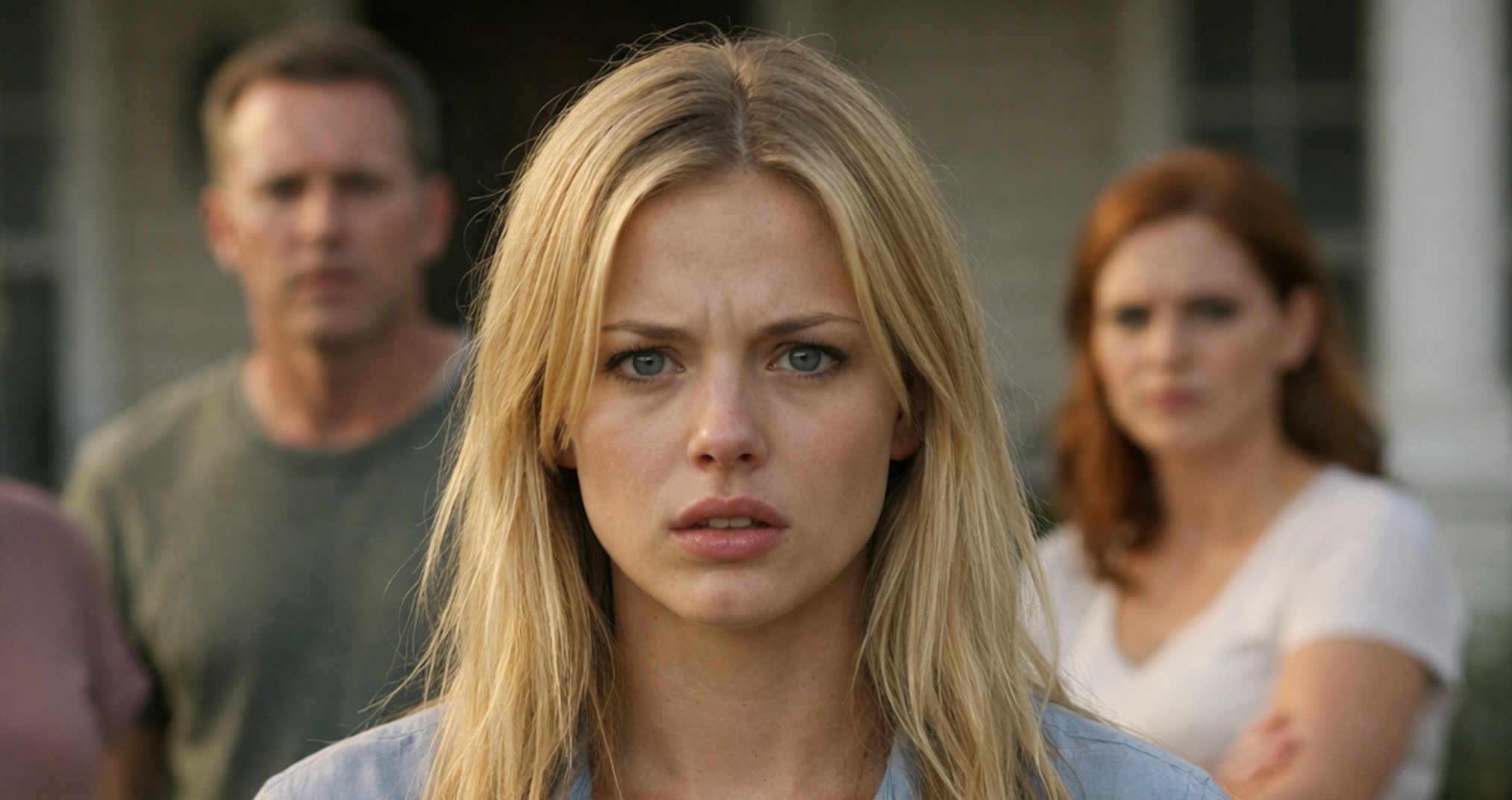
“Sveta, darling, you didn’t forget, did you? Mom’s turning sixty on Sunday—that’s a real milestone!” Larisa’s voice rang through the phone with such casual entitlement, as if she were already seated in Svetlana’s kitchen sampling the dishes in advance. “Mom has already planned the menu. Write this down: your signature aspic, two kinds of salad—the pineapple one was her favorite last time—eggplant rolls, a cold-cut platter, and of course шашлык. We’ll come around eleven so we can sit down by noon.”
Svetlana pressed the phone tighter to her ear, feeling something dark and icy begin to simmer inside her, nothing like her usual gentle nature. She stared out at the garden. The house—old, solid, with a veranda wrapped in wild grapevine—had come to her from her grandmother three years after she married Pavel. Back then, they had been over the moon. Their own place. No rented apartments, no mortgage. They had poured themselves into that home: Pavel had redone the roof and leveled the floors, Svetlana had chosen the wallpaper herself, planted hydrangeas, and tended every lilac bush as if it were family.
But along with the house came a “family tradition.” Pavel’s relatives—his mother Antonina Vasilievna, his sister Larisa with her silent husband and their permanently shrieking son—had quickly realized that “Sveta’s place” was the perfect free country retreat with full service included.
“Larisa, I’m actually not feeling well,” Svetlana said quietly. “I had a fever yesterday, and my lower back is killing me. Maybe this time you could celebrate at Antonina Vasilievna’s apartment? Or book a table at a café?”
A heavy silence settled on the other end. Then Larisa gave a short laugh, and there was so much naked superiority in it that Svetlana felt herself flinch.
“A café? Come on, Sveta. It’s Mom’s юбилей. She wants it outdoors, with family. Her apartment is cramped and stuffy, and you’ve got space. Besides, you know Mom can’t tolerate food made by strangers. At your place everything is homemade, safe, familiar. Lie down for an hour, take a pill, and get on with it. You’ve got three whole days ahead of you—you’ll recover. All right, kisses. We’re counting on a festive table!”
Svetlana slowly put the phone down on the counter. One sentence kept pounding through her head: You’ve got three days to recover. Not How are you feeling? Not Can we help? Just a tidy schedule for her exploitation.
Pavel came home that evening in a good mood, whistling some tune under his breath. But when he saw his wife’s pale face, he stopped short.
“Pasha, we need to talk,” Sveta began, trying to keep her voice steady. “Your sister called. They’re planning another celebration here. Once again I’m expected to spend three days cooking and two more cleaning up the house and picking candy wrappers out of the garden. I’m tired. I work too, Pavel. My days off are not a second shift in the kitchen for your relatives.”
Pavel sighed and slipped on his usual “peacekeeper” expression, though in truth it was little more than indifference disguised as reason.
“Sveta, here we go again. It’s Mom. It’s her birthday. Are you really begrudging a couple of salads and some meat? They accepted you like one of their own. Mom is always saying, ‘Our Sveta has golden hands.’ That’s praise.”
“Praise for what, Pasha? For never saying no?” Svetlana rose from her chair. “My parents visit once every three months. They call a week ahead and ask whether it’s convenient. They bring cake and fruit with them, and when they celebrate something, they either invite us to a restaurant or host us themselves.”
“Your parents are cold, those intellectual types of yours, always with the ‘excuse me’ and ‘sorry,’” Pavel snapped, raising his voice. “Mine are open-hearted! Warm, lively, social. We like being together. What’s so hard about chopping a few salads? Honestly, Sveta, you’re selfish. Completely selfish. As if you’re some exhausted princess.”
Svetlana looked at him as though she were seeing him for the first time. Where was the caring man who had once helped her plant hydrangeas? In front of her now stood someone who valued her comfort less than his mother’s good mood.
“All right,” she said suddenly, her voice calm. “If it’s so easy to chop salads and host guests, then you can do it. It’s your mother. Your celebration. Your ‘warm, social spirit.’”
“I can’t cook!” he muttered, turning toward the TV. “And I’m working until noon on Saturday—you know that. Don’t start making a scene. Just do what you always do and stop ruining people’s holiday.”
Saturday came quickly. Pavel left for work early, certain his wife would “get over it” and by the time he got back the table would be overflowing with dishes. He even kissed her on the cheek before leaving, not noticing that she didn’t smile.
The moment his car disappeared around the bend, Svetlana packed a small bag, locked all the windows, checked the gas, and carried her favorite pillow, a book, and a couple of dresses out to the trunk.
By eight in the morning she was already on the highway, driving toward her parents’ home in the next district. Peace was waiting for her there. Quiet. And her mother, who, after hearing a brief version of the situation over the phone, had said only this: “Come home, sweetheart. We were just about to go shopping, and your father was hoping for a quiet evening with a chessboard. Now he’ll have company.”
At eleven, the calm of the suburban street was broken by the sharp blast of a car horn, followed by rapid knocking on the gate. Antonina Vasilievna, dressed up in a formal suit, Larisa carrying an enormous cake—the only thing they had bothered to buy themselves—and her husband with a case of beer, stood outside the locked entrance.
“Sveta! Sveta, open up! We’re here!” Larisa shouted, rattling the gate handle.
No answer.
A neighbor’s dog barked lazily behind a fence. Five minutes of waiting gave way first to confusion, then righteous outrage. Antonina Vasilievna started calling her daughter-in-law. Once. Twice. Five times. The phone was unreachable.
“What is the meaning of this?” the mother-in-law hissed, her face turning red, her carefully arranged hair beginning to tilt. “Call Pasha! Is she asleep? Did she run to the store?”
Pavel nearly dropped his tools when his furious sister called him.
“What do you mean she’s not opening? She’s supposed to be home! Wait, I’ll get off work and come right away. Maybe something happened?”
He sped down the highway breaking every rule, one thought hammering in his head: Please let her just be asleep. But deep down, he already knew she wasn’t.
When he pulled up, he was greeted by a cluster of furious faces. His relatives were baking in the sun, and the festive mood had evaporated completely.
With shaking hands, Pavel unlocked the gate and let them into the house. Inside it was cool and unnervingly silent. No smell of roasting meat. No chopped vegetables. Not even a loaf of bread on the kitchen table. The refrigerator greeted them with pristine emptiness and two lonely yogurts.
“What is this supposed to mean?” Antonina Vasilievna sank into a chair. “What exactly am I looking at? It’s my birthday! Where’s the table? Where’s Sveta? Pavel, are you going to explain what’s going on in your house?”
Pavel frantically dialed his wife again—still unavailable. Then, gasping with anger and humiliation in front of his family, he called his mother-in-law.
Margarita Stepanovna answered on the third ring. Her voice was calm, almost musical.
“Yes, Pavel, I’m listening.”
“Margarita Stepanovna! Is Sveta with you? My mother is here, my sister is here, we’re supposed to be celebrating, and the house is empty! Has she lost her mind? If she’s with you, tell her to come back immediately and—”
“Lower your voice, Pasha,” his mother-in-law interrupted, her tone suddenly turning cold as winter steel. “First, do not shout at me. Second, Svetlana is resting. She worked all week, and today she decided to spend her weekend with her mother and father. We’re about to go to the mall, and after that we have a lovely dinner reservation.”
“What dinner? What rest?” Pavel almost shrieked. “It’s my mother’s юбилей! Sveta was supposed to cook! She had to! This is her family!”
“Your mother, Pavel, is your mother,” Margarita Stepanovna said with crisp precision. “And Sveta has her own mother. And if you haven’t noticed, your cheerful, sociable relatives have spent three years turning my daughter’s life into a free hospitality service for your appetites. Why exactly do you think she ‘had to’ do anything? She is not your servant.”
“How dare you—” Pavel choked out.
“Listen carefully, son-in-law,” she cut in before he could continue. “I’m handing the phone to Svetlana’s father now. He’s been wanting to discuss something with you. Since we’re all ‘one big family,’ we’ve decided to start renovating our apartment tomorrow. We thought you could spend every weekend helping us—wallpapering, tiling, whatever needs doing. You are family too, after all. Every Saturday, Pasha. From eight in the morning until evening. And don’t even think of refusing, or we’ll be terribly hurt.”
Pavel went silent.
The picture formed in his mind instantly: weekend after weekend spent under the stern eye of his father-in-law, laying tile and hanging wallpaper. His father-in-law, a retired colonel, was not a man who dealt in suggestions. If he said dig, you dug until the horizon ended.
“I… I understand,” Pavel muttered, suddenly damp with cold sweat.
“Wonderful,” Margarita Stepanovna said, her tone turning polite again. “Wish your mother a happy birthday. Perhaps she can bake herself a pie—it’s very good for family bonding. And don’t disturb Sveta today. She needs to recover. As you know, she only has a couple of days.”
Pavel slowly lowered the phone. The dining room had fallen silent. Antonina Vasilievna had pressed her lips together into a hard line. Larisa was staring at her manicured nails.
“Well?” his mother demanded. “Where is she? When is she coming back?”
Pavel looked at his mother, then his sister, then at the stack of dirty mugs left on the counter from the night before. For the first time in his life, he saw his “fun-loving family” through his wife’s eyes. They were sitting there waiting—waiting to be served, entertained, and fed.
“She’s not coming, Mom,” he said dully. “Not today. Not tomorrow. And nobody is cooking anything.”
“What do you mean?” Larisa sprang up. “What about the barbecue? What about the eggplant rolls? I’m starving!”
“There’s a store around the corner,” Pavel said, pointing toward the door. “They sell meat and prepared salads. If you want a celebration, go buy what you need. Marinate it yourselves. Grill it yourselves. Today, I’m a guest here too. And actually, Mom…”
He hesitated, then remembered his mother-in-law’s voice and continued more firmly.
“If you want to keep celebrating here in the future, the rules are changing. No more placing orders with Sveta. You bring your own food. Ready-made. And disposable plates too, if you don’t want to wash up after yourselves. Sveta is the mistress of this house, not the chef at your private restaurant. And if that doesn’t suit you… there are plenty of cafés in town. They’ll be happy to serve you—if you pay.”
Antonina Vasilievna clutched at her chest, performing what looked suspiciously like a pre-heart-attack scene, but this time Pavel didn’t rush to find her pills. He simply opened the refrigerator, took out a yogurt, and sat down at the table.
“We’re leaving!” his mother declared dramatically. “My foot will never cross this threshold again! What disgrace! What disrespect!”
“As you wish, Mom,” her son replied calmly. “The gate is open.”
When the door slammed behind them and their indignant voices faded down the path, an extraordinary silence settled over the house. Pavel sat in the kitchen for nearly an hour, staring out at the hydrangeas in the garden. And for the first time, he truly understood how much effort Sveta had poured into making that place their peaceful nest—and how easily he had allowed others to trample it.
That evening he sent her a short text:
Sveta, I understand now. I’m sorry. I cleaned the house. Stay and rest as long as you need. Your parents were right—I was selfish. I love you.
Her reply didn’t come until the next morning.
A playful heart emoji.
From that day on, celebrations at their house stopped feeling like unpaid kitchen labor. Pavel’s relatives sulked for a long time, of course. But six months later, missing the fresh air more than their pride, they came back. This time Larisa brought containers of food, and Antonina Vasilievna arrived with a ready-made cake. No one complained.
Because once boundaries are drawn, they hold firmer than any fence.
Svetlana stood on the veranda, breathing in the scent of blooming jasmine, and smiled. Her home belonged to her again. And to their little family too—small, but finally strong in the way it was always meant to be.