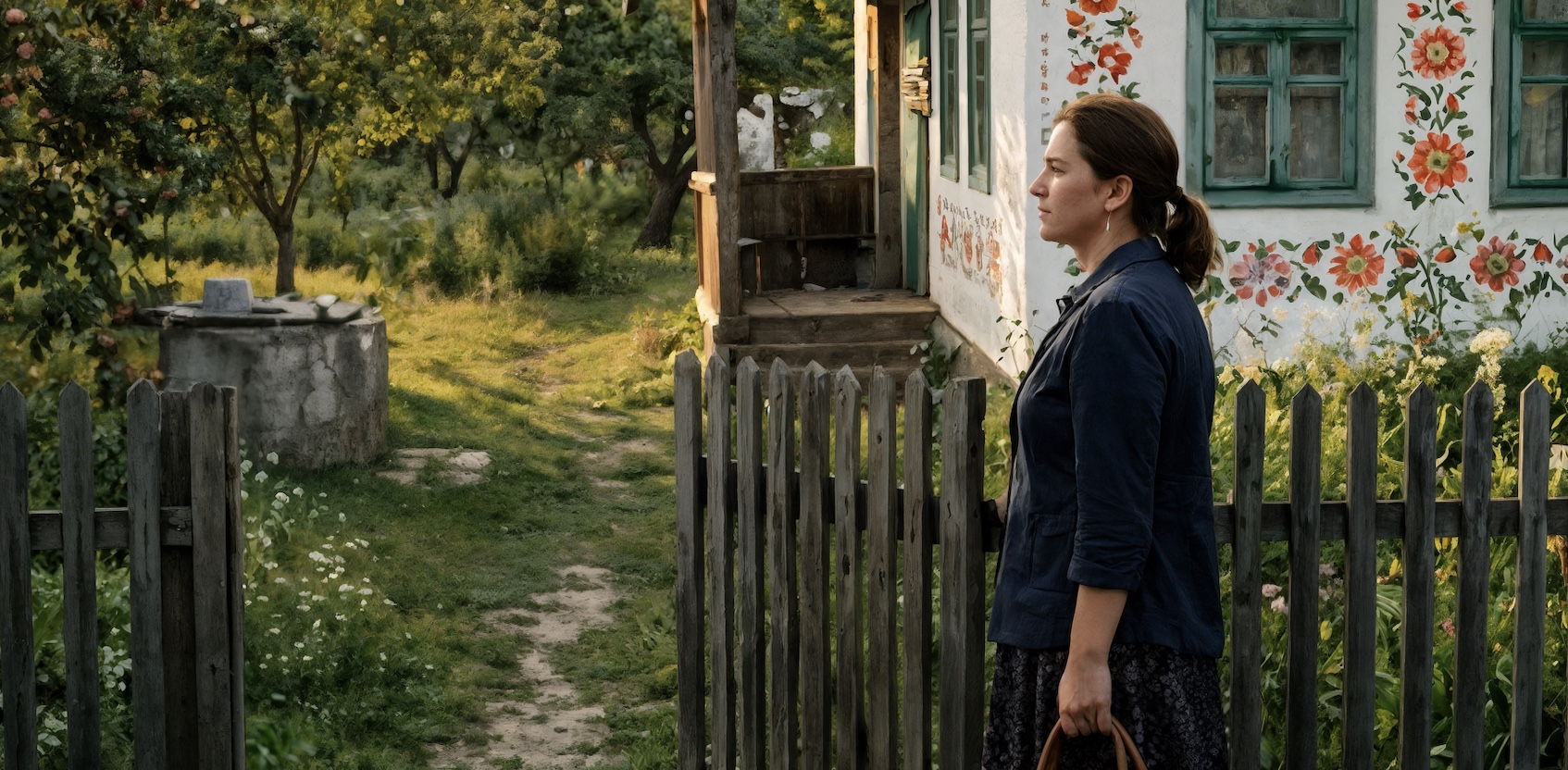
Oksana went back to her native village, to the house that was truly her own. And what a blessing it was that she had never managed to sell it, even though she had almost given in to her son’s pressure. A buyer had already been found, but he turned out to be impossible to please: first the garage was not good enough, then he complained there was no gas line, then he decided the price was too high. Her son refused to lower it under any circumstances, because the money was needed urgently. Or, to be more precise, not so much by him as by his wife, Lyuba.
Lyuba had suddenly become obsessed with the idea of starting her own business. She was tired of working “for somebody else.” The trouble was, she still had no idea what kind of business she actually wanted. Every evening she and Alexander, Oksana’s son, would go over different options, argue, and sometimes end up fighting. One day she dreamed of opening a beauty salon, the next she was considering something entirely different, while Alexander insisted a small store would be the safer choice. Their quarrels always came down to one question: which plan would require less money to get off the ground.
They argued endlessly, but the money never appeared. And selling his mother’s house quickly simply did not happen.
Little by little, Oksana began to feel like a stranger in their apartment. It was as if no one even noticed whether she was there or not. She would have her meal, then quietly retreat to her room and stay there, keeping out of everyone’s way.
She understood everything clearly the moment she suggested lowering the price of the house. In return, she heard more than enough unpleasant words from both her son and her daughter-in-law.
No one insulted her outright, but the bitterness remained. They had invited her to live with them “in her old age,” yet in reality all they cared about was her money. And what old age? She still had two months left before turning seventy.
One morning, without fuss or drama, she packed her few belongings, called a taxi, and left. She placed the key to her son’s apartment on the table and set a short note beside it:
“I’ve gone. If you remember me, call.”
That was how her city life ended. She had spent only three months there, but it had felt like years. Boredom, loneliness, and one cramped little room.
Back in the village, everything was different. Spring was in the air, the sky felt wide, and the fresh air seemed to bring life back into her.
Her neighbor came by almost immediately to find out whether the rumors were true, because everyone had heard Oksana was leaving for the city forever. When she learned that Oksana had returned for good, she was delighted.
“You did the right thing,” the woman said. “Good for you. To be honest, I was hoping you’d come back. Who knows what kind of new neighbor we might have gotten otherwise.”
“I’m not leaving again,” Oksana replied. “Only for the cemetery.”
“Oh, don’t talk like that. It’s far too early for you.”
“Of course it is. I still intend to live.”
“And that’s exactly how it should be. Listen, why don’t you get yourself a little goat? My Manka had kids, such lovely little ones. I was already thinking of selling them.”
“I’ll think about it.”
“You do that. I’ll keep one aside for you in the meantime.”
Oksana slept deeply that night and did not hear the knocking on the window right away. It was her son. Six in the morning was an unusually early hour for him.
“What happened? Why are you here so early? This doesn’t sound like you at all.”
“Mom, what are you doing? You left without telling anyone! I came to take you back. Come on, get ready quickly. I still have to get to work.”
“I decide for myself what I do. I’m not going to live at your place like a burden. Now go on, you’ll be late.”
“What burden are you talking about, Mom?”
“The one your wife mentioned. I heard Lyuba say that you had dumped me on her shoulders. But here, I answer to no one. If I want to rest, I rest. If I want to sing, I sing.”
“Mom, you’ve got it all wrong. We had agreed to sell the house, and now you’re ruining everything. Come on, get your things.”
“I’m staying. You can sell this house when I’m gone. And I’m planning to live a long time yet. I’ll get a goat. Maybe even some chickens. Off you go.”
Her son left, and Oksana returned to her own business. The house needed tidying, and she had to prepare a place for the goat. Spring always came with plenty of work.
“So, neighbor, have you decided about the goat?” the woman asked when she stopped by again.
“I’ll take one.”
“I’ve already spoken to Pyotr. He’ll bring hay. He always brings ours, and he can drop yours off today too. I’ll go fetch the goat now.”
Ten minutes later she came back leading the little animal.
“What a beauty! What’s her name?”
“Call her anything you like.”
And so Oksana’s village life settled into a peaceful rhythm—quiet, familiar, and good in its own way. In the city she had felt unwanted, but here she was the mistress of her own life again.
Then her jubilee arrived. She had nearly forgotten it herself and remembered only when her son came to congratulate her.
He came alone, without his wife and without the children. Even her granddaughter had taken offense, because Oksana had refused to help with the business. Her son admitted as much himself.
“Mom, maybe you’ll change your mind? We’re waiting for you.”
“I know very well how you’re ‘waiting.’ Don’t bother. I have my own little household now.”
He left the gifts behind and drove away.
Well, so be it. At least now she understood everything clearly—about her daughter-in-law, about her granddaughter, and about her son as well. He did not even stay for tea. He brought a cake, a bag of groceries, and that was the end of it.
No matter. She could celebrate her birthday with her neighbor instead. Seventy was not the end of anything. It was the beginning of a new chapter, the start of a new decade.
That, too, was a way to live: for your own happiness, without bending to other people’s plans, even at that age.