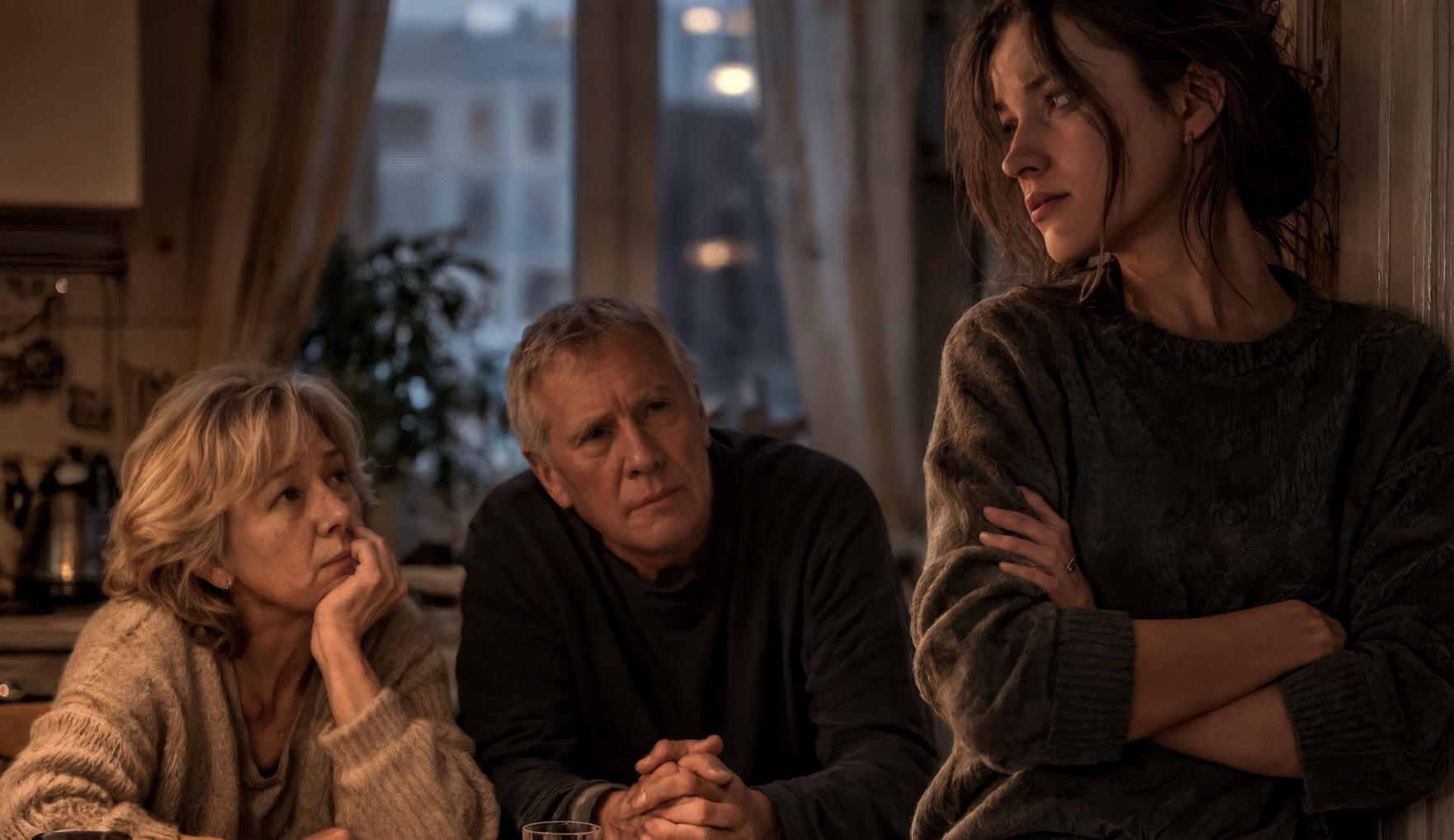
Marina opened the door and froze for a second. On the landing stood her mother and father—older now, drawn and worn, in the same nondescript jackets she’d seen on them three years earlier. Her father’s shoulders were more rounded than she remembered, and her mother kept nervously worrying the handles of a battered handbag.
“Hi,” Marina said flatly, not moving aside.
“Marinochka, sweetheart…” her mother began. In her voice were tears that hadn’t fallen yet—but were already waiting behind her words. “Can we come in? We need to talk.”
Marina stepped back slowly and let them into the entryway of her tiny one-bedroom. The apartment was small, but bright—and lived-in, warm in the way only a carefully kept space could be.
Her parents went into the room and sat awkwardly on the edge of the couch. Marina remained standing, leaning against the wall with her arms crossed over her chest. She didn’t offer tea. Didn’t ask how they were doing. She simply waited.
“Marina,” her father cleared his throat, “we came… well… to ask you…”
“For help,” she finished for him. “I figured. So they’re taking the apartment after all?”
Her mother sniffled and pulled a handkerchief from her bag. Her father tightened his fists on his knees.
“Next week they’re evicting us,” he said in a dull voice. “Andrei tried everything—ran around, looked for options… But we can’t pay off the loan. The interest has grown so much that…”
“That even if you sell the apartment, it won’t cover the debt,” Marina completed, as if reading from a report. “I told you. I told you three years ago.”
“Sweetheart, don’t start that now,” her mother lifted reddened eyes to her. “We know we were wrong. We just… we didn’t think it would end like this…”
Marina walked to the window and turned her back on them. Outside, October wind shoved at the trees, tearing the last leaves free. Three years ago it had been autumn too—gray, uneasy, heavy with the same restless air. They’d sat at the kitchen table in that apartment—the apartment that no longer existed, the one that now belonged to the bank. Marina had tried to persuade them, showing figures and calculations, pulling up bankruptcy statistics. And Andrei had sat there with burning eyes, talking about his auto shop, faithful customers, the “gold mine” he was sure he’d found.
“I suggested back then that you transfer the apartment into my name,” Marina said quietly, still not turning around. “Remember? I said it would be safer. That I’d keep it for you. That I wouldn’t let Andrei drag you into this gamble.”
“We remember,” her father said, and there was hurt in his voice. “But he’s our son. Your brother. We couldn’t say no to him.”
“But you could say no to me,” Marina turned. Something hard flashed in her eyes—sharp enough to make her mother drop her gaze. “You told me, ‘You’ll manage—you’re capable. And Andrei needs help.’ Do you remember those words? Because I remember them perfectly.”
Silence hung in the room. Somewhere behind the wall a baby started crying, and the sound felt almost mocking in the thick, airless tension.
“We came to ask you for help,” her father spoke again, and now there was a near-demanding edge to him. “You have money. We know you’re saving for your own place. You earn well…”
“Oh, so when you need something it’s ‘sweetheart,’ but when you signed the apartment over to my brother it was ‘you’ll manage—you’re capable’?” Marina’s voice rang like a wire pulled tight. “That’s an interesting kind of selective memory.”
“Marina!” her mother sprang up from the couch. “How can you talk like that? We’re your parents! We raised you, we put you through school!”
“You raised me,” Marina nodded. “That’s true. And I’m grateful. But I put myself through school, Mom. I studied on a state-funded place while working evenings in a café. You poured all your money into Andrei—his courses, his car, his endless schemes. I didn’t expect help from you. I really did manage on my own.”
“So what now?” her father stood too, his face flushing. “You’re going to throw it in our faces? You’re going to take revenge? We’re your parents! You can help us!”
“I can help myself,” Marina said calmly, but with steel under every syllable. “I’ve saved for a down payment. For my apartment. The one where I’ll finally live—rather than squeeze into rented corners. I’m twenty-nine, Dad. I’ve been working for ten years. I have the right to my own life.”
“And you don’t care if your parents end up on the street?” her mother’s voice tipped into its first shaky notes of hysteria. “We have nowhere to go!”
“You have the dacha,” Marina said.
Her parents glanced at each other.
“The dacha?” her father repeated. “What are you talking about? There’s barely any heat there. You can only live there in summer.”
“Which is why I’m ready to give you money for repairs,” Marina said. She crossed to the table and picked up an envelope lying there. She’d prepared it a week earlier, when Andrei finally found the courage to call and warn her her parents were coming. “There’s three hundred thousand in here. Enough for insulation, a stove, the bare minimum. The dacha is big—you can live there properly.”
Her father took the envelope without looking inside. Her mother stared at Marina as though she were seeing her for the very first time.
“You’re serious?” her father said slowly. “You want to send us to live at the dacha? Out in the country?”
“I want to keep my own life from collapsing,” Marina answered. “And I’m offering you a way out. Not the best one, I understand. But it’s what I can give.”
“And Andrei?” her mother asked quietly. “Will he be living there too? With us?”
Marina shrugged.
“That’s up to you. You’re his parents. You love helping him so much.”
“You hate him,” her mother whispered. “You hate your own brother.”
“I don’t hate Andrei,” Marina said, rubbing her face wearily. “I’m just refusing to pay for his mistakes. For your mistakes. Three years ago you made your choice. You chose him. That was your right. Now I’m making my choice. That’s my right.”
Her father shoved the envelope into his jacket pocket. The motion was sharp, almost angry.
“So that’s how it is,” he said, taking her mother by the arm. “Come on, Lena. There’s nothing for us here.”
“Dad…”
“Don’t,” he cut her off, lifting a hand. “You’ve said everything. We understand.”
They moved toward the door. Marina stood in the middle of the room and watched them go. At the threshold her mother turned back.
“You know, Marina,” she said, and her voice carried an old, deep resentment, “I thought you were different. I thought you were kind. But you… you’re hard. Like a stone.”
“Maybe,” Marina answered softly. “But that hardness kept me alive. It kept me from going under with you.”
Her mother wanted to say something, but her father pulled her along. The door closed. Marina heard them going down the stairs—slowly, heavily, stopping at every landing.
She went to the window and saw them step out of the building. Her father still held her mother’s arm. They stood by the road for a moment, spoke about something, and Marina saw her father take the envelope from his pocket and look at it. Then he tucked it away again. They walked toward the bus stop.
Marina sank onto the couch where her mother had been sitting moments earlier. The cushion was still warm. She covered her face with her hands.
Three years ago, when they refused her and signed the deed of gift in Andrei’s name, Marina cried all night. She felt betrayed, pushed aside, unloved. She had always been the “good daughter”—studied well, caused no trouble, grew up too early. And Andrei was always stumbling from one mess into another: he dropped out of college, drifted between jobs, borrowed money. And still, he was the one they loved more.
“You’ll manage—you’re capable.” That sentence had wounded her back then because underneath it lay something else: We don’t need to worry about you. You’ll cope anyway. But he needs saving.
After that evening Marina made a decision. She stopped waiting for anything from her parents. Stopped hoping they would finally see her, value her effort, say thank you. She simply worked. Saved money. Built a life—one nobody could take away from her.
When Andrei called a week ago, his voice shook. “Marin, it’s bad. The bank is taking the apartment. Mom and Dad are in shock. I don’t know what to do. Please help.” Marina listened to his rambling panic and felt a strange calm settle over her. She’d known this would happen. She’d warned them. And no one listened.
“I’ll think about it,” she’d said, and ended the call.
And she truly did think—an entire week. She counted her money, turned options over and over. She already had enough for a down payment on a one-bedroom in a decent neighborhood. Not the city center, no, but a new building with a good layout. She’d already chosen the unit, spoken to the developer, started preparing paperwork.
If she gave that money to her parents… it wouldn’t save the apartment. She could try to buy it back through a mortgage, and then spend years paying for what would practically be someone else’s home—while she stayed in rented housing, with no chance of buying her own for a long time.
That was when she thought of the dacha. An old little house fifty kilometers from the city, a small plot of land. Her parents went there in summer, growing tomatoes and cucumbers. The house itself was sturdy—thick logs, a solid foundation. But the windows were ancient, the roof needed repairs, and there was no heating. For summer, perfect. For winter, impossible.
But with three hundred thousand… she could install a good stove, insulate the walls and floor, replace the windows with modern ones, run basic water from the well. It wouldn’t be luxurious, but it would be livable. Plenty of people lived that way—especially retirees.
Marina knew her parents wouldn’t like the idea. They were city people, used to comfort. Her mother always complained about the outdoor toilet. Her father grumbled about the lack of internet. But there was no other option.
Or rather, there was an option—and Marina chose it. She chose herself.
Now, sitting in the emptied room, she thought, Am I a bad daughter? The question spun in her head, snagging on every thought, refusing to let go. A bad daughter refuses to help her parents. A bad daughter puts her own needs above theirs.
But a good daughter had spent ten years living in her brother’s shadow, swallowing the fact that he was loved more, silently taking every hurt. A good daughter warned them of danger and heard back, “You’ll manage.” Was a good daughter supposed to sacrifice her future now for their mistakes?
No.
Marina lifted her head and looked out the window. Her parents were already out of sight. Maybe they went to Andrei—to scold him, to comfort him, to search for an answer together. Or maybe they went back to the apartment where they had only a week left.
In a week they would pack their things. Load them into a truck (Marina was even willing to pay movers—she’d slipped a note into the envelope offering that). They would go to the dacha. Maybe Andrei would go with them, maybe he’d find a corner at a friend’s place or another girlfriend’s. Those were their problems.
And next week Marina would go to the bank. Sign the contract. Pay the down payment. In six months, when the building was completed, she would move into her apartment. Hers. The one no one could throw her out of.
Her phone vibrated. A message from Andrei: “Were they at your place? What did you say?”
Marina typed back: “I gave them money for fixing up the dacha. I can’t do anything more.”
A minute later: “Are you serious? Marin, are you messing with me? The dacha? Do you even understand what you’ve done?”
“I do. I saved my life,” Marina wrote—and locked her phone.
Outside, dusk thickened. Soon she’d have to make dinner, but she had no appetite at all. She stood, went to the refrigerator on autopilot, opened it, stared at the shelves, and closed it again.
She remembered that evening three years ago—how she came home after talking to her parents and sobbed into her pillow. How she went to work the next morning swollen from tears and moved through the day as if underwater. How a colleague asked if she was okay, and Marina lied and said she’d just slept badly.
Back then she thought it couldn’t hurt more than that.
But now it hurt more. Because then the pain was from insult, from unfairness. Now the pain came from a choice she had made—from knowing it was the right choice, but not a noble one. Not pretty. Not the kind of choice a “good daughter” would make in movies or books.
In movies the good daughter would give away her last savings, abandon her plans, save the family. And in the end everyone would hug, recognize her sacrifice, and everything would turn out fine.
But life isn’t a movie.
In real life, if Marina gave away her savings, she would simply lose them. Her parents’ apartment would still be taken, because the debt was too large. She’d end up in rentals again, saving for years all over. And her parents wouldn’t even be able to appreciate her sacrifice—because the apartment would be gone anyway. And Andrei would find another scheme, fall into debt again, and come asking again.
And no one would think of her. Of her life. Of her right to happiness.
“You’ll manage—you’re capable.”
The phrase echoed in her head again, and Marina gave a small, crooked smile through the tears rising in her eyes. Yeah. She would manage. She always had.
Only now she would manage for herself. Not for them.
Marina wiped her eyes and straightened her shoulders. She went to her laptop and opened the folder with the apartment documents. She reviewed the layout again, the views, the entrance plan. Her apartment. Fourth floor, south-facing windows, glazed balcony. Forty-two square meters of her own space.
In six months she would move in. Arrange the furniture the way she liked. Hang the paintings she loved—not the ones her parents would approve of. Invite guests when she wanted. Live the way she decided.
And maybe one day her parents would understand. Understand that she had the right to choose herself. That her life mattered too. That being “capable” didn’t mean an endless obligation to sacrifice herself.
Or maybe they never would. And then she’d have to live with that weight—their resentment, their disappointment, the cold, rare calls on holidays.
But it would be her choice. Her life. Her apartment.
Marina closed the laptop and went to the window. Streetlights flickered on below, and the city slid into evening. Somewhere out there in that enormous city, her parents were riding a bus, clutching an envelope of money that felt to them like a cruel joke.
“Forgive me,” Marina whispered to them in her mind—but she didn’t say it aloud.
She didn’t ask for forgiveness. Because she hadn’t done anything wrong.
She had simply done what they once told her to do.
Handle it herself.
Three weeks passed. Marina signed the bank agreement, paid the down payment, and received her documents. Now all that remained was to wait for the building to be finished. The developer promised April, and Marina was already planning the renovations in her head—choosing wallpaper, browsing furniture.
Andrei called several times, but she didn’t pick up. Then he sent a long voice message accusing her of being cold, selfish, and a traitor to the family. Marina listened to it to the end, exhaled, and deleted it.
Her parents said nothing.
Marina didn’t know whether they’d moved to the dacha already, whether they’d started repairs, how they were settling in. She could have called and asked. But she didn’t. Part of her was afraid to hear that old resentment in their voices—the kind that would poison what little peace she had. Another part of her insisted stubbornly, They chose this. Let them deal with it.
Workdays flowed on: projects, meetings, reports. Colleagues asked why she seemed more thoughtful, and Marina joked it off. No one needed to know about her family drama. It was her burden, and she would carry it alone.
At the end of November, when the first snow fell, Marina received a message from a distant aunt—her father’s sister, with whom they barely spoke.
“Marina, I heard what happened in your family. I want to tell you I don’t judge you. Your parents always spoiled Andrei. You did the right thing not letting them drag you into it. Take care of yourself.”
Marina reread the message several times. So her parents had told the relatives. So, in the family’s eyes, she was the cold daughter who abandoned her parents. Had they told the whole story, she wondered? About refusing her three years ago? About “you’ll manage”?
Probably not.
She wrote back: “Thank you, Aunt Lena. It matters to hear that.”
December arrived with bitter wind and pre-holiday chaos. The office was strung with garlands, coworkers discussed the corporate party and gifts. Marina bought a small Christmas tree, set it in the corner, decorated it. In the evenings she looked at it and thought that next year her tree would stand in her own apartment.
On New Year’s Eve, December 31, her mother called.
Marina stared at the name glowing on the screen for a long time. Then she answered.
“Hello?”
“Marina,” her mother’s voice sounded tired, but without its former bitterness. “Happy New Year’s, in advance.”
“And to you, Mom.”
A pause.
“We’re at the dacha,” her mother said. “The repairs are almost finished. The stove is good, it’s warm. We replaced the windows. We’re living.”
“That’s good,” Marina said, not knowing what else to add.
“Andrei left,” her mother went on. “He found work in Moscow—got hired through an acquaintance. He says he’ll pay off what’s left of the debt.”
“I see.”
Another pause—long, awkward.
“Marina, I…” her mother hesitated. “I’m not calling to ask your forgiveness. I don’t know whether you were right or not. But I want to say… we’ll survive. And you… you live too. The way you think is right.”
It wasn’t reconciliation. But it was an acknowledgment of Marina’s right to choose.
“Thank you, Mom,” Marina said quietly.
“Alright then. Happy New Year.”
“Happy New Year.”
The line went dead.
Marina lowered the phone and looked out the window where snow was falling. Something inside her tightened—and at the same time loosened. Not forgiveness, not acceptance, but at least a truce.
And that, maybe, was enough.
To keep living.
On her own.