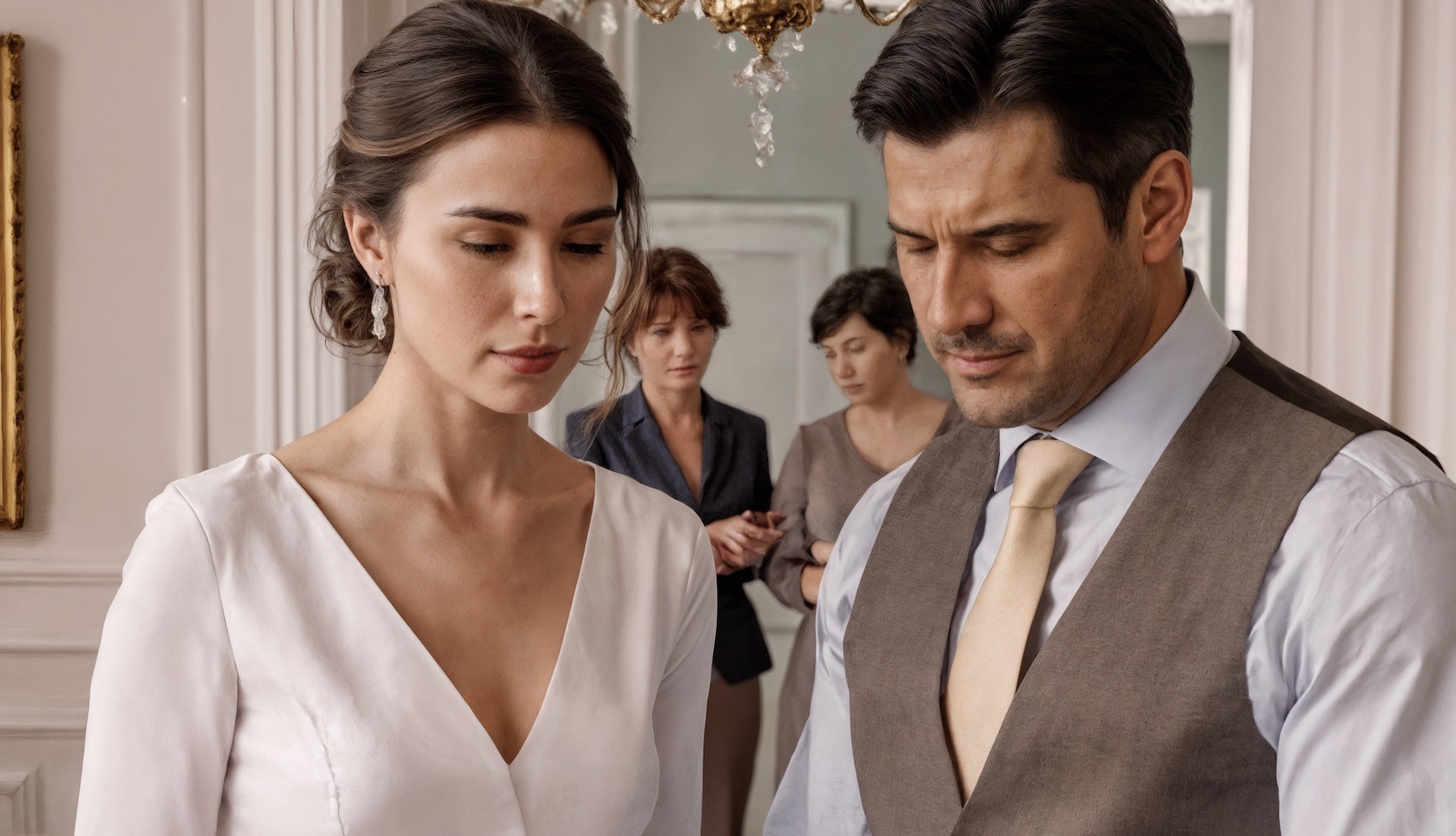
“Have you got any conscience at all, Ira?” The voice on the line was like sandpaper on glass—bearable, but unpleasant.
“Good morning, Valentina Petrovna,” I answered, even though the day had already been knocked sideways by her very first word.
“Morning is never good when the windows are filthy,” she said, offended. “I’m standing here looking toward the sun—and I can’t see a thing. It’s all streaks. And my blood pressure, by the way. And your Seryozha sneezed yesterday—said there’s mold in his mother’s home! Come over, at least wipe the windows, will you?”
I set my coffee down. I still hadn’t managed a sip.
Some people can spoil your mood in half a second. I’d promised myself today would be calm—no nerves, no other people’s problems, just one quiet day. As if that was ever going to happen.
“I’m on vacation, Valentina Petrovna. I wanted to rest a little,” I said evenly, though I could already hear steel creeping into my voice.
“Vacation?” She let out something like a laugh, but there was no warmth in it. “That’s wonderful! So you have time. Or is it a vacation from family too, hmm?”
There it was—her signature move. Smiling, but meant to hit where it hurts.
I closed my eyes, drew a slow breath, and said:
“I’m really exhausted. I just want to spend the day at home.”
“I understand,” she replied. “Of course you’re tired. Young people get tired fast these days: work for an hour and they’re heroes. I, by the way, worked double shifts at your age and never complained.”
I knew exactly how it would end. Her “I understand” always meant the opposite.
“Valentina Petrovna, I really can’t come today.”
“Fine,” her voice turned to ice. “So strangers will come later and do everything. And you—you’re not a daughter, not a wife, you’re… I don’t even know what.”
Then she hung up.
I stood there for a few seconds, then put my phone on airplane mode. Let her think I’d flown to Turkey—or to nowhere.
An hour passed.
The doorbell rang.
Of course.
“Ira, open up, it’s me,” Sergey called from the hallway. His voice sounded tired and hoarse, like he’d been running.
I opened the door. There he was. And beside him—his mother. Coat on, bag in hand, as if she wasn’t dropping by for an hour but moving in for the whole autumn.
“What do you mean you ‘don’t have time’?” she attacked from the threshold. “This isn’t a request—this is a cry for help. My pressure is up, Sergey is sneezing, the windows are dirty—and she’s resting, would you look at that!”
I turned to my husband, but he only spread his hands. You know how she is—better give in than listen to it for a week.
“Valentina Petrovna, I have cleaning of my own, and I wanted to take care of myself today,” I said, forcing calm.
“Yourself!” Her eyebrows shot up. “That’s all you people have now—‘myself.’ Feel sorry for yourself, treat yourself, protect yourself. And your husband’s mother—straight to hell, right?”
“You’re being unfair,” I said. “I respect you, but I’m not obliged to be your maid.”
Sergey muttered quietly:
“Mom, enough. Let’s do this without a scandal.”
But she only waved him off.
“You see, son? I told you—what you married wasn’t a wife, it was a boss. Nothing suits her. And she doesn’t want children, and she spits on the elders.”
The word “children” pricked me like a needle under the nail.
I looked at Sergey, but he dropped his gaze.
“Mom,” he squeezed out, “stop it.”
“No, let her hear it,” she boiled over. “We tried for them, Sergey. We invested money so there’d be an apartment later, grandkids. And now… it’s all gone!”
“What money?” I felt a coldness spread through my chest.
They exchanged a look.
And that’s when everything became clear.
A story as old as time: “a sure thing,” “a trusted man,” “big returns.” All of it, naturally, “official.” And then it turns out the company is a puff of smoke and the man disappears.
“We thought it was a chance,” Sergey said quietly. “For the future.”
“What future, Sergey? Did you see a single document?”
“Oh, come on,” he said, rubbing his face, exhausted. “People made a mistake—who hasn’t? We have to help somehow.”
“The key word is ‘have.’ And as always—I’m the one who’s supposed to.”
Valentina Petrovna pressed her lips into a thin line.
“We’re family, Ira. Family means together. And you—it’s always you, you, you.”
“You know,” I smiled, “even family has boundaries.”
She snorted.
“Typical city girl. Everything with you is paperwork and ‘mine.’ In our day everything was shared—joy and grief.”
“Maybe it was for you,” I said. “It won’t be for me.”
I stepped into the hallway, opened the door, and said calmly:
“I need to work. Excuse me.”
Sergey stayed silent. His mother looked at me like I was a traitor and marched out, heels striking the floor.
That evening, when Sergey came back, I expected a storm. Instead, he was strangely quiet.
He sat at his laptop as if I weren’t in the room.
“Did you at least look at the documents?” I asked.
“Ira,” he said without lifting his eyes, “stop digging into other people’s business. They’re my parents. It’s hard enough for them already.”
“So it’s easy for me, then?”
He didn’t answer.
I went to bed, but sleep wouldn’t come. In the night my phone lit up—a text from Tanya, my friend who works at a bank:
“Your relatives showed up on a list. It’s a scam. Tell them to brace themselves—there’ll be a case opened.”
I lay there staring at the ceiling.
Not pity. Not anger. Just emptiness.
I understood one thing: this was where the real storm would start.
Four months passed. October. Cold evenings, leaves sticking to your boots, street cleaners cursing under their breath.
In Valentina Petrovna’s eyes lived a fatigue no creams could hide. Viktor Mikhailovich, her husband, began speaking softly and slowly, as if every word had to squeeze through debt first.
Sergey acted like everything was under control. But I saw the truth: at night he didn’t sleep, he calculated, then erased and started again.
One evening he walked into the kitchen and said:
“We need to talk.”
I stood at the sink, washing a mug.
“About what?”
“My parents are in deep trouble. Loans, collectors. If we don’t step in, they’ll be thrown out.”
I felt my fingers tighten.
“‘We’—who is that?”
“Well… us. Family.”
I turned to him.
“No, Seryozha. Family is you and me. Your parents are your responsibility.”
He exhaled heavily and sat down, eyes on the floor.
“Ira, you know we have an option.”
I already knew where he was headed.
“What option?”
“Well… temporarily put your apartment in their name.”
For a second I didn’t even process his words.
“That’s my apartment. I bought it before the marriage.”
“I know. Just until they get out of this. Then we’ll transfer it back.”
I gave a short, bitter laugh.
“Seryozha, do you even believe that ‘then’ yourself?”
“What am I supposed to do—watch them get kicked out?”
“And what does that have to do with me?”
He stood up, fists clenched.
“You’re heartless, Ira.”
“No,” I said calmly. “I just don’t want to be the idiot who always pays for other people’s mistakes.”
He stormed out, slamming the door.
And I knew: from that day on, everything started sliding off the rails.
After that came the quiet pressure.
His mother called every other day. At first it was “just checking in.” Then the reproaches:
“Irina, you’re living in our apartment, you could at least help a little.”
“This is my apartment.”
“Well, formally, maybe. But Sergey is with you. That means shared life, shared decisions.”
And step by step, they tried to bend me.
But I held.
One day Sergey brought home grocery bags.
“What’s this?” I asked.
“Mom asked you to cook them lunch. I’ll take it over tomorrow.”
I looked at the meat, grains, vegetables—an entire mountain. And suddenly it hit me so clearly: I didn’t owe anyone proof that I wasn’t selfish.
“You won’t take it,” I said. “If you want it—cook it yourself.”
He turned around silently and walked out.
I pulled out a trash bag and dumped everything into it.
The kitchen silence rang like a bell.
By evening my sister Lena called.
“Irish, you’re pushing it. You can’t abandon your husband’s parents.”
“Lena, I’m not abandoning them. I just stopped breaking myself.”
“Maybe talk to him calmly?”
I muted my phone. I don’t want to.
Then Saturday came—cold and damp. Sergey walked in and tossed the car keys onto the table.
“I’ve decided: I’ll sell the car and help them myself. But know this—I won’t forget what you did.”
“And I won’t forget that you even suggested taking what’s mine.”
He stepped closer.
“Maybe you should live alone, then.”
“Maybe,” I said. “Maybe I should.”
I went to the bedroom and shut the door.
After that Saturday, Sergey and I lived like neighbors who’d accidentally ended up in the same apartment.
Him on the couch in the living room, me in the bedroom. We spoke in short, practical phrases: “Where’s the salt?” “In the cabinet.”
No “good morning,” no “how was your day.” Even our ginger stray-cat-turned-house-cat stopped going near him—animals feel it, I guess, when a home grows colder than November outside.
At first I tried to tell myself it was temporary—that he’d cool off, that he’d understand. But time only made the walls thicker.
In the evenings he locked himself in the bathroom with his phone and whispered to his mother. His voice turned soft, almost childlike—the way he hadn’t spoken to me in a long time.
Sometimes, through the thin door, I’d hear:
“Mom, hold on, I’ll try talking to her again… Yeah, stubborn… No, not mean, just… she’s got her own ideas…”
And I’d sit in the kitchen with my tea and think that it looked like there were three people in our marriage now—only I was the extra one.
Everything collapsed on one ordinary weekday evening—dull, gray, forgettable. I came home from work, took off my boots, walked into the kitchen—and saw a folder on the table.
Sergey stood beside it like an official and said:
“Here. A power of attorney. Sign it, please. I’ll take care of everything.”
I opened it—documents for my apartment.
“What is this?” I asked, though I already knew.
“Just so we can arrange a temporary collateral deal. Without it the bank won’t give an extension. We’ll return everything afterward.”
I slowly closed the folder and set it down.
“No.”
He acted as if he hadn’t heard me.
“Ira, what—are you made of stone? They’re my parents. They’ll end up on the street!”
“Sergey,” I said quietly, “do you hear what you’re asking? You want me to hand over with my own hands what I spent ten years building. For someone else’s mistakes.”
He leaned in, staring into my eyes.
“You want them to die in poverty?”
“I want you to stop calling it help when it’s robbery.”
He stepped back, slammed his fist on the table—dull, not even strong.
“You’ve lost your conscience.”
“And you’ve lost your respect,” I said.
That’s when I knew: it was over. Period.
I opened the closet, pulled out his travel bag, and began packing his things—silent, neat, like I was folding a stranger’s laundry.
At first he laughed, jittery. Then his voice went rough:
“You’re serious? You think you’ll manage without me?”
“I think I’ll finally be able to breathe,” I answered calmly.
He stood there for a long moment, then grabbed the bag, walked out, and slammed the door so hard a bit of plaster flaked from the frame.
Then came silence—the thick kind where even the clock ticks like it’s unsure.
The first days after he left were strange. I’d wake up early, put on the kettle, automatically take out two mugs—then put one back.
In the evenings I’d sit on the sofa and catch myself waiting for the lock to click.
It never did.
On the third day Valentina Petrovna came. No call—like she owned the place.
“Irina, we need to talk,” she said from the doorway. “I’m coming peacefully.”
I looked at her and understood: there was nothing peaceful about it.
“Come in,” I said. “Tea?”
“No time for tea. I won’t let this go. Sergey’s nerves are shot, Viktor Mikhailovich is swallowing pills, and you… you’re living calmly!”
“And what should I do—hang myself along with you?” I asked.
“No. You should be a human being. A wife!”
I gave a humorless smile.
“You never considered me one from the start. Remember—‘lazy city girl’?”
She froze, like she hadn’t expected that. Then she spoke more quietly, but I knew that tone: the calm before the storm.
“Irina, you think money decides everything. Life is long. The boomerang will come back.”
“Let it,” I said. “But let it come back empty. I’ve already paid my share.”
She turned, slammed the door, and left.
And for the first time in a long time, I exhaled freely.
A week passed. The silence became familiar—almost cozy.
I started sleeping with the window open. October already smelled like November, but the air felt alive—unlike the house before.
My neighbor Aunt Galya, who sits on the bench under the windows, said one day:
“Ira, I’m looking at you—you’ve gotten younger. Cheeks are pink, eyes shining. What is it, fell in love?”
I laughed.
“With life, Aunt Galya. Just with life.”
Sergey showed up two weeks later. He called when I was already getting into bed.
“We need to meet,” he said dryly.
“About what?”
“Just… we do.”
We met at the little café near the bus stop where we used to sit in summer. Now it was autumn—rain, streaks on the window, and inside it smelled like damp pastry and coffee.
He sat across from me, nervously spinning a spoon.
“I wanted to apologize. For my tone, for everything. Mom… she lost it. But you could’ve understood too.”
“I understood everything, Sergey,” I said calmly. “It’s just too late now.”
“Too late? We can start over. I sold the car, paid off part of the debt. Things are settling.”
“And what changed?” I asked. “Did your mother stop ordering me around? Did you start respecting me?”
He didn’t answer.
“I just want everything to be like it was,” he breathed.
“And I want it to never be like it was again.”
He looked at me like he was seeing me for the first time.
“You’ve changed,” he said quietly.
“No,” I replied. “I just stopped being convenient.”
We sat in silence. Then he stood up and said:
“If you ever need anything… I’m here.”
“Don’t,” I said. “I’m here for myself now. That’s enough.”
And I left without looking back.
Life slowly found a rhythm.
I got a new job—closer to home, calmer. In the mornings I started walking to the bus stop past the market. Old women sold apples and walnuts; someone roasted sunflower seeds. It smelled grounded, real.
Sometimes I’d stop and chat, and I’d hear:
“You’re doing right, girl. Don’t let anyone hurt you.”
And I’d smile, because for the first time in years I felt it: yes. I protected myself.
One evening, coming home, I saw Sergey by the entrance. He stood there stiff, hands in his pockets, eyes down.
“What happened?” I asked.
“Nothing,” he said. “Just passing by. Wanted to see… you.”
“You’ve seen me.”
“Mom… she remembers things differently now. Says maybe she shouldn’t have pushed so hard.”
“Too late.”
“I understand. But still… if someday…”
“It won’t happen,” I cut in. “That’s it, Sergey. We’re different people. You’re always looking for someone to save. And I just want to live.”
He nodded, tried to say something, couldn’t.
Stood there a moment, then walked away.
I watched him go and thought: no anger, no resentment—nothing left. Only a light sadness.
Not for him—for who we both used to be.
Almost half a year has passed since then.
I got used to being alone, and it turned out to be not a punishment, but a luxury.
In the mornings I turn on the radio, drink coffee, pet the cat, read the news. No one yells, demands, or teaches me how to live.
Sometimes, passing a mirror, I pause and think:
“There she is—the Ira who managed.”
Not long ago Valentina Petrovna came by again. Yes, again without calling.
She stood at the door holding a bag with some rolls inside.
“Don’t chase me off, I’ve got five minutes,” she said quietly.
I let her in.
She sat on a stool and sighed.
“I was wrong back then. I acted stupid. Sergey told me—you didn’t throw him out, you let him go. And I kept thinking… maybe he’s right.”
“It happens,” I said.
She pulled a slip of paper from the bag and handed it to me.
“Here’s the receipt. We paid the bank off. I don’t want you thinking we want anything from you. I just… forgive an old fool.”
I looked at her, and for the first time I felt no anger, no tension.
“Peace, Valentina Petrovna,” I said. “Just without the scandals.”
“Peace,” she nodded and left.
When the door closed behind her, I stood in the kitchen for a long time, looking out the window. Leaves drifted down like burned letters—the past going away with them.
I poured myself tea and thought: that’s it. The end of the old story.
And the beginning of a new one—where I don’t owe anyone an explanation of what it means to live my own life.
In the room, the ginger cat jumped onto the windowsill, yawned, and stared at the street.
I walked up, stroked his back, and said softly:
“Well, Red… looks like it’s finally fair now. No debts, and no one else’s drama.”
He purred in reply.
The end.