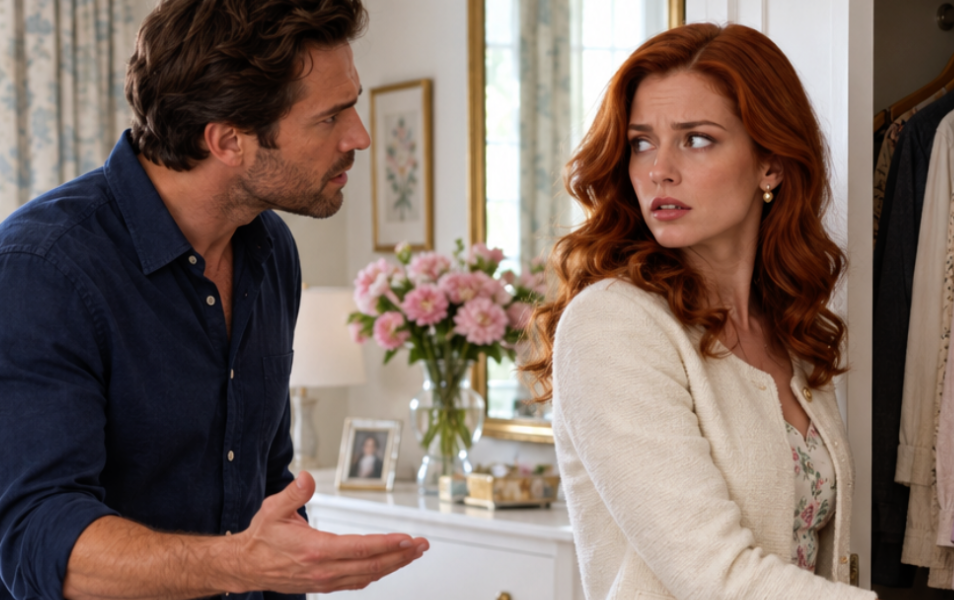
“We’ll make the kids’ room on the closed veranda, there’s more sunlight there,” my mother-in-law said confidently while helping herself to some herring under a fur coat. “Olga’s boys look so pale being in the city. We’ll put Vadim’s sofa in the big room—it’s just gathering dust on their balcony anyway. And the summer kitchen will need a fresh coat of paint.”
I was left sitting there, fork still raised, unable to bring myself to take a bite of the roast meat. A typical Sunday meal in Vera Borisovna’s cozy living room had, in one second, become anything but ordinary.
They were talking about my cousin Grandma Zina’s house. Only last week, I had finally received the official property certificate and ownership. Apparently, my husband Anton had already told his mother, and now my inheritance was being rapidly divided up between relatives—relatives Grandma Zina had never once met.
I glanced at Anton. He calmly chewed his salad and nodded, eyes glued to a renovation show on TV.
“Vera Borisovna,” I said softly, placing my fork at the edge of my plate, “what kids’ room? What sofa of Vadim’s?”
My mother-in-law looked at me with such sincere surprise, as if I’d just asked her why we need to breathe air.
— But come on, Marina. May is almost here. Olga’s kids need to spend time in nature. I’ve already planted tomato seedlings in cups, we’ll move them to the greenhouse. We’ll take turns staying at the house. Olga and the boys will live there in July, I’ll take my vacation in June. Of course, you and Anton will have a room too, for weekends. The house is big — there’s enough space for everyone.
Olga, Anton’s younger sister, sitting across from us, nodded enthusiastically as she wiped her youngest son’s mouth with a napkin.
— Vadik and I have already decided that he’ll fix the fence during the May holidays. We just need to buy the materials. How much can you and Anton pitch in? The fence is really rotten, Vadik checked the photos Anton showed him.
I glanced at my husband. He shrank his head into his shoulders a little, but tried to smile.
— Marina, come on. It’s a great spot, there’s a river nearby. And honestly, the fence does need to be fixed.
— No one’s going to be fixing the fence, I said flatly as the room went quiet. — And there’s no need to haul the seedlings either. I haven’t decided yet what I’ll do with that house.
Olga pursed her lips in disappointment, and my mother-in-law put down her spoon.
— What do you mean, you haven’t decided? Our family has a summer house now. It’s ready, with a solid roof. Or do you want it to just sit empty and rot while your nephews are stuck in the stuffy city? We’re family, not strangers — we won’t get in your way.
— It’s not a summer house, Vera Borisovna. It’s an inheritance. And I don’t plan to turn it into a summer camp right now.
The rest of lunch passed in heavy silence, broken only by the clatter of dishes. Olga made a show of not asking for the bread to be passed, and my mother-in-law sighed so heavily, it was like she was watching an ancestral estate crumble before her eyes.
In the car on the way home, Anton tried to lighten the mood with a joke.
— Marina, why are you so worked up? Mom’s just daydreaming. Sure, the house is yours, but we’re family. It’s really awesome — our own place in nature. I’ve wanted to buy a proper grill for ages, get the guys together. Vadik’s handy, he’d fix everything up quickly.
— Anton, I said, turning to look at my husband’s profile in the glow of the evening streetlights. — We live in a two-room apartment and pay forty-two thousand a month on a mortgage. Our son Yegor will start first grade in the fall — he needs a proper study area and we need to fix up his room. I’m not opening a vacation branch for your sister.
— What does the mortgage have to do with it? The house is already there, we don’t have to pay for it.
— We have to pay taxes on it, cover the electricity bills, buy gas cylinders, fix pipes, pump out the septic tank. And who’s going to do all that? Vadik, who took six months to fix a faucet at his place? Or you, after your long shifts?
Anton works as a service engineer for medical equipment. He travels all over the region, setting up and repairing CT scanners and complex ultrasound machines. He often comes home completely wiped out. The idea that he would gleefully mow the lawn and fix the porch on weekends felt like pure fantasy.
But convincing him otherwise wasn’t easy. He truly believed in that juice commercial image: a green lawn, laughing children, a rosy-cheeked grandma, and himself by the grill with a glass of beer.
The next day I went back to work. I’m a manager at a custom kitchen showroom. My job is all about numbers, measurements, ergonomics, and hard reality. Every day, I have to explain to clients that a ninety-centimeter-wide fridge just won’t fit into a sixty-centimeter-wide space, no matter what they wish for. I’m used to sticking to facts, not fantasies.
During my lunch break, I opened up the real estate database and checked properties in Sosnovka, where Grandma Zina’s house is located. It’s a nice village, all connected to the gas line, and just a fifteen-minute walk to the reservoir. The plot isn’t big, but the house is built from solid brick. Even the most modest estimate put its price at around three and a half million rubles. Our remaining mortgage was two million eight hundred thousand.
I even factored in the tax for selling an inheritance property within three years. After deductions, that would leave about three hundred thirty thousand. But even with the tax and realtor fees, there would be enough money to pay off the mortgage and fix up Yegor’s room.
On Saturday, Anton and I drove to Sosnovka to see the house for the first time since I inherited it. The last time I was here was six months ago, when I was organizing Grandma Zina’s funeral. She wasn’t a close friend, but over the last four years, I was the only one in the family who visited her every month, brought groceries, called doctors from a private clinic, and hired people to repair the fence. I never expected an inheritance—I just couldn’t leave an elderly person all alone. The will was a complete surprise to me.
We opened the heavy metal gate. The yard was overgrown with tall, dry grass, and last year’s blackened apples still clung to the trees. Inside, the house smelled like dust, dried chamomile, and old belongings.
Anton walked through the rooms like a true homeowner, touched the stove, and looked out the window onto the porch.
“You know, this is a sturdy house. All it needs is new wallpaper and for the junk to be cleared out. Over there, in that corner of the yard, we can ask Vadik to build a sandbox. And here, you and I could settle in.”
I pulled out the notebook where I’d already written down the local realtor’s contact info.
“Anton, I’m going to sell the house.”
He spun around abruptly.
“What do you mean, sell it? Why?”
“Because it’s worth at least three and a half million. We can pay off the mortgage in full. We won’t have to stretch the budget by forty thousand every month. We can start saving for a bigger place, or finally take a proper vacation without worrying about every penny.”
“Marina, you’re always thinking only about money,” my husband snapped in irritation. “We’ve got a family nest now. A place where everyone can gather. We’re used to paying the mortgage, it’s not a big deal anymore. But if you sell the house, the money will just disappear and nothing will be left.”
“This is Grandma Zina’s house, not a family nest. Your family has nothing to do with it.”
“We’re married!” Anton’s voice got louder. “My family is your family. You just don’t want Olga’s kids to come here. What, are you that stingy? Letting them stay wouldn’t take anything from you.”
“I’m not stingy. But I’m not going to sacrifice my own comfort and financial safety just to pay for someone else’s vacation.”
We drove back to the city in complete silence.
On Monday morning, my phone beeped. I glanced at the screen—Olya had added me to a new messenger group called “Dacha “.
The very first message was a link to a marketplace.
“Girls, I found an amazing frame pool! It’s only 18,000 on sale. Marina, send me 9,000 to my card, and I’ll order it today while it’s discounted.”
Right after that came a message from my mother-in-law:
“Olya, well done. Marina, we’ll also need to pitch in for a cultivator. Vadim said he isn’t going to dig the garden with a shovel—his back hurts. Check on that same site where you found the pool.”
I sat at my desk, looking at these messages. I didn’t feel angry, just a cold, professional awareness of how quickly people take over someone else’s resources if you don’t set boundaries.
I opened the keyboard and typed a message to everyone:
“Olya, Vera Borisovna. There’s no need to buy a pool or a cultivator. The house is being prepared for sale, I plan to close the deal in May. Please don’t plan on vacationing in Sosnovka—no one will be living there.”
Then, I silently left the group.
Two minutes later, my phone rang. “Mother-in-law” lit up on the screen. I took a deep breath and answered.
“Marina! What is this news?” Vera Borisovna’s voice was trembling with outrage. “Selling? Are you out of your mind?”
“I’m perfectly clear-headed. This is my property, and I need the money to pay off my mortgage.”
“You’re robbing the family!” my mother-in-law almost shouted. “The kids need fresh air! We already made plans. Vadim took time off work in July to fix your porch! How can you be so selfish? That house was a gift to you, and now you just want to profit!”
“It wasn’t a gift. I spent four years visiting Grandma Zina while you didn’t even know her name. The decision is made, Vera Borisovna. Goodbye.”
I hung up and immediately called the realtor. We scheduled a meeting for Thursday to sign the contract and hand over the keys for showings.
The conflict shifted into a quiet, yet active phase. Anton walked around gloomy, giving curt answers and making it clear he thought I was making a huge mistake. I didn’t pressure him—I wanted to give him time to accept what was coming. But I underestimated Vadim’s resourcefulness.
On Wednesday evening, while I was washing dishes after dinner, my phone rang. It was Olya’s husband calling.
“Hey Marinka. Listen, I’m at the gate in Sosnovka. It’s getting dark. Anton said the key is under the brick by the porch, but I can’t get onto the property—there’s a new combination lock on the gate. What’s the code?”
I turned the water off and dried my hands with a towel.
“Vadim, why are you in Sosnovka?”
“What do you mean? I took the work van, brought the old fridge, our couch from the balcony, and some plywood sheets—didn’t want to waste time. I figured I’d unload everything onto the veranda. Come on, give me the code, it’s cold out here.”
“There’s no code, Vadim, it’s just a regular key. And there’s no key under the brick.”
“What do you mean? How am I supposed to unload? I just spent two hours in traffic!”
“You’re not, Vadim. Turn around and take everything back. Buyers will be coming soon for viewings, and I don’t want any junk or old sofas cluttering up the place.”
“Are you kidding me?” Vadim’s tone instantly turned rude. “We had an agreement! Anton said it was okay to bring our stuff over!”
“Anton was wrong. This is my house, and I never gave permission.”
I hung up the call and turned to Anton, who had just come out of the room after hearing the conversation.
“Did you tell Vadim he could bring furniture over there?”
Anton looked away.
“He just asked if he could temporarily put some things on the veranda to free up the loggia. I didn’t think he’d go today. Marina, just let him store it, what’s the harm? The house is empty anyway. It won’t get in the way of selling it.”
“It will get in my way, Anton. Because if they bring their things over, they’ll start seeing it as their storage. Then they’ll come back to pick up some plywood, and then decide to stay for the weekend because, ‘Well, the sofa is already there.’ Don’t you get how this works?”
“I get that you’re making a big scene over an old sofa! Vadim’s now heading back with a full truck, and Olya’s going to drive me crazy about this.”
“Then you’ll have to explain to your sister why you’re making decisions about someone else’s property without asking.”
That evening, Vadim brought the sofa back and lugged it onto the loggia again. The argument was huge. Olya called Anton in tears, accusing me of hating her children. Vera Borisovna sent me a long message about how I was destroying family bonds and that it would come back to haunt me.
On Sunday we were called to a family meeting. My mother-in-law called Anton, her tone making it clear there would be no objections: we needed to have a serious talk, without emotions or shouting.
I went, because hiding would be pointless. It was better to clear everything up once and for all.
Vera Borisovna’s apartment was stuffy. Olya sat on the couch looking mournful. Vadim wasn’t there. My mother-in-law pointed us to the chairs at the table.
“Marina,” she began in a calm, almost solemn tone. “I understand you grew up in a different environment. In your family, everyone looks out for themselves. But that’s not how we’re used to things. The house is a family asset. Treating it as disposable for momentary gain is a crime against the future.”
I stayed silent, waiting to see where she was going with this.
“Olya and I have discussed the situation. If money is so important to you, and you’re not willing to just let your nephews use the dacha, we’ve found a solution that should work for everyone.”
My mother-in-law turned her gaze to Anton.
“Anton. You’ll take out a cash loan. Buy the house from Marina at market value. Put it in your own name. That way, Marina gets the millions she wants for the mortgage, and the dacha stays in the family. No more arguments.”
The room went completely silent. Even the old clock on the wall seemed to tick more quietly.
I slowly turned my head to look at my husband. This was the moment of truth. If I started arguing now, I’d just look like the greedy, hysterical one again. But the proposal was directed at him.
Anton stared at his mother without blinking.
“Take out a loan?” he repeated, sounding like someone else entirely.
“Yes, exactly. You have a documented salary and a good position. The bank will approve it easily. Give Marina three and a half million, she’ll pay off your mortgage. Then you just pay off the loan over time.”
Anton is an engineer. He knows how to do the math. I could see the numbers spinning in his head right now, crashing into reality.
“Mom,” he began slowly. “Three and a half million on a loan without collateral—that’s about a twenty-five percent annual interest rate. Over ten years, that’s nearly eighty thousand a month in payments.”
“Well, of course, you’ll have to tighten your belt a bit,” Vera Borisovna agreed easily. “But it will be yours! Olya will send you potatoes and cucumbers from the garden, that will save money on groceries. Vadim can fix everything there. You’ll just come over and relax whenever you want.”
Anton looked at Olya.
“So, wait. I’m supposed to take on a debt of three and a half million. Pay the bank almost eighty thousand every month. Live off pasta, forget about normal vacations, forget about fixing up my son’s room… All so Olya and Vadim can spend summers at the dacha for free and plant potatoes there?”
Olya blushed.
“Why for free?! We’ll pay for the electricity, by the meter! And anyway, we’re all one family—are you going to deny your nephews? You said yourself how nice it would be for everyone to gather there!”
Anton suddenly smirked. It was a cold, hard smirk—the kind of smile from someone who’s just had their rose-colored glasses ripped off.
“It is nice to gather, Olya. When someone else is footing the bill.”
He got up from the table.
“I’m not taking out any loan. Buying a house from my wife that’s already in the family is nonsense. The house is being sold. The money will go towards our mortgage, because my son deserves to live in comfort just as much as your kids do.”
Vera Borisovna clutched at her heart, though she showed no signs of shortness of breath or paleness.
“Anton! You’re betraying your own sister over a few square meters! That woman is turning you against us!”
“Mom, that woman has just been trying to show me the obvious things I refused to see,” Anton said, taking my hand. “Let’s go, Marina. There’s nothing left for us to discuss here.”
We walked out of the building onto the street. The air felt wonderfully fresh. Anton silently opened the car door for me, then got behind the wheel. He stared straight ahead for a long time, not starting the engine.
“I honestly thought they just wanted to help with the house,” he said quietly. “But they were seriously planning to fix all their problems through me, at my expense. And still blame me if I refused to live on pasta for the sake of their free swimming pool.”
“It’s good you realized all this before Vadim took apart the porch,” I replied, buckling my seatbelt.
The house in Sosnovka sold by mid-June. The realtor found a lovely retired couple from up north who wanted to move closer to the center of the country. They fell in love with the property and didn’t even try to haggle, because Grandma Zina had left the house in perfect technical condition.
As soon as the money came through, I immediately set aside the amount for tax and the realtor’s fee, then paid off our mortgage entirely. That evening, seeing a zero in the “outstanding balance” field of the banking app, I felt a concrete slab lift from my shoulders—one we’d been carrying for the past five years.
With the rest of the money, we hired a crew and did a fantastic renovation in Egor’s room, getting him a proper desk, an ergonomic chair, and a good bed.
Since then, my mother-in-law hasn’t called us. Olya made a show of deleting Anton from her friends on social media. We didn’t force ourselves into their lives.
At the end of August, just before the first day of school, Vera Borisovna called my husband on her own. She sounded distant, wished Egor a successful new school year. Then, unable to hold back, she started complaining that Olya and Vadim had spent the whole summer in the city, the boys trashed their apartment, and Vadim still hadn’t taken his couch off the balcony.
Anton listened, nodded along, and sympathized. But when his mother hinted that they needed financial help to get the older nephew ready for school, my husband calmly replied:
“Sorry, Mom, we don’t have any extra money right now. We just renovated Egor’s room and are now saving up for the down payment—we want to buy a three-room apartment. Maybe Vadim should sell his couch; it’s just gathering dust anyway.”
He hung up, looked at me, and winked. Life went on, but now both of us knew exactly where the boundaries of our family lay. And the gate at that boundary was firmly locked.