Part One. The Anniversary
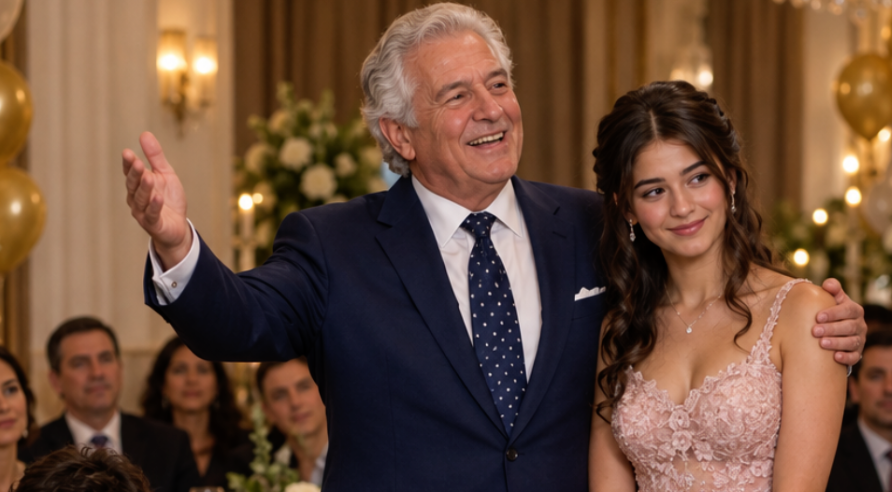
They booked a banquet hall for twenty-eight people, but forty showed up—Viktor Stepanovich always loved it packed and lively. He stood at the head of the long table, held his glass with two fingers, and waited for everyone to quiet down. The silence took its time, and it annoyed him.
“Everyone, sit down,” he said. “I’m going to speak.”
His son Andrey sat at the end of the table beside Nina and already knew how the speech would end. He was as sure of it as he was of his shoe size. Under the table, Nina placed her hand over his.
“Sixty years,” Viktor Stepanovich began. “A whole life’s passed, you can see the results. What are the results for a man? Children. I look at my Lena and I know it’s not been in vain.”
His daughter Lena smiled and adjusted her hair. To her right sat Oleg—broad-shouldered, calm, wearing a nice jacket. Their two children, Kirill and Sonya, poked their salads with forks, waiting for dessert.
“Lena’s the smart one,” her father continued. “Her husband’s a solid guy. House, car, kids in a private school. That’s what I call results. That’s what I understand.”
“Dad, that’s enough,” Lena laughed. “It’s embarrassing.”
“It’s not embarrassing,” he shot back. “I’m just telling the truth. Now, about the second one.”
Andrey lowered his eyes to his plate. Nina felt his hand tense up beneath hers.
“I have a son, Andrey,” Viktor Stepanovich said loudly. “Almost forty. Makes toy houses. Models, as he calls them. For museums, exhibitions. Gluing cardboard and being proud of it.”
Someone at the table snickered. Somebody else pretended to be occupied with their fish.
“Dad, today’s your day,” Andrey said evenly. “Let’s leave my results out of this.”
“Am I lying?” Viktor Stepanovich turned his whole body. “You rent your apartment. Your car’s ten years old. No kids. Your wife’s an expert at cardboard too.”
“Nina makes tactile books and models for blind children,” Andrey explained. “She even won a medal at an exhibition. In September.”
“A medal,” his father repeated with satisfaction. “Put it in the fridge. It’ll come in handy in winter.”
Nina sat up straight. She wanted to snap back, but remembered: here, her word would be worth three times less.
“Viktor Stepanovich,” she said calmly, “Happy anniversary. May you always have many reasons to be proud. All kinds.”
“I already have one,” he nodded at Lena. “One, but it’s reliable.”
Lena stood up with her glass and looked at her brother almost gently.
“Andrey, don’t be upset. Dad’s blunt, but he means well. You just chose a job for your soul. For a family, you need to pick a job for the money.”
“That’s right—I picked a job for my soul, and work is my second family,” Andrey said. “It’s just that my family isn’t as noisy.”
“Look at Oleg,” his father interrupted. “Raised himself up from nothing. Warehouses, logistics, twenty people answer to him. And you sniff glue.”
Oleg grimaced and set his glass down.
“Viktor Stepanovich, let’s not do this.”
“See?” his father said triumphantly. “Even he pities you.”
Andrey stood up. Nina thought there’d be shouting, but he only buttoned his jacket.
“Congratulations, Dad,” he said. “Long life to you. Your gift’s on the windowsill, in the wooden box.”
“What is it, a little house?” Viktor Stepanovich grinned.
— This is your home. The one in Koltsovka where you grew up. I made it from the photos, it took me six months. It even has the porch, the well, and the rowan tree by the fence.
The table fell silent. Viktor Stepanovich picked up the box, opened it, and stared inside for a long while. Then he closed the lid and set it down on a chair.
— Just a cardboard box, — he said. — Well, thank you.
Nina and Andrey left after twenty minutes. In the elevator, Nina leaned her shoulder against her husband.
— He saw, — she said. — He saw everything, Andrey. He just doesn’t know how to show it any other way.
— He knows how, — Andrey replied. — He knows how with Lena. He just doesn’t want to with me.
Part Two: Grandpa’s Apartment
At Nina’s house there was always a familiar song, but with different words. Her mother, Lyudmila Arkadievna, sang it, and the chorus hadn’t changed in four years.
— Nina, when are you going to visit Grandpa? — her mother asked over the phone on Thursday. — He’s been asking about you.
— On Saturday, — Nina replied. — I ordered his medication and made him a raised calendar—his eyesight is getting worse.
— A calendar, — her mother sighed. — You’d be better off bringing him some money. Yulia is the one renovating the bathroom for him.
— Is Yulia really renovating for him, or is she getting the apartment ready to sell?
— Don’t be ridiculous! — her mother’s voice shot up. — Yulia takes care of him. Unlike some people.
Nina had heard this conversation so many times, she could predict every line.
— Mom, I visit him twice a week, every week, for four years. I take him to the clinic. I change the batteries in his hearing aid.
— And what does it matter? — Lyudmila Arkadievna said. — You come empty-handed and just sit there. Yulia brings money.
— With his own money, Mom. He gave her his bank card.
— You’ve learned to count someone else’s money, — her mother said with offense. — You know what, daughter? I’ll talk to Grandpa. I’ll tell him to sign everything over to Yulia. Everything. The three-room apartment and the dacha.
— Go ahead.
— Aren’t you scared? — her mother clearly expected a different answer. — You’ll be left with nothing. Just your books for the blind. Your Andrey won’t ever earn you anything, his father is just the same.
— Mom, are you talking about people right now, or just furniture?
— I’m talking about life! — cut off Lyudmila Arkadievna. — Yulia arranged things well. No husband, but at least she’ll have an apartment. And you married a model-maker.
Nina hung up and sat in the hallway, her head resting against the wall. Andrey came out of the room and sat next to her. He didn’t ask anything.
— The apartment talk again, — she said.
— Let them have it, — Andrey said. — We don’t need it.
— It’s not about the apartment. It’s about Grandpa. He understands everything. Last time he told me: Ninka, I feel like I’m just a bargaining chip to you all.
— He actually said that?
— Word for word.
Andrey fell silent.
— You know what I’ll do? — he said. — I’ll make him a model of their house in Patrushevo. He talks about that place all the time. With the shed, the apple trees, the pigeon coop.
— He’ll start crying.
— Let him. It’s better than a bathroom renovation.
On Saturday, they went to visit Grandpa together. Pyotr Ilyich met them in the hallway in a warm vest, leaning on his cane.
— You came, — he said. — I was waiting.
— Hello, Pyotr Ilyich, — Andrey shook his hand. — My father sends his regards, he remembers you from fishing trips.
— I remember, I remember. Your dad was a stern one.
— He still is, just a bit.
The three of them were sitting together in the big room, and Grandpa was telling stories about how he built the pigeon loft back in ’68. Andrey was jotting down the dimensions in his notebook while Nina kept throwing in little comments to make sure Grandpa didn’t lose his train of thought.
“Yulka came by yesterday,” Pyotr Ilyich suddenly said. “She brought a man with her. He was knocking on the walls, asking what year the house was built.”
“A realtor?” Nina asked for clarification.
“Who else could it be? I’m not deaf, I just pretend sometimes.”
“So, what did you tell him?”
“I didn’t say anything,” Grandpa replied with a smirk, tapping his cane on the floor. “I may be old, but I’m no fool. I’ll say my piece when the time comes.”
Part Three: The Streak
The trouble started when the client for whom Andrey spent nine months building a model of a late nineteenth-century neighborhood suddenly stopped answering his calls. Then a lawyer picked up. It soon became clear he wasn’t going to get paid.
“How can that be?” Nina looked at her husband. “You have a contract.”
“I have a contract,” Andrey said. “But the company is gone. They folded and registered a new one. Now they tell me, ‘Go sue an empty shell.’”
“How much was it?”
“Eight hundred forty. Plus, I put in another one twenty of my own money for materials.”
They sat on the floor of the workshop, nestled between shelves. The workshop was a rented twenty-eight square meters in the basement of an old factory building, low ceilings and an iron door.
“Well,” Nina said. “It’s not the first time.”
“This is the first, Nina. We’ve never lost this much before.”
Two weeks later, the upstairs neighbors’ riser pipe burst overnight, and water seeped through the ceiling. In the morning, when Andrey opened the iron door, he saw that the model of the old train station—an order for the regional museum, due in eighteen days—was sitting in a puddle, the cardboard and plaster swollen like dough.
He called Nina. His voice didn’t sound like his own.
“It’s over,” he said. “The station is ruined.”
“I’m on my way.”
She arrived forty minutes later, wearing her work overalls, armed with two rolls of polyethylene and a heat gun she’d borrowed from a neighbor down the hall.
“Alright,” she said, surveying the basement. “We’re going to save the lower level. We’ll redo the top. Eighteen days is three hundred forty hours if we sleep five a night.”
“Nina, this is impossible.”
“It’s possible. I’ll handle the facades and the little details, you take care of the structure and the roof. We’ll outsource the cutting—I’ll negotiate delayed payment.”
Andrey looked at her.
“You have your own deadline next month. Those tactile books for the orphanage.”
“Then I’ll sleep four hours instead,” said Nina. “Don’t argue. We cannot miss this museum handover. Nobody will hire you after that.”
They worked nearly non-stop for eighteen days, barely taking any days off. Ate at the workbench, slept in the workshop, taking turns on a mattress. Nina sliced her fingers on the scalpel and taped them up, one bandage over another.
On the ninth day, Viktor Stepanovich called.
“How are you holding up?” he asked without a greeting.
“Working,” Andrey replied. “My workshop got flooded.”
“Of course,” his father said. “Basement, cardboard, water—what did you expect. I told you: go work with Oleg at the warehouses, make something of yourself.”
“Dad, I can’t talk right now.”
“You never can. Lena finished the house yesterday, second floor’s all done. Come see it if you’re not too ashamed.”
“We’ll come,” Andrey said, and hung up.
On the twelfth day, Lyudmila Arkadyevna called and talked for seven minutes straight.
“Nina, your grandfather’s not well and you’re nowhere to be found. Yulia visits him three times a week. I’m warning you: I’m going to talk to him. Everything will go to Yulia. Don’t come to me with complaints afterward.”
“Mom, I’m finishing up at the museum,” Nina replied. “I’ll come on Sunday and bring Grandpa a nebulizer.”
“A nebulizer!” her mother scoffed. “Yulia bought him a washing machine.”
“On his own card.”
“There you go again!”
They finished the train station a day ahead of deadline. The museum curator, Olga Vadimovna, walked around the model three times and stopped at the platform where tiny 12-millimeter figures stood.
“What do we have here?” she asked. “A woman with a basket and a boy?”
“It’s from an archival photo, 1902,” Andrey explained. “I enlarged it, you can see the basket in it.”
“And you made all that after the flood in just eighteen days?”
“The two of us did,” Nina said. “I worked on the facades.”
Olga Vadimovna pulled out her phone.
“I need to talk to you. This fall they’re announcing a competition for the new building’s permanent exhibit. There’s a mandatory requirement: an accessible section — raised-relief maps, tactile models, Braille captions. No one in our region can manage it. Give it a try.”
“We don’t have a single ruble,” Andrey admitted honestly.
“But you have the train station,” she replied. “And the woman with the basket.”
Part Four: Who’s on Top
They spent a month and a half preparing their application. There was plenty of counting, arguing, late-night changes, and even a small loan from a friend who specialized in casting.
In November, Lena invited everyone to her housewarming party on the second floor. The table was set long, they’d bought plenty of wine, and Viktor Stepanovich was in the center of it all, feeling jovial.
“Look,” he said, gesturing at the ceiling. “See that, Andrey? That’s what came of it.”
“It’s beautiful,” Andrey said. “Congratulations, Lena.”
“Thank you, Andrey.” Lena beamed. “We’re planning a pool in the spring. Oleg says it’ll be done by July.”
At that moment, Oleg was standing near the stairs with his phone, looking like he was waiting for a bus that would never come.
“And you two?” Lena asked. “Still gluing things together?”
“We entered the competition,” Nina said. “For the museum’s new building.”
“And what’s at stake?”
“If we win, it’s four and a half million for two years of work.”
Lena raised her eyebrows.
“And if you don’t win?”
“Then we keep on working,” Nina replied calmly. “We’ve already faced zero before.”
“Oh Nina,” Lena laughed. “You and Andrey are like a pair of teenagers. It’s all some kind of game to you. Oleg and I have stability. I haven’t worked in four years, and you know what? It’s the best decision I’ve ever made.”
Viktor Stepanovich slapped his palm on the table.
“See? Did you hear that? The woman’s at home, the man earns the money. That’s how normal people live.”
Eight days after the housewarming, Oleg rented an apartment in the center and moved his things in. Three weeks later, Lena received a court summons.
She called Andrey at half past eleven at night.
“He filed for divorce,” she announced immediately. “Can you believe it? He filed.”
“Lena, wait. Where are you?”
“At home. He took his things. He said he’d been living like in a hotel for four years.”
“And the house?”
“That’s exactly the problem!” Her voice cracked. “The house is registered in his mother’s name. The car belongs to the company. The company belongs to his brother. I don’t own anything, Andrey. I don’t even have work experience. I haven’t worked in four years!”
Andrey sat on the edge of the bed. Nina turned on the lamp and joined him.
“Lena,” he said. “You’ll get child support. Two kids means a third of his income.”
“He’ll show a salary of twenty-two thousand! It all goes through his brother, I know that. I used to laugh at how smart he was.”
“Did you find a lawyer?”
“How could I?” she cried. “I only have eleven thousand in my account, and a credit card.”
“I’ll come by tomorrow. I’ll bring some money for the lawyer. Not much, but enough for a consultation and to file the paperwork.”
“You?” Lena fell silent. “But you yourself…”
“Yes, me,” he agreed. “I’ll be there at ten.”
He hung up the phone. Nina was watching him.
“Are you going?”
“I’m going.”
“That’s the right thing,” she said. “But let’s agree on one thing: we help the kids. No long conversations.”
That same winter, the second structure collapsed. Yulia brought a notary to Pyotr Ilyich and asked him to sign a power of attorney—”so I can go to the clinic without waiting in line and get papers for you.”
Grandpa signed the power of attorney. Six days later, he got a call from the property management office, asking why the apartment’s meters were being changed without his request, and who the woman was showing ownership documents.
Pyotr Ilyich put on his jacket, grabbed his cane, and went to the notary himself. He revoked the power of attorney and rewrote his will.
Yulia showed up at his place that evening, angry.
“Grandpa, what are you doing?”
“I do what I want in my own home,” said Pyotr Ilyich. “You were doing whatever you wanted in my house.”
“I’m taking care of you!”
“You bought me a washing machine—with my own card—and reminded me about it three times.” He lifted his cane and pointed at the door. “Go, Yulia. Leave the key on the table.”
“You’ll be all alone! Ninka won’t come to see you—she’s got her museum!” she shouted.
“Ninka made me a dovecote,” Grandpa replied. “Out of wood, with little windows. It sits on the sideboard. You asked what year this apartment was built.”
Part Five. A Year Later
They won the competition in February. In May, they opened a workshop twice as large as the last one—on the second floor, with windows up by the ceiling and a proper vent over the cutting area. They hired two people: a student model-maker and a woman who specialized in Braille signage.
Pyotr Ilyich moved in with them in June, bringing two suitcases, his cane, and the wooden dovecote for the sideboard. They gave him the far, quiet room.
“Ninka,” he said the first night, “I’ll be in your way.”
“Grandpa, you’ll be our model tester,” Nina replied. “Your eyesight’s not great—that makes you our chief quality inspector. If you can recognize the building by touch, that means it’s done right.”
“This counts as work?” Grandpa asked, impressed.
“It’s the most important work.”
Ludmila Arkadyevna called her daughter in August, and her voice was different—soft, cautious.
“Ninochka. How is Grandpa?”
“He’s good. Blood pressure’s normal, and he eats well.”
“Does he… ask about me?”
“No. But you should come. He’s not resentful, he’s just tired of being a pawn.”
“Yulia won’t talk to him,” her mother said. “Or to me, either. She thinks it’s all my fault.”
“What do you think?”
There was a long pause.
“I thought I was doing the right thing,” said Lyudmila Arkadyevna. “I believed Yulka needed help because life didn’t work out for her. But you had a husband, I thought you would manage.”
“We managed. But not thanks to you.”
Viktor Stepanovich showed up at the workshop in September, unannounced and without calling first. He climbed to the second floor, stood in the doorway, and spent a long time looking at the central table where they were assembling a model of the square with a fountain.
“So this is your factory, huh?” he mumbled.
“It’s a workshop,” Andrey corrected him. “Come on in.”
His father entered, touched a plaster casting with his finger, then quickly pulled his hand back.
“Am I going to break it?”
“You won’t break it. It’s a casting, it’s sturdy.”
He walked around between the tables and stopped at a display where Nina’s relief books lay — with raised outlines of buildings and tiny dotted labels.
“Are these for the blind?”
“For the visually impaired and blind,” Nina explained. “A child can run their hand over it and understand what the city looks like.”
“And people actually buy these?”
“Museums, schools, and libraries order them. Our schedule is booked through the end of next year.”
Viktor Stepanovich sat down on a stool and rested his hands on his knees.
“I’m here on business, Andrey,” he said. “About Lena.”
“I’m listening.”
“She works at a pharmacy, packing goods, in shifts. Twelve-hour days on her feet. The court set the alimony — eight thousand for both kids, because Oleg’s salary is officially like a security guard’s. She didn’t get the house. She’s renting a two-bedroom with the kids.”
“I know,” Andrey replied. “I gave her money for a lawyer.”
“She told me,” his father said, rubbing his chin. “Could you take her on? In any position at all? She’s careful and diligent.”
Andrey looked at Nina. Nina gave a barely noticeable nod.
“I’ll take her,” Andrey said. “As a model maker’s apprentice. The salary isn’t big, two months’ probation, hours start at nine. Any tardiness means a bonus cut. No family favors.”
“But she’s your sister!”
“That’s exactly why I’m saying this upfront. So there are no misunderstandings later.”
Viktor Stepanovich fell silent.
“You’ve gotten tough.”
“You’re the one who taught me that,” Andrey replied.
His father stood up and walked once more around the table with the fountain model. Then he turned to face Andrey.
“Andrey, about what happened at the anniversary…”
“I remember.”
“I never threw away the house from the box,” Viktor Stepanovich blurted out, as if afraid he’d lose the chance to say it. “It’s in my display cabinet. I dust it off.”
“Good,” Andrey said. “It should only be dusted with a dry cloth, not a damp one. The rowan tree will come off otherwise.”
“Got it,” his father coughed. “Thank you.”
He left, forgetting to say goodbye, and you could hear his steps, slow and careful, as he held onto the railing on the stairs.
Lena started work on Monday. For the first two weeks, she was silent and kept mixing up the glue. In the third week, she asked to be shown how the window frames were made. After a month, she stayed late by herself to finish the cornice, without anyone asking her to.
“Nina,” she said as they put away the tools, “you didn’t judge me back then, at the housewarming. Why not?”
“I did judge you,” Nina answered honestly. “And then I stopped. You have two kids — they’re not in need of my judgment. They need tights and lunches.”
“I thought everything would last forever,” Lena said. “The house, that pool. I used to tell Dad about it, he was so happy.”
“He’s still happy. Just a little quieter now.”
In December, the new wing of the museum unveiled its latest exhibition. Pyotr Ilyich arrived dressed in a jacket and carrying a cane. He stood by the tactile model of the old city and traced his hand across the reliefs.
“Right here,” he announced loudly so the whole hall could hear, “this is Zarechye. Our house used to stand here. I can feel the porch with my finger.”
Nearby, a boy about nine years old, wearing dark glasses, let his hands travel across a neighboring model, laughing every time he discovered a tower.
“Nina,” Andrey said quietly. “Look.”
“I’m looking.”
“For four years, everything was falling apart for us.”
“Not everything,” Nina replied. “We didn’t fall apart.”
She took her husband’s hand. Ahead of them was the second museum wing, a three-year contract, the grandfather on the sideboard with his dovecote, and a mountain of unfinished models.
And, to be honest, this was only the beginning.