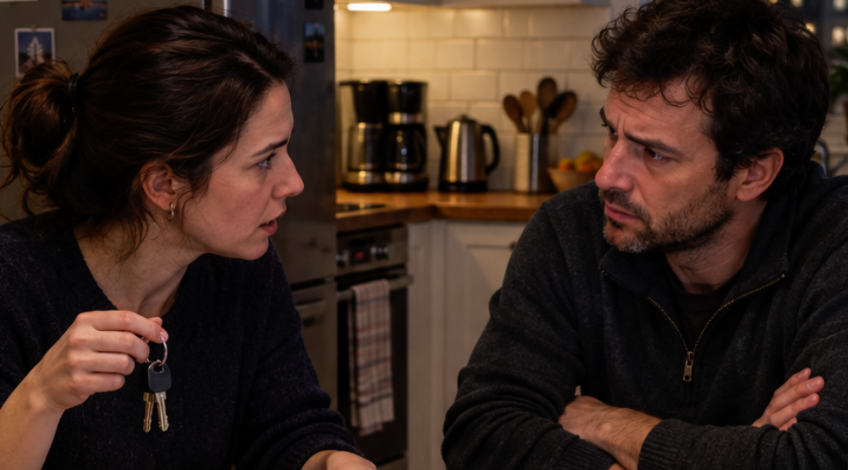
“Listen, my parents’ gas boiler just broke, it’s freezing outside, and their house is absolutely cold. They desperately need ninety thousand for a new one and for installation,” I said, putting my smartphone down on the kitchen table and looking at my husband, who was scrolling through his tablet.
Vadim didn’t even look up. He kept swiping at his screen, as if what he was reading was the most important thing in the world.
“Let them get a loan, any appliance store can arrange an installment plan in ten minutes with just a passport,” he said calmly, flipping to a new page on his browser. “We don’t have any extra money right now, you know we’re saving up for winter tires. Plus, the car insurance needs to be renewed any day now.”
I took a deep breath. Instantly, all the hurt I’d been hiding deep inside for a year started to bubble up.
“A loan, Vadim? Both of my parents are retired, half of dad’s pension goes to his medication, no bank is going to offer them decent terms,” I said, my voice steady, but my hands tightly clasped. “We could easily send them that amount from our savings account, and you can buy the tires with your next paycheck. A month riding on the old ones won’t be the end of the world.”
My husband set his tablet aside and frowned. He looked at me with such indignation, as if I’d just asked him to give up our last penny.
“Not a big deal? What if I lose control on the highway and end up in a ditch on these bald tires during the first snow?” He raised his voice, waving his hands. “I have no intention of draining our account for other people’s problems. They have their own budget—they need to learn how to manage their money and stop leaning on their kids.”
The phrase “other people’s problems” hit me hard. Instantly, I remembered all those mobile bank receipts I paid regularly throughout the last year.
“Other people’s problems, huh? What about when your mom got caught up in that supplement scheme and took out microloans for three hundred thousand? Whose problems were those?” I refused to back down, staring right into his darting eyes. “I spent a year paying off your mom’s debt, picking up extra work in the evenings and on weekends while you just shrugged. You told me yourself we were obligated to get her out of that financial mess.”
Vadim’s shoulder jerked nervously. He tried to brush off my words like they were an annoying fly.
“That was a completely different situation—she was facing court, she was getting daily calls from collectors and was in a terrible state,” he rattled off with a rehearsed tone. “Plus, she’s a lonely, trusting woman; she was tricked by scammers. But a boiler breaking down? That’s just a regular household issue they need to sort out themselves.”
My mother-in-law had gotten obsessed with some Chinese supplements that supposedly helped with joint pain. She was convinced she could start her own profitable business from home.
She started buying these cardboard boxes in bulk. First, she spent her whole pension. Then she borrowed from friends, and when the cash ran out, she turned to microloans.
These companies handed out loans with skyrocketing interest rates. Unsurprisingly, the business collapsed within the very first month. The boxes of pills are still gathering dust on her enclosed balcony.
The interest was piling up every single day. What started out as a manageable amount quickly turned into an overwhelming financial abyss.
When the company reps started spray painting our apartment doors and calling us at night with threats, Vadim rushed to me, his hands shaking.
He begged for help. He said his mom was getting worse from the stress, that she wouldn’t survive such humiliation in front of the neighbors.
I believed his panic and decided to support his family. I withdrew money from my savings account—the one I’d been growing to renovate our bathroom—and gave it to pay down the main debt.
But that wasn’t enough. I had to take on a second outsourced job, giving up 40,000 rubles every month to cover all the accumulating fines. For a whole year, I forgot what real sleep and weekends felt like.
The most hurtful part of my mother-in-law’s debt wasn’t even giving up my hard-earned money. It was her attitude about the whole situation that drained me.
Not once did Vadim’s mom say a simple ‘thank you’ to me. When she visited on weekends, she’d make herself comfortable at our table and then systematically criticize how I was running the house.
‘Ira, who bakes meat like this? It’s so dry you can’t even chew it,’ she’d complain, picking at her plate with a fork. ‘And your curtains are hanging all wrinkled. Back when I was your age, I managed to take extra shifts at the factory and still keep my house spotless. Vadim needs a caring wife, but you’re always on your laptop, not paying any attention to your husband.’
I was glued to my laptop because I was balancing accounts for three business owners. I had to make sure I sent out another payment to the creditors by the end of the month—just to keep her at peace.
In these moments, Vadim preferred to stay silent. He’d quickly disappear into another room to play on his phone, leaving me alone with her lectures.
I gritted my teeth, smiled politely, and nodded, convincing myself it was just hard for an older person to admit they were wrong. I kept making excuses for her.
At that time, Vadim didn’t look for a second job or extra shifts. He claimed his schedule at the logistics company was exhausting enough as it was.
But he never forgot to pay for his premium sports channel subscriptions or upgrade his expensive fishing gear for summer, while I was wearing fall boots with the sole coming off, saving every last penny.
Unlike my mother-in-law, my parents never meddled with unwanted advice. They quietly lived in their old house in the village outside the city and cherished our visits.
When Vadim and I first got married, my dad handed us his savings—the money he’d put away for years—so we could buy a used car.
My husband now drives the very car he refused to lend my parents when they needed help. He sold his previous car for next to nothing because the engine kept breaking down and never bought a new one—instead, we just added him to my insurance.
My mom always sent us homemade stewed meat in jars and used to say we shouldn’t fight over money—that family is about sticking together. I kept that peace for a whole year.
Now the boiler broke down. The metal heat exchanger cracked, and water started flooding the burner inside. The gas technician my dad called on an emergency rate came, filed an official report, strictly forbade us from using the boiler, and capped the gas pipe.
It’s late November, and the nights are always below zero. The house cools down instantly. My parents brought out their old oil heaters, but they only managed to warm up one room.
We urgently needed to drive to the hardware store, buy a new boiler, pay for a connection project, and hire contractors to install it. My dad’s pension goes entirely on medication, my mom’s on basic groceries and utility bills. They had no savings set aside.
And now, when I asked for help from the man for whose mother I sacrificed a whole year of my life, he told my parents to go to the bank for a loan—with sky-high interest.
I didn’t reply to his words about other people’s problems. I just turned away and walked into another room. There was no point arguing with someone so certain they’re absolutely right.
The talks and persuasion were over. Now it was time to rely on numbers and facts alone.
That evening, while Vadim went to the garage to check the antifreeze in the car, I opened the banking app on my laptop. We had one joint savings account for big purchases where we both deposited money monthly, and each of us had separate payroll cards for everyday expenses.
Absentmindedly, I looked through the transactions from the past few days and couldn’t believe my eyes. Yesterday, forty thousand rubles were transferred from our joint account to Vadim’s mother’s personal card.
No warning, no discussion whatsoever. Just a silent, direct transfer.
I was overwhelmed with hurt. So, we’re saving money for winter tires, my freezing parents’ need for a new boiler is their own problem, but forty thousand for my mother-in-law disappears at the snap of a finger.
I pulled my phone out of my pocket and dialed Vadim’s mom. The call rang for a long time, but she finally picked up.
“Hello, could you come by our place tomorrow evening? Vadim asked me to give you some documents, and we can all have dinner together,” I said, trying my best to sound as friendly and even as possible so she wouldn’t get suspicious too soon.
“Oh, if my son’s asking, of course I’ll come! Expect me around seven,” she trilled back, clearly delighted by the invitation and the promise of a free dinner.
The next day, I asked my boss if I could leave work early. I stopped by the nearest print shop and printed out all my bank statements from the past year.
These statements clearly showed my monthly payments towards my mother-in-law’s debts. I even highlighted my husband’s transfer from yesterday—forty thousand rubles—in bright yellow marker.
Then I pulled out the documents for my pre-marital car from our home file. Vadim had been using that car for the past three years, acting as if it were his own and managing it however he pleased.
At seven in the evening, the doorbell rang. Vadim had just gotten home from work, and he and his mother entered the kitchen at almost the same time.
My mother-in-law made herself comfortable at the dinner table, smoothing the wool skirt over her knees, while my husband immediately poured himself some mineral water.
“So, tell me—what’s so urgent? I actually missed my favorite show because you invited me over,” my mother-in-law said with a dramatic sigh, folding her arms across her chest as she waited for me to bring out her dinner plate.
Instead of a plate, I laid out a stack of printed bank statements in front of her and my husband. Vadim stared blankly at the papers, read the top line, and then shot me a cautious, icy look.
“Yesterday I asked you for money to buy a gas boiler for my parents, and you clearly told me we were tightening our belts and there was no extra cash in our account,” I said calmly, looking my husband straight in the eye. “But that same evening, I just happened to see that forty thousand rubles vanished from our joint account—straight to your mom’s card.”
Vadim swallowed nervously and tried to sweep the papers into a pile, but I pressed my hand down firmly on them to keep them in place.
“Are you seriously tracking my personal transfers now? You’re really crossing the line with this obsessive control!” my husband protested, trying to change the subject and make me out to be the bad guy. “Mom’s washing machine broke—she couldn’t spin her laundry. She needed to hurry out and buy a new one. I don’t owe you an explanation for every single kopeck I spend.”
“So a new washing machine for your mom is apparently more important than the health and safety of my parents, who are now sleeping in winter coats and under three blankets,” I said bitterly, finally convinced there was no fairness in this house.
My mother-in-law immediately leapt to her beloved son’s defense. She pursed her lips disapprovingly and pushed the bank printouts away from her with an air of disdain.
“Why are you even counting someone else’s money? Vadik works from dawn until late at night—he’s got every right to help his own mother in a tough situation,” she said proudly, lifting her chin with supreme confidence. “Your parents have spent their whole lives working up north—they’ve probably got a nice retirement nest egg. They’re just pretending to struggle so they can squeeze you two dry.”
That was the last straw. My parents never asked us for anything—I only wanted to help them because I could see how desperate they were.
I pulled out the thickest folder from the stack—the one with all the bank statements from last year—and placed it right in front of my disapproving mother-in-law.
“There is exactly three hundred and fourteen thousand rubles here that I personally transferred from my own salary account to credit organizations, just so the bailiffs wouldn’t seize your property,” I said, my voice firm but controlled. “I spent an entire year paying for your financial illiteracy. Back then, Vadik, as you so affectionately call him, was earning only the bare minimum wage, which barely covered groceries on sale and utility bills. I was the only one fixing your difficult situation at that time.”
My mother-in-law started blinking rapidly. She tried to say something in her defense, but the words caught in her throat. There was simply nothing she could argue against the hard evidence laid out in front of her.
She looked at her son, hoping for his usual support and protection, but he just sat there, shoulders hunched. Vadim quickly realized things were spiraling out of control and tried to backpedal, forcing an awkward, conciliatory smile.
“Come on, let’s not dwell on the past. We’re family—things happen in life. We’ve paid off all those loans and now we can just live peacefully,” he tried to gently take my hand, but I quickly pulled it away in disgust.
“No, Vadim, we are not just going to go on like this. Your comfortable little game ends today,” I said, pulling my car keys and insurance policy from my pocket and setting them on top of the printouts. “Here’s the deal. You have exactly twenty-four hours to transfer one hundred thousand rubles to my parents. Either use the money you withdrew yesterday for that imaginary ‘purchase’ or go get a loan, just like you suggested my parents do.”
My husband was stunned. He clearly hadn’t anticipated such a sharp and uncompromising turn of events happening right here in his own kitchen.
“What if I refuse? You think you can give me ultimatums in my own house?” he snapped, all pretense of peace gone, his wounded ego laid bare.
“This house is mortgaged, and the entire initial payment came from the sale of my pre-marital apartment,” I reminded him coolly, watching his face lengthen as the legal reality set in. “If my parents don’t see the money on their card by noon tomorrow, I’m filing for divorce and will force a division of property. By law, any secret transfers without my knowledge or consent are considered misuse of the family budget, and that amount will be subtracted from your share.”
I paused, giving him a chance to process the information, then continued in an even stricter tone.
“Also, starting tomorrow you’ll be walking or taking the bus to work. The car is registered to me as pre-marital property, and tonight I’m canceling your insurance.”
My mother-in-law raised her voice in protest, trying to argue again, but this time her complaints didn’t bother me at all. All I saw in front of me was a confused, selfish man who’d gotten used to being generous and a good son—always at someone else’s expense.
“You wouldn’t dare break up our family over something this ridiculous. It’s just not serious. We’ve been together for so many years,” Vadim muttered, nervously glancing between the keys and the bank statements.
“It’s your shameless hypocrisy that’s destroying this family, not me. The clock is ticking, Vadim. Tomorrow at exactly twelve noon, I expect a call from my dad confirming the money transfer,” I said, carefully putting all the documents back into the plastic folder.
I turned and walked out of the kitchen, leaving the two of them alone to process this harsh new reality.
That night, we slept in separate rooms. I silently made up a bed for myself on the fold-out chair in the small bedroom.
I couldn’t fall asleep at all. My mind kept turning over how easy it is to be wrong about someone you love.
You make plans together, share a budget, support each other during tough times. But when you need urgent help, he just slams the door in your face, fiercely protecting his own comfort.
In the morning, Vadim got ready for work in utter silence. I could hear him banging dishes loudly in the kitchen, slamming the mirrored cabinet door in the hallway in frustration.
Normally, he would take my car, but today the keys were safely in the pocket of my loungewear. I walked into the hallway just as he was putting on his winter boots.
“I ordered a car through the app, since you decided to play these silly childish games,” he spat without looking at me, aggressively tying his laces. “And by the way, Mom cried all night. She’s not crying because of what I said, but because now she has to return the forty thousand.”
I leaned against the doorframe, looking down at him with absolute calm.
“Maybe she should’ve eaten less of other people’s money for breakfast. You have until twelve, Vadim. I am dead serious—not bluffing for a second. If the money isn’t transferred, tonight I’m going to a lawyer to file a claim.”
My husband slammed the front door loudly and didn’t say another word. I drank a glass of mineral water, already realizing that it’d be almost impossible to focus on the quarterly reports at the office today.
Inside, I was still visibly shaken from last night’s emotional stress. Laying down the hard ultimatum turned out to be easier than handling this drawn-out, excruciating waiting game.
I was well aware that if he didn’t transfer the money, I’d really have to file for divorce. There’s just no way I can go on living under the same roof with someone who shamelessly walks all over my parents and devalues all my efforts.
The clock hands on the office wall crept closer to noon. At half past eleven, my cell phone suddenly vibrated on the desk.
I grabbed it quickly, expecting to see my husband’s name—but it was “Dad” glowing on the screen. I felt a jolt of nerves.
“Ira, sweetheart, something strange just happened,” my father’s voice sounded confused and a little anxious. “Vadim just transferred a hundred thousand to our bank card. He sent a short message saying it’s for a new boiler and installation. But we never asked for that much, that’s a huge amount for you two. Is everything okay over there, you didn’t argue because of us, did you?”
I let out a sigh of relief, feeling the tension of the past day slowly start to fade away.
“Everything’s fine, Dad. No one argued. It’s just our family’s savings. Vadim and I sat down last night, talked it over, and decided you need the money more right now. Call the repairmen today, okay? No more freezing for you two.”
“Thank you, my dear. And give Vadim our biggest thanks too. We’ll return it all little by little from our pension – we will pay back the debt,” my father’s voice wavered with genuine gratitude.
“There’s nothing to pay back, it’s simply a gift from us,” I said firmly, ending the call and sinking back into my work chair.
That evening, Vadim came home quiet and unusually agreeable. There was no trace left of yesterday’s cockiness or the confidence that he was in charge of everything.
He clearly understood one thing now: my natural kindness and willingness to compromise are not a sign of weakness or lack of character.
Vadim sat at the kitchen table, poking at his pasta with a fork.
“I’m okay with separate finances,” he finally said, without looking up. “We’ll split our shared expenses fifty-fifty if that’s what you want. I talked to Mom, her washing machine still works, she gave me the money back. But please don’t take my car—I really need it to get to work, it’s a huge hassle to take two buses with transfers.”
I silently took a load of clean laundry from the basket, walked over to the ironing board, and plugged in the iron. The spare set of car keys was sitting on the edge of the dresser.
“You can get the keys yourself,” I said as I carefully spread a damp shirt across the board. “But remember this: any future financial secrets behind my back will be a reason for you to start packing your things in boxes. We’re not secretly spending joint money on relatives ever again. This topic is officially closed.”