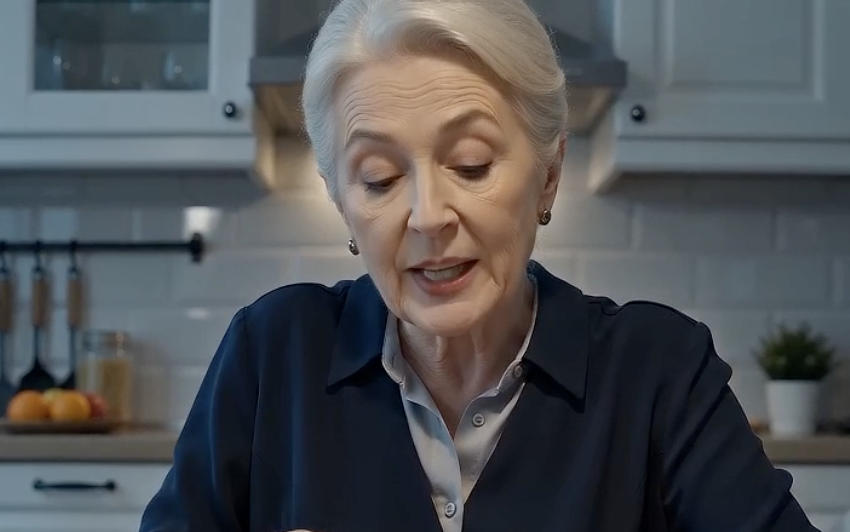
So, here’s what we’ve decided to do about Anna’s house. There’s absolutely no reason for the two of you to live there alone. There’s far too much space, and heating a place that size is nothing but a waste of money. So next week we’re going to the notary, and you, Anna dear, will issue a general power of attorney to Igor. He’ll take care of transferring all the paperwork. We’ll give the house to Larisa and the children. The fresh air will be much better for them. And you and Pasha can move into their two-bedroom apartment for the time being.”
Tamara Ilyinichna delivered this speech in an entirely matter-of-fact tone while carefully cutting a store-bought poppy-seed roll into portions. She sat at the head of the table in her apartment, a fluffy gray shawl draped over her shoulders, looking at her daughter-in-law with an expression of benevolent superiority. Beside her, Larisa, Pavel’s younger sister, nodded vigorously while adjusting the cheap shiny chain around her neck. Her husband Igor, a heavyset man with a permanently dissatisfied expression, silently chewed a sandwich thickly spread with butter, pretending to be completely absorbed in his meal.
A heavy, suffocating silence settled over the room. Anna slowly lowered her cup of tea onto the faded plastic tablecloth.
She was forty-two years old and worked as the head of the logistics department at the largest regional transportation company. Her entire day had been filled with nonstop stress. In the morning, a truck carrying perishable goods had broken down on the M4 highway. At lunchtime, the drivers had caused a scandal over their travel documents. By evening, the tax authorities had sent a request to reconcile paperwork from the previous quarter.
Anna was accustomed to solving extremely complicated problems, coordinating dozens of people, and carrying enormous responsibility. She had a will of steel and the patience of a saint. But what she had just heard went beyond every boundary of common sense.
Pavel, Anna’s husband, who worked as a senior diagnostician at a large auto repair shop, froze with a half-eaten piece of bread in his hand. Slowly, he looked from his mother to his sister, as though trying to figure out whether he had misheard.
“Mom, was that some kind of terrible joke?” Pavel asked hoarsely, pushing his plate away. “What notary? What power of attorney? That’s Anna’s house. She inherited it from her grandfather Matvei. We’ve put our hearts and souls into that place for five years!”
Tamara Ilyinichna pursed her lips in annoyance, making it clear with her entire expression how exhausting she found her son’s inability to understand something so obvious.
“Pavel, don’t raise your voice at your mother. I’m saying perfectly reasonable things. You’re thinking like selfish people. Larisa has three children! The boys need to run around on grass, breathe clean air, and eat apples straight from the tree. The five of them are crammed into sixty square meters, while the two of you occupy a two-story brick house. You don’t have children, and at your age you’re unlikely to have any now. What do you need such a huge place for? We’re one family. We’re supposed to help one another. Igor has already found a lawyer he knows who can take care of everything quickly so you won’t have to run around dealing with government offices. We’ll even let you take your new refrigerator and washing machine from the house.”
Anna listened to the monologue and felt a dull rage beginning to boil inside her.
The house twenty kilometers outside the city really had been inherited from her beloved grandfather. But it had not been some luxurious estate. It was a sturdy but badly neglected house built in the 1980s. When Anna inherited it, the roof leaked in three places, the floors were rotten, and the old stove looked as though it might collapse the first time anyone tried to light it.
To restore the house, Anna had taken out a huge personal loan.
She worked without days off and took overnight phone shifts, supervising deliveries from Vladivostok to Kaliningrad. Pavel had not sat idle either. After exhausting shifts at the auto shop, he would drive out to the village. He replaced the wiring himself, cut channels into the walls, laid bathroom tiles, installed a modern solid-fuel boiler, and fitted underfloor heating.
They gave up vacations. They stopped buying new clothes. They lived on the simplest meals of pasta and chicken, investing every spare kopek into the renovation.
The house became their shared creation, their fortress, their pride.
And in all those years, Pavel’s relatives had never once offered even symbolic assistance.
Larisa considered herself a “professional mother” who should not have to work because her primary responsibility was raising children. Igor constantly got involved in questionable business ventures. One month he tried to open an electronic-cigarette store. Then he imported a shipment of defective sneakers. After that, he invested money in some dubious investment funds.
Every one of his ventures failed spectacularly, leaving behind nothing but debts, which he shamelessly pushed onto Pavel while complaining about how unfair life was.
Pavel, being a gentle man who found it difficult to refuse people, had helped his sister for years. He paid for his nephews’ winter clothes, bought their school supplies, repaired Igor’s constantly breaking-down car for free, and even paid for the replacement parts himself.
Anna tolerated it because she did not want to fight with her husband and understood how attached he was to his family.
But now these people had decided that they could simply take away everything she had created through her own sweat and sacrifice.
“Have you completely lost your conscience?” Anna asked in an even but icy voice. “This is like a meeting of cooperative shareholders from the movie Garage,” she added aloud. “Except those people were at least fighting over something they had paid for themselves. You’ve gathered here to divide someone else’s property. Why on earth should I give my house to people who haven’t even hammered a single nail into it?”
Larisa flushed. Ugly red blotches spread across her face.
“Because my brother wasted his youth on you!” his sister shrieked, slamming her palm against the table. “He worked himself to death there! He installed your pipes, poured your floors! Those are jointly acquired improvements! We have every right to demand a share for his own nephews! You should be grateful that we’re giving you our apartment. You’ll live closer to work. It’ll actually be more convenient for you!”
“Yes, Anna, Larisa is right,” Igor added gravely, pushing aside his empty plate. “You have to think strategically. Assets should work for the benefit of the entire family instead of sitting idle for the sake of two people. It’s basic economics.”
Anna felt that if she stayed at that table for even another minute, she would explode from outrage.
Without saying anything, she rose from her chair.
“I’m going to wash my face,” she said dryly and walked into the narrow hallway cluttered with old shoes.
In the bathroom, Anna turned on the cold water and stared at her reflection in the mirror for a long time.
Dark shadows from lack of sleep had settled beneath her eyes. Premature gray hair was beginning to appear at her temples—the price of all those late-night calls from drivers and nerve-racking negotiations with clients.
She wiped her face with a towel and took a deep breath, trying to calm her pounding heart.
When Anna stepped out of the bathroom, she suddenly stopped.
Through the half-open balcony door, where Igor had gone to smoke, she could hear his muffled voice.
He was talking to someone on the phone.
“Yeah, Sanya, everything’s going according to plan,” Igor said with satisfaction. “My mother-in-law is putting the pressure on her right now. The woman’s stubborn, but she won’t go against the whole family. Pashka will persuade her. He’s always been an obedient little calf. As soon as she signs the general power of attorney, I’ll let you know immediately. Your buyer hasn’t backed out, has he? Excellent. The location is prime. Gas runs along the property line, and there’s asphalt right up to the gates. They won’t pay much for the house itself, of course, but we can easily get twenty million for the land. Yeah, we’ll tear that dump down immediately. There’s commercial development planned nearby anyway. Fifteen million goes straight into our pockets, and the rest is yours for your services and all the hassle. We’ll buy a four-bedroom apartment downtown, and I’ll finally get myself a decent car instead of driving around in this embarrassing piece of junk. All right. Talk later.”
Anna went completely still.
The whole picture finally became clear.
Nobody intended to let children run around on the grass or feed them apples straight from the tree.
They did not care about fresh air.
They wanted millions.
They intended to sell her grandfather’s house, bulldoze the apple trees Anna personally whitewashed every spring, destroy the gazebo Pavel had built with his own hands, and use the money to buy themselves a spacious apartment and an expensive SUV.
At that moment, Anna’s gaze fell on Larisa’s bulky leather handbag, carelessly tossed onto the cabinet in the hallway.
The bag was open, and the corner of a thick plastic folder was sticking out.
A sheet of paper with a large heading was clearly visible.
Anna carefully pulled the folder out.
It was an official document:
“Agreement for Real Estate Brokerage Services Regarding the Sale of Property.”
The address listed under “Property Address” was the address of Anna’s house.
Beside it was a “Market Value Appraisal Report,” which clearly stated a value of twenty-one million rubles.
The date on the document was yesterday.
Anna’s cold fury suddenly transformed into absolute, crystal-clear calm.
She took the folder in her hands and walked confidently back into the kitchen.
Pavel was still arguing with his mother. His face was red with anger.
“Mom, you don’t understand! We renovated that house for ourselves! We’re planning to live there! We only finished paying off the loan six months ago! Do you have any idea how much effort we put into that place?”
“Effort can always be replaced,” Tamara Ilyinichna remarked philosophically as she poured herself more tea. “But you only have one sister. You have to know how to share.”
Anna walked up to the table and threw the blue plastic folder down in front of her mother-in-law with a loud thud.
“You want to share? Fine. Let’s share some information,” Anna said.
Her voice was so loud and commanding that Larisa flinched and pressed herself back into her chair.
At that moment Igor returned from the balcony.
The moment he saw the folder on the table, his face turned pale.
“What’s that?” Pavel frowned, reaching for the papers.
“That, Pasha, is your wonderful family’s business plan,” Anna said, staring directly into Larisa’s shifting eyes. “Your sister and her brilliant husband have no intention of moving into our house. They couldn’t care less about apples, clean air, or fresh grass for the children. They’ve already hired a realtor and had our property valued at twenty-one million rubles. They plan to sell it for demolition because commercial development is coming to the area, buy themselves a luxury apartment downtown and a new car, and then generously allow us to live in their old two-bedroom apartment.”
image
Pavel opened the folder.
Slowly, he read through the contract, his eyes moving across the appraisal figures.
With every passing second, his expression became darker.
The muscles in his jaw tightened.
“You went through my things?!” Larisa shrieked hysterically, trying to snatch the documents from her brother’s hands. “That’s private! You had no right!”
“Private?” Pavel roared so loudly that the dishes in the cabinet trembled.
He pushed his sister’s hand aside and stared at her with a dark, terrifying expression.
“You’re having my wife’s house appraised behind my back? You’re already looking for buyers for something I helped build? Something Anna worked herself to death for, day and night, at that logistics company?”
“Pasha, sweetheart, calm down!” Tamara Ilyinichna wailed, clutching her chest. “Those were only preliminary calculations! We only wanted what was best! We wanted everyone to be happy! Larisa needs a bigger place, and Igor wants to start a new business! You don’t have children anyway. Who are you going to leave all of this to? You could at least help your nephews get a start in life!”
“Who we leave it to is our business!” Pavel snapped.
He stood up to his full, considerable height.
Igor instinctively took a step backward toward the safety of the hallway.
“I’ve helped you for years. I did your repairs. I fixed Igor’s cars for free. I bought your children jackets and phones. I thought you were struggling and needed support. But you’re nothing but parasites. You decided Anna and I were some kind of feeding trough you could empty out and throw away once there was nothing left.”
“How dare you speak to your mother like that!” Larisa screeched, practically spitting with rage. “Henpecked idiot! That ugly woman has completely poisoned your mind! Greedy bitch! She’d choke herself over a single kopek but refuses to give her own family even a piece of bread!”
Pavel stepped toward his sister.
She immediately fell silent.
“Shut your mouth, Larisa,” he said quietly but menacingly. “One more word about my wife and I’ll forget that you and I grew up in the same apartment. Now all of you listen to me very carefully. From this moment on, every bit of financial support from us to your family is over. Completely. No money for school uniforms. No free repairs. No loans until payday. Tell Igor to start doing some actual work instead of sitting on the internet inventing schemes to steal what belongs to other people. And none of you will come anywhere near our house again. If I see any of you near our fence, I’ll release the dogs.”
“Pasha!” Tamara Ilyinichna howled. “Don’t disgrace your late father! He’d turn over in his grave if he saw you throwing your own sister out onto the street!”
“Father would have been the first one to wring Igor’s neck for something like this,” Pavel replied harshly.
Then he turned toward Anna and gently took her hand.
“Come on, Anya. Let’s get out of here. There’s nothing left for us here.”
They put on their coats in the hallway while Larisa continued hurling curses at them and their mother sobbed theatrically.
Igor wisely hid in the bathroom, pretending that he suddenly had an urgent need to wash his hands.
When the heavy metal door slammed shut behind the married couple, Anna felt as though an enormous weight, weighing many tons, had finally fallen from her shoulders—a burden she had carried for years.
She looked at her husband.
There was pain in his eyes from the betrayal of the people closest to him, but there was also unwavering determination and profound devotion.
Eight months passed.
A hot, sunny summer arrived.
Anna sat in a wicker chair on the spacious wooden veranda of her house, slowly drinking cold homemade lemonade with mint.
In front of her stretched a well-kept green lawn bordered by lush hydrangea bushes and slender apple trees, their branches already bending beneath the weight of ripening fruit.
Life had settled into a peaceful and productive rhythm.
Pavel was busy in the new spacious garage they had recently added to the property.
He hummed a cheerful tune while polishing the fender of an old but sturdy SUV they had bought specifically for trips outside the city.
After that unforgettable scandal, their lives changed completely.
Once they stopped pouring money into the bottomless pit of their relatives’ needs, Anna and Pavel discovered that they actually had quite a lot of money left over.
With those savings, they completed the landscaping, built a traditional bathhouse, and even spent two weeks at a good health resort—something they had not done since their wedding.
Anna’s self-esteem soared.
She no longer felt obligated to apologize for her success, her salary, or her property.
She learned to say a firm “no” not only to dishonest contractors at work but also to toxic people in her personal life.
Pavel’s relatives, realizing that their gold mine had been permanently shut down, tried several times to return everything to the way it had been.
Tamara Ilyinichna called her son, complained that her blood pressure had risen, begged him to visit, and told heartbreaking stories about poor Larisa being unable to buy everything the children needed for school and Igor once again being unfairly fired from his job.
She tried manipulating Pavel through mutual acquaintances and neighbors, spreading rumors about her ungrateful son.
But the old tactics no longer worked.
Pavel politely but coldly asked about his mother’s health and offered to call an ambulance if she was feeling ill, but every request for financial assistance or a reconciliation meeting was met with a categorical refusal.
He had finally understood an important truth:
Your real family consists of the people who build alongside you, respect the fruits of your labor, and protect your peace—not the people who smile at you while preparing to bulldoze your entire life for their own profit.
Anna smiled and turned her face toward the warm rays of the sun.
The breeze softly rustled through the leaves of Grandfather Matvei’s old apple trees.
Ahead of them lay a long, peaceful evening, the smell of meat grilling over hot coals, and the deep, undisturbed feeling of absolute freedom—and of knowing that everything was finally exactly as it should be.